
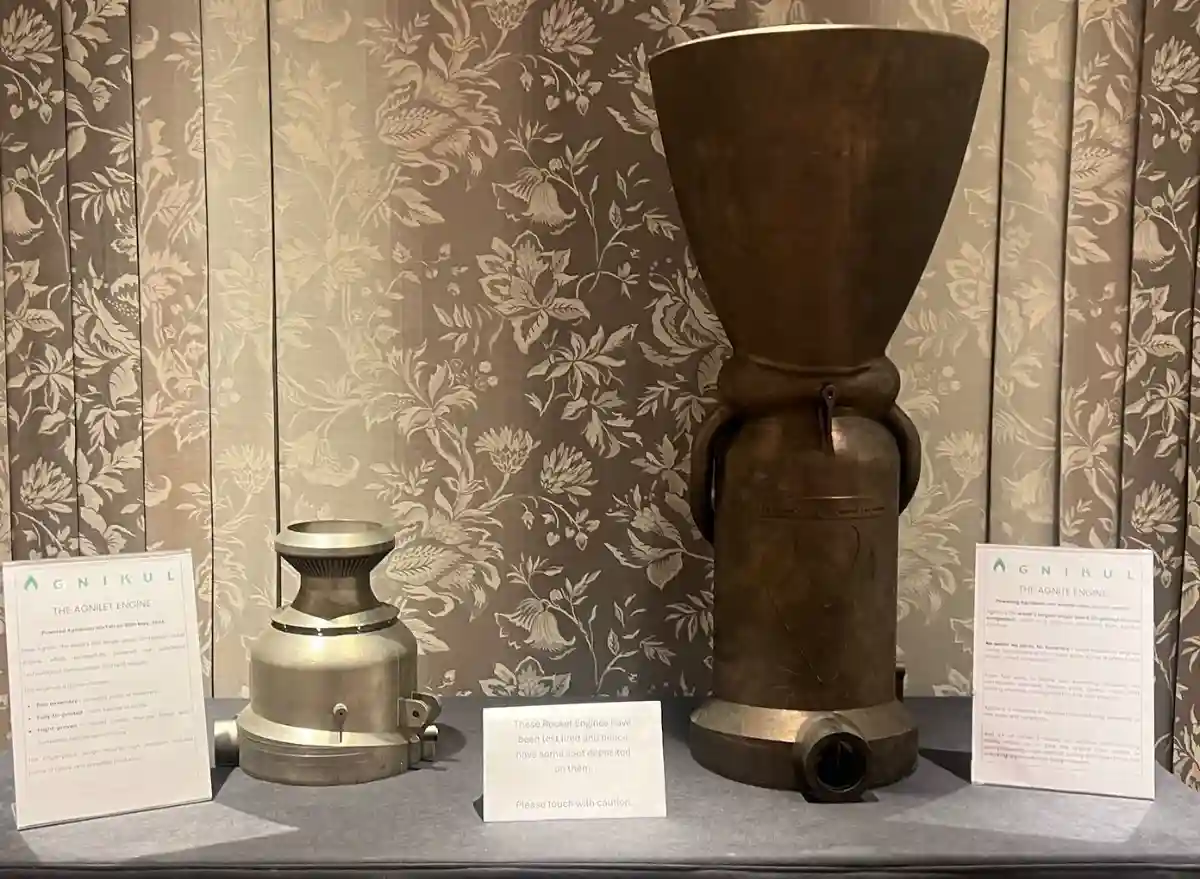
Agnikul Cosmos, a private space startup based in Chennai, has raised $17 million to speed up its plan to build reusable rockets. The funding comes as the company prepares for its first full orbital launch, expected in 2026. Founded by engineers from IIT Madras, Agnikul aims to cut launch costs by recovering and reusing parts of its rocket, making access to space cheaper for small satellite users in India and abroad.
The company started about five years ago. It was founded by two engineers from the National Centre for Combustion R&D at IIT Madras. Since then, Agnikul has focused on building a small launch vehicle designed mainly for lightweight satellites used in research, communication, and Earth observation.
@AgnikulCosmos have posted a new video of their Agnibaan SOrTeD mission containing some new angles! 🚀 #ISRO #Agnikul
Full video 👇https://t.co/4nWQ4w3BMM pic.twitter.com/cuhHRiwey8
— ISRO Spaceflight (@ISROSpaceflight) June 2, 2024
In May 2024, Agnikul carried out a key test. The company launched Agnibaan SOrTeD, a suborbital test rocket, from a private launchpad in Sriharikota. The rocket was controlled using a mobile app. It rose to a height of about one kilometer before safely landing in the Bay of Bengal. The short flight confirmed that its 3D-printed semi-cryogenic engine could work under real conditions.
The idea of rocket reuse has changed the space industry in the past decade. Normal rockets are used only once. After launch, most of the hardware falls into the ocean or burns up in the atmosphere. This makes every mission very expensive. On average, sending one kilogram into low Earth orbit can cost between $2,000 and $10,000. Reusing parts of a rocket can bring that number much lower, sometimes below $500 per kilogram.
Agnikul is trying a simpler design than many reusable rockets used by larger companies. Its upcoming orbital rocket, called Agnibaan, will use only two liquid-fuel engines in its first stage. The vehicle will be around 18 meters tall and is designed to carry up to 300 kilograms to low Earth orbit. The company says this design reduces complexity and lowers the risk of failure.
Another part of Agnikul’s plan is large-scale 3D printing. The company is setting up some of the biggest 3D printers in the country for rocket engines. This process allows them to manufacture an engine in a few days instead of several months. It also reduces the number of parts needed, which makes the engine easier to assemble and repair.
The new $17 million investment came from Indian banks, venture capital groups, and family offices. A large part of the money will go into building a new manufacturing facility near Kulasekarapatnam in Tamil Nadu. This location sits close to the equator, which gives rockets a natural speed boost from the Earth’s rotation. That boost means less fuel is needed to reach orbit.
The Kulasekarapatnam site is also important because it is close to India’s second rocket port. By building a factory near the launch site, Agnikul can reduce transport time and cost. The company plans to use the facility for research, production, assembly, and testing of future rockets.
Agnikul has set 2026 as a target for its first full orbital launch. Unlike earlier tests, this mission will aim to place a satellite into low Earth orbit. The company also plans to test recovering the first stage of the rocket, which is the most expensive part. If the recovery is successful, the same stage could be used again for future missions.
If Agnikul succeeds in creating a reliable reusable rocket, it could change India’s position in the global launch market. Lower prices could attract universities, startups, and smaller nations that cannot afford high launch costs. This shift could make India not just a reliable option for launches but also one of the most affordable.
For now, Agnikul’s focus remains on testing, building, and preparing for its next flights. The company says the next two years will be critical as it moves from short test missions to full-scale launches. The success of these steps will decide whether its reusable rocket plan can work outside the lab and in regular space operations.

Leave a Reply