Category: Explained

Dive into the concepts that power our understanding of the universe. This section breaks down complex theories in physics, astronomy, and space science into simple, clear explanations. From the laws that govern motion and gravity to the mysteries of black holes and time.

  • What Is a Light-Year? How Astronomers Measure Distance in Space

    What Is a Light-Year? How Astronomers Measure Distance in Space

    Kilometers work perfectly on Earth. Even millions of kilometers are manageable when we talk about planets inside our solar system. But the moment we step beyond nearby planets, numbers explode into endless strings of zeros that lose all meaning.

    This challenge forced astronomers to adopt a smarter unit for cosmic distances. That unit is the light-year.

    Despite its name, a light-year is not a measure of time. It is a measure of distance, and it plays a central role in how scientists understand the size, structure, and history of the universe.

    Why Measuring Distance in Space is so Difficult

    Space does not behave like a road map. You cannot stretch a ruler from Earth to a star, and you cannot send a probe to every galaxy to measure distances directly.

    Astronomers face three fundamental problems when measuring distance in space.

    • Stars and galaxies are separated by distances so large that conventional units become impractical. Even the nearest star system lies trillions of kilometers away.
    • Unlike Earth, space lacks permanent landmarks. Everything is moving, including stars, galaxies, and even space itself.
    • Light does not reach us instantly. Every observation we make shows objects as they existed in the past, not as they are now.

    Because of these limitations, astronomers rely on indirect methods based on physics, geometry, and observation. At the center of this system lies the light-year.

    What Is a Light-Year?

    A light-year is the distance light travels in one year through empty space.

    Light moves at a constant speed in a vacuum: 299,792 kilometers per second. When that speed is multiplied by the number of seconds in one year, the result is an enormous distance.

    How Long Is One Light-Year?

    • 1 light-year = 9.46 trillion kilometers
    • 1 light-year = 5.88 trillion miles

    Why Scientists Use Light-Years Instead of Kilometers

    Scientists use the light-year because it keeps cosmic distances readable. Instead of writing a number with fourteen zeros, astronomers can express distance in a form that humans can understand and compare.

    For example, describing the distance to the Andromeda Galaxy in kilometers produces a number so large that it has no intuitive meaning. Expressing the same distance as 2.5 million light-years immediately provides context and scale.

    Light-years simplify communication, calculations, and comparison between cosmic objects. More importantly, they encode something beyond distance.

    A Light-Year Is Also a Time Machine

    When you observe an object one light-year away, you are seeing it as it appeared one year ago. If a galaxy lies 100 million light-years away, its light began its journey toward Earth 100 million years ago.

    This means telescopes function as time machines.

    Astronomers do not observe the universe as it exists today. They observe the universe as it existed across different stages of cosmic history. This principle is fundamental to modern astronomy and cosmology.

    How Do Scientists Measure Distances in Space?

    Astronomers do not rely on a single method. Instead, they use a layered system known as the cosmic distance ladder. Each method works best within a specific distance range, and scientists link them together to measure the universe step by step.

    Radar Ranging for Nearby Objects

    For objects inside the solar system, scientists use radar ranging.

    They transmit a radio signal toward a planet or asteroid. The signal reflects back, and scientists measure the time delay. Since the speed of radio waves is known, calculating distance becomes straightforward.

    Radar ranging works best for:

    • The Moon
    • Venus and Mars
    • Near-Earth asteroids

    This method is extremely accurate but limited to nearby objects.

    Stellar Parallax for Nearby Stars

    For stars beyond the solar system, astronomers use stellar parallax.

    As Earth orbits the Sun, nearby stars appear to shift slightly against distant background stars. By measuring this tiny shift and applying geometry, astronomers can calculate the starโ€™s distance.

    Parallax is reliable up to a few thousand light-years. Space missions like ESAโ€™s Gaia spacecraft have dramatically improved parallax precision.

    Standard Candles and Known Brightness

    Beyond parallax limits, astronomers rely on objects with known intrinsic brightness, called standard candles.

    If scientists know how bright an object truly is, they can compare it to how dim it appears from Earth. The difference reveals distance.

    Common standard candles include:

    • Cepheid variable stars, which pulse at predictable rates
    • Type Ia supernovae, which explode with nearly identical brightness

    These objects allow astronomers to measure distances across galaxies.

    Redshift and the Expanding Universe

    For the most distant galaxies, astronomers measure redshift.

    As the universe expands, light traveling through space stretches, shifting toward longer wavelengths. The greater the redshift, the faster a galaxy is moving away.

    Using Hubbleโ€™s Law, astronomers convert redshift measurements into distance estimates, allowing them to map the large-scale structure of the universe.

    How Accurate Are Space Distance Measurements?

    Every distance measurement carries uncertainty. Astronomers account for this carefully.

    They improve accuracy by:

    • Cross-checking multiple methods
    • Using overlapping distance ranges
    • Refining measurements with better instruments

    Modern astronomy relies on statistical confidence, not guesswork. Measurements are continuously updated as new data becomes available.

    Common Misunderstandings About Light-Years

    Several misconceptions surround the light-year.

    • A light-year is not a unit of time
    • It does not represent travel time for spacecraft
    • Human technology is far slower than light
    • The speed of light is constant in a vacuum everywhere

    Understanding these points is essential for interpreting astronomical discoveries correctly.

    Why Light-Years Matter in Modern Astronomy

    Light-years are more than a convenient unit. They help scientists:

    • Understand galaxy formation
    • Study stellar evolution
    • Trace the history of the universe
    • Test cosmological theories

    Without light-years, modern astrophysics would collapse under unreadable numbers and unclear scales.

    Frequently Asked Questions

    Is a light-year a unit of time or distance?

    A light-year measures distance, not time.

    How many kilometers are in one light-year?

    Approximately 9.46 trillion kilometers.

    Why donโ€™t scientists use kilometers in space?

    Because cosmic distances are too large to express meaningfully in kilometers.

    How long would it take humans to travel one light-year?

    With current technology, tens of thousands of years.

    What is the cosmic distance ladder?

    A layered system of methods used to measure distances from nearby objects to distant galaxies.

  • The Fermi Paradox: Why Havenโ€™t We Found Alien Life Yet?

    The Fermi Paradox: Why Havenโ€™t We Found Alien Life Yet?

    The universe is enormous, ancient, and filled with billions of stars that hold the right conditions for life. With so many possibilities, it seems reasonable to expect that intelligent civilizations should exist somewhere out there. Yet despite decades of searching, humanity has found no clear sign of them. This puzzle is known as the Fermi Paradox.

    Many scientists believe the ingredients for life should appear naturally. Stars form, planets follow, and conditions for biology can emerge in countless places. Some planets would be older than Earth, giving potential civilizations millions of years to advance. With so much time and so many opportunities, we might expect the galaxy to be full of activity or at least detectable traces of it.

    The Drake Equation and the Roots of the Paradox

    The Fermi Paradox closely connects with the Drake Equation, developed by astronomer Frank Drake in 1961. The equation estimates the number of communicative civilizations in the Milky Way.

    The Drake Equation does not provide a single answer. It highlights uncertainties in areas such as:

    • How often life begins
    • How often intelligence evolves
    • How long civilizations survive

    Despite these uncertainties, many reasonable estimates still suggest that advanced civilizations could exist. The absence of evidence remains difficult to explain.

    Possible Explanations for the Fermi Paradox

    Scientists have proposed many explanations. Some rely on biology. Others focus on technology or sociology. None have definitive proof, but all remain grounded in known science.

    1. Intelligent Life Is Extremely Rare

    One possibility suggests that simple life may be common, but intelligent life is exceptionally rare.

    On Earth, complex multicellular life took billions of years to develop. Intelligence capable of building technology appeared very late. This pattern may not be unusual.

    If intelligence requires a rare sequence of events, then humanity might represent an exception rather than the rule.

    2. The Great Filter

    The Great Filter hypothesis proposes that a major barrier prevents life from advancing to a detectable technological stage.

    This filter could lie:

    • Behind us, meaning we already passed it
    • Ahead of us, implying future danger

    Possible filters include self-destruction, environmental collapse, or technological stagnation. Scientists discuss this idea cautiously because it raises uncomfortable questions about humanityโ€™s future.

    3. Civilizations Do Not Last Long

    Technological civilizations may have short lifespans.

    Radio communication represents a brief phase in a civilizationโ€™s development. Advanced societies may quickly move to technologies that do not leak detectable signals into space.

    If civilizations rise and fall quickly, the chances of overlap become very small.

    4. The Universe Is Simply Too Big

    Space imposes severe limits on communication. Even traveling at light speed, a signal takes tens of thousands of years to cross the Milky Way. Civilizations may exist, but distance and timing prevent contact.

    The universe does not owe us good reception.

    5. We Are Looking in the Wrong Way

    Human searches focus mainly on radio signals and optical flashes. Extraterrestrial technology may use methods we do not yet understand or monitor.

    Scientists continue expanding search strategies through projects like SETI and Breakthrough Listen.

    What Science Has Actually Found So Far

    To date, scientists have found:

    • No confirmed extraterrestrial signals
    • No verified alien artifacts
    • No physical evidence of non-human technology

    Claims of detections receive rigorous review and often fail verification. This careful process strengthens scientific credibility.

  • The Asteroid Belt: Here’s how it Separates Inner and Outer Planets

    The Asteroid Belt: Here’s how it Separates Inner and Outer Planets

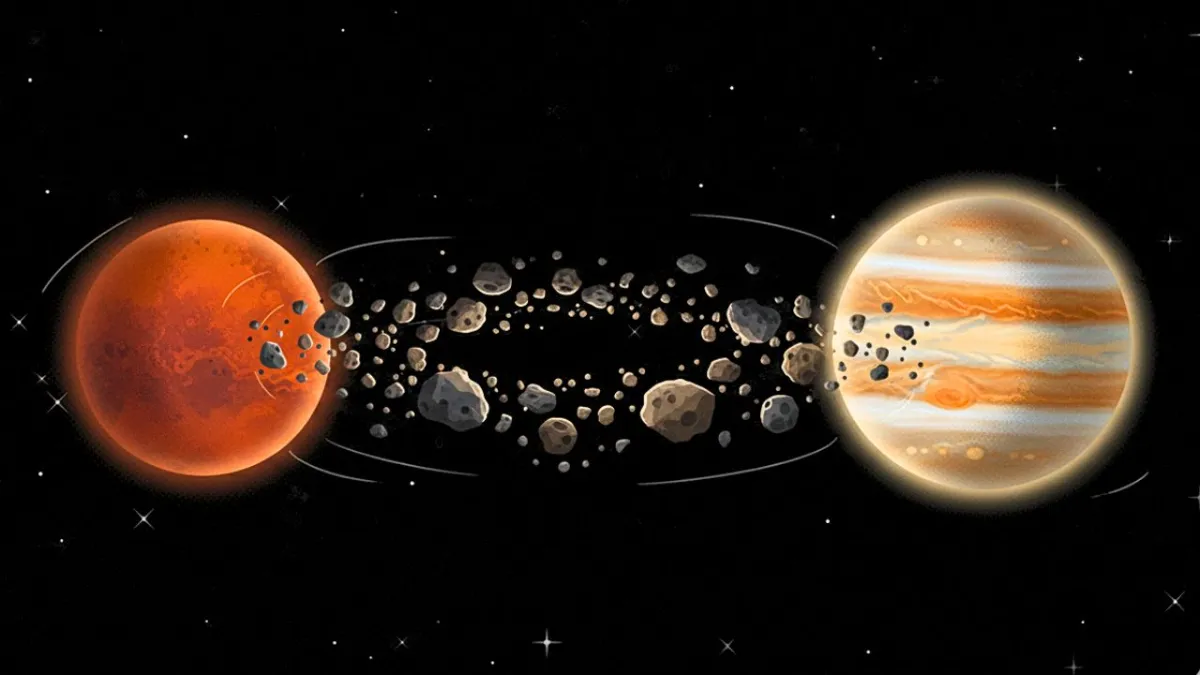
    The inner and outer planets sit on opposite sides of a natural boundary in the solar system known as the asteroid belt. This region circles the Sun between Mars and Jupiter, and it marks where rocky worlds end and giant worlds begin.

    Where Is the Asteroid Belt Located?

    The asteroid belt lies at an average distance of about 2.8 astronomical units (AU) from the Sun. One astronomical unit equals the average distance between Earth and the Sun.

    The belt stretches from roughly 2.1 AU to 3.3 AU. Jupiterโ€™s strong gravity shapes the beltโ€™s structure and prevents the material from forming a planet.

    This location places the asteroid belt in a key position for studying gravitational interactions within the solar system.

    How Did the Asteroid Belt Form?

    Early theories suggested that the asteroid belt came from a destroyed planet. Modern science rejects this idea.

    During the early solar system, dust and rock began clumping together to form planets. In the region between Mars and Jupiter, Jupiterโ€™s gravity disrupted this process. The material never merged into a single planet.

    Instead, repeated collisions broke larger bodies into smaller fragments. Over time, these fragments settled into the asteroid belt we observe today.

    This explanation aligns with computer simulations and spacecraft observations.

    What Are Asteroids Made Of?

    Asteroids vary widely in composition. Scientists classify them into three main types based on their chemical makeup and reflectivity.

    C-type (Carbon-rich asteroids)

    C-type asteroids are the most common. They contain carbon compounds, clay, and silicate rocks. These asteroids appear dark and may resemble the building blocks of early Earth.

    S-type (Silicate asteroids)

    S-type asteroids contain silicate minerals and nickel-iron metal. They dominate the inner regions of the asteroid belt.

    M-type (Metal-rich asteroids)

    M-type asteroids consist largely of metallic iron and nickel. Some scientists believe they represent the exposed cores of early planetary bodies.

    These classifications come from spectral analysis conducted by ground-based telescopes and spacecraft.

    Notable Objects in the Asteroid Belt

    Ceres

    Ceres is the largest object in the asteroid belt and holds about one-third of the beltโ€™s total mass. Scientists classify it as a dwarf planet. NASAโ€™s Dawn mission revealed evidence of water ice and ancient brine deposits on its surface.

    Vesta

    Vesta is one of the brightest asteroids visible from Earth. It shows signs of volcanic activity in its past and has a differentiated interior.

    Pallas and Hygiea

    Pallas and Hygiea rank among the largest asteroids. Hygiea may also qualify as a dwarf planet based on its shape and size.

    Is the Asteroid Belt Dangerous?

    The asteroid belt does not pose a direct threat to Earth. Most near-Earth asteroids do not originate from the main belt itself. Gravitational interactions can occasionally nudge asteroids onto Earth-crossing paths, but such events are rare.

    Space agencies continuously monitor near-Earth objects using advanced telescopes and tracking systems. These efforts improve planetary defense and risk assessment.

    The Inner Planets

    The inner planets are Mercury, Venus, Earth, and Mars. They orbit within about 1.5 astronomical units (AU) of the Sun and are made mainly of rock and metal.

    Mercury

    Mercury is the smallest planet and the closest to the Sun. It has almost no atmosphere, so temperatures change sharply. Days are extremely hot, while nights are very cold.

    Its surface has craters, cliffs, and plains shaped by ancient volcanic activity. NASAโ€™s MESSENGER spacecraft mapped Mercury and found water ice in craters at its poles, where sunlight never reaches.

    Venus

    Venus is similar in size to Earth, but its climate is very harsh. A thick carbon dioxide atmosphere traps heat and creates a strong greenhouse effect. This makes Venus the hottest planet.

    Its surface has mountains, large volcanic plains, and many volcanoes. Radar images show signs that some volcanic activity may still be happening. NASAโ€™s VERITAS and ESAโ€™s EnVision missions will study Venus in more detail.

    Earth

    Earth is the only known planet with liquid water on its surface. Its atmosphere provides oxygen, protects life from radiation, and keeps temperatures stable. Plate tectonics slowly reshape the surface, forming mountains and oceans.

    Earth also has a magnetic field that shields the planet from solar particles. These features make Earth the only confirmed world that supports life.

    Mars

    Mars is cold and dry today, but it once had flowing water. Its surface has dried riverbeds, minerals formed by water, and polar caps of frozen water and carbon dioxide. Rovers like Perseverance and Curiosity explore its surface, while orbiters map the planet from space.

    Mars has Olympus Mons, the largest known volcano, and Valles Marineris, a massive canyon system. Scientists see Mars as a strong candidate for past or present life. Future missions aim to return samples to Earth.

    Why the Inner Planets are Small and Rocky

    The early solar system was hot near the Sun. That heat allowed only rock and metal to stick together. Gas escaped easily, so the inner planets grew slowly and stayed small. Their surfaces cooled over time and formed crusts with mountains, plains, and craters. Earth and Mars even kept thin atmospheres, though Earthโ€™s is far more active.

    Gravity also shaped their size. These planets did not have enough mass to pull in large amounts of gas before the young Sun blew it away.

    The Outer Planets

    Farther from the Sun, beyond 5 AU, are Jupiter, Saturn, Uranus, and Neptune. These planets are large and have thick atmospheres of hydrogen, helium, and ices.

    Jupiter

    Jupiter is the largest planet. Its atmosphere has long-lasting storms, including the Great Red Spot. Jupiter also has a strong magnetic field and faint rings.

    It has more than 90 moons. Europa is one of the most important. It likely has an ocean beneath its ice surface. NASAโ€™s Europa Clipper, launched in 2024 and scheduled to reach Europa in 2030, will study the moon and search for signs of habitability.

    Saturn

    Saturn is known for its ring system, made of ice and rock. The rings consist of many pieces that orbit the planet. Saturn has more than 140 moons. Titan, the largest, has a thick atmosphere and lakes of liquid methane and ethane.

    NASAโ€™s Dragonfly mission, planned for 2028, will land on Titan and travel across its surface. It will study its atmosphere, surface, and chemistry.

    Uranus

    Uranus rotates on its side, giving it long and extreme seasons. Its atmosphere contains hydrogen, helium, and methane. It also has faint rings.

    In 2025, researchers confirmed that Uranus gives off more heat than it receives from the Sun, meaning it still has internal energy. Scientists believe an orbiter could reveal much more about Uranus, which has only been visited once by Voyager 2 in 1986.

    Neptune

    Neptune is the farthest major planet. It has strong winds and storms. It also has faint rings and several moons. Triton, the largest, has icy geysers that shoot nitrogen gas into space, showing it is still active.

    Triton orbits in the opposite direction of Neptuneโ€™s rotation, which suggests it came from the Kuiper Belt.

    How the Outer Planets became Giants

    Farther out, the temperature dropped. Ice and gas could collect in thick layers. The outer planets grew quickly, pulled in more gas, and became giants. Jupiter and Saturn are gas giants. Uranus and Neptune formed with more ice mixed in. They now hold deep layers of hydrogen and helium and have many moons.

    Their strong gravity also affected the asteroid belt. Jupiterโ€™s pull prevented the belt from forming into a planet, leaving behind scattered rocky bodies.

    Beyond the Outer Planets

    The Kuiper Belt lies past Neptune. It contains icy bodies and dwarf planets such as Pluto. NASAโ€™s New Horizons mission revealed Plutoโ€™s mountains and glaciers in 2015.

    In 2025, astronomers reported the discovery of dark comets in the Kuiper Belt. These may help explain past impacts on Earth.

    Beyond the Kuiper Belt is the Oort Cloud, a distant region thought to supply long-period comets. In July 2025, astronomers detected 3I/ATLAS, the third known interstellar object. Hubble images captured its coma as it passed through the outer solar system at more than 200,000 kilometers per hour.

    Why Scientists Study the Asteroid Belt

    The asteroid belt acts as a time capsule from the early solar system. By studying asteroids, scientists gain insight into planet formation processes.

    • The distribution of water and organic materials
    • The history of impacts in the inner solar system

    Meteorites found on Earth often originate from the asteroid belt, providing direct physical samples for laboratory study.

    Space Missions to the Asteroid Belt

    Several space missions have explored asteroids directly. NASAโ€™s Dawn mission studied both Vesta and Ceres, offering unprecedented detail. The OSIRIS-REx mission, while targeting a near-Earth asteroid, provided valuable data relevant to main belt studies.

    Future missions plan to explore metal-rich asteroids and binary systems within or near the belt. These missions rely on international collaboration and long-term research planning.

    Common Myths About the Asteroid Belt

    Many people imagine the asteroid belt as a tightly packed obstacle course. This image comes from science fiction rather than science.

    In reality, the average distance between asteroids measures hundreds of thousands of kilometers. A spacecraft could travel through the belt without encountering a single rock.

  • The Densest Materials on Earth and Their Real-World Uses

    The Densest Materials on Earth and Their Real-World Uses

    The densest materials on Earth come from both natural sources and human work in labs. Scientists measure density to understand how tightly atoms pack together. This helps them learn where these materials form, how they behave under pressure, and why industries rely on them.

    Densest Materials on Earth

    ElementDensity (ร—10ยณ kg/mยณ)
    Osmium22.6
    Iridium22.4
    Platinum21.5
    Rhenium21.0
    Plutonium19.8
    Gold19.3
    Tungsten19.3
    Uranium18.8
    Tantalum16.6
    Mercury13.6
    Rhodium12.4
    Thorium11.7
    Lead11.3
    Silver10.5

    The densest naturally occurring material on Earth is osmium, a rare metal with a density of 22,600 kg/mยณ. Found in platinum ores, osmiumโ€™s atoms are incredibly tightly packed, making it heavier per unit volume than almost anything else. Its bluish-silver sheen and extreme hardness also make it a standout. However, itโ€™s toxic and expensive.

    Right behind osmium is iridium, with a density of 22,400 kg/mยณ. This corrosion-resistant metal is often found in meteorites and used in high-tech alloys. Platinum, at 21,500 kg/mยณ, is another dense metal, prized for jewelry and industrial applications. Both are heavyweights but fall just short of osmiumโ€™s record.

    Several other metals rank high on the density scale. Rhenium (21,000 kg/mยณ) is used in jet engines due to its durability. Gold and tungsten, both at 19,300 kg/mยณ, are well-known for their weight and value. Uranium (18,800 kg/mยณ) and plutonium (19,800 kg/mยณ) are notable for their nuclear applications, though plutonium is mostly synthetic.

    Lab-Made Materials

    In laboratories, scientists have created even denser elements. Hassium, element 108, tops the list with an estimated density of 40,700 kg/mยณ. This superheavy, synthetic element is radioactive, with a half-life of just seconds. Meitnerium, element 109, follows at 37,400 kg/mยณ, but both are too unstable for practical use.

    Why Does Density Matter?

    Density affects many things around us. In radiation shielding, lead works well because it has a lot of mass in a small space, so it blocks X-rays with thinner walls. Tungsten does a similar job in space probes, helping protect equipment from cosmic rays without adding too much weight.

    In everyday life, your phoneโ€™s vibration motor feels strong because it has a small, dense weight inside it. Submarines use dense metal parts so they can handle high pressure underwater. In hospitals, dense iodine compounds help doctors see organs clearly during scans.

    Density of Neutron Stars

    Now compare that to space. Neutron stars make everything on Earth look light. They form when a large star dies and gravity squeezes its core so tightly that electrons and protons combine into neutrons. The result is a super-dense object: about 3.7 to 6 ร— 10ยนโท kg/mยณ.

    Imagine something the size of a city with more mass than the Sun. A sugar cube of neutron star material would weigh as much as Mount Everest. We notice neutron stars as pulsars, which spin and send out beams of radiation, or as magnetars, which have extremely strong magnetic fields. Some may reach densities near 10ยนโธ kg/mยณ.

    Nuclear Density

    Inside atoms, the nucleus is also very dense. On average, nuclear density is around 2.3 ร— 10ยนโท kg/mยณ, and it stays almost the same no matter which element you pick. For example, a uranium-238 nucleus is only a few femtometers wide, but all its protons and neutrons are packed together by the strong nuclear force.

    Neutron stars are similar: theyโ€™re basically giant balls of neutron-rich matter. Thatโ€™s why theyโ€™re so hard to crush. Add too much mass, and they collapse into a black hole.

    Why Donโ€™t We Use Super-Dense Materials?

    Some elements are even denser than lead or tungsten, but we canโ€™t use them. Elements like hassium last only seconds before decaying and releasing dangerous radiation. Osmium and iridium are stable, but theyโ€™re rare and very expensive. Plutonium is highly controlled.

    So for now, we rely on materials that are safe, stable, and affordable. Lead for shielding, tungsten for heat and impact resistance, and gold for electronics. New discoveries may give us stronger, denser metals in the future, but current limits come from cost, safety, and availability.

  • Dark Matter vs Dark Energy: Here’s how they shape the Universe

    Dark Matter vs Dark Energy: Here’s how they shape the Universe

    Dark matter and dark energy influence the universe today, though no one can see either of them directly. Scientists study them through space telescopes and ground observatories in many countries, comparing what galaxies do now with how they behaved billions of years ago.

    Dark matter appears to hold galaxies together, while dark energy seems to push the universe apart. These two unseen forces act in opposite ways, operate on different scales, and raise questions that researchers still try to answer. This topic can feel abstract, but the differences become clear once we look at how each one behaves.

    What is Dark Matter?

    Dark matter acts as the universeโ€™s hidden framework. It makes up about 27% of everything, and its gravity holds galaxies together. Without it, stars and planets would drift apart, and galaxies wouldnโ€™t stay intact.

    Astronomers canโ€™t see dark matter directly, but they detect it through its effects. Galaxies spin so fast that visible matter alone canโ€™t keep them from flying apart. Dark matter adds the extra gravity needed. It also bends light from distant galaxies, a process called gravitational lensing. When light curves around massive clusters, it shows that dark matter is there.

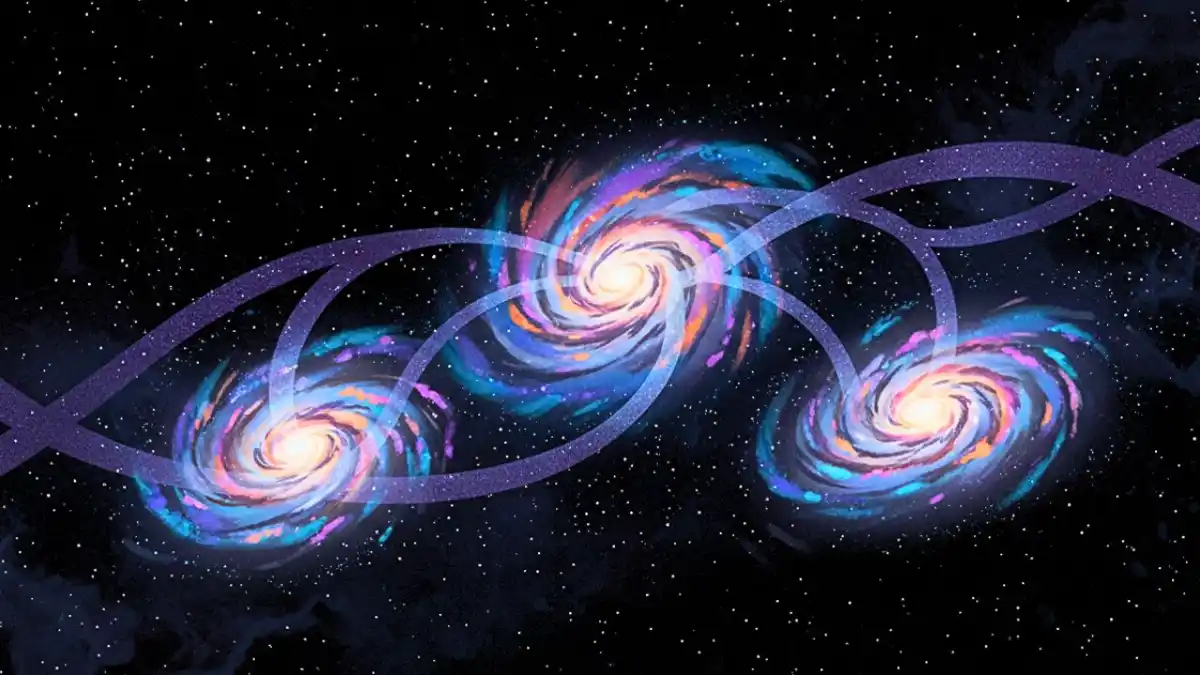
    Computer simulations also support this idea. In the early universe, matter was spread out. Dark matter slowly pulled itself into clusters and long strands, forming what we call the cosmic web. Regular matter gathered on this structure, forming galaxies, stars, and planets. Our own Milky Way sits inside one of these dark matter networks.

    What is Dark Energy?

    Dark energy drives the fast expansion of the universe. It makes up about 68% of all energy in space and pushes galaxies apart. When scientists discovered it in the 1990s, they expected the universe to be slowing down. Instead, they found that expansion is speeding up.

    You can think of dark energy as a force that stretches space. Light from very distant supernovae looks dimmer than expected, showing that space has expanded more than predicted. The farther the supernova, the faster space is growing around it. As time passes, the universe expands faster and faster because of dark energy.

    This affects galaxy clusters too. Gravity pulls galaxies together, but dark energy works in the opposite direction. Over billions of years, distant galaxies will move farther away until their light no longer reaches us. In the far future, only nearby galaxies will remain visible while others fade out of sight.

    Difference between Dark Matter and Dark Energy

    Dark MatterDark Energy
    Accounts for roughly 27% of the universeโ€™s mass and energy.Constitutes about 68% of the universeโ€™s total energy.
    Invisible; it neither emits, absorbs, nor reflects light.Invisible, it fuels the universeโ€™s accelerating expansion.
    Provides gravitational pull, binding galaxies and clusters.Exerts a repulsive force, expanding the space between galaxies.
    Possibly composed of undetected particles, such as WIMPs.It may be a constant energy in space or a dynamic cosmic field.

    What is dark matter made of?

    Dark matterโ€™s composition remains a mystery. Scientists suspect it consists of exotic particles like WIMPs (Weakly Interacting Massive Particles) or axions. Underground detectors, deep in mountains and ice layers, listen for rare particle interactions. Particle colliders smash atoms together to create traces of new matter. So far, no direct evidence has emerged, but research continues.

    Some ideas even suggest dark matter could be made of black holes formed in the early universe. These are called primordial black holes. If they exist in the right sizes and numbers, they could explain dark matter. Future observations may help confirm or rule out this idea.

    What is dark energy made of?

    Dark energy is even more puzzling. Some propose itโ€™s a constant energy woven into space, as Einsteinโ€™s cosmological constant suggests. Others think itโ€™s a dynamic field that changes over time. A few theories point to hidden dimensions or new physics beyond what we know. Both ideas demand proof, and scientists are building new tools to find answers.

    Space observatories measure how galaxies spread apart. Ground telescopes map the cosmic web to see how expansion changes over time. Each dataset helps refine our understanding of dark energy.

    Importance of Dark Matter and Dark Energy in the Universe

    Dark matter shaped the early universe. Its gravity pulled gas and dust together, creating galaxies, stars, and planets. Without dark matter, space would be scattered and empty. Itโ€™s the unseen base that holds everything in place.

    Dark energy shapes the universeโ€™s future. It pushes galaxies apart and controls how the universe expands. Telescopes like Euclid and the James Webb Space Telescope measure this expansion to learn what dark energy is doing. Each new result helps us understand where the universe is heading.

    Together, dark matter and dark energy make up about 95% of everything in the universe. All the stars, planets, and life we know are only 5%. This shows how much we still donโ€™t understand.

    Scientists keep searching for answers. New telescopes, detectors, and experiments study these invisible forces. Dark matter and dark energy force us to rethink our ideas about space. With every discovery, we solve one part of the puzzle, but new questions appear. The mystery continues, and thatโ€™s what makes science interesting.

  • Observational Astronomy: The Art of watching the Universe

    Observational Astronomy: The Art of watching the Universe

    What Is Observational Astronomy?

    Observational astronomy is the practice of watching the sky to learn how the universe works. Anyone can take part, from scientists using giant telescopes to hobbyists with binoculars in their backyard. People observe planets, stars, nebulae, and galaxies from Earth or space at any time of year.

    They do it to measure motion, track change, and figure out what objects are made of. They use telescopes, cameras, and simple tools to gather light and study patterns. It sounds big, but at its core, this field is about looking up and paying attention.

    How Observational Astronomy Works

    Observers collect light that reaches Earth. They study how bright it is, how it moves, and how it changes over time. This light can be visible, infrared, radio, or other forms that our eyes cannot see. Tools capture it and record it. Software then helps measure and compare what was seen.

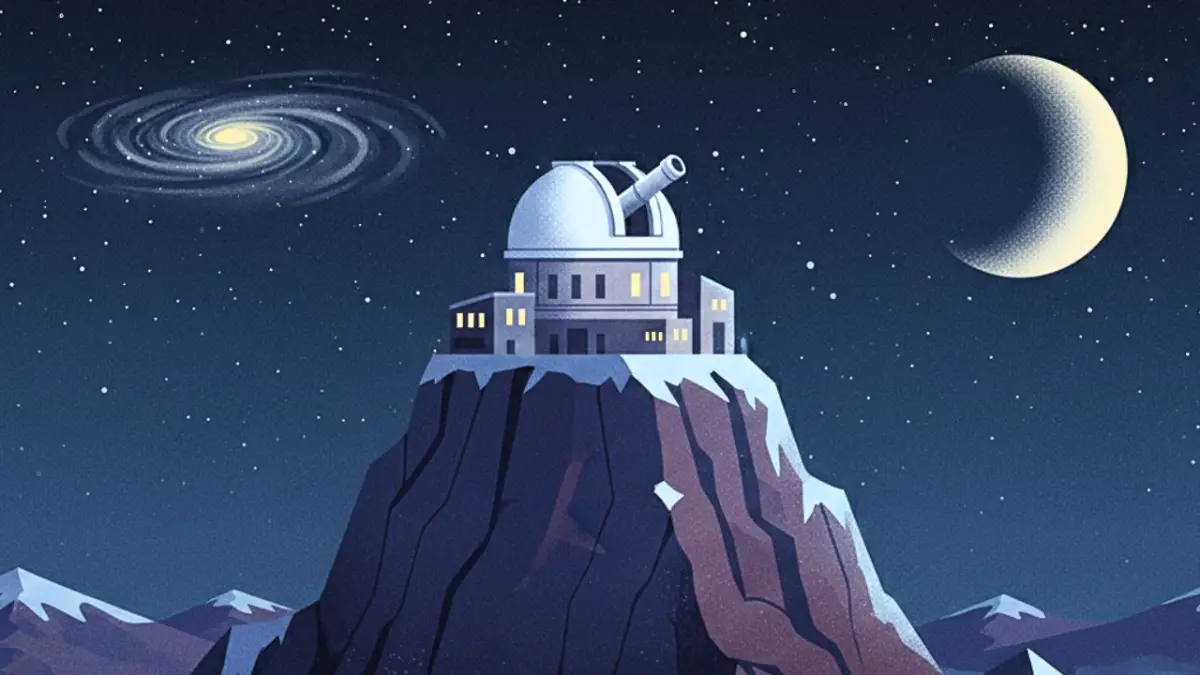
    Most work still happens on Earth. Large observatories sit on high mountains in places with dry air and dark skies. Some missions use satellites to avoid clouds and city lights. Even so, a quiet backyard can offer clear views of the Moon, bright planets, and many stars.

    What People Observe

    The Moon is the easiest target. Its phases and surface features change in ways that help beginners practice. Planets show steady paths across the sky. Venus grows brighter and dimmer. Jupiterโ€™s four large moons shift position each night. Saturnโ€™s rings tilt over the years.

    Stars offer steady light, but some vary. These changes help researchers measure distance and motion. Star clusters reveal how stars form and age. Nebulae show glowing gas shaped by stars nearby. Galaxies appear as faint smudges, yet they help map large parts of the universe.

    Why Observational Astronomy Matters

    Observations help confirm theories and reveal new questions. Watching the sky helps track objects that pass near Earth, study storms on other planets, and follow events like eclipses and meteor showers. The field mixes simple curiosity with patient watching. Not every moment is dramatic, but every clear sky has something to teach.

    How to Start

    A beginner needs only a clear night. Apps and star charts can guide the way. Binoculars help, and a small telescope opens more detail. The key is to step outside, give your eyes time to adjust, and look around. The universe does not hurry, and it will not mind if you take your time either.

    Types of Observational Astronomy

    Observational astronomy is divided into different branches based on the type of light being studied:

    • Optical Astronomy: Focuses on visible light emitted by celestial bodies like stars and galaxies.
    • Radio Astronomy: Detects radio waves to study phenomena such as pulsars and the cosmic microwave background.
    • Infrared Astronomy: Examines cooler objects like dust clouds and exoplanets.
    • X-ray and gamma-ray Astronomy: Investigates high-energy processes like black hole accretion and supernova explosions.

    Important concepts in Observational Astronomy

    The Doppler Effect, which explains why light from objects moving toward us shifts toward shorter wavelengths (blue shift) and light from objects moving away shifts toward longer wavelengths (redshift).

    Redshift measurements, which show the expansion of the universe and allow astronomers to estimate distances of galaxies and quasars.

    Together, these tools help explain how galaxies evolved, how stars are born and die, and how the universe has changed over billions of years.

    Tools Used in Observational Astronomy

    Astronomers use a wide range of instruments to study the sky. Each detects a different type of light, offering a unique window into the universe:

    Optical telescopes study visible light. They come in two forms: refractors (which use lenses) and reflectors (which use mirrors). Many professional observatories use large reflecting telescopes with adaptive optics to sharpen images affected by atmospheric turbulence.

    Radio telescopes detect radio waves from sources like pulsars, gas clouds, and the cosmic microwave background. Arrays such as ALMA combine multiple dishes to create one powerful instrument.

    Spectroscopes separate light into wavelengths, helping astronomers identify chemical elements and temperatures of stars and gases.

    Space-based observatories, such as Hubble and the James Webb Space Telescope, avoid atmospheric distortion entirely. From orbit, they capture high-precision images and data that ground-based telescopes cannot.

    Challenges in Observational Astronomy

    Despite advancements, observational astronomy faces challenges. Light pollution from urban areas makes it difficult to observe faint objects, and the increasing number of satellites and space debris in orbit hinders astronomical observations.

    Atmospheric conditions, such as clouds and turbulence, can distort images. Ground-based telescopes are also limited by the Earthโ€™s atmosphere, which is why space-based observatories are crucial.

    While these challenges may act as a barrier to astronomical observations, modern-day solutions and space policies to reduce satellite launches and space debris management may help astronomers stay captivated while space-based telescopes keep advancing and continue observing the universe.

    Astronomy is not only a hobby; there are numerous ways by which you can turn your astronomy from a hobby to your passion.

    You can read our astrophotography guide to learn the aspect of capturing the night sky or read our astronomy guide to learn about the different career paths and get a roadmap to becoming a professional in this field.

  • Incubation Theory Explained: Could Aliens Be Watching Humanity?

    Incubation Theory Explained: Could Aliens Be Watching Humanity?

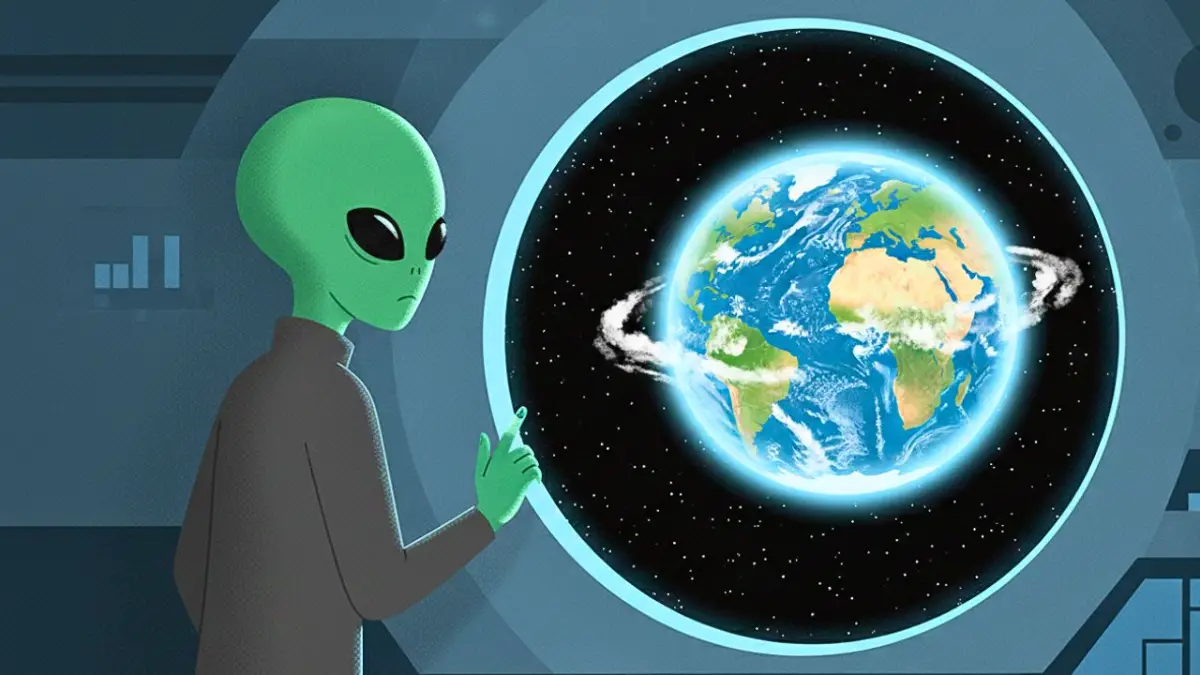
    Incubation theory suggests that advanced civilizations in the universe monitor and protect emerging civilizations like ours without directly interfering. The idea is that these advanced beings, if they exist, allow less developed societies to grow and evolve naturally while ensuring their survival and progress.

    This protective approach aims to avoid disruption, allowing civilizations to reach a stage where they can engage as equals on a cosmic scale.

    How does the incubation theory work?

    If incubation is real, advanced civilizations would need methods of observation that are difficult for humans to detect. Hypothetical possibilities include remote sensing, advanced probes, or technologies beyond our current understanding.

    Any intervention would likely be limited to preventing catastrophic outcomes such as planetary destruction, self-annihilation, or events that could erase a developing civilization entirely. These ideas remain speculative, but they highlight how incubation theory tries to explain both silence and protection at the same time.

    A key part of the theory is timing. Direct contact could disrupt a society that is socially or technologically unprepared. Making contact too early could create dependency, conflict, or cultural collapse. For that reason, the theory suggests a civilization must meet certain criteria before being invited into a wider cosmic network. These criteria could involve peaceful cooperation, responsible use of technology, and long-term planetary stability.

    Where the Theory Comes From

    The idea first appeared in mid-20th-century UFO discussions, grew online over the years, and now shows up in podcasts, documentaries, and the occasional late-night debate. It took shape during the Cold War, when reports of strange aerial objects spread across the United States and other regions. As the public wondered who or what controlled those objects, some writers suggested that if the objects were not human, then the visitors might be watching Earth with care, waiting for the right moment to make contact.

    That thought caught on because it gave people a simple story: if someone is out there, maybe they are checking our growth the way we check animal groups in the wild.

    Why Supporters Think It Could Be True

    Supporters point to a few common arguments.

    First, many cultures have stories about mysterious visitors who arrive from the sky.

    Second, modern UFO sightings often describe objects that move in ways pilots cannot explain.

    Third, if a far-advanced group wanted to watch us, distance would be safer than a public landing.

    None of these claims prove anything, but they help the idea survive. And to be fair, the theory is more comforting than the thought of total silence in the universe.

    Why Scientists Push Back

    Scientists say the theory has no direct proof. They also point out that even if alien life exists, the universe is huge, travel is hard, and there is no clear reason outsiders would track a young species that still argues about traffic rules. The scientific view is simple: show evidence, then we can talk.

    Connection to the Fermi Paradox

    The incubation theory is often discussed alongside the Fermi Paradox, which questions why, despite the high probability of extraterrestrial life, humanity has not yet encountered it. ย which proposes that Earth is intentionally isolated as part of a larger strategy by advanced civilizations. Incubation theory builds on this, emphasizing a nurturing role rather than mere observation.

    One explanation is the Zoo Hypothesis. Itย suggests Earth is isolated in a controlled environment, similar to animals observed in a reserve. Incubation theory goes a step further, proposing that this isolation has a purpose: to protect and prepare a civilization rather than simply watch it.

    The Bottom Line

    The Incubation Theory has no confirmed scientific support, but it reflects our urge to ask if we are alone. Until we have clear proof, the idea remains an open question, one that invites debate and probably keeps a few aliens laughing, if they exist.

  • What is a Radiant Point of a Meteor Shower?

    What is a Radiant Point of a Meteor Shower?

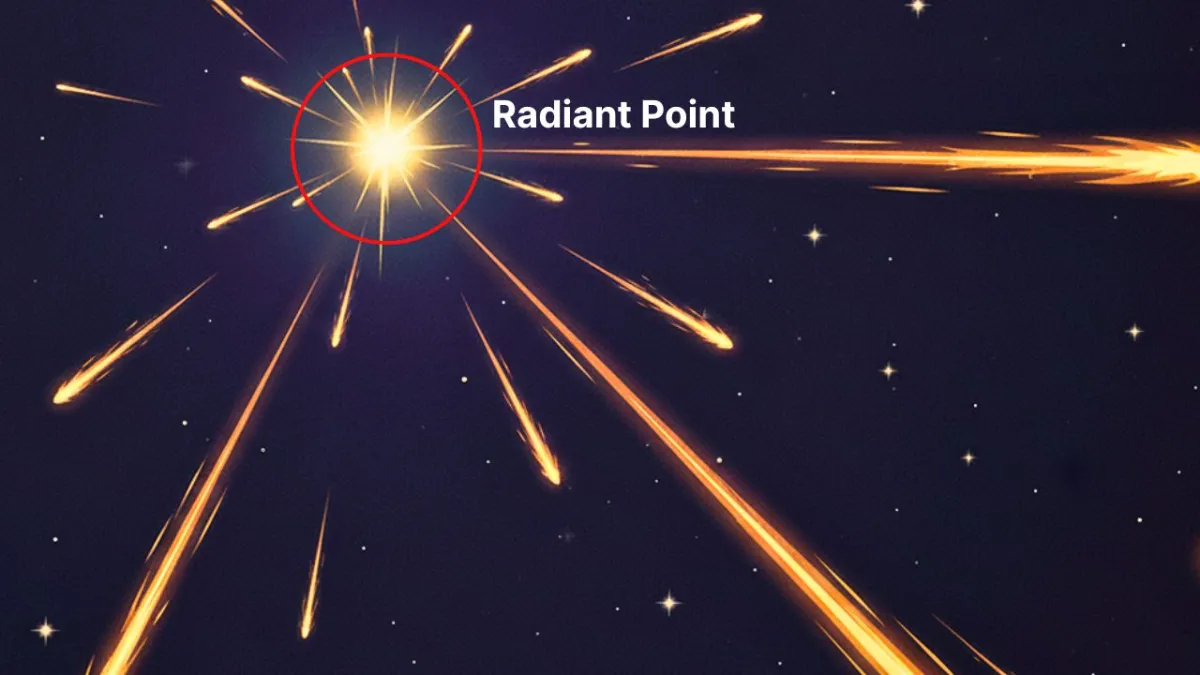
    A radiant point is the spot in the sky where the streaks of a meteor shower seem to start. You can picture it as the meeting point of many trails, even though the meteors are not actually gathering there. Observers use this point to know where to look, when the shower peaks, and how active it may get through the night. Each meteor shower has its own radiant that sits in a specific constellation, and that link helps name the shower. Once you learn how radiant points work, watching a shower becomes much easier and a bit more fun.

    Why Meteor paths seem to meet

    Meteors shoot into the atmosphere at high speed, all moving in nearly the same direction as Earth runs into a stream of debris left by a comet or asteroid. Their paths look separate on paper, but our line of sight blends them. It is the same effect that makes train tracks seem to meet in the distance. The meteors travel on parallel lines, yet they look as if they burst from a single spot.

    How Astronomers use the Radiant

    The location of a radiant tells astronomers the parent body of a meteor shower. For example, the Perseids appear to come from the constellation Perseus, so the shower takes its name from that region. By tracking the radiant over many years, researchers can follow changes in the debris trail and learn how the parent comet evolves.

    Observers on the ground use the radiant in a more practical way. If the radiant rises higher in the sky, you can expect more meteors. When it sits low, the count drops. This simple rule helps you decide the best time to step outside. It also gives you a reason to stay awake longer than you planned, which might be the most dangerous part of stargazing.

    When a Radiant Moves

    The radiant drifts slightly through the night as Earth rotates. It can also shift from one night to the next as our planet moves along its orbit. These small changes are normal and easy to follow with a sky map or a stargazing app. You do not need any special gear. Just find a dark spot, look up, and let the radiant guide you.

    Why It Matters for Skywatchers

    Knowing the radiant helps you set expectations. It tells you where to aim your attention and when the show will be at its best. You do not have to stare straight at it; in fact, you will catch more meteors by looking a bit to the side. Still, the radiant acts like the title of the event, giving every shower a clear identity.

    Understanding this point turns a simple night of watching streaks into a clearer and more rewarding experience. It also gives you a small piece of the method behind how astronomers track activity in our skies, without needing any equations or equipment.

    Radiant Point of Meteor Showers

    Each meteor shower has a different radiant point. Here’s a list of the radiant points of all the meteor showers that are observed throughout the year, starting from the Quadrantids in January to the Ursids in December.

    Meteor ShowerRadiant Point
    QuadrantidsConstellation Boรถtes, near the former constellation Quadrans Muralis
    Alpha CentauridsConstellation Centaurus, near the star Alpha Centauri
    LyridsConstellation Lyra, near the star Vega
    Eta AquariidsConstellation Aquarius, near the star Eta Aquarii
    ArietidsConstellation Aries
    Southern Delta AquariidsConstellation Aquarius, near the star Delta Aquarii
    Alpha CapricornidsConstellation Capricornus
    PerseidsConstellation Perseus
    AurigidsConstellation Auriga, near the star Capella
    DraconidsConstellation Draco
    OrionidsConstellation Orion, near the star Betelgeuse
    Southern TauridsConstellation Taurus, near the star Aldebaran
    Northern TauridsConstellation Taurus
    LeonidsConstellation Leo, near the star Regulus
    GeminidsConstellation Gemini
    UrsidsConstellation Ursa Minor, near the star Kochab
  • What Color Is the Moon? Why It Appears White, Yellow, or Red

    What Color Is the Moon? Why It Appears White, Yellow, or Red

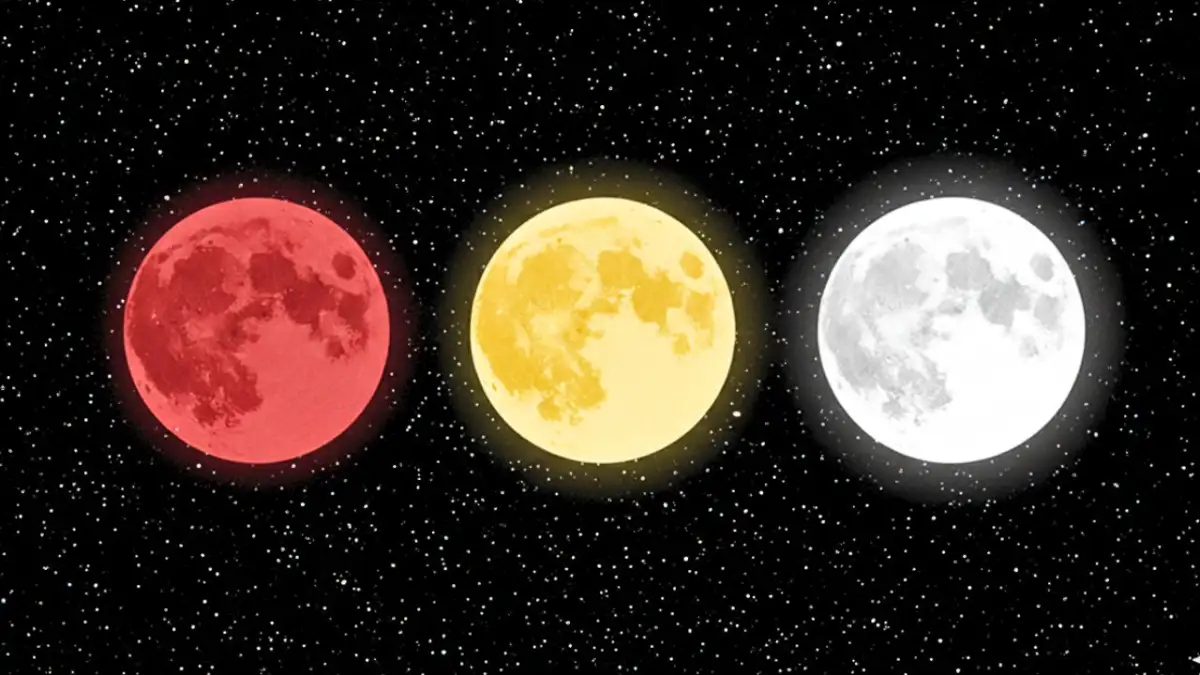
    Most people say the Moon is white, but anyone who has watched the sky for more than a few nights knows it changes color. It can look bright white overhead, pale gray through a telescope, soft yellow near the horizon, and even red during a lunar eclipse. These shifts happen because of sunlight, surface material, and Earthโ€™s atmosphere. The Moon itself never changes its natural shade, yet our view of it does, and understanding why is easier than it seems.

    The Moonโ€™s True Color

    The Moonโ€™s surface is mostly gray. If you could stand on it, you would see a dull mix of gray rock and dust. Astronaut photos confirm this. The bright โ€œwhiteโ€ we see from Earth is just sunlight reflecting off this gray surface. The Moon reflects less light than many people think, but the contrast against the dark sky makes it appear brighter.

    Why It Looks White in a Clear Night Sky

    When the Moon sits high in the sky, you look at it through a smaller amount of Earthโ€™s atmosphere. Less air means less scattering of light. Sunlight bounces off the Moon and reaches your eyes almost unchanged, so the Moon looks white or light gray. This is the color most people picture.

    Why It Turns Yellow or Orange Near the Horizon

    When the moon rises or sets, you look at it through a much thicker layer of air. Dust, smoke, and water vapor scatter blue light. The remaining light is more yellow or orange. This effect is the same one that gives us colorful sunsets. The Moon has not changed color. The air in front of it has changed what reaches you.

    Why It Turn’s Red

    During a lunar eclipse, Earth blocks direct sunlight from reaching the Moon. Some light still bends through Earthโ€™s atmosphere, and this light is mostly red. The Moon then glows with a copper or brick shade. This red moon often makes people think something unusual is happening on the surface, but it is still the same gray world. Only the lighting changes.

    Perception

    Your eyes and phone cameras can exaggerate these colors. Long exposures can make the moon look gold or almost orange even when it does not look that strong in person. So if your photos are dramatic, you are not imagining it. Your camera is just doing what cameras do.

    Conclusion

    The Moonโ€™s color stays the same. The way we see it changes because of sunlight, air, and viewing angle. High in the sky, it looks white. Low on the horizon, it turns yellow or orange. During an eclipse, it can glow red. The Moon may not be as colorful as some photos suggest, but the shifts you see are real and follow simple rules.

  • What is a Supernovae? What types of Stars end their lives with Supernovae?
    What is a Supernovae? What types of Stars end their lives with Supernovae?

    Stars are born in huge clouds of gas and dust. For most of their lives, they create energy by fusing hydrogen into helium in their cores. This process keeps them stable, balancing the outward pressure of fusion with the inward pull of gravity.

    When a star runs out of hydrogen fuel, its life changes dramatically. Stars like our sun will puff up into red giants. However, a massive star much bigger than our sun becomes a supergiant. This is when its story gets truly explosive.

    Why Do Stars Explode?

    Inside a massive star, fusion works like a cosmic onion, creating heavier elements in layers. This process stops when the star’s core begins to fuse iron. Making iron requires more energy than it releases, so the star’s power source shuts down.

    Without fusion to hold it up, the core collapses in a fraction of a second. This collapse creates a powerful shockwave that races outward, tearing the star apart. The result is a supernova: a brilliant explosion that briefly outshines an entire galaxy.

    Types of Stars That End Their Lives with Supernovae

    Not all stars are destined for a supernova. Whether a star ends this way depends on its mass and other factors:

    • Massive Stars: Stars at least eight times more massive than our Sun can end their lives in a Type II supernova. As they burn through their fuel, they build up layers of heavier elements in their cores. Once iron is produced, fusion can no longer support the star, causing the core to collapse and trigger an explosion.
    • White Dwarfs: Smaller stars, like our Sun, donโ€™t explode as supernovae when they die. However, a white dwarf in a binary system can trigger a Type Ia supernova. If the white dwarf pulls in enough material from its companion star, it can reach a critical mass, leading to a runaway explosion.

    What Are the Different Kinds of Supernovae?

    Astronomers group supernovae into two main types.

    • Type I supernovae: Type I supernovae occur in a two-star system. A white dwarf star pulls matter from its partner until it triggers a runaway nuclear reaction, which blows the star apart.
    • Type II supernovae: Type II supernovae are the death throes of a massive star. When its core collapses, the outer layers explode outward. These events leave behind a super-dense neutron star or, if the original star was huge, a black hole.

    What Produces a Type I Supernova?

    Type I supernovae occur when a white dwarf star accumulates material from a nearby companion. Once the white dwarf reaches a certain mass, a sudden burst of nuclear reactions occurs, leading to a thermonuclear explosion. This type of supernova doesnโ€™t show hydrogen lines in its spectrum, setting it apart from other types.

    What Produces a Type II Supernova?

    Type II supernovae occur in massive stars that are at least eight times the mass of the Sun. When these stars exhaust their nuclear fuel, they no longer have the energy to support their massive cores. The core collapses rapidly, causing the outer layers to crash inward.

    This collapse generates a shockwave that propels the outer layers into space in a spectacular explosion. Unlike Type I supernovae, Type II supernovae display hydrogen in their spectra because the star still has hydrogen in its outer layers at the time of the explosion.

    The remaining core can form a neutron star or, if the star is massive enough, collapse further into a black hole. These remnants are among the densest objects in the universe.

    How Hot Is a Supernova?

    Supernovae are incredibly hot, reaching temperatures of millions of degrees. This extreme heat causes atoms to fuse into heavier elements, creating many of the elements found throughout the universe, including those that make up planets and even life itself.

    How Does a Supernova Change a Galaxy?

    The temperatures inside a supernova can reach hundreds of millions of degrees. These extreme conditions create heavy elements like gold, silver, and uranium. The explosion scatters these elements across space.

    This cosmic dust eventually becomes part of new stars and planets. The iron in our blood and the calcium in our bones were created in ancient stellar explosions. We are, in a very real sense, made of star stuff.

    How Did We First See These Events?

    Long ago, people noticed sudden “new stars” appearing in the night sky. In 1054, Chinese astronomers wrote about a star so bright it was visible during the day. We now know its remains formed the Crab Nebula.

    Centuries later, in 1572, Danish astronomer Tycho Brahe observed another bright new star. His detailed work showed that the heavens were not unchanging, helping to usher in modern astronomy.

    How Do Astronomers Find Supernovae Today?

    Modern telescopes on Earth and in space constantly hunt for supernovae. Surveys scan the sky every night, catching these events soon after they begin. This lets researchers study them in real time.

    Powerful instruments like the Hubble and James Webb Space Telescopes also reveal the structure of these explosions in amazing detail. By watching them, we learn about how stars die and how galaxies evolve over time.

    Why Do Supernovae Matter to Us?

    Supernovae are more than just bright explosions. They are essential for galaxy evolution, spreading heavy elements and even triggering the birth of new stars. The remnants they leave behind are among the universe’s most fascinating objects.

    By studying supernovae, we are not just looking at the death of a star. We are learning about the origins of our own solar system and understanding our place in the cosmos.