
Category: Astrophotography

This category is a helpful resource for anyone interested in capturing the night sky, with guides on equipment, telescopes, cameras, settings, and techniques. Whether you are just starting out or looking to improve your results, you will find clear, practical content to help you photograph the universe.
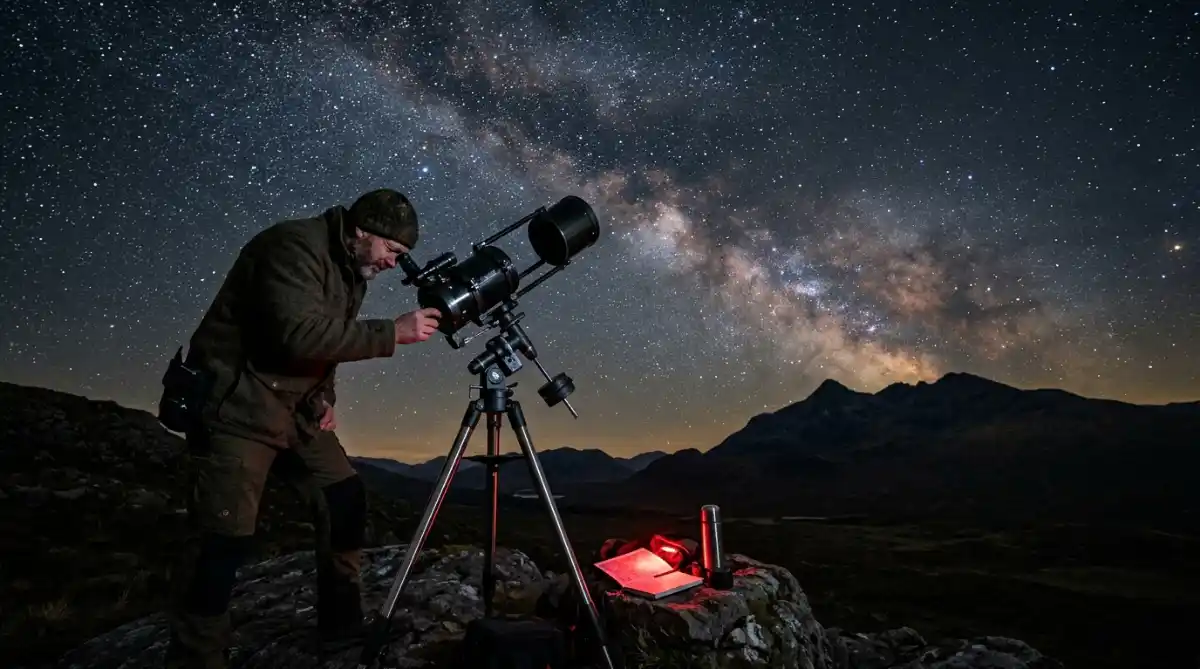
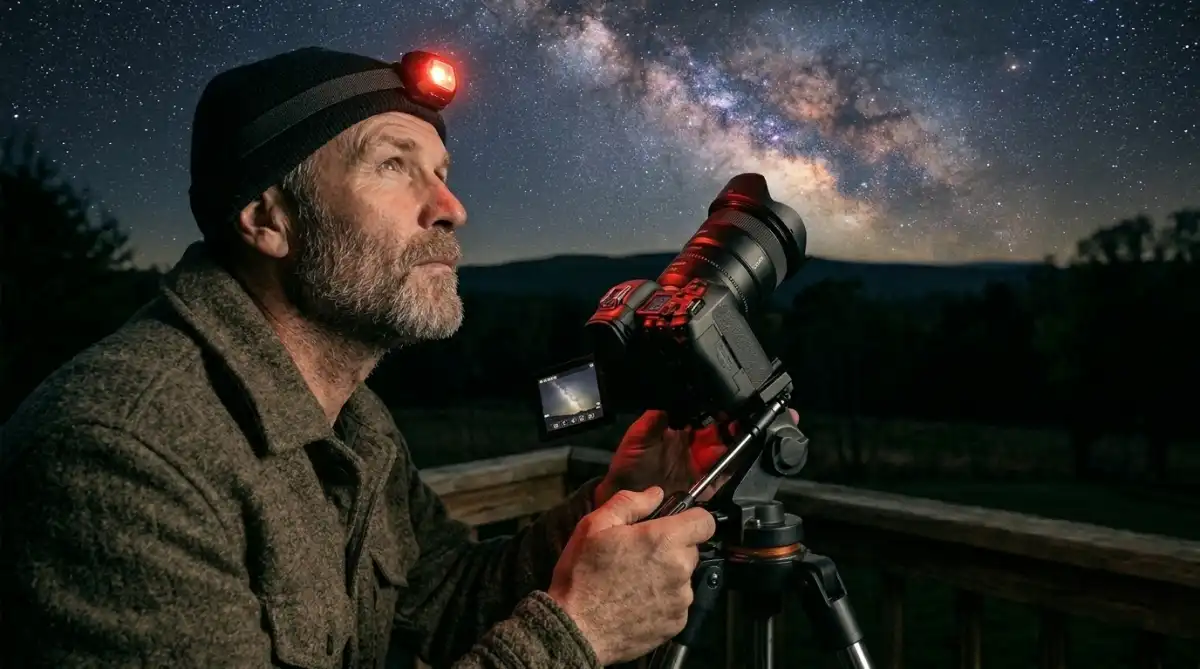
  • Best Telescopes for Observing Planets and Galaxies for Beginners

    Best Telescopes for Observing Planets and Galaxies for Beginners

    Many first-time observers assume that viewing planets and galaxies requires expensive equipment. In reality, several beginner-friendly telescopes from internationally trusted brands offer excellent optical performance at reasonable prices. With the right telescope, beginners can clearly observe the Moon, Jupiterโ€™s moons, Saturnโ€™s rings, star clusters, and even nearby galaxies under dark skies.

    Here are some of the best affordable telescopes for beginners, selected for their ease of use, optical quality, and global availability. All models listed are well-known in the astronomy community and suitable for beginners worldwide.

    Telescope ModelBrandApertureMount TypeBest ForSkill Level
    Travel Scope 70Celestron70 mmAlt-AzimuthPortable stargazing, Moon & planetsBeginner
    AstroMaster 70AZCelestron70 mmAlt-AzimuthMoon and planetary viewingBeginner
    AstroMaster 130EQCelestron130 mmEquatorialPlanets, galaxies, deep-sky objectsBeginnerโ€“Intermediate
    Heritage 130PSky-Watcher130 mmTabletop DobsonianGalaxies, nebulae, star clustersBeginner
    StarBlast 4.5 AstroOrion114 mmTabletop DobsonianWide-field and deep-sky observingBeginner

    Celestron Travel Scope 70

    The Celestron Travel Scope 70 is designed for beginners who value portability and ease of use. Its lightweight design makes it ideal for outdoor and travel stargazing. Despite its compact size, it provides clear views of the Moon, planets, and bright star clusters.

    Best for: Casual stargazing and travel
    Strength: Easy setup and portability

    Celestron AstroMaster 70AZ

    This refractor telescope offers sharp lunar and planetary views with a stable alt-azimuth mount. It is well-suited for beginners who want straightforward operation without complex adjustments.

    Best for: Moon and planetary observation
    Strength: Stable mount and simple controls

    Celestron AstroMaster 130EQ

    With a larger 130 mm aperture, this reflector telescope gathers significantly more light, making it suitable for observing galaxies, nebulae, and star clusters. While the equatorial mount requires some learning, it offers smoother tracking once mastered.

    Best for: Beginners ready to explore deep-sky objects
    Strength: Bright images and improved detail

    Sky-Watcher Heritage 130P

    The Sky-Watcher Heritage 130P is a compact tabletop Dobsonian telescope widely praised for its optical performance. Its collapsible design makes it portable, while the 130 mm aperture delivers impressive views of galaxies and nebulae.

    Best for: Deep-sky observing under dark skies
    Strength: Excellent light-gathering capability

    Orion StarBlast 4.5 Astro Reflector

    This beginner-friendly Dobsonian telescope is known for its durability and ease of use. Its wide field of view makes it excellent for scanning star clusters and large deep-sky objects.

    Best for: Wide-field and deep-sky observing
    Strength: Simple design and robust construction

    Why Choosing the Right Telescope Matters for Beginners

    A beginnerโ€™s first telescope often determines whether astronomy becomes an enjoyable hobby or a frustrating experience. Telescopes that are too complex, unstable, or poorly built can discourage new users.

    Choosing the right beginner telescope offers several advantages:

    • Simple setup and operation
    • Clear and stable views of celestial objects
    • Low maintenance requirements
    • Balanced performance for planets and deep-sky objects

    Beginner telescopes should prioritize usability and optical quality over advanced features.

    How to Choose a Telescope for Beginners

    Aperture and Light Gathering

    The aperture is the diameter of the telescopeโ€™s main lens or mirror. Larger apertures collect more light, producing brighter and more detailed images. For beginners, telescopes with apertures between 70 mm and 130 mm provide an excellent balance between performance and portability.

    Telescope Type

    • Refractor telescopes are ideal for beginners due to their sharp planetary views and minimal maintenance.
    • Reflector telescopes offer brighter images for galaxies and nebulae but may require occasional alignment.

    Mount Type

    A stable mount is essential for comfortable viewing.

    • Alt-azimuth mounts are intuitive and beginner-friendly.
    • Equatorial mounts allow more precise tracking but have a steeper learning curve.

    Portability

    Lightweight and compact telescopes are easier to transport, especially for beginners who observe from multiple locations.

    Tips for Beginners Starting Stargazing

    • Start with the Moon and bright planets
    • Use astronomy apps or star charts to locate objects
    • Observe from dark locations away from city lights
    • Allow your eyes time to adapt to darkness
    • Handle optics carefully and store your telescope properly

    Frequently Asked Questions

    What is the best telescope for beginners?

    A beginner telescope should be easy to use, stable, and have good optical quality. Refractors and small reflectors from trusted brands are ideal starting points.

    Can beginners see galaxies with affordable telescopes?

    Yes. Under dark skies, brighter galaxies like Andromeda can be observed with mid-range beginner telescopes, though fine details may be limited.

    Is a larger aperture always better?

    Larger apertures provide brighter views, but they also increase size and weight. Beginners should balance aperture with ease of use.

    Do beginners need expensive accessories?

    No. Most beginner telescopes include essential eyepieces. Additional accessories can be added later as experience grows.

  • A guide to Astrophotography: Basics, Career, Salary, and more

    A guide to Astrophotography: Basics, Career, Salary, and more

    Astrophotography is the practice of photographing the night sky, combining science and photography to capture and study celestial objects. It has grown in popularity in recent years as interest in astronomy has increased, creating both hobby and career opportunities. Astrophotographers can work with observatories, research institutions, and media companies and in tourism, producing images for research, education, and public enjoyment.

    What is astrophotography?

    Astrophotography is the art and science of taking images of celestial objects and events. It can be pursued as a hobby or a profession. Modern technology has made high-quality astrophotos more accessible, encouraging more people to try the field. The practice began in the 19th century, when early astronomers attempted to photograph the Moon and star clusters.

    Watch this video before you get into astrophotography:

    History and development

    Notable early contributors to astrophotography include William Herschel and his son John Frederick William Herschel, who photographed the Moon and star clusters. Since then, the field has advanced to capture objects invisible to the naked eye, such as distant galaxies, nebulae, and short-lived events like supernovae. It combines technical skill, artistic vision, and scientific application.

    How much money does an astrophotographer make?

    According to Jobzmall, beginner-level astrophotographers earn between $25,000 and $50,000 per year, while experienced professionals can make up to $75,000 per year. Pay depends on skill, experience, and the type of work.

    Who hires astrophotographers?

    Employers include research institutions, universities, space agencies such as NASA, ISRO, and ESA, observatories, planetariums, media companies, and tourism businesses. Work may involve research projects, public outreach, or commercial assignments.

    Career opportunities in astrophotography

    Scientific research

    Observatories on top of a mountain.
    Observatories. Image credit: Unsplash

    Astrophotographers can work with astronomers to document celestial objects and changes in the night sky. Their images may support data analysis, research, and scientific publications. In education, astrophotographers create visuals for classrooms, lectures, and outreach programs. Competitions such as the Astronomy Photographer of the Year offer recognition and exposure.

    Night sky tourism

    Growing interest in dark-sky travel has created demand for astrophotography services. Photographers can guide tours, teach workshops, and offer photo sessions at locations with minimal light pollution. These services can enhance the visitor experience and generate income for skilled photographers.

    Publishing and media

    Magazines, websites, books, and documentaries require high-quality astronomical images. Astrophotographers may provide visuals for articles, covers, or video productions. Their work is used to illustrate scientific concepts or to add visual appeal to media content.

    Stock photography and licensing

    Astrophotographers can sell their work through stock image platforms, where photos may be licensed for advertising, websites, or promotional materials. This provides a potential source of ongoing income from previously captured images.

    It is a money-making venture. This implies that the taken photographs can still be used for other purposes, like in advertisements, on websites, or for promotional purposes.

  • A Telescope guide for beginners; Types, Mounts and more

    A Telescope guide for beginners; Types, Mounts and more

    Looking at the stars is always exciting. Telescopes are like doors into other galaxies, stars, and planets, thus making it easier to observe the universe properly. Proper telescope choice is another important aspect of stargazing.

    Types of telescopes

    Refracting telescopes

    Image showing the working of keplarian refracting telscope. A telescope guide for beginners
    Keplarian Refracting Telescope. Image credit: Wikimedia Commons

    Refracting telescopes provide clear and crisp views of heavenly bodies through their lens-based optics. Think about how pleased Galileo was the first time he pointed a telescope at the night sky. They are the most appropriate for people who are starting in astronomy; they are simple to operate and do not require regular maintenance.

    Reflecting telescopes

    Image showing working of a reflecting telescope.
    A Reflecting Telescope. Image credit: Wikimedia Commons

    Reflecting telescopes are based on mirrors for image creation, and their construction allows them to have bigger apertures, which in turn helps capture more light and display dimmer objects; hence, it is like advancing from using small to larger cosmic lenses that reveal all secrets about the universe.

    Know how the telescopes work:

    Catadioptric telescopes

    A catadiaoptric Maksutov telescope.
    A 150 mm aperture catadioptric Maksutov telescope. Image credit: Wikimedia Commons

    Having lenses and mirrors, catadioptric telescopes are tailored for versatility, thus giving a small yet heavyweight package. When it comes to optical observation and astrophotography, telescopes such as the renowned Schmidt-Cassegrain design stand out like none other.

    A telescope that is capable of multitasking and that can be altered in line with the conditions is beneficial.

    Factors to consider while buying a telescope

    Aperture and light gathering

    At any given time, the amount of light a telescope collects is determined by its aperture. The image of an object that is too faint can be increased in brightness using a large piece of equipment. Simply put, an aperture is just like having a big eye that is used to watch the dimmest cosmic bodies.

    The smaller oneโ€™s field of view, the more opportunities one has to see more details within it.

    Focal length and magnification

    If you know the relationship between focal length and magnification, you can identify a cosmic sweet spot. In other words, when studying these celestial objects, our vision should just be right within a range that is not too narrow or too wide.

    Telescope mount types

    A telescope on an Altazimuth mount on lush green grass.
    Altazimuth mount. Image credit: Wikimedia Commons

    The most important thing to consider is the stability of your telescope. The Altazimuth mount usually follows the Earthโ€™s pole, which makes it capable of being used in shooting images that would require a long time. It normally offers the advantage of simplicity over the equatorial when it comes to viewing images through an eyepiece.

    What we mean is that this is just as important as choosing the appropriate mode of transport because in both scenarios stabilization ensures comfort.

    How to maintain a telescope?

    A delicate touch is important when it comes to cleaning and maintaining a telescope’s optics. Dust can be removed without causing scratches by using a soft brush and breathing gently. It is the regular maintenance of your telescope that will guarantee that it remains performing at its best as it goes through the cosmos.

    Keeping telescopes safe from environmental hazards during storage and transportation is very important. Buy strong carrying bags as well as protective covers for your stargazing partner.

    Budget considerations

    If you are an amateur astronomer or someone interested in taking up astrophotography as a hobby, then rest assured because there are many affordable telescopes.

    For instance, there is Celestronโ€™s AstroMaster series, which starts at just under $200, while the Orion SkyScanner series, though marketed at about $199.99+, is still cost-effective, allowing one to start studying stars right from Earth.

    Recommended telescopes

    5 best telescopes for astrophotography

    1. Meade LX200 Series
    2. Sky-Watcher Evostar Pro Series
    3. Celestron EdgeHD Series
    4. Orion Astrograph Refractors
    5. William Optics RedCat Series

    5 best beginner-friendly astronomy telescopes

    1. Celestron NexStar 130SLT
    2. Celestron PowerSeeker 127EQ
    3. Orion SkyQuest XT8
    4. Meade Instruments Infinity 102mm AZ
    5. Sky-Watcher Heritage 130P

    You can also read Best Telescopes for Observing Planets and Galaxiesย for a much more detailed guide.