Category: Space

Explore the vastness beyond our planet. This section covers missions, discoveries, and events that expand our reach into the cosmos. From new rocket launches to deep-space observations, “Space” keeps you updated on humanity’s steps into the unknown.

  • Starlink Satellite Seen Tumbling After Suspected Orbit Breakup, HEO Captures Images

    Starlink Satellite Seen Tumbling After Suspected Orbit Breakup, HEO Captures Images

    A HEO satellite monitoring campaign has captured new images of a damaged Starlink 34343 spacecraft following a suspected fragmentation event in orbit, confirming that the satellite remains largely intact but is now spinning rapidly and is no longer stable.

    The company said it redirected its sensor constellation within a day of the incident to collect non-Earth imagery of the satellite. The images show the main body still holding together but rotating at a minimum of 16 degrees per second along one axis. Because the data only tracks motion on a single axis, the real spin rate could be higher.

    Two months earlier, HEO had already captured clear images of the same satellite in a steady, operational state. That earlier dataset now serves as a direct comparison point, allowing analysts to assess how the satellite’s condition has changed after the event. This type of before-and-after record is rare and gives investigators a better starting point to determine what went wrong.

    The exact cause of the fragmentation remains unclear. Such events can happen due to internal failures, leftover fuel reactions, or impacts with small debris. Even a minor breakup can create dozens of fragments, increasing the risk to nearby satellites in low Earth orbit, where thousands of spacecraft operate today.

    What stands out here is how quickly imaging assets responded. Instead of relying only on ground-based tracking, HEO used space-based sensors to capture detailed visuals. That approach helps confirm whether a satellite is still intact, drifting, or breaking apart further.

    The tumbling motion suggests the satellite has lost control of its orientation system. In normal operation, satellites maintain a fixed position using onboard systems to keep antennas and solar panels aligned. Once that control is lost, the spacecraft can spin uncontrollably, limiting communication and power generation.

    HEO said it will continue monitoring the satellite with higher-resolution imaging in the coming days. These future observations may reveal visible damage, missing components, or debris nearby.

    The incident adds to growing concerns about congestion in orbit. As networks like SpaceX Starlink expand, even isolated failures can have wider effects if debris spreads. Tracking and rapid imaging are becoming essential tools to keep space operations safe and predictable.

  • Skyroots Vikram-1 clears fairing separation tests ahead of upcoming maiden launch test

    Skyroots Vikram-1 clears fairing separation tests ahead of upcoming maiden launch test

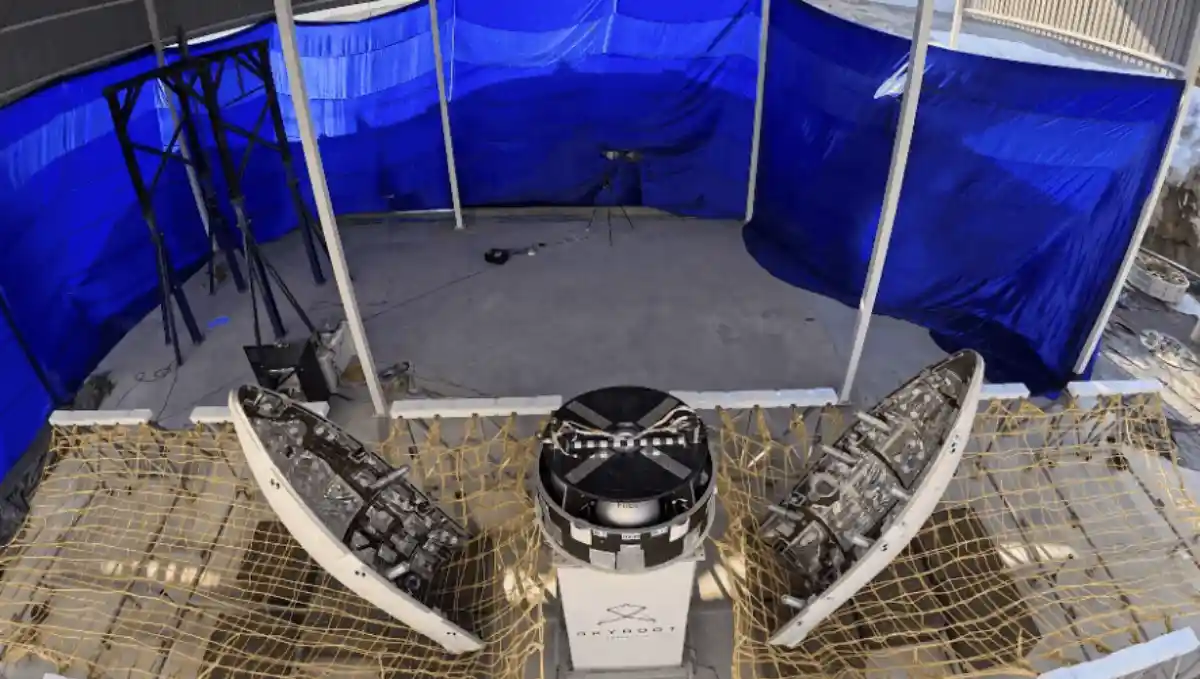
    Vikram-1, the launch vehicle developed by Skyroot Aerospace, has completed all ground tests for its payload fairing separation system, marking a major step toward its first flight from Sriharikota. The mission was earlier scheduled for January 2026, but the updated timeline now points to a later launch window as final preparations continue.

    The payload fairing plays a key role during liftoff. It shields satellites from heat, vibration, and pressure as the rocket climbs through the atmosphere. Once the vehicle crosses roughly 100 kilometers in altitude, these conditions drop sharply. At that stage, the fairing must separate cleanly to shed extra weight and allow the rocket to continue efficiently.

    Engineers tested that sequence on the ground. The fairing split and moved away exactly as planned, with precise timing and stable motion. This step is sensitive. Any issue during separation can affect the rocket’s balance or damage the payload.

    Vikram-1 uses a low-shock separation system instead of standard pyro-based methods. Traditional systems rely on small explosive charges, which can create sudden stress. In contrast, this design reduces mechanical shock and allows repeat testing before flight. That gives the team tighter control over performance and consistency.

    The delay from the earlier January 2026 target reflects the detailed testing and validation still underway. Private launch companies often adjust timelines as they move from development to flight readiness. Each subsystem must pass strict checks before integration.

    With all ground separation tests now complete, Vikram-1 moves closer to its debut. This mission will mark Skyroot Aerospace’s first orbital launch, placing it among a small group of private players building launch vehicles.

    A successful flight would expand India’s launch capacity for small satellites and add competition in a fast-growing global market.

  • The Viral Earth Shots from Artemis II are actually enabled by next-gen Laser Communication

    The Viral Earth Shots from Artemis II are actually enabled by next-gen Laser Communication

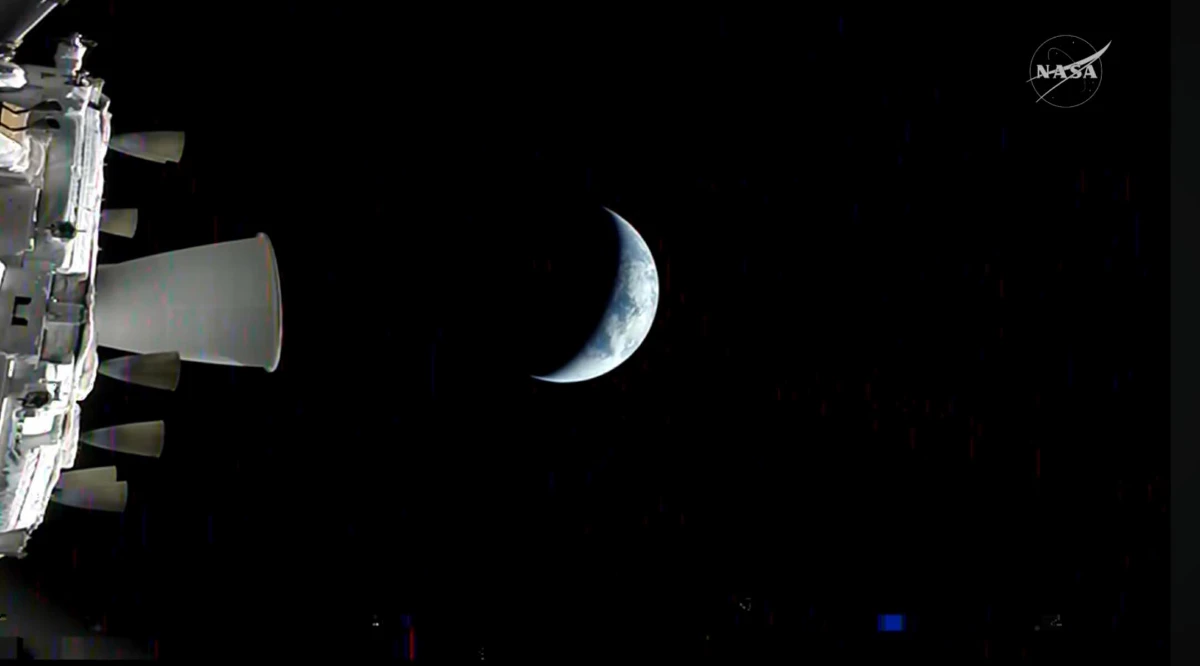
    A new video from NASA shows the Artemis II Orion spacecraft switching from traditional radio signals to a laser-based system, sharply improving the clarity of images sent from space. The transition happens within seconds, and the difference is easy to spot. The test highlights how optical communication could reshape how spacecraft send data during future missions to the Moon and beyond.

    The system, called the Optical Communications System or O2O, was developed by MIT Lincoln Laboratory in collaboration with NASA. It uses laser signals instead of radio waves to transmit data.

    In the clip shared by the laboratory, the Moon appears slightly blurred at first. As soon as the system switches, the image becomes cleaner and more detailed. This direct comparison offers a simple but powerful demonstration of what the new technology can do.

    Radio-frequency systems have served space missions for decades. They are reliable but limited in how much data they can carry at once. As missions grow more complex, spacecraft need to send high-resolution images, video, and larger data sets back to Earth. Optical communication addresses this gap by offering much higher data rates.

    The Artemis program aims to return humans to the Moon and prepare for future missions to Mars. Artemis II will carry astronauts around the Moon and test key systems in deep space. Communication is one of those systems. A stable and fast data link is essential for navigation, safety, and real-time decision-making.

    This test also builds on earlier efforts. NASA has been working on laser communication for years, including experiments in Earth orbit and deep space. Each step brings the agency closer to making it a standard feature for missions.

    There are still challenges. Laser systems need precise alignment between the spacecraft and ground stations. Even small shifts can interrupt the signal. Weather conditions on Earth can also affect performance. Engineers continue to refine tracking systems to handle these issues.

    The potential payoff is clear. Faster data transfer means scientists can receive more detailed information in less time. It could also improve communication with astronauts, making future missions safer and more efficient.

  • “Space plumber” Christina Koch fixes toilet glitch aboard Orion

    “Space plumber” Christina Koch fixes toilet glitch aboard Orion

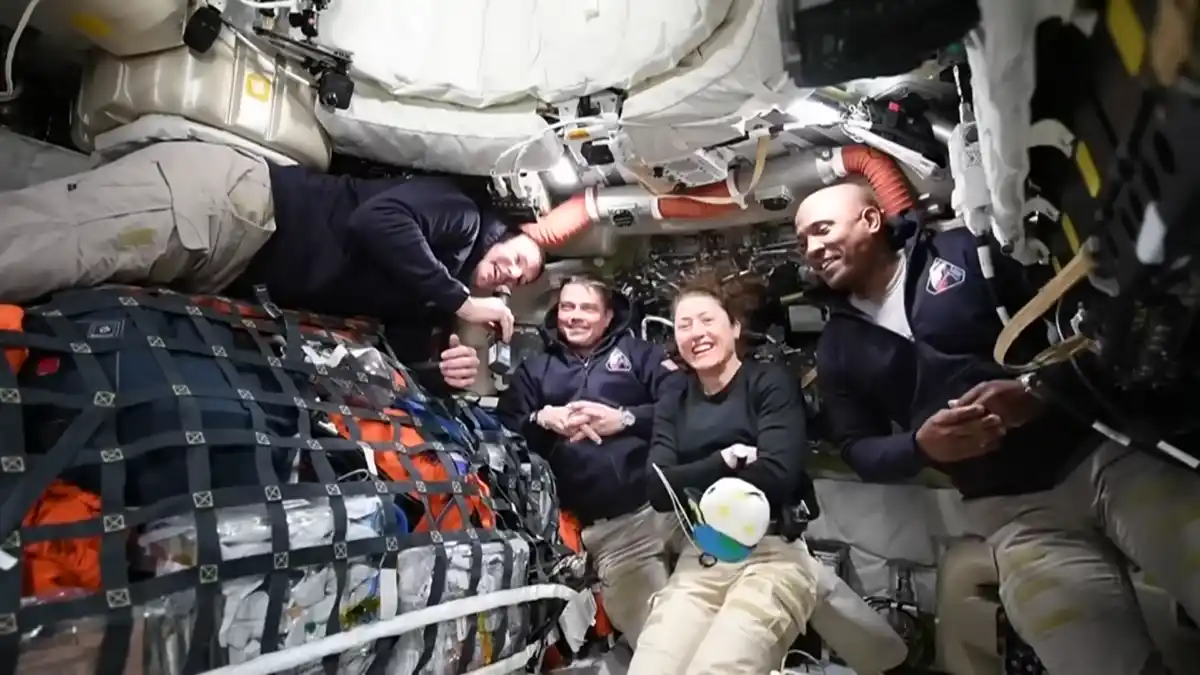
    A toilet malfunction aboard NASA’s Artemis II mission created an early challenge for astronauts just hours after launch, temporarily disabling part of the waste system on the Orion spacecraft before it was successfully repaired in orbit. The issue affected the urine collection system, requiring mission specialist Christina Koch to work with ground teams to restore functionality.

    The problem began when a fan inside Orion’s toilet system jammed, disrupting airflow that is essential for waste collection in microgravity. The system, known as the Universal Waste Management System (UWMS), depends on controlled suction to function, so even a minor fault can make it unusable.

    While the toilet remained functional for solid waste, astronauts could not use the urine collection system. The crew switched to backup equipment designed for short-term use, including collapsible contingency devices. At least one of these units was used before the main system was restored.

    Mission control guided Koch through troubleshooting steps to restart the system. Engineers later identified the issue as a controller-related fault rather than a major hardware failure. The system returned to normal operation within a few hours.

    “I’m the space plumber, I’m proud to call myself the space plumber.” said Mission specialist Christina Koch after resolving the issue.

    The UWMS onboard Orion cost an estimated $23 million to $30 million to develop and produce. It is a compact, high-tech vacuum toilet built for deep space missions, including future journeys to the Moon and Mars. Engineers designed it to support mixed-gender crews, improving usability compared to older systems.

    Christina Koch working with a test version of the Orion space toilet.
    Artemis II Mission specialist Christina Koch (right) working with a test version of the Orion space toilet. Image credit: NASA

    The toilet is smaller and lighter than earlier versions used on the International Space Station, reduced by about 65 percent in size and 40 percent in weight, with a mass of around 45 kilograms. It uses vacuum suction to collect waste and includes design changes that make it more practical and comfortable for all astronauts. The system is installed inside a private hygiene bay within Orion’s small cabin, offering limited but important privacy during the mission.

    Before Artemis II, NASA tested the system on the International Space Station to confirm its performance in microgravity. The upgrade was part of a broader effort to improve comfort and hygiene during long-duration missions.

    Even so, the malfunction shows that no system is immune to failure in space. Orion carries only one toilet for its four-person crew, leaving little margin for error. Unlike the International Space Station, deep space missions operate with limited redundancy and no quick replacement options.

  • Meet Orion, the spacecraft taking astronauts farther than ever before!

    Meet Orion, the spacecraft taking astronauts farther than ever before!

    The Orion spacecraft is now carrying astronauts beyond Earth’s orbit for the first time in over 50 years as part of NASA’s Artemis II mission. Launched in April 2026, the mission sends four astronauts on a 10-day journey around the Moon and back. The goal is not landing, but testing whether Orion can safely support humans in deep space after decades of missions limited to low Earth orbit.

    Orion is built in two main sections. The crew module is where astronauts live and work. It includes flight controls, navigation systems, and life support that provides air, water, and temperature control. Attached to it is the service module, developed in partnership with the European Space Agency, which supplies propulsion, electrical power, oxygen, and water. Large solar arrays generate electricity, allowing Orion to operate far from Earth for extended periods.

    The spacecraft has been in development for nearly two decades. NASA began work on Orion in the mid-2000s under the Constellation program. After that program was canceled in 2010, Orion was redesigned and carried forward into the Artemis program. Over time, development costs have reached tens of billions of dollars, reflecting the complexity of building a spacecraft capable of deep space human travel.

    The program has faced multiple delays and technical challenges. Engineers had to redesign systems, improve safety standards, and address issues found during testing. Artemis I, the uncrewed test flight in 2022, revealed wear on the heat shield during reentry, prompting further analysis and adjustments before flying astronauts. Delays in the Space Launch System rocket also affected Orion’s timeline, pushing crewed missions several years behind initial targets.

    What sets Orion apart is how far it can go. During Artemis II, it will travel thousands of kilometers beyond the Moon, reaching distances not achieved by human missions since the Apollo era. At its peak distance, the crew will be farther from Earth than any humans in history.

    The mission is not a passive journey. Astronauts are actively testing systems throughout the flight. They will take manual control, perform maneuvers, and verify navigation, communication, and life support under real conditions. These checks are essential because future missions will require Orion to dock with other spacecraft in lunar orbit and support longer stays.

    Orion also follows a free-return trajectory, using the Moon’s gravity to loop around and return to Earth without major engine burns. This path provides an added safety margin, allowing the spacecraft to come home even if propulsion systems face issues.

    Cockpit of NASA's Orion Spacecraft.
    Inside the Orion spacecraft, this view shows the cockpit and main control panel used by astronauts during the Artemis II mission. The panel features multiple digital displays, switches, and flight controls that allow the crew to monitor systems, navigate, and operate the spacecraft throughout their journey to the Moon and back. Image credit: NASA

    The spacecraft includes several advanced systems designed for deep space missions. Its life support system recycles air and water, while onboard computers manage navigation and communication with Earth across large distances. Radiation monitoring equipment tracks exposure levels, and the heat shield protects the crew during high-speed reentry into Earth’s atmosphere.

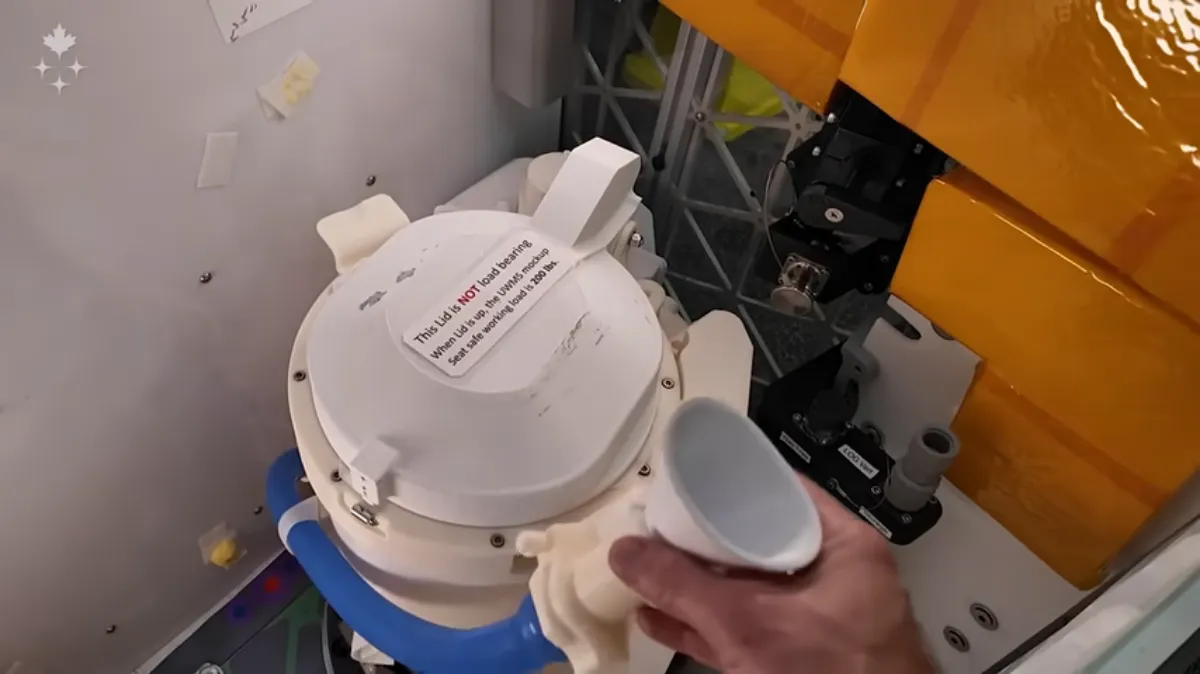
    Toilet aboard nasa's-orion spacecraft.
    Inside the Orion spacecraft, this screengrab from a vlog by astronaut Reid Wiseman shows the onboard toilet system in use. Wiseman is holding the urine collection funnel (each astronaut is assigned their own for hygiene and functionality in microgravity). Image credit: NASA/CSA

    Among its most discussed features is the onboard toilet system. The Universal Waste Management System, which cost between $23 million and $30 million to develop, is a compact, vacuum-based unit designed for mixed-gender crews. It is smaller and lighter than previous designs and is installed in a private hygiene bay within the capsule. The system was tested on the International Space Station before being used on Artemis II, but its early malfunction shows that even advanced systems require real-world validation.

    This mission builds directly on earlier testing. Artemis I proved that Orion could fly safely without a crew. Artemis II now tests whether it can support human life in deep space for extended periods.

    If Orion performs as expected, NASA will move closer to landing astronauts on the Moon again under Artemis III. If issues arise, engineers will address them before the next mission. In either case, Artemis II is the step where long-planned systems face real conditions with humans onboard.

  • Why Artemis II could decide when NASA finally lands humans on the Moon again

    Why Artemis II could decide when NASA finally lands humans on the Moon again

    The Artemis II mission is a full-scale test that will shape NASA’s plan to land humans on the Moon again with Artemis III. Launched on April 1, 2026, at 6:35 p.m. EDT from Kennedy Space Center, the mission sends four astronauts on a roughly 10-day journey around the Moon and back. The goal is to test spacecraft systems, crew operations, and deep space travel before attempting a landing.

    NASA is using Artemis II to verify that its core systems perform reliably. This includes the Space Launch System rocket and the Orion spacecraft, both of which will be used again in future missions. Their performance on this flight will directly affect the timeline for a lunar landing.

    Aretemis II Flight Path illustration.
    An illustration released by NASA showing the flight path of the Artemis II mission. Image credit: NASA

    Launch and Early Flight – April 1, 2026

    The mission began with liftoff on April 1, 2026. Within minutes, the rocket’s boosters separated, and Orion entered space. Solar arrays deployed shortly after, allowing the spacecraft to generate power for the rest of the mission.

    In the first 24 hours, the crew remained in a high Earth orbit while checking key systems. These checks included life support, navigation, communication, and propulsion. This phase ensures the spacecraft is fully ready before heading toward the Moon.

    Translunar Injection and Outbound Journey – April 2–4, 2026

    After system checks, Orion performed a major engine burn known as translunar injection. This maneuver placed the spacecraft on a path toward the Moon. Over the next few days, the crew traveled farther from Earth than any humans in decades.

    By April 4, astronauts had already crossed more than 150,000 miles from Earth, moving closer to the Moon than to their home planet.

    Lunar Flyby and Deep Space Operations – Mid-Mission

    At the midpoint of the mission, Orion flies behind the Moon and reaches its maximum distance, traveling thousands of kilometers beyond it. This is the farthest humans have traveled from Earth in history.

    The spacecraft does not enter lunar orbit. Instead, it follows a free-return trajectory, using the Moon’s gravity to curve back toward Earth. This approach reduces risk because it does not rely on major engine burns to return home.

    During this phase, astronauts continue testing systems, including navigation, communication delays, and onboard operations. These activities help mission teams refine how deep space missions are managed.

    Return Journey and Splashdown – April 11, 2026

    After looping around the Moon, Orion begins its return to Earth. The spacecraft re-enters the atmosphere at speeds of about 25,000 miles per hour, testing its heat shield under extreme conditions.

    The mission is scheduled to end with a splashdown in the Pacific Ocean on April 11, 2026, where recovery teams will retrieve the crew after roughly 9 to 10 days in space.

    Why Artemis II Matters for Artemis III

    Artemis III will go a step further by attempting a lunar landing. Instead of staying in orbit, astronauts will transfer from Orion to a separate landing system and descend to the Moon’s surface.

    That makes Artemis II a preparation mission focused on everything leading up to that moment. It ensures that Orion can support astronauts, that navigation is accurate, and that communication works over long distances.

    Astronaut performance is also being tested. The crew is managing spacecraft systems, responding to unexpected situations, and working with communication delays. These human factors will shape how future missions are planned.

    What Happens Next

    NASA aims to move quickly to Artemis III if Artemis II performs well. Current plans target the next mission for 2027, with broader goals of landing astronauts on the Moon later in the decade.

    The agency is also working toward a long-term presence near the Moon, including regular missions and new infrastructure in lunar orbit. Artemis II marks the transition from testing hardware to operating full missions with astronauts.

  • CERN moves antimatter on a truck for the first time, proving safe transport of antimatter is possible!

    CERN moves antimatter on a truck for the first time, proving safe transport of antimatter is possible!

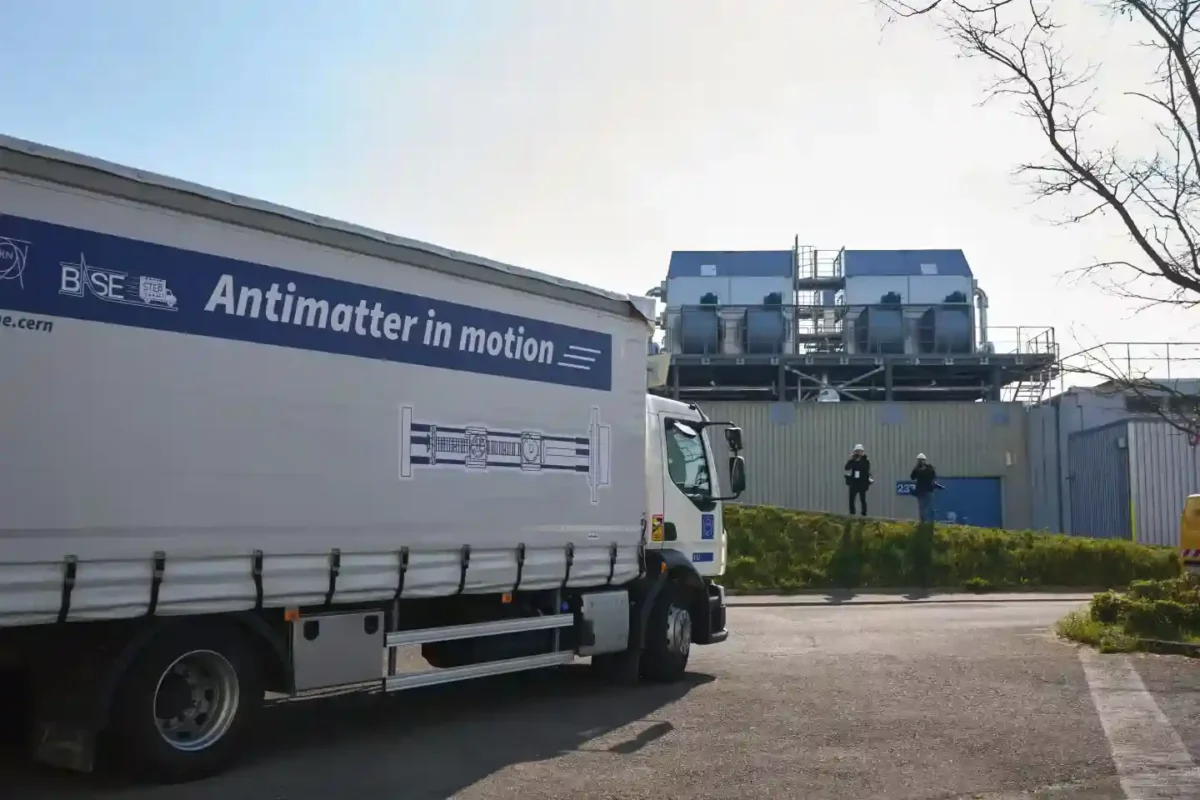
    Physicists at CERN have successfully transported antimatter on a truck for the first time, completing a controlled test on March 24, 2026, at their Geneva campus. The team moved 92 antiprotons inside a custom-built portable trap, drove them over a 4-kilometre route, and returned with every particle intact. The test shows that antimatter can be safely moved outside its production site, opening a new path for precision experiments.

    Antimatter is the mirror version of normal matter. When the two meet, they annihilate instantly. That makes storage and handling extremely demanding. Scientists can only produce and trap it at facilities like CERN, using machines such as the Antiproton Decelerator and ELENA, which slow particles enough to contain them using electromagnetic fields.

    The transport was led by the BASE collaboration, a group focused on comparing matter and antimatter with extreme precision. Their work aims to answer a fundamental question: why the universe is made mostly of matter when both should have formed in equal amounts.

    Until now, their measurements were limited by tiny magnetic disturbances inside CERN’s antimatter facility. Even extremely weak fluctuations interfere with high-precision experiments. Moving antimatter to quieter locations could remove that limitation.

    To make this possible, the team built BASE-STEP, a one-tonne portable trap that combines a superconducting magnet, cryogenic cooling, vacuum systems, and backup power. It keeps antiprotons stable at temperatures colder than outer space and protects them from vibrations during transport.

    BASE antiproton trap.
    Diagram showing the portable antiproton trap developed by the BASE collaboration, with one chamber for loading particles from CERN’s accelerator and another for securely storing them. Image credit: Christian Smorra

    During the test, engineers loaded the trap onto a truck using a crane. A trained driver completed the route while scientists monitored the particles in real time. After reconnecting the system, the team confirmed that all 92 antiprotons survived the journey.

    The next step is more ambitious. Researchers plan to transport antimatter to labs in Germany, including Heinrich Heine University Düsseldorf. That trip would take up to 12 hours and require continuous cooling below 8.2 Kelvin. The team is working on adding a mobile cryocooling system to extend travel time.

    If successful, this approach could improve measurement accuracy by up to 1,000 times. That level of precision could reveal even tiny differences between matter and antimatter. Any mismatch would challenge current physics models and reshape our understanding of the universe.

  • ISRO IISU Opens Internship Applications for Science and Engineering Students in 2026

    ISRO IISU Opens Internship Applications for Science and Engineering Students in 2026

    India’s space agency is inviting students in science and engineering to apply for internships at the Indian Space Research Organisation (ISRO) unit in Thiruvananthapuram. The ISRO Inertial Systems Unit (IISU) has issued detailed guidelines for students who want hands-on exposure to space technology during their ongoing degree programs. Applications must reach IISU by March 15 for the May–July internship block and by September 30 for the October–December session.

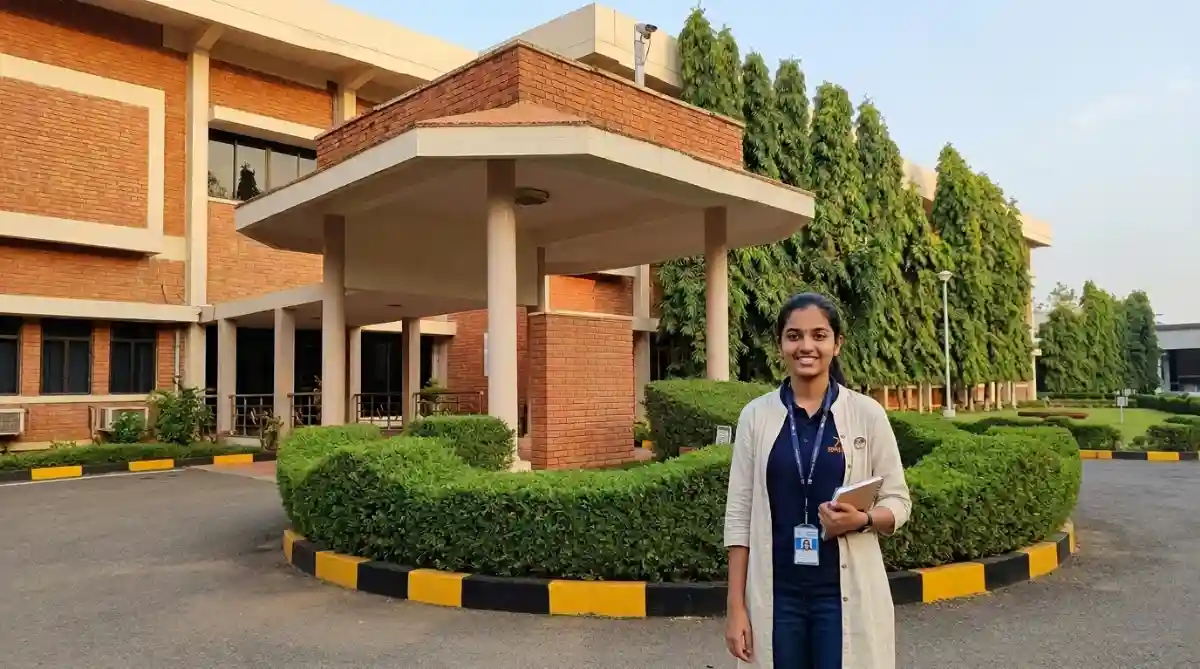
    The internships will take place at IISU’s facility in Thiruvananthapuram and will run between 21 and 45 days. Students can apply by sending the completed form by post or email to the program planning and evaluation group under the management and information systems area. Selected students will work only in unclassified sections of the center.

    The opportunity is open to Indian citizens who are pursuing degrees in science and technology fields connected to space programs. Eligible courses include BE, BTech, ME, MTech, MSc, integrated MSc, PhD, BSc in Physics or Chemistry, and BS-MS programs in the same subjects. Undergraduate applicants must have completed at least four semesters, while postgraduate and doctoral candidates must meet academic requirements based on their previous qualifying degree.

    Applicants must maintain a minimum of 60 percent marks or a CGPA of 6.32 on a 10-point scale. Each student is allowed only one internship during a single degree program. IISU also requires a detailed biodata that lists education history, technical skills, project work, and any earlier internships.

    The agency expects a large number of applications, and not all candidates will receive a position. Officials advised students to consider other institutions as backup options because facility limits restrict how many interns IISU can host at one time. The final decision will be sent to the principal or head of the applicant’s college.

    The internship does not include any stipend or financial support. Students will need approval from their college principal or department head before submitting the application, and incomplete forms will not be considered.

    Internships at IISU attract strong interest because the center plays a key role in India’s launch vehicle guidance and navigation systems. These technologies help rockets maintain stable flight paths and accurate satellite placement. Exposure to such work offers students a rare chance to observe how space hardware and software operate in a real mission environment.

    Get the Application Form Here.

  • Bitcoin Mining Heads to Space! Starcloud Plans Satellite Test With AI and ASIC Hardware
    Bitcoin Mining Heads to Space! Starcloud Plans Satellite Test With AI and ASIC Hardware
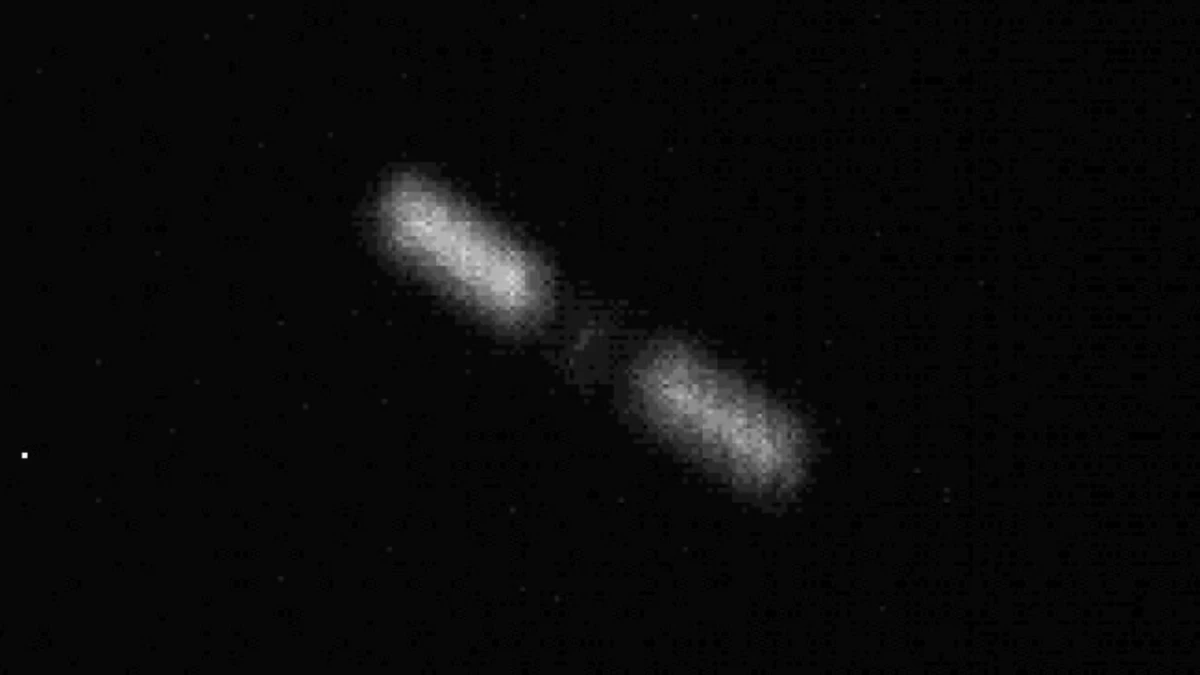
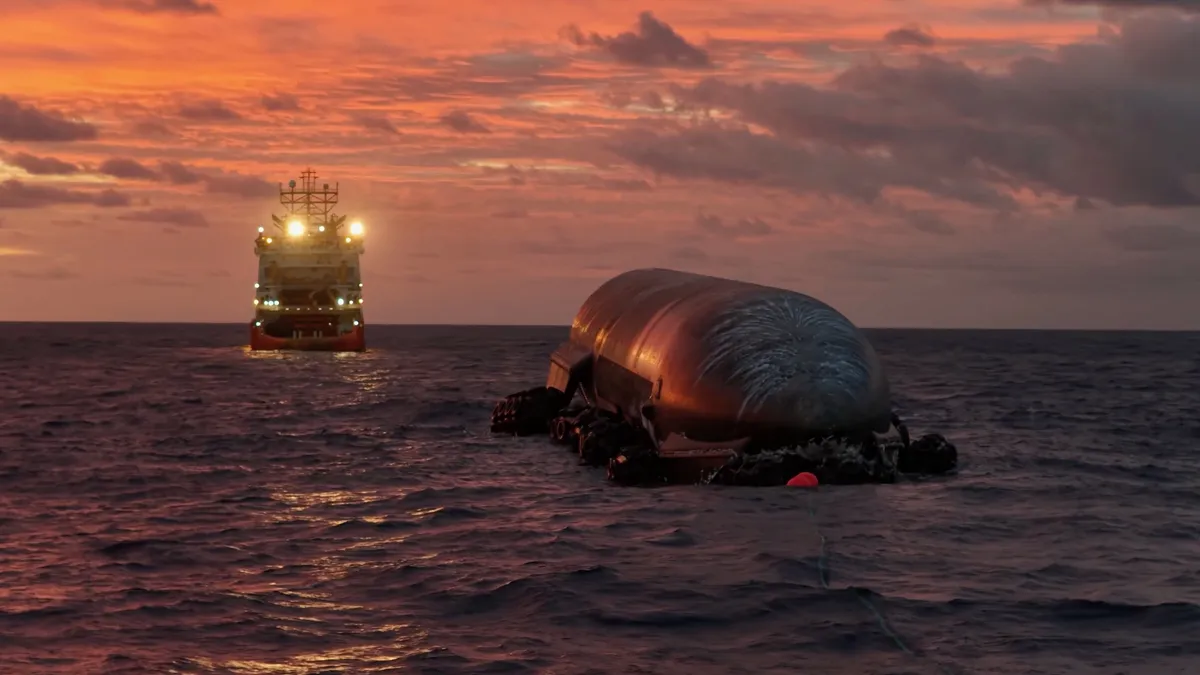
    A U.S.-based space technology startup, Starcloud, plans to test whether Bitcoin mining and artificial intelligence computing can operate in orbit, using solar power and the vacuum of space to reduce energy costs. Starcloud says its upcoming Starcloud-2 satellite, expected to launch later in 2026, will carry specialized bitcoin-mining chips along with a larger cluster of AI processors. If the mission works as planned, the company could mine the first bitcoin in space.

    The project follows an earlier experiment in November 2025 when Starcloud launched its first satellite aboard a SpaceX Falcon 9 rocket. The small spacecraft carried five Nvidia H100 processors, hardware usually found inside large terrestrial data centers. During the test, the satellite trained a small language model and ran inference using a version of Google Gemini, proving that advanced computing workloads can operate in orbit.

    Starcloud now wants to expand that idea. The company’s second spacecraft will add ASIC mining hardware alongside AI chips. Chief executive Philip Johnston said the mission will test whether steady solar power in orbit can support energy-heavy computing tasks like bitcoin mining.

    Orbit offers two advantages that attract engineers. Satellites placed in sun-synchronous paths receive sunlight almost all the time, avoiding the night cycles and weather interruptions that limit solar farms on Earth. At the same time, the vacuum of space allows heat to radiate away without large water-based cooling systems. Starcloud believes those factors could cut power costs by as much as ten times compared with many ground data centers.

    The company’s long-term plan goes far beyond a single spacecraft. Starcloud has asked the Federal Communications Commission for approval to deploy up to 88,000 satellites that would form a global network of orbital computing infrastructure. Johnston has also described a vision for a multi-gigawatt data center powered by solar arrays stretching several kilometers across.

    Bitcoin mining serves as an early test because the hardware is cheaper than top-tier AI processors and converts electricity directly into computational work. If a satellite produces more solar power than AI workloads require, mining equipment could use the extra energy and generate revenue.

    Yet the plan faces technical and regulatory questions. Electronics in orbit must survive radiation, debris risks, and extreme temperature swings. Large satellite constellations also raise concerns about congestion in low-Earth orbit and the chance of cascading debris events.

    Still, falling launch costs have renewed interest in space-based infrastructure. Companies such as SpaceX, Blue Origin, and Axiom Space have outlined future projects that rely on orbital data centers.

    If Starcloud-2 succeeds later this year, it could mark the first time digital currency is produced beyond Earth. The test may also show whether orbit can host the next generation of data centers as demand for computing power keeps rising.

  • Magnetic Fields from Early Solar System found preserved in Asteroid Ryugu Samples

    Magnetic Fields from Early Solar System found preserved in Asteroid Ryugu Samples

    A new analysis of asteroid dust returned by Japan’s Hayabusa2 mission has revealed that tiny grains from the asteroid 162173 Ryugu still hold a record of magnetic fields from the early solar system. Researchers led by Masahiko Sato studied 28 samples and found that most preserve stable magnetic signals formed billions of years ago, offering a rare look at the environment where the first planets began to take shape.

    Asteroids formed from leftover gas, dust, and rock when the solar system was young. Because they have remained mostly unchanged since then, they act like time capsules. When the Hayabusa2 spacecraft returned material from Ryugu in 2020, scientists hoped those grains could reveal details about the conditions that existed when planets were forming.

    Earlier research produced confusing results. Different teams studied only a handful of grains and reached conflicting conclusions. Some reported a stable magnetic signal from the early solar system. Others argued the asteroid formed in a region with almost no magnetic activity. A third group suggested Earth’s magnetic field had contaminated the samples during handling.

    The new study tackled that problem by analyzing four times more material. The team examined 28 grains and removed modern magnetic interference through a method called alternating field demagnetization. After cleaning the samples, 23 still held a stable magnetic signal while five did not.

    The measurements show magnetic field strengths between about 16 and 174 microteslas. For comparison, Earth’s magnetic field averages around 50 microteslas. Several grains even contained signals pointing in different directions within the same piece of rock. That detail helped confirm the magnetism came from space, not from Earth.

    The researchers believe these signals formed when the asteroid’s building blocks interacted with liquid water early in its history. Minerals known as framboidal magnetite can form when water reacts with rock. When those minerals cooled or hardened inside a magnetic field, they locked in the field’s direction and strength.

    The team estimates this process happened between about 3 and 7 million years after the first solid material appeared in the solar system. That places the event very early in planetary history.

    The findings may help scientists improve models of how planets formed.

    “Our highly sensitive magnetic measurements on microsamples collected from the asteroid Ryugu provided sufficient magnetic data to finally clarify the differing interpretations obtained by previous research groups. Thereby, offering important clues for understanding the evolution of the early solar system,” said Dr. Sato