Category: Astronomy

Look deeper into the science of the stars. This section explores celestial events, cosmic phenomena, and the latest research that helps us understand how the universe came to be and where it’s headed.

  • Astronomers Discover First Galaxy-Lensed Superluminous Supernova

    Astronomers Discover First Galaxy-Lensed Superluminous Supernova

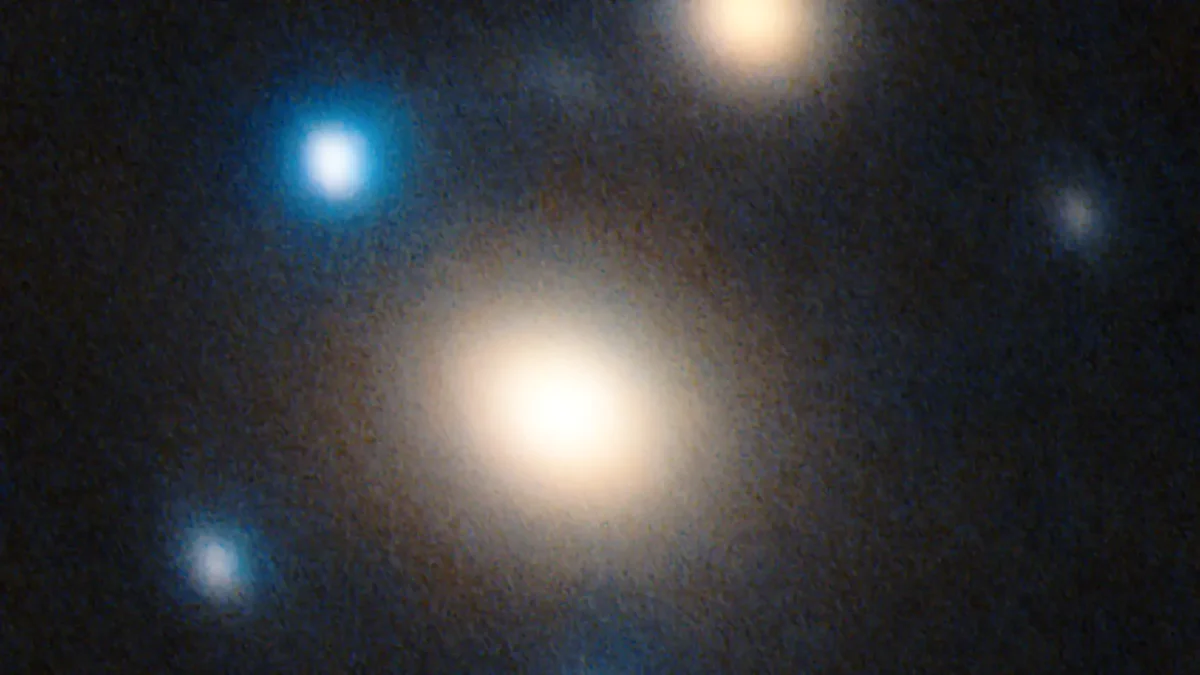
    An international team of astronomers has discovered SN 2025wny (nicknamed SN Winny), the first strongly lensed superluminous supernova seen on galaxy scales, offering a rare new way to measure how fast the universe expands. The paper was published in Astronomy & Astrophysics. The explosion appears as four separate images because two foreground galaxies bend its light.

    “The chance of finding a superluminous supernova perfectly aligned with a suitable gravitational lens is lower than one in a million,” said Sherry Suyu, associate professor of observational cosmology at TUM and fellow at the Max Planck Institute for Astrophysics.

    Sky surveys first detected the transient in late August and early September 2025. Follow-up observations across Asia, Europe, and the United States confirmed the find and revealed a system that may help settle the long-running debate over the Hubble constant.

    Researchers spotted the event through wide-field sky surveys and quickly turned ground-based telescopes toward it. The Lulin Observatory in Taiwan and the Maidanak Observatory in Uzbekistan confirmed the four-image structure after subtracting older sky images. Spectra from the Nordic Optical Telescope in Spain and the 88-inch telescope at the University of Hawaii pinned down the distance. Narrow absorption lines from the host galaxy matched those seen in superluminous supernovae closer to Earth.

    Two galaxies sit directly between Earth and the explosion. Their gravity bends and splits the supernova’s light into four images that arrive at slightly different times. Because the image separations are small but measurable, astronomers expect delays of days to weeks. That range makes the system well suited for time-delay cosmology. Earlier galaxy-scale lensed supernovae showed delays shorter than one day, which limited precision.

    By measuring these delays and mapping the mass of the lensing galaxies, scientists can calculate the Hubble constant using geometry rather than the usual distance ladder or early-universe models. Those two approaches currently disagree. A clean, independent measurement could help determine whether the tension reflects new physics or hidden errors in data.

    The discovery came from the HOLISMOKES project, which built a catalog of strong lens candidates from large imaging surveys and cross-matched them with fresh transient alerts. Archival images from 2005 already showed four lensed views of the host galaxy at the same location, setting the stage for this event.

    Teams now monitor SN 2025wny every night or two from telescopes in Taiwan, Uzbekistan, Mexico, and Germany. They expect full light curves within months. The Hubble and James Webb space telescopes have scheduled time to capture sharper images that will refine the lens model.

    The Vera Rubin Observatory is now active, and it should find about ten useful lensed supernovae each year. Models suggest that about twenty well-measured systems could pin down the expansion rate to 1 percent accuracy. SN Winny may be the first clear step toward that goal.

  • Rubin Observatory Sends 800,000 New Alerts in One Night!

    Rubin Observatory Sends 800,000 New Alerts in One Night!

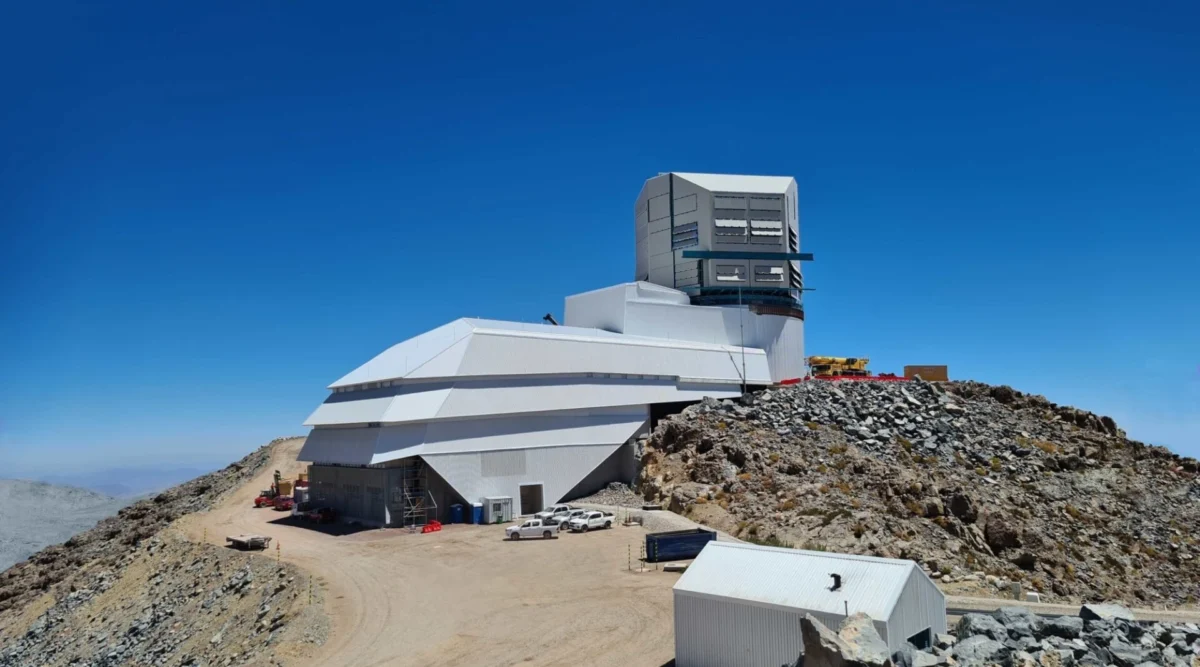
    The Vera C. Rubin Observatory has opened a new chapter in astronomy after detecting 800,000 changes in the night sky in a single night on February 24, 2026. Operating from Cerro Pachón in Chile, the observatory activated its near real-time alert system, sending notifications to scientists worldwide within minutes of spotting new asteroids, supernovae, and variable stars. The milestone clears the way for its decade-long Legacy Survey of Space and Time, which will map the southern sky in motion.

    The observatory uses the 3,200-megapixel LSST Camera, the largest digital camera ever built for astronomy. Every 30 seconds, it captures a massive image of the sky. Software compares each new frame with earlier images and flags anything that changes in brightness or position. Within about 60 seconds, alerts reach a global network of researchers.

    This week’s 800,000 alerts are only a preview. Once the system reaches full capacity, it is expected to generate up to seven million alerts per night. That flow of data will allow astronomers to track fast-moving asteroids, catch supernovae at their earliest moments, and monitor distant active galactic nuclei as they flare and fade.

    The data travels through fiber optic cables from Chile to processing centers in the United States, including facilities at SLAC National Accelerator Laboratory. Automated pipelines filter images, remove satellite trails, and prepare science-ready files. Intelligent broker systems then sort alerts so researchers receive only the events relevant to their work.

    The observatory’s wide-field design sets it apart. Instead of targeting one object at a time, it scans vast sections of sky every few nights. Over ten years, it will build a time-lapse record of billions of stars and galaxies. Scientists expect it to discover millions of supernovae, tens of thousands of near-Earth objects, and detailed maps of dark matter through gravitational lensing.

    The impact extends beyond research labs. The alerts are public, and citizen scientists can take part through platforms such as Zooniverse. Amateur astronomers can also respond to alerts with personal telescopes.

    The observatory is named after Vera Rubin, whose work provided strong evidence for dark matter. Fittingly, her namesake facility will now gather the data needed to test ideas about dark matter, dark energy, and the structure of the universe.

    After years of construction and testing, the system is finally watching the sky at scale. If the first night is any guide, astronomers are about to receive more cosmic updates than ever before.

  • Venus may have an Underground Lava Tube, NASA Magellan Data Suggests

    Venus may have an Underground Lava Tube, NASA Magellan Data Suggests

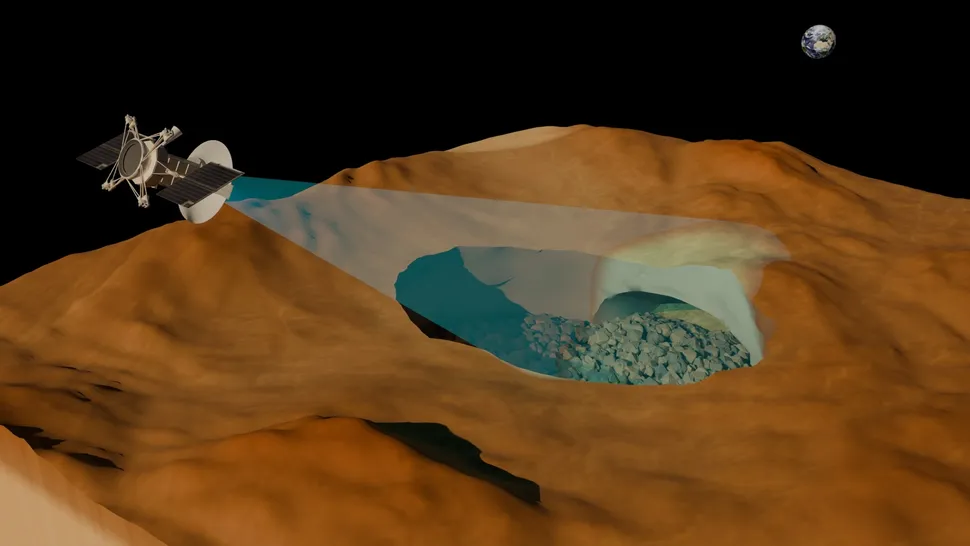
    Scientists studying decades-old radar images from NASA’s Magellan orbiter suggest that Venus may contain a massive underground lava tube carved by ancient volcanic eruptions. The team identified the feature on the western flank of Nyx Mons and published their findings on Feb. 9 in Nature Communications. If confirmed, the structure would be only the second lava tube reported on Venus and would add weight to the idea that the planet is not geologically dead.

    Researchers from the University of Trento, led by Lorenzo Bruzzone, reexamined radar data collected between 1990 and 1992, when the Magellan spacecraft mapped most of Venus through its thick cloud cover. Because dense clouds block visible light, Magellan used radar pulses to measure the planet’s surface and build detailed maps.

    Those maps show long chains of pits across Venus. Scientists have long suspected that some of these depressions mark the collapse of underground lava tubes. On Nyx Mons, the team found a localized surface collapse that produced a radar pattern matching what scientists see when a lava tube roof caves in.

    The data suggest the conduit may extend for several dozen kilometers below the surface, though only part of it can be confirmed with current imagery. The radar signature closely resembles collapsed lava tubes found on the moon and Mars, where similar volcanic processes shaped the terrain.

    “Our knowledge of Venus is still limited, and until now we have never had the opportunity to directly observe processes occurring beneath the surface of Earth’s twin planet,” said Lorenzo Bruzzone in a statement.

    Venus hosts about 1,600 major volcanoes and nearly a million smaller ones. For decades, many researchers viewed the planet as largely inactive today. However, recent studies have pointed to possible ongoing volcanic activity. The new finding adds another piece of evidence that Venus has remained geologically active longer than once believed.

  • A Spectacular Planetary Parade will Light Up Evening Sky on February 28, Don’t Miss!

    A Spectacular Planetary Parade will Light Up Evening Sky on February 28, Don’t Miss!

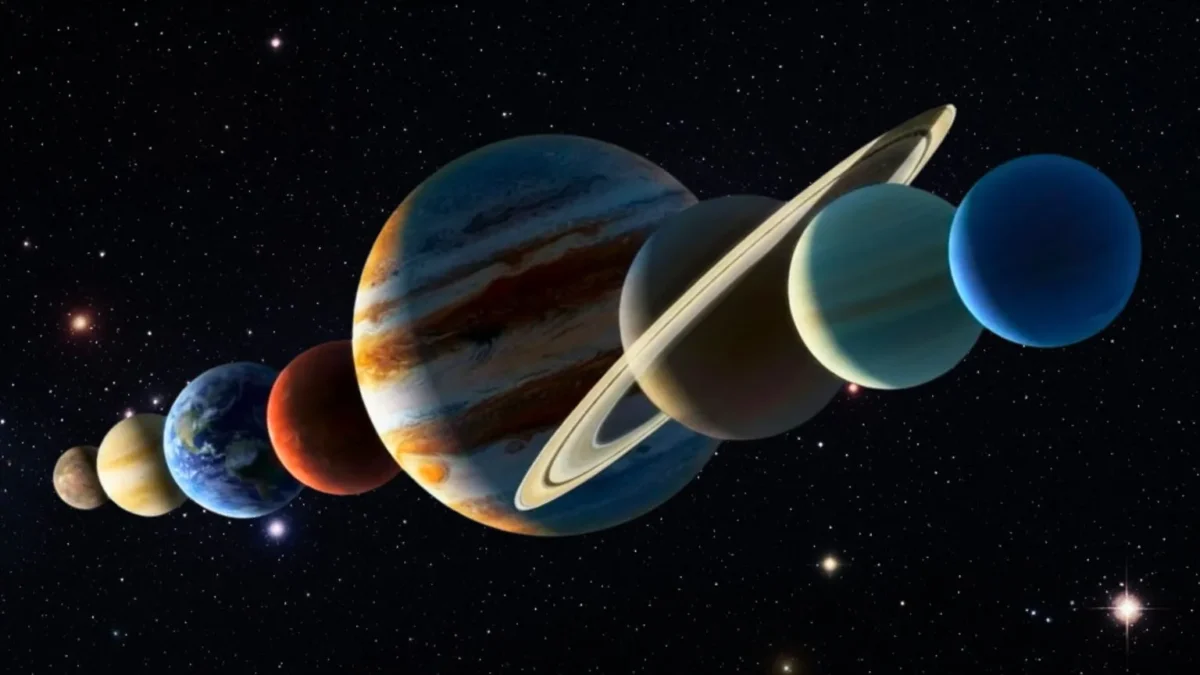
    On February 28, 2026, a rare planetary alignment will be visible in the evening sky. Mercury, Venus, Saturn, Jupiter, Uranus, and Neptune will appear in the sky after sunset. Four of them will be visible to the naked eye, making this one of the most accessible multi-planet events in recent years.

    The best time to observe the alignment is about 30 minutes after local sunset. Mercury, Venus, Saturn, and Neptune will appear low in the western sky, so a clear view of the horizon is essential. Jupiter will be higher in the southeastern sky and remain visible for most of the night. Uranus will sit higher than the western planets but will require binoculars to see.

    Planetary Parade as seen from the Southern Hemisphere.
    Planetary Parade, February 28, 2026, as seen from the Northern Hemisphere.
    Planetary Parade as seen from the Southern Hemisphere.
    Planetary Parade, February 28, 2026, as seen from the Southern Hemisphere.

    The planets appear grouped because they orbit the Sun along nearly the same plane. From Earth, this causes them to follow a common path across the sky called the ecliptic. On this date, the planets will form a gentle arc stretching from the western horizon toward the southeast.

    Mercury and Venus will set first, followed by Saturn and Neptune. Uranus will remain visible a bit longer, while Jupiter will continue shining prominently throughout the night. For the best view, begin observing as soon as the sky becomes dark and choose a location with minimal light pollution. A bright Moon near Jupiter may make the fainter planets more difficult to spot.

    For more details, see Starwalk.

  • New sungrazing Comet C/2026 A1 could put on a rare daylight show in April

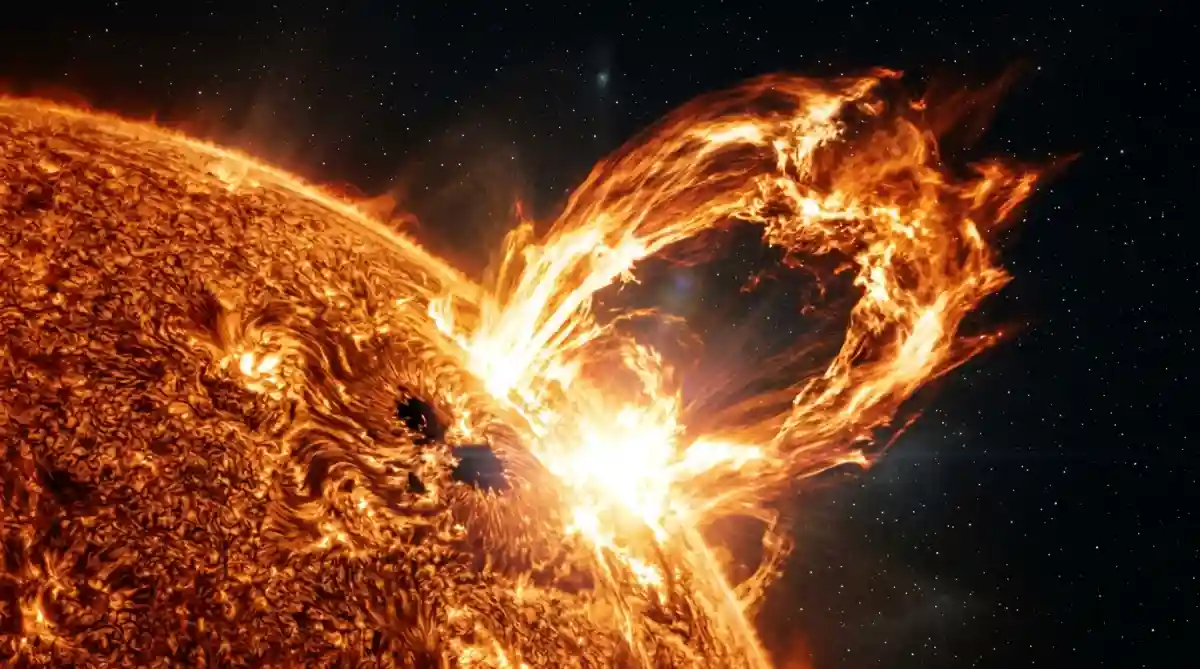
    New sungrazing Comet C/2026 A1 could put on a rare daylight show in April

    Astronomers are closely tracking a newly found comet that could become a rare and striking sight near the Sun in early April. The comet, named C/2026 A1 (MAPS), was discovered on January 13 by four amateur astronomers using a remote telescope in Chile’s Atacama Desert. Early observations show it is heading straight toward an extremely close pass by the Sun, where it will skim just 120,000 kilometers above the solar surface.

    The comet is a part of the Kreutz family of sungrazing comets. These comets follow long, stretched paths that bring them dangerously close to the Sun. Most of them break apart before or during that encounter. A few survive long enough to brighten sharply, sometimes becoming visible in daylight. Some of the brightest comets ever recorded came from this same group.

    The Kreutz family began with a giant comet that broke apart more than 2,000 years ago. Since then, its fragments have returned in waves, producing famous comets seen across history. The Great Comet of 1882 became brighter than the full Moon. In 1965, Comet Ikeya Seki reached similar fame after surviving a close solar pass and shining in daytime skies.

    Comet 3I/ATLAS also followed a steep path toward the inner solar system and drew attention for its unusual orbit and brightness changes.

    What makes comet MAPS stand out is how early it was spotted. At the time of discovery, it was farther from the Sun than any other known sungrazer detected at such a stage. That early detection hints that it may be larger than most of the small fragments usually seen. Recent observations show the comet steadily growing brighter, which suggests it is still holding together.

    As the comet approaches the Sun, intense heat and gravity will put enormous stress on its icy core. It may break apart before reaching its closest point, known as perihelion. If it does survive, it could become visible near the Sun in early April and then move into the evening sky days later.

    Viewers in the southern hemisphere will likely have the best chance to see it. There is also a chance the comet could briefly brighten if it breaks apart near the Sun, which could create a short but dramatic display. If it fails, spacecraft such as NASA’s SOHO observatory will still capture detailed images of its final moments.

  • Hubble Captures Rare Sun-Earth Alignment of Interstellar Object 3I/ATLAS in Striking Detail

    Hubble Captures Rare Sun-Earth Alignment of Interstellar Object 3I/ATLAS in Striking Detail

    The Hubble Space Telescope has captured rare images of the interstellar object 3I/ATLAS during a brief alignment with the Sun and Earth on January 22, 2026. The observations, led by Harvard astrophysicist Avi Loeb and collaborators, show unusual jet activity and a bright anti-tail aimed almost directly toward Earth.

    Hubble recorded six exposures, each lasting 170 seconds, over a 33-minute window using its Wide Field Camera 3. The images released by the Space Telescope Science Institute (STSCI) reveal a glowing cloud around 3I/ATLAS stretched roughly 100,000 kilometers toward the Sun. That distance is about ten times Earth’s diameter. The brightness rose sharply during the alignment because observers on Earth viewed the object nearly from the direction of the Sun, similar to seeing a full moon.

    Loeb and his co-author Mauro Barbieri had predicted this “full moon phase” of the comet in advance. They calculated that Earth would fall within just 0.012 radians of the Sun-object line, an extremely tight angle by astronomical standards. That setup caused sunlight to scatter off material released from the object, boosting its apparent glow in a way that depends on the size and makeup of the particles involved.

    Further image processing revealed even more unusual features. Using a rotational gradient filter, Loeb’s collaborator Toni Scarmato removed the smooth background glow around the nucleus. What remained was a clear system of four jets. One jet formed a bright anti-tail pointing almost straight toward the Sun and Earth. Three smaller jets appeared around the nucleus, spaced evenly by 120 degrees. One of those jets looked faint, likely because of how it faced Earth at the time.

    In a separate study, Loeb and Scarmato found that the jet system does not stay fixed. It wobbles around the rotation axis every 7.2 hours by about 20 degrees. That motion makes a perfect alignment with Earth rare and brief, which explains why the anti-tail did not vanish into the surrounding glow.

    “We still do not know the nature of the anti-tail that allows it to penetrate hundreds of thousands of kilometers through the solar wind and radiation without being deflected away from the Sun,” said Avi Loeb on Medium.

    As researchers continue their analysis, 3I/ATLAS is reinforcing its status as one of the most unusual interstellar objects ever observed passing through our solar system.

  • Astronomers Capture the Clearest Picture of the Dark Universe: ‘Insight into some of the Universe’s biggest mysteries’

    Astronomers Capture the Clearest Picture of the Dark Universe: ‘Insight into some of the Universe’s biggest mysteries’

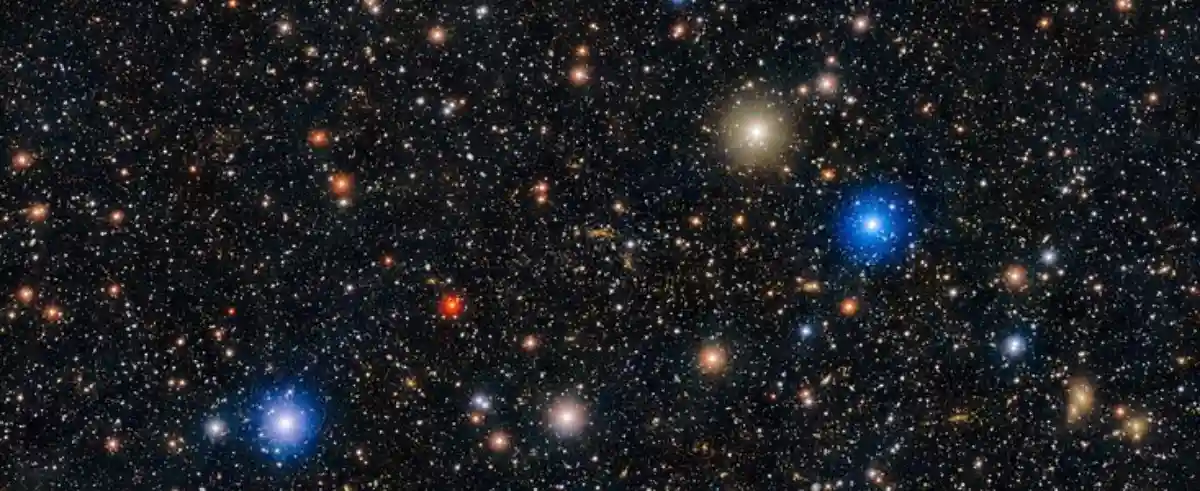
    Astronomers have released the most detailed results yet from the Dark Energy Survey (DES), offering a clearer picture of how the universe has expanded and formed structure over billions of years. The findings, published on January 26, 2026, draw on the survey’s full six-year dataset and rely on observations of about 140 million distant galaxies spread across 5,000 square degrees of sky.

    This breakthrough analysis draws from six years of data gathered by the Dark Energy Camera (DECam), a 570-megapixel instrument mounted on the U.S. National Science Foundation Víctor M. Blanco 4-meter telescope in Chile. The dataset includes 758 nights of observations conducted by the DES Collaboration from 2013 to 2019, covering one-eighth of the sky and capturing details from 669 million galaxies billions of light-years away.

    “These results from the Dark Energy Survey shine new light on our understanding of the Universe and its expansion,” said Regina Rameika, Associate Director for the Office of High Energy Physics in the DOE’s Office of Science (DOE/SC).

    The Dark Energy Survey began more than a decade ago with a clear goal: test whether the standard model of the universe can fully explain how galaxies grow and spread apart. Scientists used a telescope in Chile equipped with a powerful camera to track galaxy positions, shapes, and subtle distortions caused by gravity. Together, these signals reveal how matter clusters and how fast cosmic structures form.

    Using three linked measurements: galaxy clustering, light bending by gravity, and the overlap between the two, the team measured the overall strength of cosmic structure growth at 0.789, with an error of about 1.5 percent. They also found that matter accounts for roughly 33 percent of the universe. Both numbers improve earlier results from the survey’s first three years by about a factor of two.

    Growth rates inferred from nearby galaxies run slightly lower than those predicted from early-universe data. The difference stands at about 1.8 standard deviations overall and rises to 2.6 in certain measures. When combined with other probes such as exploding stars, early sound wave patterns, and galaxy groups, the gap reaches 2.8. Scientists stress that this level does not point to a failure of the standard model.

    Adding results from other surveys tightened the picture further. With extra data, the team achieved about 0.8 percent precision on structure growth and 1 percent on the matter share. In a model that allows dark energy to change over time, they measured its pressure-to-density ratio at minus 0.98, consistent with a steady value.

    Researchers credit the progress to better instruments, improved data methods, and detailed simulations that match real skies more closely. Future observatories, including the Rubin Observatory, will push these tests even harder. For now, the universe continues to follow the rules astronomers expect, but small tensions remain on the radar. In science, even quiet results can set the stage for bigger surprises later.

  • NASA’s Voyager 1 will soon reach one light-day Distance from Earth breaking it’s own Record!

    NASA’s Voyager 1 will soon reach one light-day Distance from Earth breaking it’s own Record!

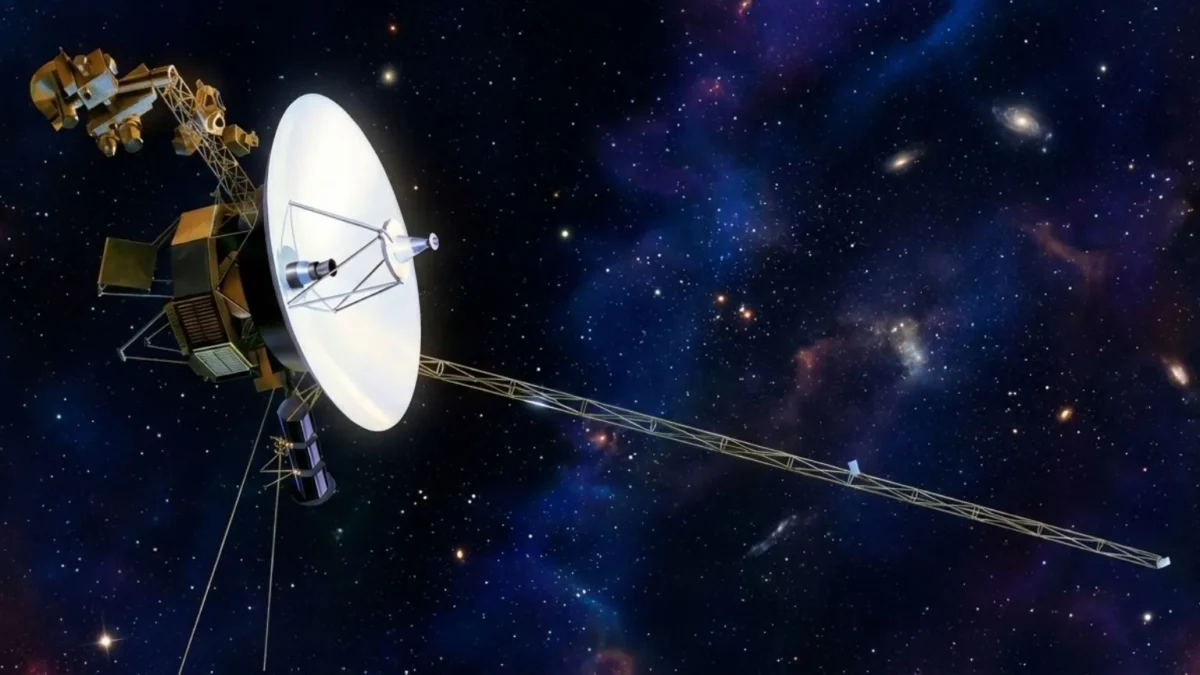
    Voyager 1, NASA’s longest-running spacecraft, will reach a distance of one light-day from Earth in November 2026, breaking its own record of the farthest human-made object ever! At that range, a radio signal from Earth will take a full 24 hours to reach the probe. Every command will require patience, planning, and trust in hardware launched nearly five decades ago.

    A light-day is the distance light travels in 24 hours, about 26 billion kilometers. The Moon sits just over one light-second away, while sunlight reaches Earth in eight minutes. Voyager 1 will become the first spacecraft to cross this threshold, placing it far beyond the planets and deep into interstellar space.

    NASA launched Voyager 1 in 1977 to study the outer solar system. The mission delivered close-up views of Jupiter and Saturn, revealed active volcanoes on Jupiter’s moon Io, and documented Saturn’s rings in sharp detail. After finishing its planned flybys, the spacecraft continued outward. In 2012, scientists confirmed it had exited the Sun’s domain and entered interstellar space.

    By early 2026, Voyager 1 is about 170 astronomical units from Earth, or roughly 25.4 billion kilometers away. It travels at nearly 61,000 kilometers per hour and increases its distance by more than 500 million kilometers each year. Communication delays already stretch close to a full day for a round trip.

    Power is the mission’s main constraint. Voyager 1 relies on a plutonium-based generator that now produces about half the energy it did at launch. Even so, engineers at NASA’s Jet Propulsion Laboratory (JPL) keep the spacecraft operating. In 2024, the team resolved a computer problem that briefly threatened the mission.

    From its remote location, Voyager 1 studies cosmic radiation and magnetic fields between stars. The data shows the boundary around our solar system allows more outside particles to pass through than expected. This work helps scientists better judge how the Sun interacts with the wider galaxy.

    Voyager 1 also carries the Golden Record, a gold-plated disc filled with sounds, images, and greetings from Earth. Long after its instruments fall silent, the spacecraft will continue drifting through space, carrying a small snapshot of human life far from home.

  • Meteor Shower Calendar 2026: Major Meteor Showers and the Best Nights to See Them

    Meteor Shower Calendar 2026: Major Meteor Showers and the Best Nights to See Them

    From the Quadrantids in January to the Geminids in December, this guide covers all major meteor showers in 2026 with their active periods, peak dates, and viewing conditions. Whether you are a beginner or an experienced observer, understanding when and where to look can significantly improve your chances of seeing meteors under dark skies.

    Here is a complete list of the major meteor showers in 2026, including their active periods and peak dates.

    Meteor Shower Peak Dates 2026.
    Meteor Shower Peak Dates 2026

    Quadrantids Meteor Shower

    Active: December 28, 2025-January 12, 2026
    Peak: January 2-3, 2026

    The Quadrantids are one of the strongest meteor showers, but their peak is very short. At maximum activity, they can produce a high number of fast-moving meteors. Clear skies during the peak night are crucial, as missing the peak window can significantly reduce visible activity.

    Best viewing time: Pre-dawn hours
    Best hemisphere: Northern Hemisphere

    Lyrids Meteor Shower

    Active: April 14-April 30, 2026
    Peak: April 21-22, 2026

    The Lyrids are among the oldest recorded meteor showers in human history. They are known for occasional bright meteors and short bursts of increased activity. While not the most intense shower, the Lyrids remain a reliable springtime event for stargazers.

    Best viewing time: Late night to early morning
    Best hemisphere: Northern Hemisphere

    Eta Aquariids Meteor Shower

    Active: April 19-May 28, 2026
    Peak: May 5-6, 2026

    Associated with Halley’s Comet, the Eta Aquariids are famous for fast, long-lasting meteors that often leave glowing trails. This meteor shower is especially favorable for the Southern Hemisphere, though observers in the Northern Hemisphere can still catch meteors before sunrise.

    Best viewing time: Pre-dawn hours
    Best hemisphere: Southern Hemisphere

    Alpha Capricornids Meteor Shower

    Active: July 3-August 15, 2026
    Peak: July 30-31, 2026

    Alpha Capricornids produce fewer meteors compared to other meteor showers in 2026, but they are well known for slow-moving fireballs. Even with low meteor counts, the brightness of individual meteors makes this shower worth watching.

    Best viewing time: After midnight
    Best hemisphere: Both hemispheres

    Southern Delta Aquariids Meteor Shower

    Active: July 12-August 23, 2026
    Peak: July 30-31, 2026

    This long-lasting meteor shower overlaps with the Alpha Capricornids, increasing overall meteor activity in late July. The Southern Delta Aquariids typically produce faint meteors, making dark sky conditions essential for the best experience.

    Best viewing time: Midnight to dawn
    Best hemisphere: Southern Hemisphere

    Perseids Meteor Shower

    Active: July 11-August 24, 2026
    Peak: August 12-13, 2026

    The Perseids are the most popular and widely observed meteor shower. Known for bright, frequent meteors, they are ideal for beginners and casual stargazers. Perseids are easy to observe and often produce impressive fireballs.

    Best viewing time: After midnight
    Best hemisphere: Northern Hemisphere

    Orionids Meteor Shower

    Active: October 2-November 7, 2026
    Peak: October 21-22, 2026

    Another meteor shower linked to Halley’s Comet, the Orionids are known for fast meteors and occasional bright fireballs. Autumn nights provide comfortable viewing conditions, making this a favorite among experienced observers.

    Best viewing time: Pre-dawn hours
    Best hemisphere: Both hemispheres

    Southern Taurids Meteor Shower

    Active: September 20-November 20, 2026
    Peak: November 4-5, 2026

    The Southern Taurids are known for slow-moving meteors and a higher chance of bright fireballs. Activity is spread out over several weeks, allowing observers multiple opportunities to catch meteors without relying on a single peak night.

    Best viewing time: Late evening
    Best hemisphere: Both hemispheres

    Northern Taurids Meteor Shower

    Active: October 20-December 10, 2026
    Peak: November 11-12, 2026

    This meteor shower overlaps with the Southern Taurids, creating an extended period of Taurid activity in late autumn. The combined effect often results in enhanced fireball activity.

    Best viewing time: Late evening
    Best hemisphere: Northern Hemisphere

    Leonids Meteor Shower

    Active: November 6-November 30, 2026
    Peak: November 16-17, 2026

    The Leonids are famous for producing meteor storms in some years. Although 2026 is not expected to be a storm year, the Leonids still offer fast and bright meteors that make them worth observing.

    Best viewing time: Pre-dawn hours
    Best hemisphere: Both hemispheres

    Geminids Meteor Shower

    Active: December 4-December 17, 2026
    Peak: December 13-14, 2026

    The Geminids are considered the most reliable and intense meteor shower 2026 will deliver. They produce bright, colorful meteors and are often visible throughout the night, making them the highlight of the year for many stargazers.

    Best viewing time: Late evening to early morning
    Best hemisphere: Both hemispheres

    Ursids Meteor Shower

    Active: December 17-December 26, 2026
    Peak: December 21-22, 2026

    Closing out the year, the Ursids offer a modest but steady display around the winter solstice. While less intense than the Geminids, they are still worth watching from dark locations.

    Best viewing time: Pre-dawn hours
    Best hemisphere: Northern Hemisphere

    Check out the Astronomical Calendar 2026 for more events.

    Best Tips to Watch Meteor Showers in 2026

    • Choose a dark location away from city lights
    • Allow at least 20 minutes for your eyes to adapt to the dark
    • Avoid using telescopes or binoculars
    • Check moon phases before peak nights
    • Watch after midnight or before dawn for higher rates

    Frequently Asked Questions

    What is the best meteor shower to watch in 2026?

    The Geminids and Perseids are the most reliable and intense meteor showers in 2026.

    Can meteor showers be seen with the naked eye?

    Yes, all major meteor showers can be observed without any equipment.

    What time is best to watch meteor showers?

    Late night to pre-dawn hours usually offer the highest activity.

    Do moon phases affect meteor visibility?

    Yes, bright moonlight can significantly reduce the number of visible meteors. Check the moon phase today before planning your observations.

  • Astronomical Calendar 2026: All the Major Astronomical Events You Can See in 2026

    Astronomical Calendar 2026: All the Major Astronomical Events You Can See in 2026

    Here’s a complete list of astronomical events in 2026 month by month.

    January 2026

    • January 3 – Full Moon (Supermoon)
    • January 3-4 – Quadrantids Meteor Shower
    • January 10 – Jupiter at Opposition
    • January 18 – New Moon

    February 2026

    • February 1 – Full Moon
    • February 17 – New Moon
    • February 17 – Annular Solar Eclipse
    • February 19 – Mercury at Greatest Eastern Elongation

    March 2026

    • March 3 – Full Moon
    • March 3 – Total Lunar Eclipse
    • March 19 – New Moon
    • March 20 – March Equinox

    April 2026

    • April 2 – Full Moon
    • April 3 – Mercury at Greatest Western Elongation
    • April 17 – New Moon
    • April 22-23 – Lyrids Meteor Shower

    May 2026

    • May 1 – Full Moon
    • May 6-7 – Eta Aquarids Meteor Shower
    • May 16 – New Moon
    • May 31 – Full Moon (Blue Moon)

    June 2026

    • June 15 – New Moon
    • June 15 – Mercury at Greatest Eastern Elongation
    • June 21 – June Solstice
    • June 29 – Full Moon

    July 2026

    • July 14 – New Moon
    • July 28-29 – Delta Aquarids Meteor Shower
    • July 29 – Full Moon

    August 2026

    • August 2 – Mercury at Greatest Western Elongation
    • August 12 – New Moon
    • August 12 – Total Solar Eclipse
    • August 12-13 – Perseids Meteor Shower
    • August 15 – Venus at Greatest Eastern Elongation
    • August 28 – Full Moon
    • August 28 – Partial Lunar Eclipse

    September 2026

    • September 11 – New Moon
    • September 23 – September Equinox
    • September 25 – Neptune at Opposition
    • September 26 – Full Moon (Harvest Moon)

    October 2026

    • October 4 – Saturn at Opposition
    • October 7 – Draconids Meteor Shower
    • October 10 – New Moon
    • October 12 – Mercury at Greatest Eastern Elongation
    • October 21-22 – Orionids Meteor Shower
    • October 26 – Full Moon

    November 2026

    • November 4-5 – Taurids Meteor Shower
    • November 9 – New Moon
    • November 17-18 – Leonids Meteor Shower
    • November 20 – Mercury at Greatest Western Elongation
    • November 24 – Full Moon (Supermoon)
    • November 25 – Uranus at Opposition

    December 2026

    • December 9 – New Moon
    • December 13-14 – Geminids Meteor Shower
    • December 21 – December Solstice
    • December 21-22 – Ursids Meteor Shower
    • December 23 – Full Moon (Supermoon)

    Check out the Meteor Shower Calendar 2026.