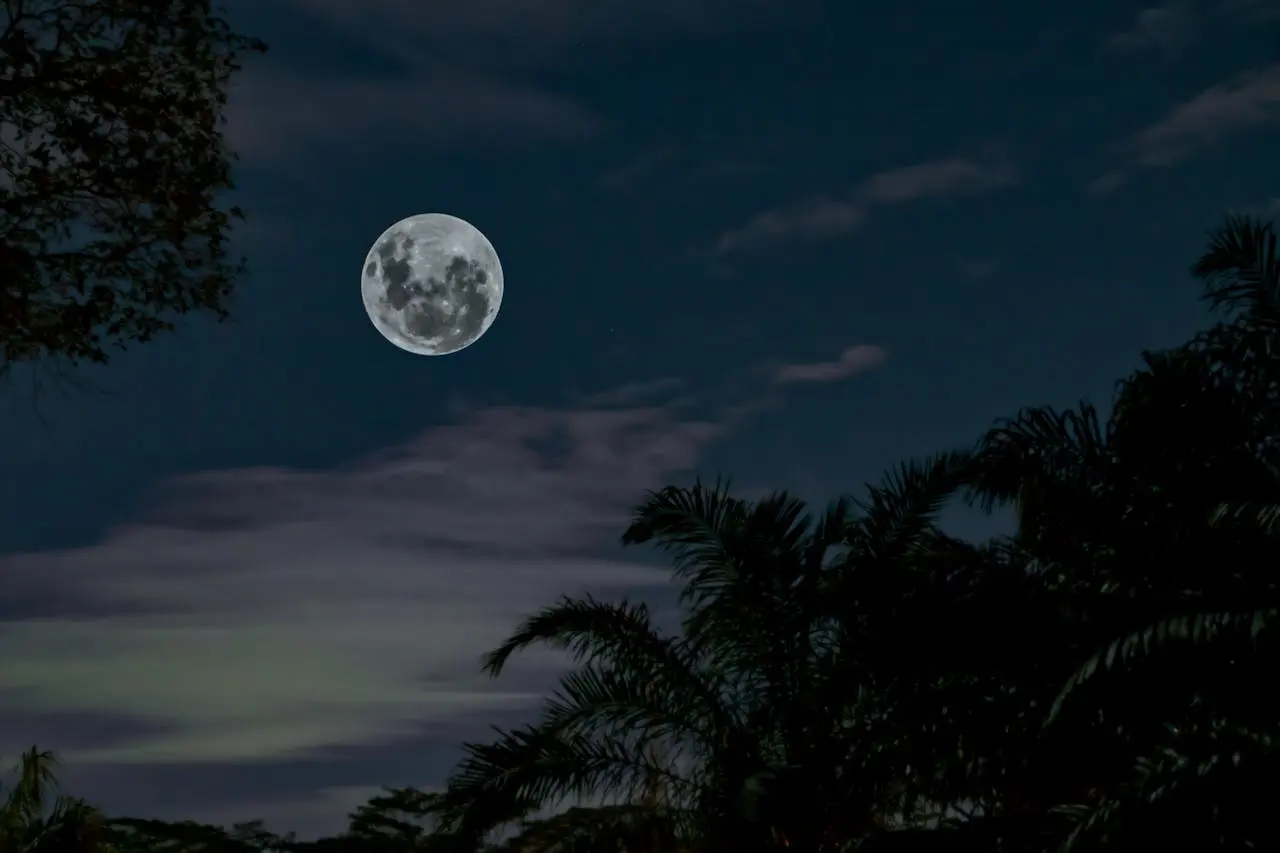
Category: Astronomy

Look deeper into the science of the stars. This section explores celestial events, cosmic phenomena, and the latest research that helps us understand how the universe came to be and where it’s headed.

  • Rare Super Blue Moon to Light Up the Sky on August 19, First Since 2018

    Rare Super Blue Moon to Light Up the Sky on August 19, First Since 2018

    On August 19, 2024, people across the world will be able to see a rare Super Blue Moon, a celestial event that combines two unusual lunar phenomena in one night. The Moon will appear larger and brighter than usual because it reaches its closest point to Earth while also marking the second full moon of the month. This combination has not been seen since 2018 and will not return until 2032.

    A supermoon occurs when the Moon is at perigee (the nearest point in its orbit to Earth) while also being full. At this stage, the Moon looks up to 30 percent brighter and slightly bigger to the naked eye, although the size difference is subtle for most observers.

    The term “blue moon” refers to the second full moon in a single calendar month. Despite the name, the Moon does not change color. Blue moons appear once every two to three years, making them uncommon. But when a blue moon also happens to be a supermoon, the result is a far rarer event.

    The peak of the full moon will take place during daylight hours in some locations, but viewers everywhere will be able to see it after sunset on August 19. The best views are expected at moonrise and moonset, when the Moon is close to the horizon and appears larger against landmarks.

    No special equipment is needed to see the Super Blue Moon. A clear view of the sky is enough, though binoculars or a telescope can reveal greater detail on the lunar surface. Weather conditions will play a major role, and cloud cover may block the view. For those unable to see it directly, several observatories and space organizations are expected to stream the event online.

  • Mars and Jupiter Conjunction to Light Up the Morning Sky on Wednesday; Don’t Miss It

    Mars and Jupiter Conjunction to Light Up the Morning Sky on Wednesday; Don’t Miss It

    Stargazers across India and the Northern Hemisphere are in for a rare treat on Wednesday, August 14. The planets Mars and Jupiter will appear incredibly close together in the eastern sky before sunrise, an event known as a planetary conjunction. This celestial pairing will be a spectacular sight for early risers and won’t happen again until 2033.

    The two planets have been visible in the eastern sky all month, but they will be at their closest point on Wednesday morning. According to NASA, they will appear only about one-third of a degree apart, which is less than the width of a full moon. Jupiter, the larger of the two, will shine brightly, while Mars will appear as a reddish dot nearby.

    To see this stunning alignment, set your alarm and head outside a few hours before sunrise on Wednesday. The planets will be visible to the naked eye, rising above the eastern horizon around 1:30 a.m. IST, positioned in front of the constellation Taurus the Bull.

    While you can enjoy the view without any equipment, a pair of binoculars or a telescope will give you an even better look. With a little magnification, you might even be able to spot some of Jupiter’s largest moons, adding to the spectacle.

    Experts at EarthSky.org recommend finding a location with a clear view of the eastern horizon and minimal light pollution for the best viewing experience. Make sure to check the weather forecast for your area, as clear skies are essential.

    This event is part of a series of astronomical events this month, including the Perseid meteor shower, which peaked on August 12-13.

  • Tsuchinshan-ATLAS becomes the brightest visible comet of the 21st century

    Tsuchinshan-ATLAS becomes the brightest visible comet of the 21st century

    Comet Tsuchinshan-ATLAS in the night sky captured by a telescope.
    C/2023 A3 (Tsuchinshan-ATLAS) on April 26, 2024, as seen through an 8-inch f/4 reflector telescope. Image credit: Wikimedia Commons

    Comet C/2023 A3, known as Tsuchinshan-ATLAS, became visible from late September to mid-October 2024, with peak brightness in early October shortly after sunset. It was observed from both the northern and southern hemispheres before fading from view by October 24. The comet stood out for its brightness, size, and extremely long 80,000-year orbit, last passing the inner solar system when Neanderthals lived on Earth.

    Discovery of comet C/2023 A3

    Purple Mountain Observatory
    Purple Mountain Observatory. Image Credit: Wikimedia Commons

    The comet was discovered on January 9, 2023, by China’s Purple Mountain Observatory (also called Tsuchinshan) and the Asteroid Terrestrial-impact Last Alert System (ATLAS) in South Africa. Tsuchinshan has a long history in astronomy, while ATLAS is a modern automated system for detecting near-Earth objects.

    What makes Comet Tsuchinshan-ATLAS unique?

    • It has an orbital period of about 80,000 years.
    • Its nucleus size and composition contributed to exceptional brightness, at times rivaling Venus and Sirius.
    • It was discovered independently by two observatories, giving it a dual name.

    Orbital path

    C/2023 A3 follows a vast elliptical path that takes it far into the outer solar system before returning close to the Sun and planets. Its last visit to the inner solar system was tens of thousands of years ago.

    Physical characteristics

    The comet’s nucleus contains ice, dust, and rock from the early solar system. The head of the comet is about 130,000 miles wide, and its tail can stretch up to 18 million miles. As it nears the Sun, heat turns its ice into gas and dust, creating a bright coma and tail pushed outward by the solar wind.

    Technical aspects of comet Tsuchinshan-ATLAS

    Viewing times and locations

    The comet reached its closest point to the Sun (perihelion) on September 27, 2024, and its closest point to Earth on October 12, 2024, at a distance of about 44 million miles. Observers in the northern hemisphere enjoyed the best views as it appeared higher in the sky.

    How to photograph Tsuchinshan-ATLAS

    Photographing the comet requires a camera with manual settings, a tripod, and a remote shutter or timer to avoid camera shake. Longer exposures capture its motion and detail, and binoculars or a telescope improve clarity.

    Previous comet sightings

    Bright comets like Halley and Hale-Bopp have been recorded throughout history. Today, astronomers use ground-based telescopes and space probes to monitor comets, studying their chemical makeup and behavior in detail.

  • Astronomical calendar 2024: Meteor showers, Eclipse, Conjunctions and more

    Astronomical calendar 2024: Meteor showers, Eclipse, Conjunctions and more

    The universe has always been a source of wonder to mankind, full of mysteries waiting to be discovered. In the year 2023, a spectacular Geminid meteor shower and Comet Nishimura graced us, leaving us in awe and wonder. 2024 promises to bring us even more excitement and astronomical events! With many other stunning phenomena waiting to be discovered. So, let’s look up and get ready for a year full of astronomical wonders.

    Astronomical events 2024

    Meteor showers in 2024

    2024 is an exciting year for stargazers with celestial events including eclipses, meteor showers, and conjunctions.

    Here’s a table that provides a list of some major astronomical events and some valuable information about the events. This Data is calculated using the Stellarium software.

    Note: The peak dates may vary.

    Quadrantids Meteor Shower
    Start Time: Early January
    Peak Time: January 4
    Parent Body: 2003 EH1
    Hourly Rate: 110 meteors/hour

    Alpha Centaurids Meteor Shower
    Start Time: Early February
    Peak Time: February 8
    Parent Body: Unknown
    Hourly Rate: 6 meteors/hour

    Lyrids Meteor Shower
    Start Time: Mid-April
    Peak Time: April 23
    Parent Body: C/1861 G1 (Thatcher)
    Hourly Rate: 18 meteors/hour

    Eta Aquariids Meteor Shower
    Start Time: Early May
    Peak Time: May 6
    Parent Body: 1P/Halley
    Hourly Rate: 50 meteors/hour

    Arietids Meteor Shower
    Start Time: Early June
    Peak Time: June 8
    Parent Body: 1566 Icarus
    Hourly Rate: 30 meteors/hour

    Southern Delta Aquariids Meteor Shower
    Start Time: End of July
    Peak Time: July 30
    Parent Body: 96P/Machholz
    Hourly Rate: 25 meteors/hour

    Alpha Capricornids Meteor Shower
    Start Time: End of July
    Peak Time: July 30
    Parent Body: 169P/NEAT
    Hourly Rate: 5 meteors/hour

    Perseid Meteor Shower
    Start Time: Early August
    Peak Time: August 13
    Parent Body: 109P/Swift-Tuttle
    Hourly Rate: 110 meteors/hour

    Aurigid Meteor Shower
    Start Time: Early September
    Peak Time: September 1
    Parent Body: C/1911 N1 (Kiess)
    Hourly Rate: 6 meteors/hour

    Draconids Meteor Shower
    Start Time: Early October
    Peak Time: October 9
    Parent Body: 21P/Giacobini-Zinner
    Hourly Rate: 10 meteors/hour

    Southern Taurids Meteor Shower
    Start Time: Early October
    Peak Time: October 10
    Parent Body: 2P/Encke
    Hourly Rate: 5 meteors/hour

    Orionids Meteor Shower
    Start Time: Mid-October
    Peak Time: October 22
    Parent Body: 1P/Halley
    Hourly Rate: 20 meteors/hour

    Northern Taurids Meteor Shower
    Start Time: Early November
    Peak Time: November 13
    Parent Body: 2P/Encke
    Hourly Rate: 5 meteors/hour

    Leonid Meteor Shower
    Start Time: Mid-November
    Peak Time: November 18
    Parent Body: 55P/Tempel-Tuttle
    Hourly Rate: 15 meteors/hour

    Geminid Meteor Shower
    Start Time: Early December
    Peak Time: December 14
    Parent Body: Asteroid 3200 Phaethon
    Hourly Rate: 140 meteors/hour

    Ursid Meteor Shower
    Start Time: Mid-December
    Peak Time: December 23
    Parent Body: 8P/Tuttle
    Hourly Rate: 10 meteors/hour

    Eclipse in 2024

    1. Penumbral Lunar Eclipse
    Time: March 25
    Visibility: Eastern Europe, Eastern Africa, Asia, and Western Australia

    2. Total Solar Eclipse
    Time: April 9
    Visibility: Crossing from Mexico, through the United States from Texas to Maine, and up through Canada

    3. Partial Lunar Eclipse
    Time: September 18
    Visibility: Most of North America and South America, Europe, and Africa

    Conjunctions in 2024

    DateConjunction
    7 JanuaryMoon and Venus
    11 JanuaryMoon and Jupiter
    30 JanuaryMoon and Saturn
    7 FebruaryMoon and Venus
    11 FebruaryMoon and Jupiter
    14 FebruaryVenus and Neptune
    27 FebruaryMoon and Saturn
    5 MarchVenus, Mars, and Neptune
    8 MarchMoon and Venus
    10 MarchMoon and Jupiter
    25 MarchMoon and Saturn
    7 AprilMoon and Venus
    8 AprilMoon and Jupiter
    15 AprilVenus, Mars, and Jupiter
    24 AprilMoon and Saturn
    6 MayMoon and Venus
    7 MayMoon and Jupiter
    23 MayMoon and Saturn
    5 JuneMoon and Venus
    5 JuneMoon and Jupiter
    14 JuneVenus, Mercury, and Moon
    21 JuneMoon and Saturn
    4 JulyMoon and Jupiter
    5 JulyMoon and Venus
    20 JulyMoon and Saturn
    3 AugustMoon and Venus
    4 AugustMoon and Jupiter
    14 AugustMercury and Mars
    18 AugustMoon and Saturn
    2 SeptemberMoon and Venus
    2 SeptemberMoon and Jupiter
    16 SeptemberMoon and Saturn
    1 OctoberMoon and Jupiter
    2 OctoberMoon and Venus
    10 OctoberVenus, Mercury, and Moon
    16 OctoberMoon and Saturn
    1 NovemberMoon and Venus
    2 NovemberMoon and Jupiter
    14 NovemberMoon and Saturn
    1 DecemberMoon and Venus
    2 DecemberMoon and Jupiter
    13 DecemberMoon and Saturn
    30 DecemberVenus, Mars, and Saturn

    Necessary equipment for stargazing

    Here’s a list of essential stargazing equipment for night and daytime observations

    • Binoculars
    • Telescope
    • Star Maps or Sky Atlases
    • Red Flashlight
    • Sturdy Tripod
    • Finder Scope
    • Observation Chair
    • Planisphere
    • Warm Clothing and Blanket
    • Notebook and Pen
    • Smartphone with Astronomy Apps
    • Lens and Filter Kit
    • Thermos with Hot Beverage
    • Insect Repellent
    • Power Supply
    • Weather App
    • Camera with Adapter (optional)
    • Observing Logbook
    • Astronomy Books and Guides
    • Groundsheet
    • Eclipse glasses
    • Solar filters for your camera and telescope