Category: Astronomy

Look deeper into the science of the stars. This section explores celestial events, cosmic phenomena, and the latest research that helps us understand how the universe came to be and where it’s headed.

  • Astronomical Events in April 2025: Micro Pink moon, Lyrids meteor shower and more!

    Astronomical Events in April 2025: Micro Pink moon, Lyrids meteor shower and more!

    April 2025 brings exciting astronomical events that you won’t want to miss! From the micro pink moon to the Lyrid meteor shower, here are the details about the key astronomical events to look out for in April 2025.

    Astronomical EventDate
    Micro Pink MoonApril 13
    Mercury at Greatest Elongation WestApril 21
    Lyrid Meteor ShowerApril 22-23

    Micro Pink Moon

    The month begins with the Micro Pink Moon, a full moon that occurs on April 13. This event is named after the pink moss phlox, an early spring wildflower that blooms in North America, according to the farmer’s almanac. The term “micro” refers to the moon’s position at its farthest point from Earth, known as apogee, making it appear smaller and less radiant compared to a supermoon. Despite its name, the moon does not turn pink; it will still be a beautiful sight in the evening sky.

    Mercury at Greatest Elongation West

    On April 21, Mercury will reach its greatest elongation westward, marking a rare opportunity to observe this elusive planet. This event occurs when Mercury is at its most distant point from the Sun in the dawn sky, making it visible just before sunrise. For stargazers, this is a chance to catch Mercury low on the eastern horizon, requiring an early morning observation session.

    Lyrid Meteor Shower

    One of the highlights of April is the Lyrid meteor shower, which peaks on the nights of April 22-23. This ancient meteor shower is known for its spectacular display of shooting stars. Although the moon will be about 40% full during this period (Moon phase calculator), potentially hindering optimal viewing, the best time to observe the Lyrids may be just after sunset when the moon is still low in the sky.

    The Lyrid meteor shower is one of the oldest recorded, offering a thrilling experience for those who venture out to witness it. You can add the Lyrids and many other meteor showers to your calendar by referencing the meteor shower calendar.

  • Partial Solar Eclipse March 2025: Canada, USA, UK, Russia, Greenland, and Norway

    Partial Solar Eclipse March 2025: Canada, USA, UK, Russia, Greenland, and Norway

    If you missed the incredible blood moon lunar eclipse on March 14, don’t worry! You’ll have another chance to witness a partial solar eclipse on March 29, 2025. This partial solar eclipse will be visible in Europe, North Asia, North and West Africa, much of North America, South America, and the Atlantic and Arctic regions. You won’t need a telescope or binoculars to watch this eclipse.

    However, it is important to protect your eyes by using solar eclipse glasses, as viewing the eclipse without proper protection can cause serious eye damage and even permanent blindness. If your eclipse glasses are damaged or old, consider donating them and getting new ones!

    The eclipse will be best viewed in Canada. Here are details such as obstruction, magnitude, duration, and timing for some of the best places in Canada to watch the eclipse.

    Salluit, Canada

    • Obscuration: 93.07%
    • Magnitude: 0.9375
    • Duration: 1h 48m 5s
    • Partial Eclipse Begins: Sun below horizon
    • Sunrise: 10:32:55 GMT
    • Maximum Eclipse: 10:48:56 GMT
    • Partial Eclipse Ends: 11:44:03 GMT

    Labrador City, Canada

    • Obscuration: 90.32%
    • Magnitude: 0.9156
    • Duration: 1h 49m 7s
    • Partial Eclipse Begins: Sun below horizon
    • Sunrise: 11:07:55 GMT
    • Maximum Eclipse: 11:31:58 GMT
    • Partial Eclipse Ends: 12:27:58 GMT

    Peak Island, Canada

    • Obscuration: 90.32%
    • Magnitude: 0.9156
    • Duration: 1h 49m 7s
    • Partial Eclipse Begins: Sun below horizon
    • Sunrise: 11:07:55 GMT
    • Maximum Eclipse: 11:31:58 GMT
    • Partial Eclipse Ends: 12:27:58 GMT

    Here are some details about the eclipse for a few locations in Europe, North Asia, and North America.

    London, UK

    • Obscuration: 30.62%
    • Magnitude: 0.4167
    • Duration: 1h 53m 25s
    • Partial Eclipse Begins: 10:07:25 GMT
    • Maximum Eclipse: 11:03:27 GMT
    • Partial Eclipse Ends: 12:00:50 GMT

    Paris, France

    • Obscuration: 23.51%
    • Magnitude: 0.3466
    • Duration: 1h 47m 35s
    • Partial Eclipse Begins: 11:08:46 GMT
    • Maximum Eclipse: 12:01:58 GMT
    • Partial Eclipse Ends: 12:56:21 GMT

    Berlin, Germany

    • Obscuration: 15.27%
    • Magnitude: 0.2574
    • Duration: 1h 34m 50s
    • Partial Eclipse Begins: 11:32:22 GMT
    • Maximum Eclipse: 12:19:41 GMT
    • Partial Eclipse Ends: 13:07:12 GMT

    Saint Petersburg, Russia

    • Obscuration: 12.71%
    • Magnitude: 0.2273
    • Duration: 1h 24m 53s
    • Partial Eclipse Begins: 14:00:17 GMT
    • Maximum Eclipse: 14:43:00 GMT
    • Partial Eclipse Ends: 15:25:10 GMT

    Pechora, Russia

    • Obscuration: 10.36%
    • Magnitude: 0.1978
    • Duration: 1h 13m
    • Partial Eclipse Begins: 14:24:20
    • Maximum Eclipse: 15:01:14
    • Partial Eclipse Ends: 15:37:20

    Pura, Italy

    • Obscuration: 24.86%
    • Magnitude: 0.3611
    • Duration: 1h 25m 56s
    • Partial Eclipse Begins: 18:17:34
    • Maximum Eclipse: 19:00:59
    • Partial Eclipse Ends: 19:43:30

    Oslo, Norway

    • Obscuration: 29.95%
    • Magnitude: 0.4105
    • Duration: 1h 49m 1s
    • Partial Eclipse Begins: 11:30:18
    • Maximum Eclipse: 12:24:42
    • Partial Eclipse Ends: 13:19:19

    Reykjavik, Iceland

    • Obscuration: 67.72%
    • Magnitude: 0.736
    • Duration: 2h 1m 25s
    • Partial Eclipse Begins: 10:05:47
    • Maximum Eclipse: 11:05:35
    • Partial Eclipse Ends: 12:07:12

    New York, USA

    • Obscuration: 21.83%
    • Magnitude: 0.33
    • Duration: 1h 41m 9s
    • Partial Eclipse Begins: Sun below horizon
    • Sunrise: 06:44:01
    • Maximum Eclipse: 06:46:51
    • Partial Eclipse Ends: 07:04:55

    Maine, USA

    • Obscuration: 69.24%
    • Magnitude: 0.7493
    • Duration: 1h 44m 51s
    • Partial Eclipse Begins: Sun below horizon
    • Sunrise: 06:25:12
    • Maximum Eclipse: 06:28:53
    • Partial Eclipse Ends: 07:11:31

    Igloolik, Canada

    • Obscuration: 90.63%
    • Magnitude: 0.9182
    • Duration: 1h 47m 40s
    • Partial Eclipse Begins: Sun below horizon
    • Sunrise: 06:44:09
    • Maximum Eclipse: 07:02:01
    • Partial Eclipse Ends: 07:56:39

    Nuuk, Greenland

    • Obscuration: 87.45%
    • Magnitude: 0.8925
    • Duration: 1h 55m 46s
    • Partial Eclipse Begins: 07:57:16
    • Maximum Eclipse: 08:53:59
    • Partial Eclipse Ends: 09:53:02

    The data provided above was gathered from Time and Date. Please note that the actual timings may vary slightly and visibility depends on the weather conditions. Be sure to check the weather before making plans to observe the eclipse. Don’t forget to wear your eclipse glasses while you view the Eclipse, Happy eclipse watching!

  • Astronomical Events in March 2025: Blood Moon, Lunar Eclipse, and more!

    Astronomical Events in March 2025: Blood Moon, Lunar Eclipse, and more!

    Here are some astronomical events in March 2025 that you won’t want to miss!

    Total Lunar Eclipse (March 14)

    On March 14, a total lunar eclipse will occur, during which the Moon will pass through Earth’s shadow, causing it to appear red—a phenomenon often referred to as a “Blood Moon.” This event will be visible across North and South America, as well as parts of Europe and Africa.

    Partial Solar Eclipse (March 29)

    On March 29, the Moon will cover a portion of the Sun, making it appear as if a “bite” has been taken out of it. This eclipse will be observable from regions including the northeastern United States, eastern Canada, Greenland, Europe, northwest Africa, and northwestern Russia.

    Planetary Conjunctions

    • Mercury and Venus (Early March): In the early evenings of early March, Mercury and Venus will appear close together in the western sky during twilight. This offers a good opportunity to observe the elusive Mercury, using bright Venus as a reference point.

    • Moon and Mars (March 9): On March 9, the Moon will appear near Mars in the night sky, creating a striking visual pairing.

    March Equinox (March 20)

    The March equinox will occur on March 20, marking the beginning of spring in the Northern Hemisphere and autumn in the Southern Hemisphere. On this day, day and night are approximately equal in length.

    These events provide excellent opportunities for both amateur and seasoned astronomers to observe and appreciate the dynamics of our solar system.

  • Planetary Parade 2025: Mark your calendars for this rare spectacle!

    Planetary Parade 2025: Mark your calendars for this rare spectacle!

    Mercury, Venus, Mars, Jupiter, Saturn, Uranus, and Neptune will align in the night sky on February 28, 2025. This rare event, known as a planetary parade, offers a unique chance to observe multiple planets simultaneously.


    What Is a Planetary Parade?

    A planetary parade occurs when several planets appear to line up from Earth’s perspective. While such planetary alignments aren’t uncommon, seeing seven planets together is a special occasion. The next event of this magnitude won’t occur until 2040.


    When and How to See the Alignment?

    The best time to view this alignment is just after sunset on February 28, 2025. Venus, Mars, Jupiter, and Saturn will be visible to the naked eye. Mercury, Uranus, and Neptune will require binoculars or a telescope. For optimal viewing, find a location with a clear horizon and minimal light pollution.


    Tips for Observing the Event

    • Choose a Dark Spot: Away from city lights for better visibility.
    • Use Optical Aids: Binoculars or a telescope will help spot the fainter planets.
    • Check the Weather: Clear skies are essential for the best experience.
  • ‘Football field’ sized asteroid 2024 YR4 has a 1.2% collision chance, say scientists!

    ‘Football field’ sized asteroid 2024 YR4 has a 1.2% collision chance, say scientists!

    Asteroid 2024 YR4, a recently discovered near-Earth object, has garnered significant attention due to its potential collision risk with Earth. Discovered on December 27, 2024, by the Asteroid Terrestrial-impact Last Alert System (ATLAS) telescope in Chile, this asteroid measures roughly equivalent to half the width of a football field.


    Potential Impact and Risk Assessment

    As of early February 2025, NASA and the European Space Agency (ESA) assessed the likelihood of an impact on December 22, 2032, at approximately 1.2%. This translates to a roughly 99% chance that the asteroid will safely pass Earth during its close approach. The asteroid’s trajectory places it within about 106,200 kilometers (66,000 miles) of Earth, which is considered a close encounter in astronomical terms.

    Dr. Paul Chodas, director of NASA’s Center for Near Earth Object Studies, emphasized that while there is a slim chance of impact, ongoing observations are critical to refining the asteroid’s trajectory and size estimates34. The current risk level categorizes 2024 YR4 as a Level 3 on the Torino Impact Hazard Scale, indicating it warrants attention but does not pose an immediate threat.


    What will happen if Asteroid 2024 YR4 collides on Earth?

    If asteroid 2024 YR4 were to collide with Earth, it could produce significant localized damage. Depending on its size and speed—estimated at 17 kilometers per second (approximately 38,028 miles per hour)—the impact could create an airburst or an impact crater with blast damage potentially extending up to 50 kilometers (31 miles) from the site. Such impacts are rare; asteroids of this size typically collide with Earth only once every few thousand years.


    Monitoring Efforts

    Following its discovery, automated systems flagged Asteroid 2024 YR4 for further observation due to its potential risk. Astronomers have since utilized multiple telescopes globally to gather data on the asteroid’s characteristics and trajectory67. As it moves away from Earth after its close approach in late December 2024, it will become increasingly difficult to observe until its next close pass in December.

    The ongoing monitoring efforts are crucial as they may lead to changes in the assessed impact probability. History has shown that many asteroids initially deemed a threat later had their risks downgraded as more data became available. For instance, similar scenarios unfolded with asteroids like Apophis, which was once thought to be on a collision course but was later ruled out.

  • Where to see Comet G3 Atlas? Will it be visible to the naked eye?

    Where to see Comet G3 Atlas? Will it be visible to the naked eye?

    Comet G3 Atlas will be visible on January 13 and 14 before sunrise and after sunset. The Comet C/2024 G3 Atlas was last seen 0.16 million years ago, i.e., when the woolly mammoths existed. Scientists predict that Comet G3 Atlas can be the brightest comet in 20 years (possibly brighter than Tschunishan Atlas), making it as bright as Venus in the night sky.

    The Asteroid Terrestrial-impact Last Alert System survey (ATLAS) in Hawaii first discovered the comet in April. Scientists have been tracking it since then, and as it approaches the sun, if it survives this encounter, it might become bright enough to be visible to the naked eye.

    You can watch the comet on Monday, January 13, before sunrise and for a few days in the west direction before sunset. But why does a comet get so bright when it approaches the sun?

    Comets are some of the most beautiful and interesting celestial objects. A comet is made of ice, gas, and dust, and when it approaches the sun, this ice evaporates and forms the bright coma and the tail of the comet.

  • Venus, Saturn, Jupiter, and Mars to Align in the sky for a Planetary Parade

    Venus, Saturn, Jupiter, and Mars to Align in the sky for a Planetary Parade

    NASA has announced that four planets—Venus, Saturn, Jupiter, and Mars—will align in a planetary parade on January 21, 2025. This rare event will be visible from Earth, offering skywatchers the chance to see all four planets line up along the ecliptic. The planetary parade is expected to provide a clear view for observers around the world, with minimal equipment required.

    A planetary parade occurs when multiple planets appear in a straight line in the night sky. These alignments, although not common, occur several times each year. The 2025 parade will feature Venus, Saturn, Jupiter, and Mars, the planets most often visible during such events.

    To view the parade, find a location away from city lights and tall structures that could block the view. While the planets are visible to the naked eye, a telescope or binoculars will enhance the experience, allowing viewers to see finer details such as the rings of Saturn or the surface features of Mars.

    Observers should plan to watch after sunset, as the planets will be positioned along the horizon and gradually move higher into the night sky. Experts recommend checking local sky charts or astronomy apps to confirm the precise positions of the planets based on your location.

    This alignment offers not only a visual spectacle but also a chance for amateur astronomers and educators to engage with the solar system. Events and viewing parties may be organized at observatories and science centers, encouraging communities to explore the planets together.

  • Asteroid C0WEPC5 Burns Up Over Yakutia, Russia

    Asteroid C0WEPC5 Burns Up Over Yakutia, Russia

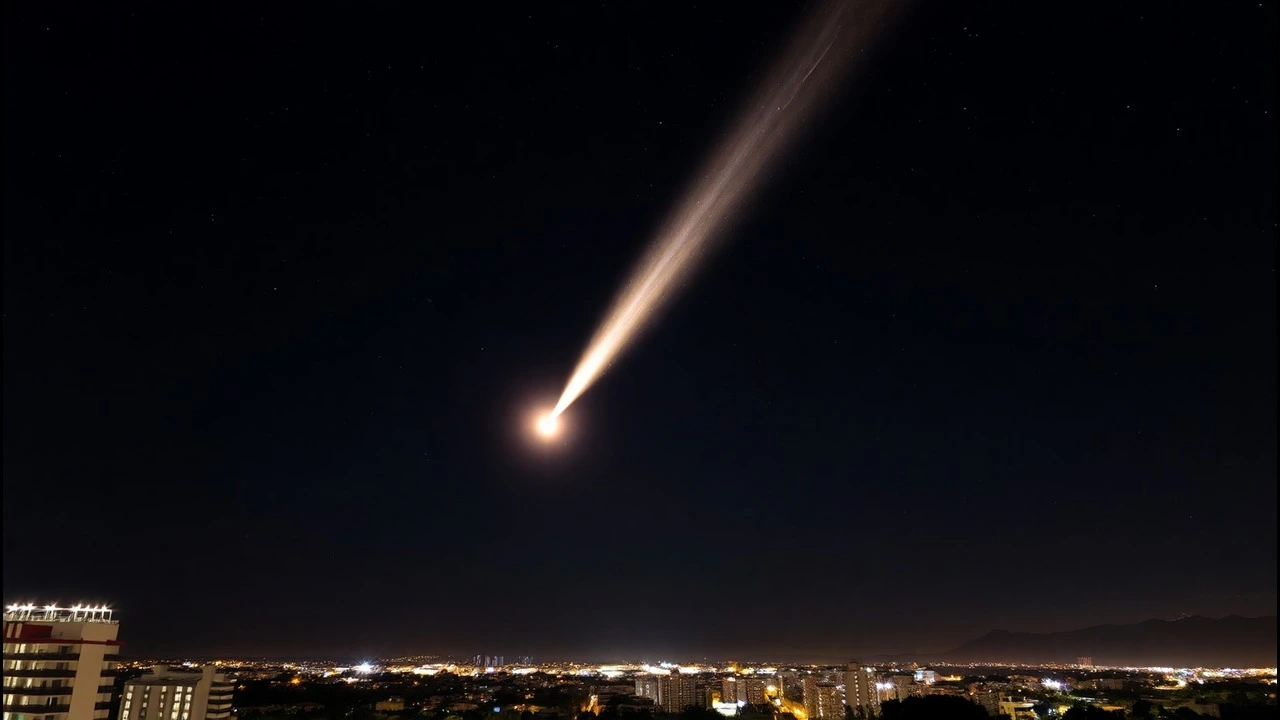
    A bright fireball streaked across the skies of Yakutia, Russia, on Tuesday, December 3, as asteroid C0WEPC5 entered Earth’s atmosphere and burned up. The asteroid, about 70 cm in diameter, lit up the sky at 16:15 UTC, creating a dazzling fireball that left many observers stunned. Stunning footage shared on social media captured the moment, quickly going viral among space enthusiasts.

    The European Space Agency (ESA) had detected the asteroid hours before its impact, confirming it would pose no threat. ESA posted an alert on X, noting that the asteroid would likely produce a harmless but spectacular fireball over northern Siberia. The agency’s prediction proved accurate, as the object disintegrated harmlessly, with no reports of damage on the ground.

    This event follows a series of recent asteroid sightings, including the fireball of asteroid 2024 RW1 over the Philippines in September.

    Space agencies and monitoring networks such as ESA, NASA, and the Asteroid Terrestrial-impact Last Alert System (ATLAS) continue to track Near-Earth Objects (NEOs) closely, providing early warnings of potential impacts. The Yakutia fireball served as another reminder of the importance of these detection systems in monitoring cosmic visitors to Earth.

  • November Supermoon is the last supermoon of 2024: Don’t miss!

    November Supermoon is the last supermoon of 2024: Don’t miss!

    The Beaver Moon, also the last supermoon of 2024, will rise in India at approximately 2:58 AM IST on November 16, 2024, as reported by TOI. Due to its proximity to Earth, this full moon is notable for being both larger and brighter than usual making it a significant event for skywatchers across the country.

    However, the supermoon will obstruct the view of the Leonid meteor shower. The best viewing experience will be shortly after sunset on November 16, when the moon appears particularly striking as it rises against the twilight sky.


    What is a Beaver Moon?

    The term “Beaver Moon” refers to the full moon in November, named for the time when beavers are actively preparing for winter by building their dams. This name has its roots in North American traditions and reflects the natural behaviours of wildlife during this season. Additionally, it is known by other names such as the Frost Moon or Snow Moon, indicating the onset of colder weather.


    What is a Supermoon?

    A supermoon occurs when a full moon coincides with perigee, the point in its orbit when it is closest to Earth. This results in the moon appearing up to 14% larger and 30% brighter than a typical full moon. The Beaver Moon marks the fourth and final supermoon of 2024, following earlier supermoons in August, September, and October.


    How to Watch the Beaver Moon

    To observe the Beaver Moon effectively:

    • Find a clear location: Look for an open area for an unobstructed view.
    • Timing: The best time to see it will be shortly after sunset on November 16.
    • Use binoculars or a telescope: While not necessary, these can enhance your view of lunar details.
    • Photography tips: If you wish to capture images of the moon, use a DSLR camera with manual settings. Adjust ISO, aperture, and shutter speed according to your needs.

    This celestial event presents a great opportunity for both casual observers and photography enthusiasts alike.

  • Comet C/2024 S1, Dubbed the ‘Halloween Comet,’ Could Shine Brighter Than Venus; If It Survives!

    Comet C/2024 S1, Dubbed the ‘Halloween Comet,’ Could Shine Brighter Than Venus; If It Survives!

    A newly discovered comet, C/2024 S1, may put on a dramatic sky show in late October, but only if it survives its close pass with the Sun. First detected in September 2024 by the Asteroid Terrestrial Impact Last Alert System (ATLAS) in Hawaii, the comet is expected to reach peak brightness around October 24, possibly outshining Venus. Yet astronomers warn the object could break apart before reaching that stage.

    Nicknamed the “Halloween Comet” by Forbes, C/2024 S1 is drawing attention because it follows closely on the heels of Comet Tsuchinshan-ATLAS, making 2024 a rare year with two bright comets visible to the public. NASA said the comet could briefly become visible in daylight near the Sun on October 24, especially from the U.S. East Coast. After Halloween, it is expected to reappear in the western evening sky from November 2 through mid-December.

    The best viewing, however, will be from Africa, Europe, and South America, according to astronomers. Skywatchers in those regions may be able to see the comet without special equipment if it brightens enough. For others, binoculars or small telescopes will improve the view.

    Still, its future is uncertain. The Watchmen Earth and Space Connection reported that the comet’s brightness has been fluctuating by about two magnitudes, a sign its icy core could be unstable. If the nucleus fractures while approaching the Sun, it may fade or even vanish completely, leaving only fragments behind.

    On the other hand, if it holds together, the comet could become as bright as magnitude –5, far brighter than Venus, and visible in the pre-dawn skies of the Northern Hemisphere. Such brightness would make it one of the most striking comets in recent decades.

    Scientists also believe C/2024 S1 may not be entirely new. Research suggests it could be a surviving fragment of the Great Comet of 1106, which broke apart more than 900 years ago during a close approach to the Sun. Like that historic comet, C/2024 S1 is thought to have originated in the distant Oort Cloud, a region of icy bodies at the edge of the solar system.

    For now, astronomers are watching closely to see whether the so-called Halloween Comet makes it through its brush with the Sun. Its survival could mean a rare treat for skywatchers across several continents.