Category: Astronomy

Look deeper into the science of the stars. This section explores celestial events, cosmic phenomena, and the latest research that helps us understand how the universe came to be and where it’s headed.

  • Astrophotographer Captures the ISS as It Transits a Flaring Solar Region

    Astrophotographer Captures the ISS as It Transits a Flaring Solar Region

    Arizona-based astrophotographer Andrew McCarthy, known for his creative and stunning astrophotos, has captured a remarkable image of the International Space Station (ISS) transiting the Sun, framed perfectly against a flaring solar region. This photograph reflects his technical mastery and relentless dedication.

    With over 1.5 million followers on Instagram and more than 400K followers on X, Andrew has made significant contributions to astrophotography and astronomy.
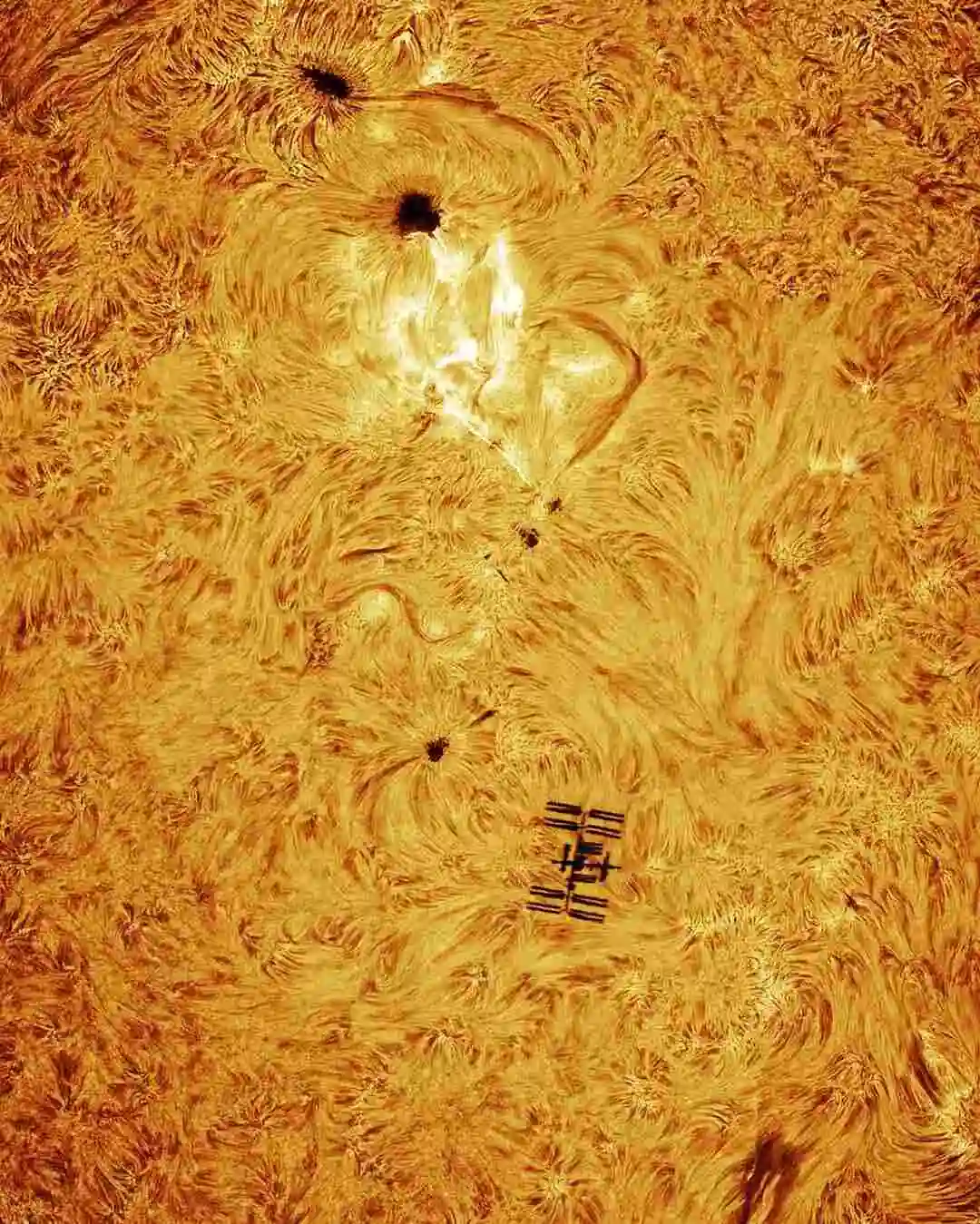
    ISS transiting the Sun, framed perfectly against an flaring solar region
    International Space Station (ISS) transiting the sun against a flaring solar region. Credit: Andrew McCarthy (@cosmic_background) via Instagram

    His recent capture of the ISS transit has captivated audiences on social media platforms, including Instagram and X (formerly Twitter).

    Commenting on his work, users on Instagram expressed their admiration, saying, “Your work is absolutely awesome. Thank you for sharing your patience, effort, and skills with the world.” Another user remarked, “This has to win an award. Where can I vote?”

    Andrew McCarthy shared the story behind the image in an exclusive interview with Wonders In Space.

    Here’s the full interview:

    What inspired you to attempt this particular shot?

    Andrew: I have always wanted to combine hydrogen alpha solar imaging with International Space Station transits and have previously attempted many with mixed results. This upcoming transit was the first that had a large active region towards the center of the disc, so I thought it was a great opportunity to try and get a really unique composition.

    Where did you go to capture the event, and when was it taken?

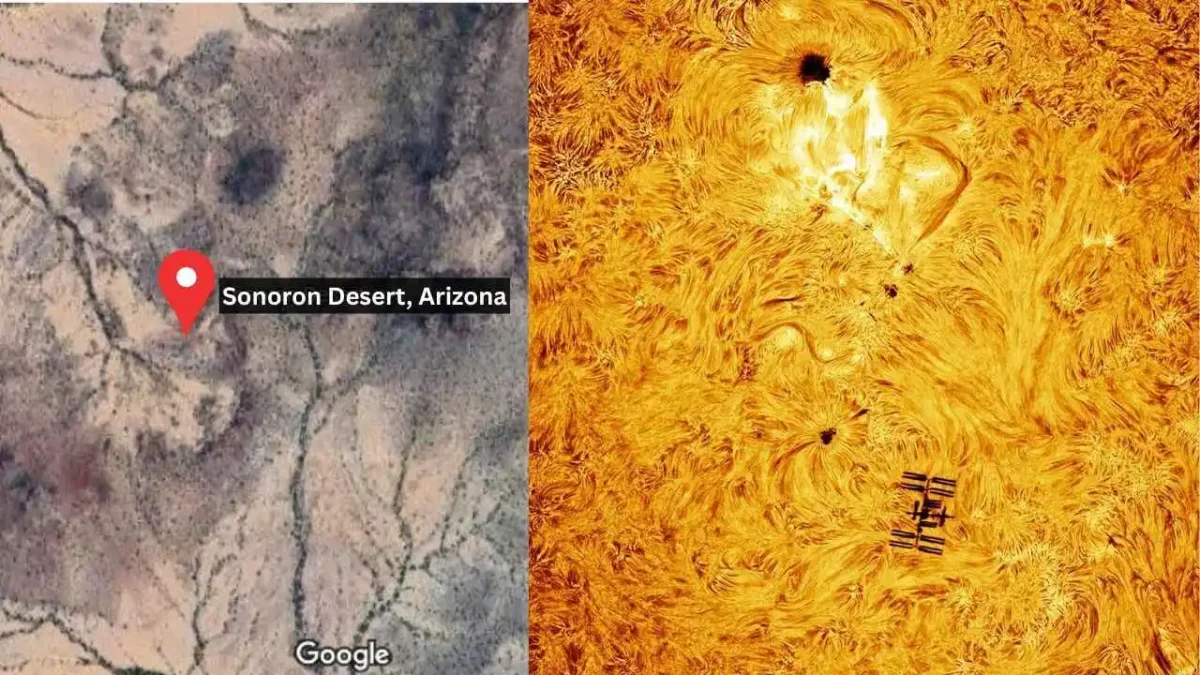
    Andrew: I went to a remote location in the middle of the Sonoran Desert, near Gila Bend, AZ. I had to get there via a dirt road, with many warning signs along the route about the dangers of the desert. I found a clearing amidst many Saguaro cacti and cholla plants where I set up my telescope. The best time to capture a transit like this is when the sun is right overhead, so it was captured shortly after noon in the heat of the day.

    What equipment and settings did you use?

    Andrew: I had several telescopes running for redundancy, but the main system I used was a modified Esprit 150 telescope with a Player One Apollo M-Max camera. The image was captured at 0.3 milliseconds, with 100 gain, and in 16-bit SER format for maximum quality.

    Were there any special preparations or difficulties you faced?

    Andrew: Definitely, the biggest challenge was the heat. I had a temp reading of 121° from my car’s exterior thermometer while I was working, and some of my equipment reached 130°F. At those temps, computers shut down and cameras stop working right. These conditions have caused many previous attempts to fail. To mitigate this, I brought several ice packs and thermoelectric coolers to keep the electronics (and me) cool.

    How did it feel when you finally saw the image come through?

    Andrew: It was quite thrilling, particularly as the active region began flaring right before the transit. I knew the moment it appeared on screen the shot was something special. (Buy the prints here: Cosmic Background).

    What advice would you give to beginners who want to try capturing ISS transits?

    Andrew: Start small. You don’t need fancy gear right away; a telephoto lens and a basic white-light solar filter are enough to start capturing these events. Once you’re comfortable, you can level up to longer focal lengths or hydrogen-alpha imaging. It’s definitely more challenging but very rewarding.

    Read a guide by him: Capturing the International Space Station.

    Andrew’s dedication, technical skill, and passion for astrophotography shine through in every frame he captures. This latest shot not only captures the beauty of space but also the incredible persistence it takes to chase these fleeting moments.

    Stay connected with Andrew’s work; follow him on Instagram & X.
  • $800 million Camera at Rubin Observatory Released its debut images

    $800 million Camera at Rubin Observatory Released its debut images

    The Vera C. Rubin Observatory, located in the Chilean Andes, released the first images on Monday, June 23, 2025, marking the beginning of a revolutionary era in observational astronomy.

    The Vera Rubin Observatory, situated on Cerro Pachón mountain in central Chile, combines cutting-edge technology with one of the best stargazing locations on Earth. The site benefits from dry air, minimal pollution, and clear skies, all of which make it ideal for observing the stars. Observations made here are less likely to be disrupted by external environmental factors.

    This project is a joint effort between the U.S. National Science Foundation and the Department of Energy, with construction costs reaching approximately $800 million.

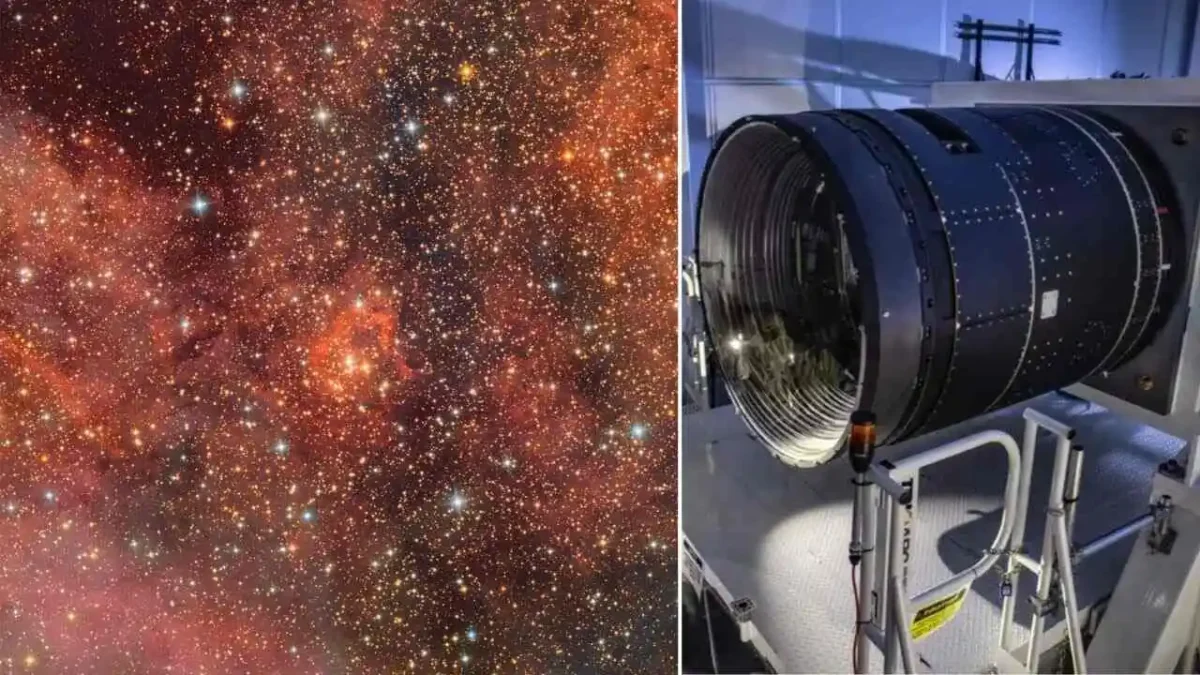
    The observatory is home to an 8.4-meter telescope paired with the world’s biggest digital camera that weighs 2.8 tons and measures roughly the size of a car.

    This camera captures images at 3,200 megapixels, creating photographs so detailed that they could spot a golf ball on the Moon’s surface. For perspective, displaying one image would require 400 ultra-high-definition television screens.

    The debut images revealed by the observatory showcase the ability of the instrument to capture the universe in exquisite detail.

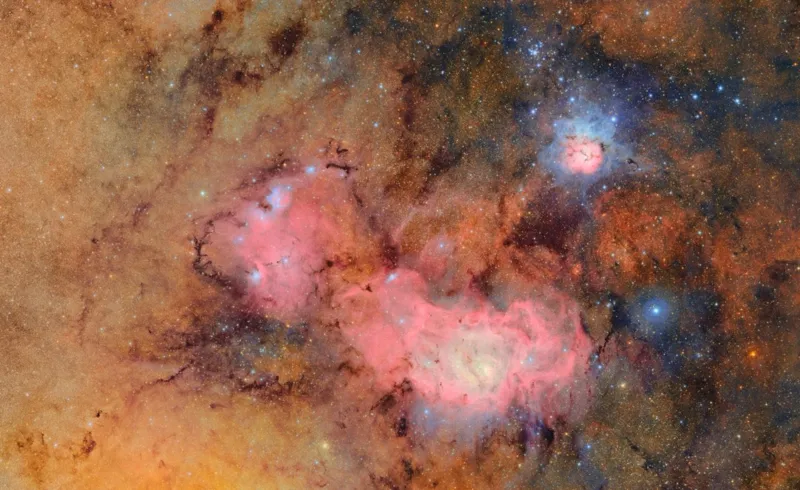
    Trifid and Lagoon Nebulae captured by the Vera C. Rubin Observatory
    The first released image of the Vera C. Rubin Observatory featuring the Trifid and Lagoon Nebulae. Credit: NSF-DOE Vera C. Rubin Observatory

    This image combines 678 separate photographs taken over seven hours, revealing the Trifid and Lagoon nebulas in vivid detail. These star-forming regions, located thousands of light-years from Earth, appear as swirling clouds of pink and orange gas where new stars are born.

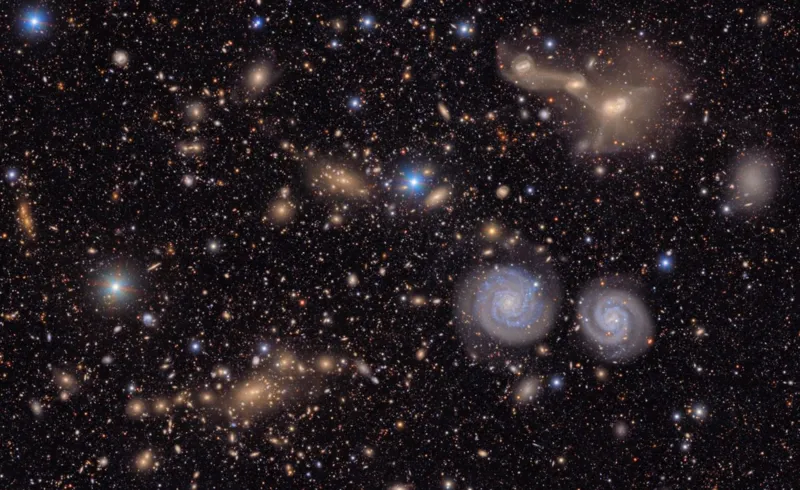
    Picture of the vast Virgo Cluster captured by the Vera C. Rubin Observatory
    Spiral galaxies and a large cluster of galaxies located in the vast Virgo Cluster. Credit: NSF-DOE Vera C. Rubin Observatory

    This image captures the Virgo Cluster, a massive collection of galaxies located about 55 million light-years away. The photograph shows bright spiral galaxies alongside countless distant galaxies, each containing billions of stars.

    Apart from these stunning images, during just 10 hours of test observations, the observatory discovered 2,104 previously unknown asteroids within our solar system. Seven of these space rocks qualify as near-Earth asteroids, though none pose any threat to our planet.

    This discovery rate far exceeds current capabilities. All other ground-based and space-based telescopes combined typically find about 20,000 new asteroids per year. The Rubin Observatory achieved more than 10 percent of that total in less than half a day of observations.

    The telescope’s rapid scanning ability allows it to capture images every 40 seconds throughout the night. This constant monitoring creates a time-lapse movie of the changing sky, revealing objects that move, brighten, dim, or explode across the cosmos.

    The observatory will spend the next 10 years conducting the Legacy Survey of Space and Time (LSST), photographing the entire southern sky every few nights. This massive undertaking will generate about 500 petabytes of data, which is far more than that produced by giant companies like Google, Netflix, or Amazon.

    International partnerships will help analyze the massive data streams, with processing centers planned for France, the United Kingdom, and other locations.

    Scientists expect this survey to catalog 20 billion galaxies while discovering millions of asteroids, comets, and other solar system objects.

    Scientists believe the observatory might finally solve longstanding mysteries, including the possible existence of a ninth planet in our solar system’s outer reaches. If such a world exists, the telescope’s powerful camera should spot it within the first year of full operations. The observatory is set to begin its scientific observation of the southern sky on July 4, 2025, and the world is looking forward to seeing it working at its full potential.

  • A ‘New Star’ has Exploded in the Night Sky! Here’s Where to See It

    A ‘New Star’ has Exploded in the Night Sky! Here’s Where to See It

    Astronomers have discovered a new star in the night sky. This new star is not a normal star but a nova. On June 12, 2025, the All-Sky Automated Survey for Supernovae detected a sudden bright spot in the constellation Lupus. Over the coming days, that spot brightened enough to become visible without a telescope. This supernova is named V462 Lupi.

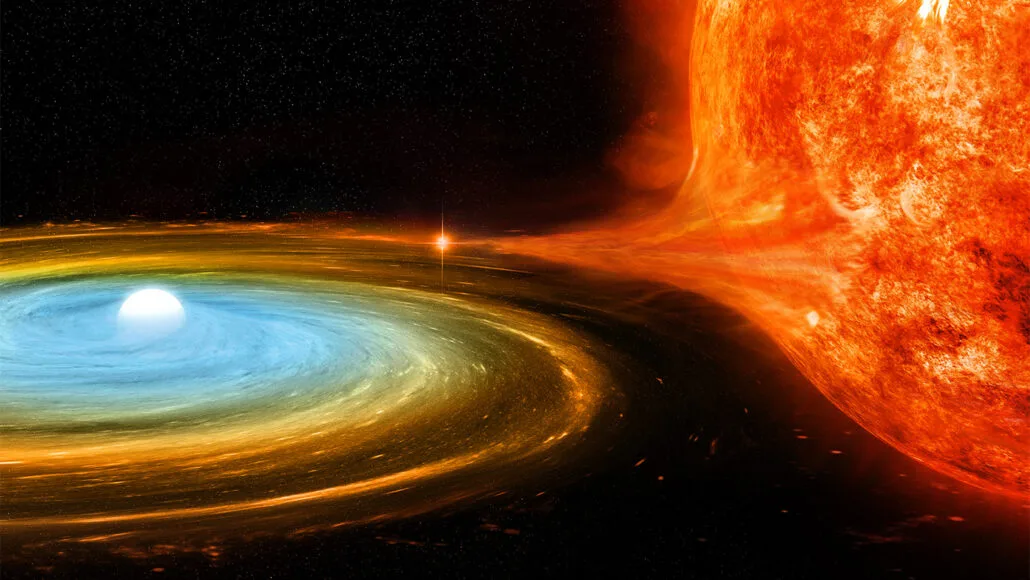
    As of June 18, it had reached an apparent magnitude of +5.7, just inside the range our eyes can see under dark skies. The explosion made the star 4 million times brighter than it was before, thanks to a thermonuclear burst on the surface of a white dwarf in a binary system.

    Where is the Nova V462 Lupi visible?

    The nova is visible in the constellation Lupus, low in the southern sky after sunset. It’s best seen from the Southern Hemisphere, but people in North America can also catch a glimpse. Sightings have been reported as far north as Lake Superior, as well as in California and Arizona, particularly just after sunset near the southern horizon. The nova can be viewed with the naked eye in dark sky areas; however, using a telescope or binoculars can increase your chances of spotting it.

    What is a nova?

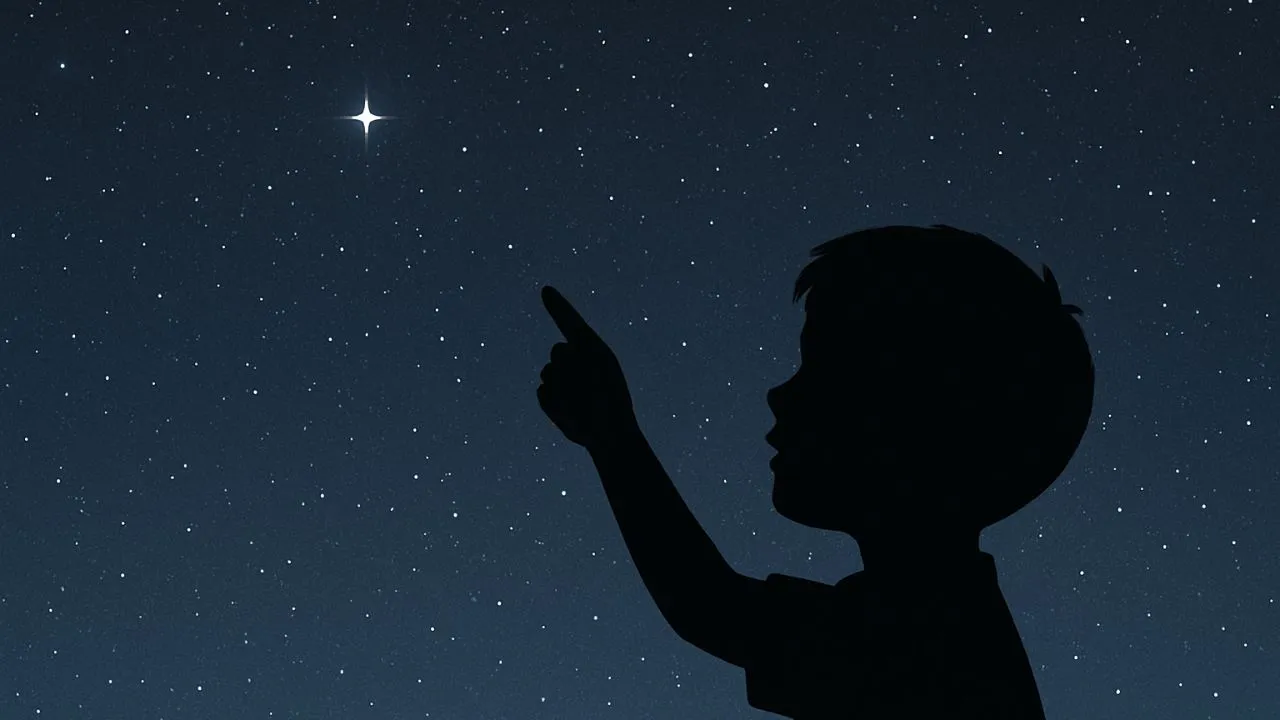
    A young boy pointing to a bright new star in the night sky
    (Artist’s Concept). Credit: Nihal sayyad / Wonders in Space

    A nova is a transient astronomical event that causes the sudden appearance of a bright, apparently new star that slowly fades over weeks or months.

    What Makes This Event Rare?

    Novae like this one do happen, but they rarely reach a brightness level we can see without tools. On average, just one or two novae a year become visible to the naked eye worldwide—and often, they appear in hard-to-see parts of the sky or go unnoticed due to moonlight, clouds, or city lights.

    What makes V462 Lupi stand out is that it was unexpected; it got bright enough for backyard stargazers to notice. It’s in a southern constellation but still visible from parts of the Northern Hemisphere.

    Don’t miss this incredible opportunity to witness a nova explosion. Use a sky-watching app like Stellarium to find the constellation and the nova, and enjoy the experience!

  • Strawberry Moon 2025 in Pictures

    Strawberry Moon 2025 in Pictures

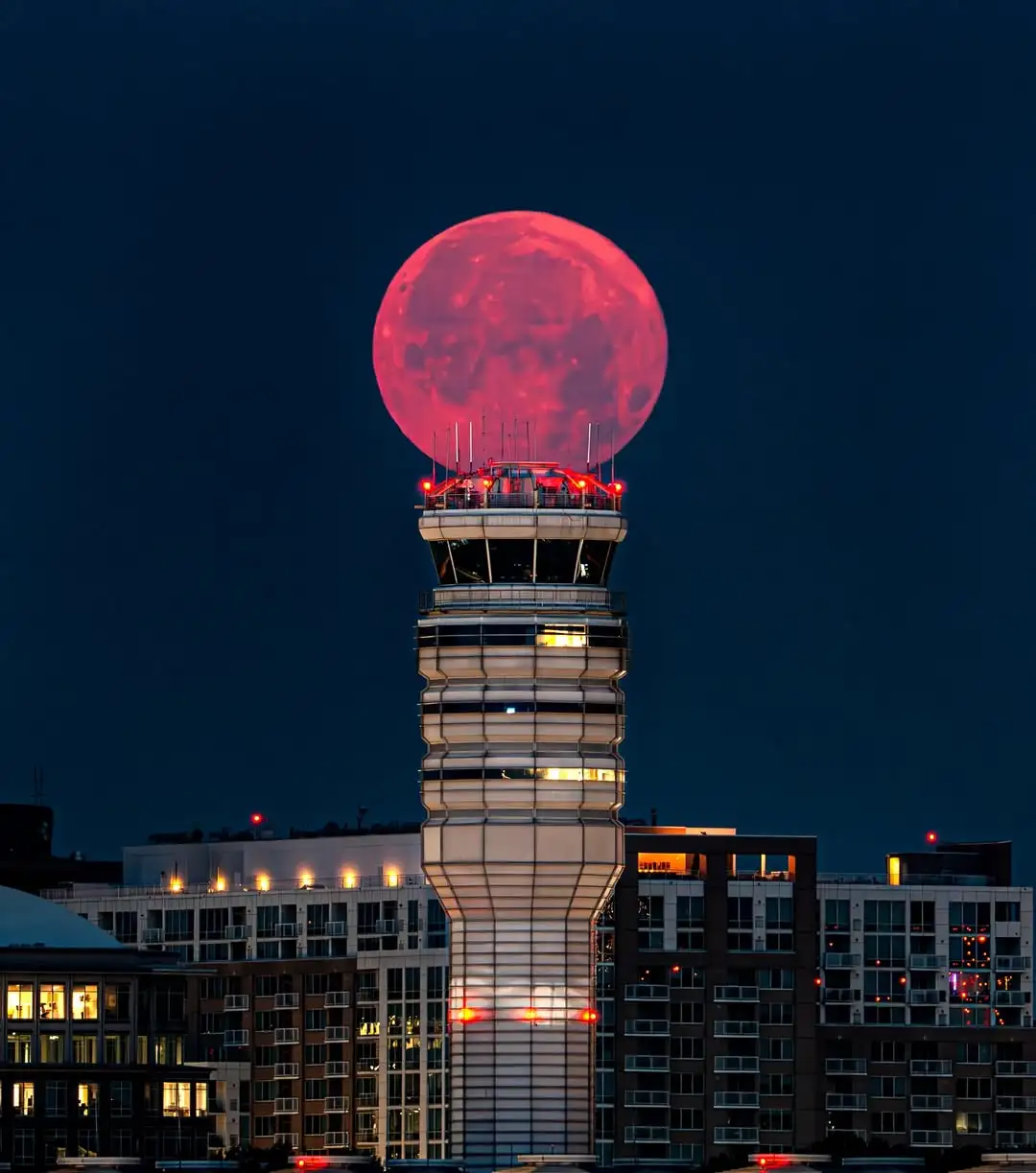
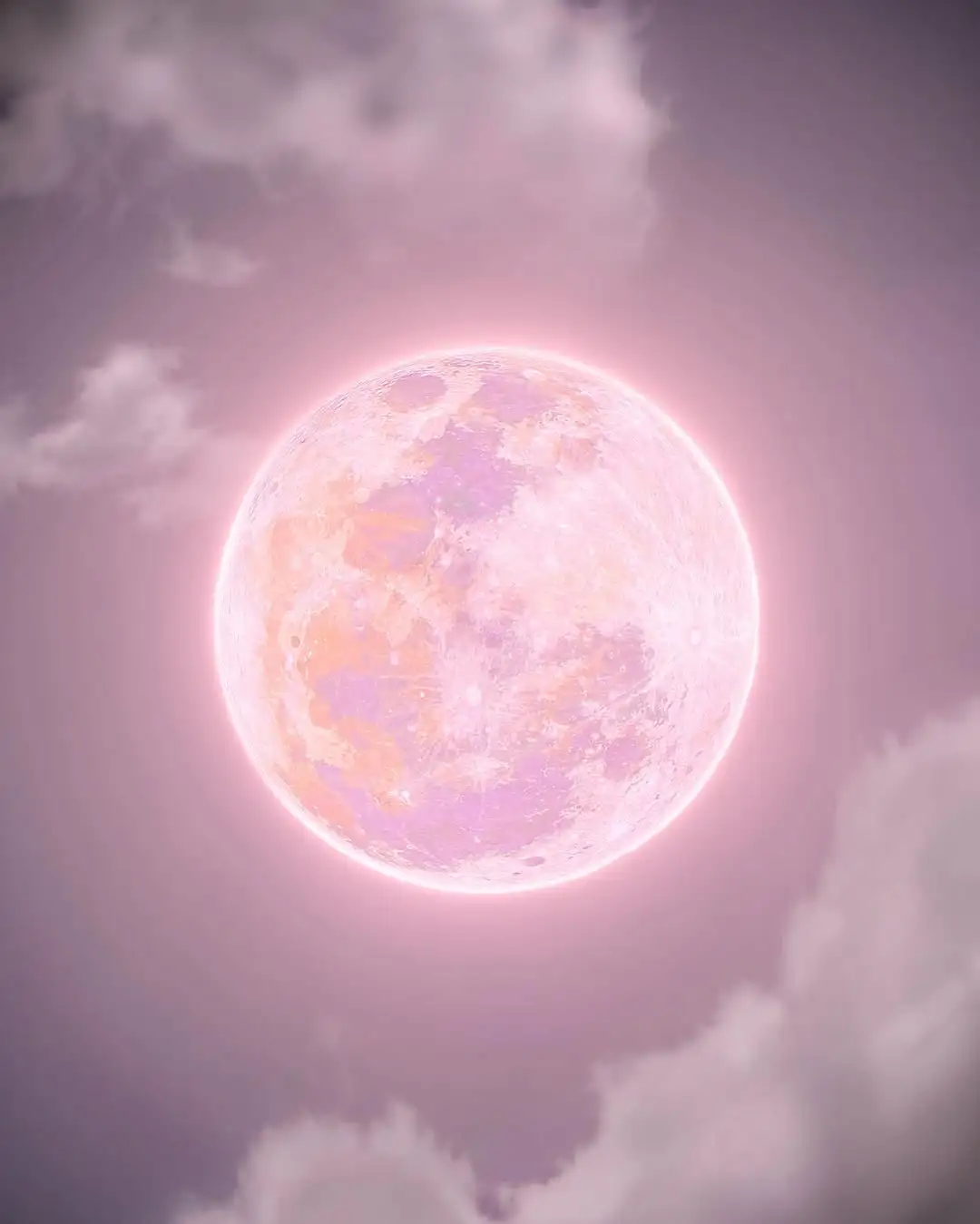
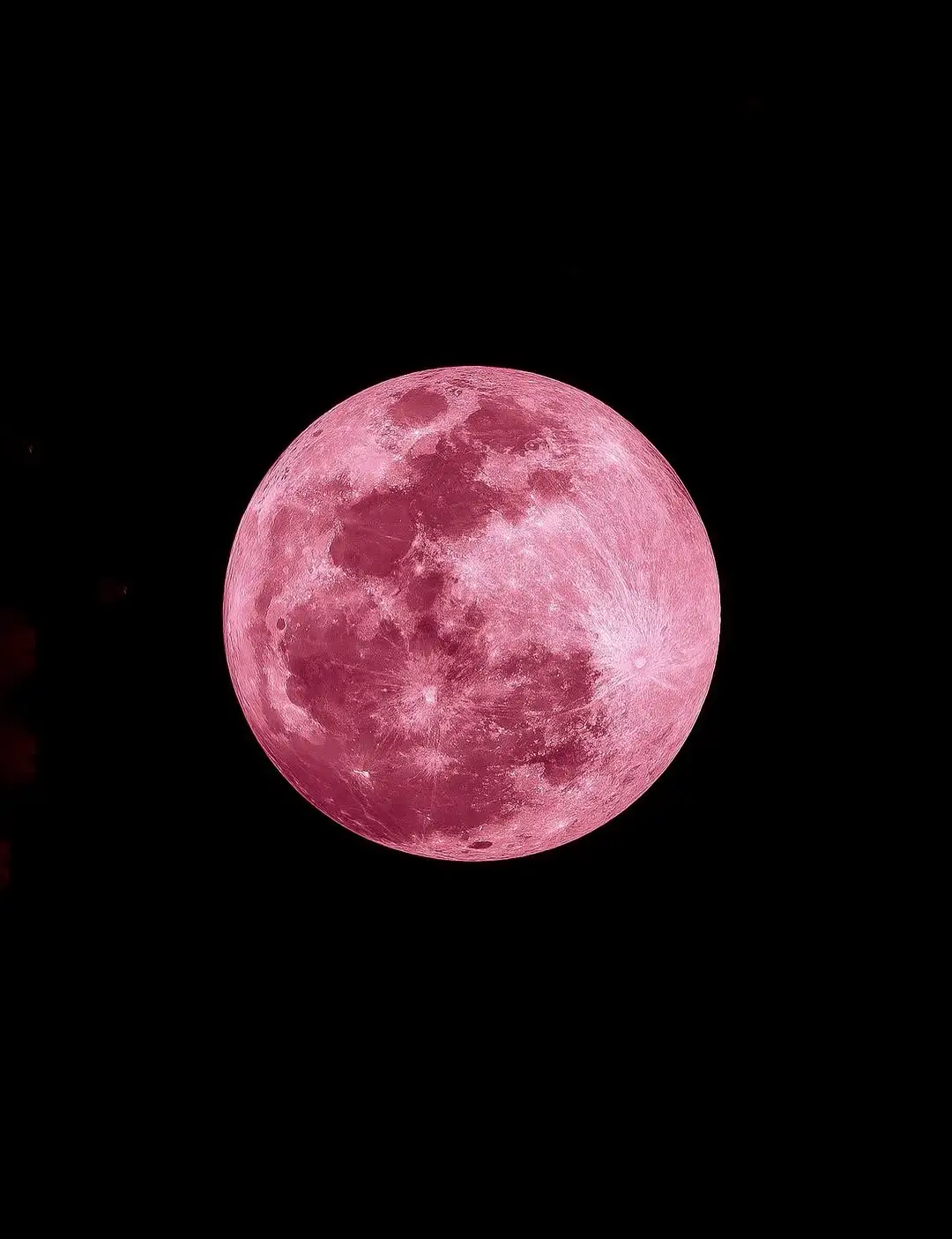
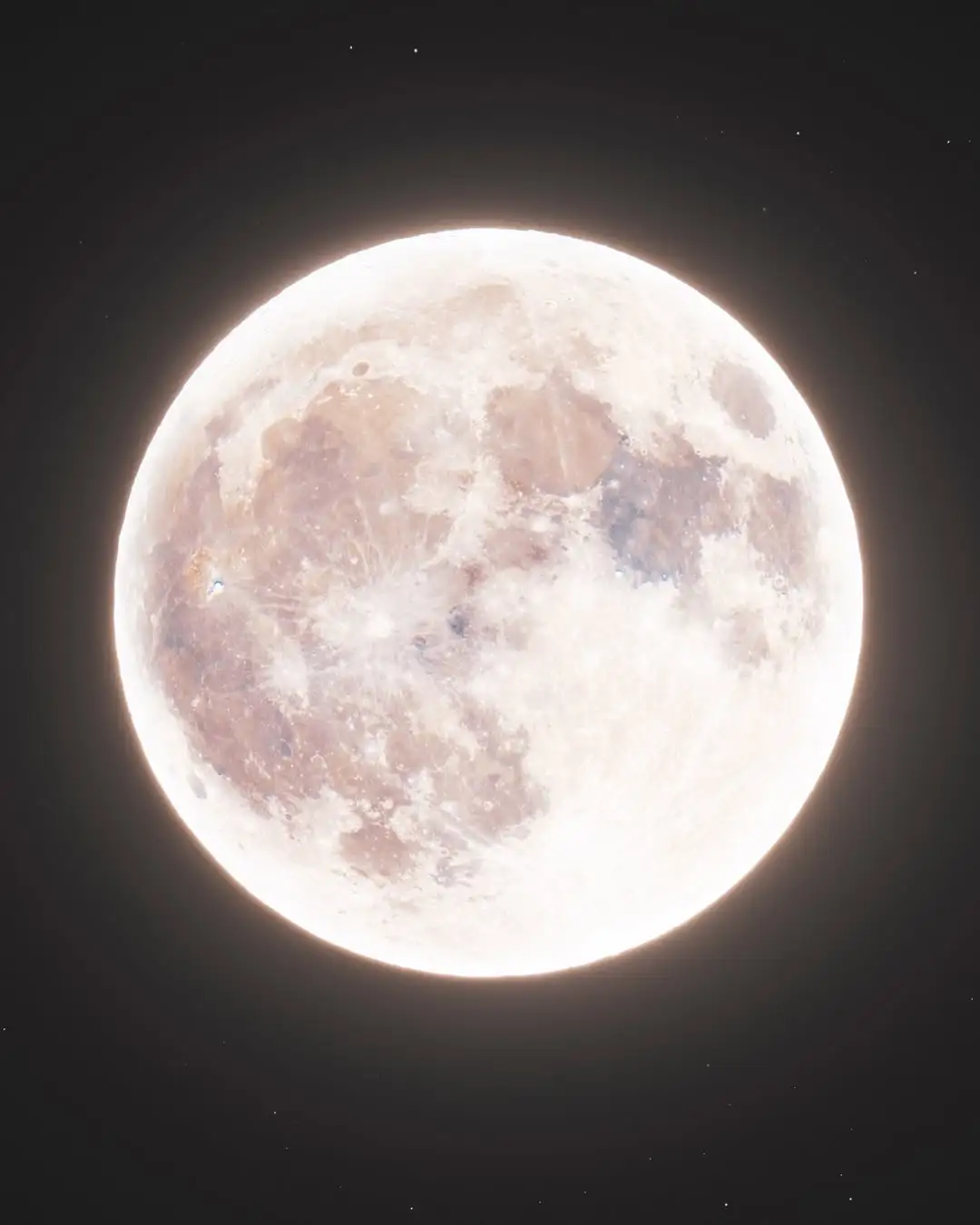
    The Strawberry Moon occurred on June 11 this year. Photographers around the world managed to capture some stunning shots of the Strawberry Moon; however, only a few pictures have made a spot in the viewers’ hearts and, apparently, in this article.

    Here are some of the best images of this year’s Strawberry Moon captured from different locations worldwide.

    1) Washington, USA

    Strawberry Moon captured in Washington DC, USA
    Image credit: Drew Giggity via Instagram

    2) Bogor, Indonesia

    Starwberry Moon captured in Bogor, Indonesia
    Image credit: Bima Nasution via Instagram

    3) Madura, Sumenep, Indonesia

    Strawberry Moon captured in Madura ,Sumenep, Indonesia
    Image credit: badutlangit_ via Instagram

    4) Mount Erciyes, Turkey

    Strawberry Moon captured behind Mount Erciyes, Turkey
    Image credit: Betul Turkosy via Instagram

    5) Brentwood, Tennessee, USA

    Starwberry Moon captured in Brentwood, Tennessee, USA
    Image credit: Rami Ammoun via Instagram

    And that’s a wrap for today! A huge shoutout to the incredibly talented photographers who captured and shared these stunning images with the world.

    Note: The order and numbering of these images are purely random and do not indicate any ranking or preference.

    Disclaimer: All image credits go entirely to the respective photographers. The images featured in this article are used under the Fair Use policy for educational and illustrative purposes only. Mail: contact@wondersinspace.com for queries or removal requests.

  • Japanese Moon lander Resilience crash lands on Moon with a $16 million payload

    Japanese Moon lander Resilience crash lands on Moon with a $16 million payload

    Japan’s private moon lander hard-landed on the moon on June 5, 2025. The Japanese private aerospace company ispace launched the moon lander ‘Resilience’ to the moon’s Mare Frigoris region on January 15, 2025.

    The lander arrived in lunar orbit on May 7 and was scheduled to touch down on Thursday (June 5) at 3:24 p.m. EDT. However, the lander lost communication while landing, resulting in a presumed crash. According to Reuters, the lander was carrying a $16 million payload.

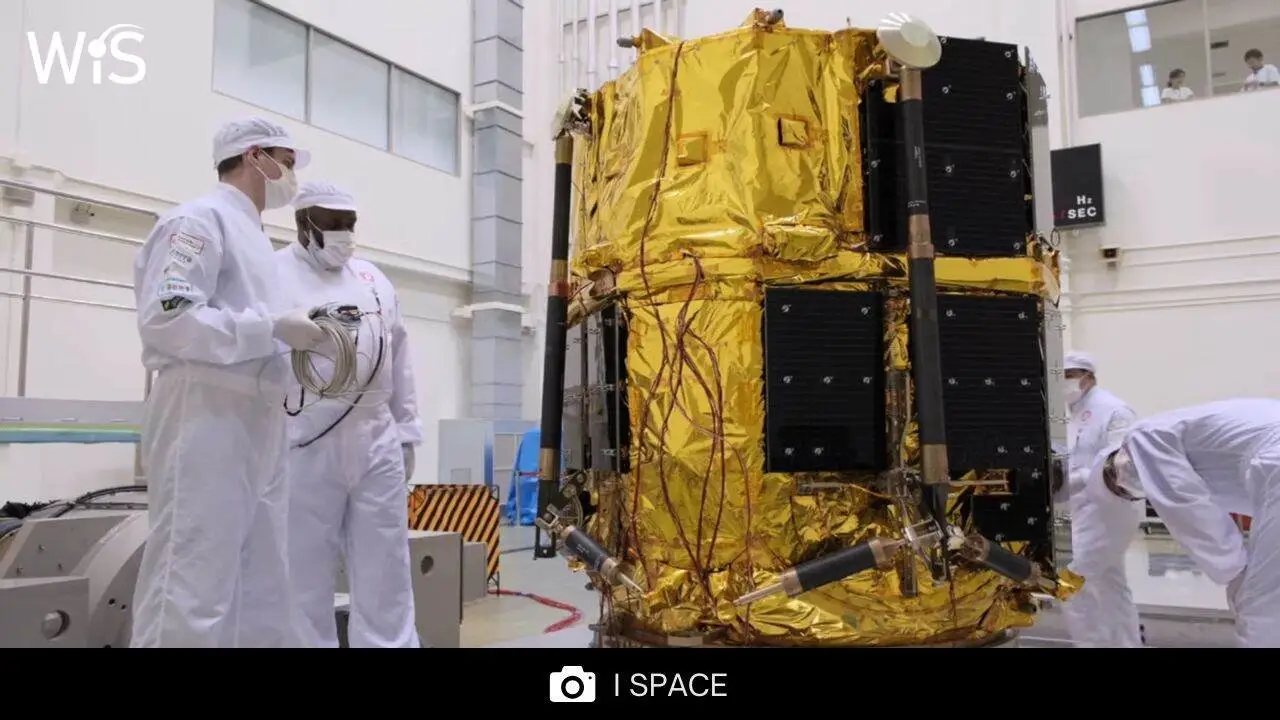
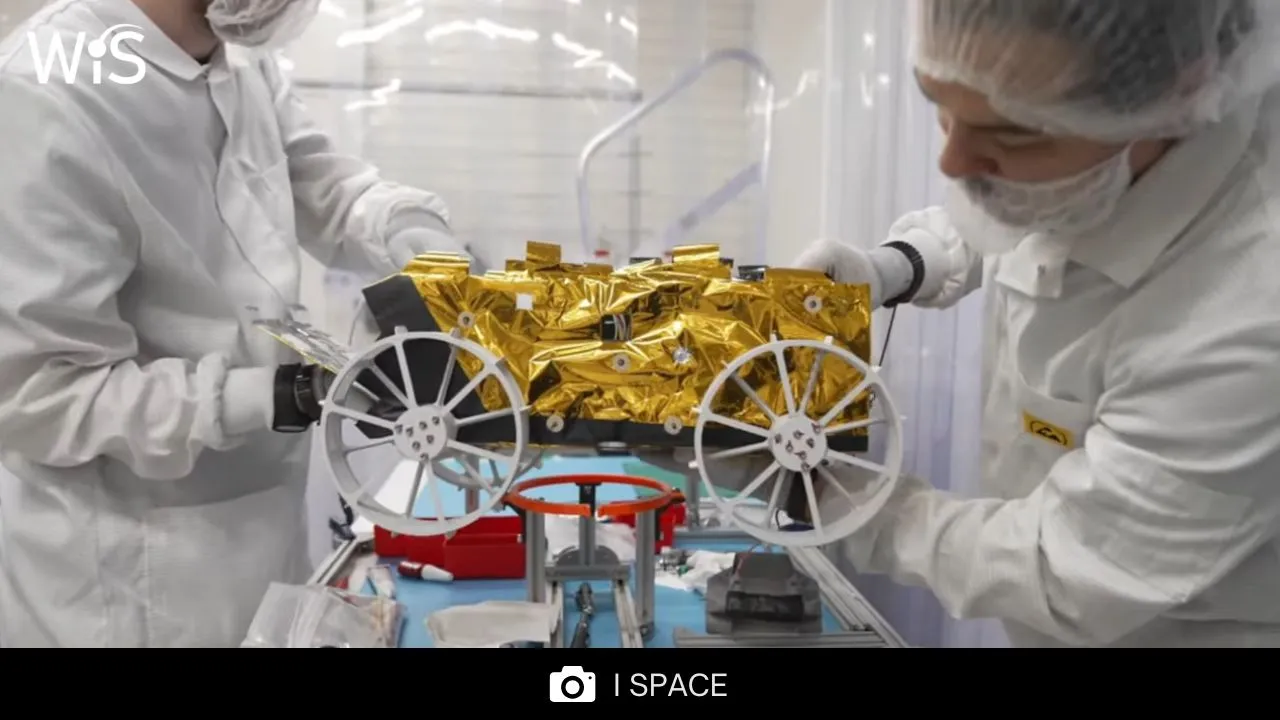
    Resilience, a moon lander that is a part of ispace’s Hakuto-R Mission 2, was launched on January 15, 2025, aboard SpaceX’s Falcon 9 rocket. The mission aimed to deploy several payloads, including Tenacious (a European-built mini rover designed to collect lunar soil samples for NASA and the European Space Agency (ESA)) and Moonhouse (a symbolic art installation; a miniature red house created by Swedish artist Mikael Genberg).

    Engineers assembling the European Moon rover Tenacious
    Engineers assembling the European Moon rover Tenacious. Image credit: Screengrab/ispace/via Youtube

    Preliminary tests are indicating that a malfunction in the laser altimeter system caused the lander to misjudge its altitude, leading to a descent that was too rapid for a safe landing.

    This incident highlights the challenges faced by private companies in lunar exploration, a domain where successful landings have predominantly been achieved by government space agencies. Nonetheless, the pursuit of lunar missions by private entities like ispace signifies a growing interest and investment in space exploration beyond traditional state-led initiatives.

  • June Skywatching Tips: Strawberry Moon, Solstice, and World Asteroid Day!

    June Skywatching Tips: Strawberry Moon, Solstice, and World Asteroid Day!

    If you missed stargazing in May, there’s no need to worry! June offers some exciting stargazing events. From the Strawberry Moon to World Asteroid Day, immerse yourself in the wonders of the night sky this month.

    Celestial EventDate
    Milky Way Core SeasonAll June
    Strawberry MoonJune 11
    Moon-Saturn ConjunctionJune 19
    June SolsticeJune 20
    Moon-Venus ConjunctionJune 22
    Moon-Mars ConjunctionJune 29-30
    World Asteroid DayJune 30

    Milky Way core season

    The beginning of June usually means the Milky Way core season is here. According to NASA, this is the time of year when the Milky Way is visible as a faint band of hazy light arching across the sky all night. Just head to a dark sky site away from the city lights and observe the bright central core of our galaxy.

    Strawberry Moon

    The full moon of June, also known as the ‘Strawberry Moon,’ will occur on June 11. According to the Farmer’s Almanac, the term ‘Strawberry Moon’ is used by the Native American Algonquian tribes in the northeastern United States, as well as by the Ojibwe, Dakota, and Lakota peoples, to signify the ripening of “June-bearing” strawberries that are ready for harvesting; i.e., the name ‘Strawberry Moon’ has nothing to do with the appearance or color of the moon.

    Moon-Saturn conjunction

    On June 19, the moon and Saturn will be aligned close to each other in the eastern sky a few hours before dawn.

    June solstice

    June marks the beginning of a solstice for both hemispheres. It brings the summer solstice in the northern hemisphere and the winter solstice in the southern hemisphere. This means that the northern hemisphere will experience the longest day of the year, whereas the southern hemisphere will experience the shortest day of the year.

    Moon-Venus conjunction

    The moon and Venus will be aligned close to each other on June 22 in the eastern sky a few hours before sunrise.

    Moon-Mars conjunction

    On June 29-30, the moon and Mars will be closely aligned in the evening sky in the western direction after the sunset.

    World Asteroid Day

    June 30, i.e., the anniversary of the Tunguska event, is celebrated as World Asteroid Day. The first celebration took place on June 30, 2015. World Asteroid Day aims to raise awareness about asteroids and what can be done to protect the Earth, its families, communities, and future generations from a catastrophic event.

    We hope you are now all set to observe and celebrate these beautiful events this June. Bookmark this page so that you don’t forget any of these events!

  • Eiffel Tower sized Asteroid 2003 MH4 just missed Earth by a few million kilometers

    Eiffel Tower sized Asteroid 2003 MH4 just missed Earth by a few million kilometers

    Asteroid 2003 MH4 safely flew by Earth at an approximate distance of 6.68 million kilometers with a velocity of around 8.35 kilometers per second today (May 24, 2025, at 10:37 UTC).

    The asteroid 2003 MH4, designated as 387746, was discovered in 2003. Comparable in size to the Eiffel Tower, it is classified as an Apollo-class Near-Earth Object (NEO) and a Potentially Hazardous Asteroid (PHA) due to its size and proximity to Earth’s orbit.

    Physical characteristics

    Asteroid 2003 MH4 has an estimated diameter of approximately 335 meters, making it comparable in size to the Eiffel Tower. Its albedo (reflectivity) is measured at 0.132, and it has an absolute magnitude of 20.1.

    Orbital characteristics

    Asteroid 2003 MH4 orbits the Sun every 1,010 days (approximately 2.77 years). Its orbit ranges from a perihelion (closest point to the Sun) of 0.96 AU to an aphelion (farthest point) of 2.97 AU. The asteroid’s orbit has an eccentricity of 0.5134 and an inclination of 3.89 degrees relative to the ecliptic plane.

    Future Flybys

    • May 23, 2036, at a distance of approximately 7.45 million kilometers.
    • April 17, 2047, at about 9.99 million kilometers.
    • March 27, 2058, at a distance of approximately 11.53 million kilometers.

    NASA and other space agencies are actively monitoring asteroids to evaluate potential future risks and improve planetary defense strategies. In preparation for future missions aimed at studying asteroids, NASA is set to examine the well-known asteroid Apophis during its close flyby in 2029.

  • Crown of Thorns Nebula: Astrophotographer discovers a stunning new Nebula in Virgo

    Crown of Thorns Nebula: Astrophotographer discovers a stunning new Nebula in Virgo

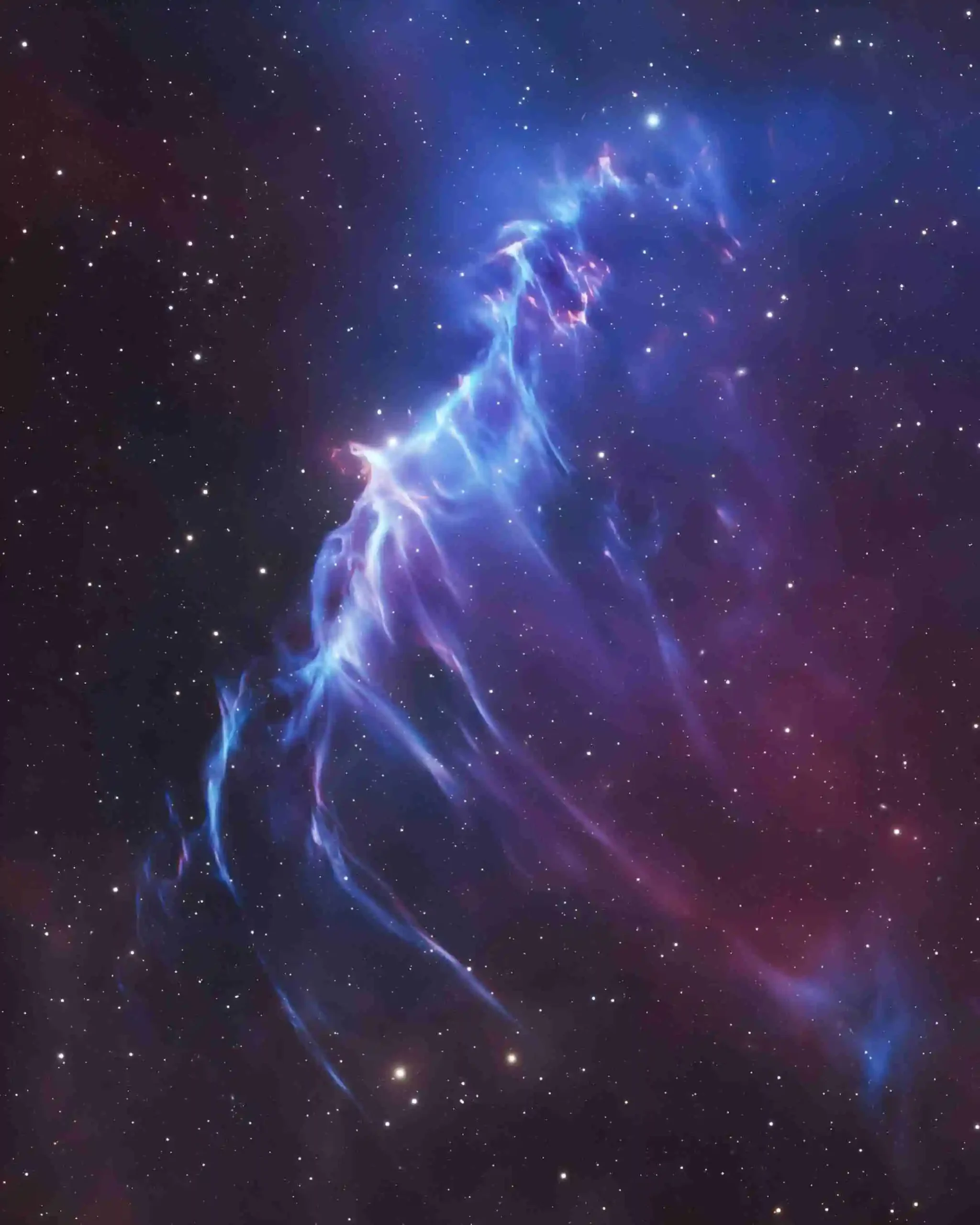
    An American astrophotographer has discovered a new nebula in the constellation Virgo. Called the Crown of Thorns Nebula, the discovery was shared on Instagram on May 14, 2025. It drew attention from the public and the scientific community. People responded with surprise and excitement. Comments included “Congratulations, this is spectacular, too mind-blowing for my mind to comprehend” and “Phenomenal!!”

    Bray Falls, a professional astrophotographer from Austin, Texas, posted images of the nebula and shared some details. “I’ll start this off by saying this nebula should not be here,” he wrote. He explained that most supernova remnants are found within 10 degrees of the Milky Way band, where the star count is highest. But this one is different. It is located 42 degrees away from that area, in the constellation Virgo.

    Falls said he discovered this object through a careful search of areas in the night sky that are often overlooked. The survey he ran to find it took about 90 hours of exposure time and two months in real time. Capturing the final image took 185 hours of exposure time. He also mentioned that editing the data was very challenging.

    He added that he and his friend Derek Culver named the Nebula. The name perfectly matches its shape. The long, pointed strands of gas, dust, and matter stretch from a central structure that looks like a crown of thorns.

    This discovery shows that even after years of looking at the sky, there is still much we do not know about space. New objects and patterns appear all the time. Each one helps us learn more about the universe.

  • Image: ‘Smiley Face’ Conjunction April 2025

    Image: ‘Smiley Face’ Conjunction April 2025

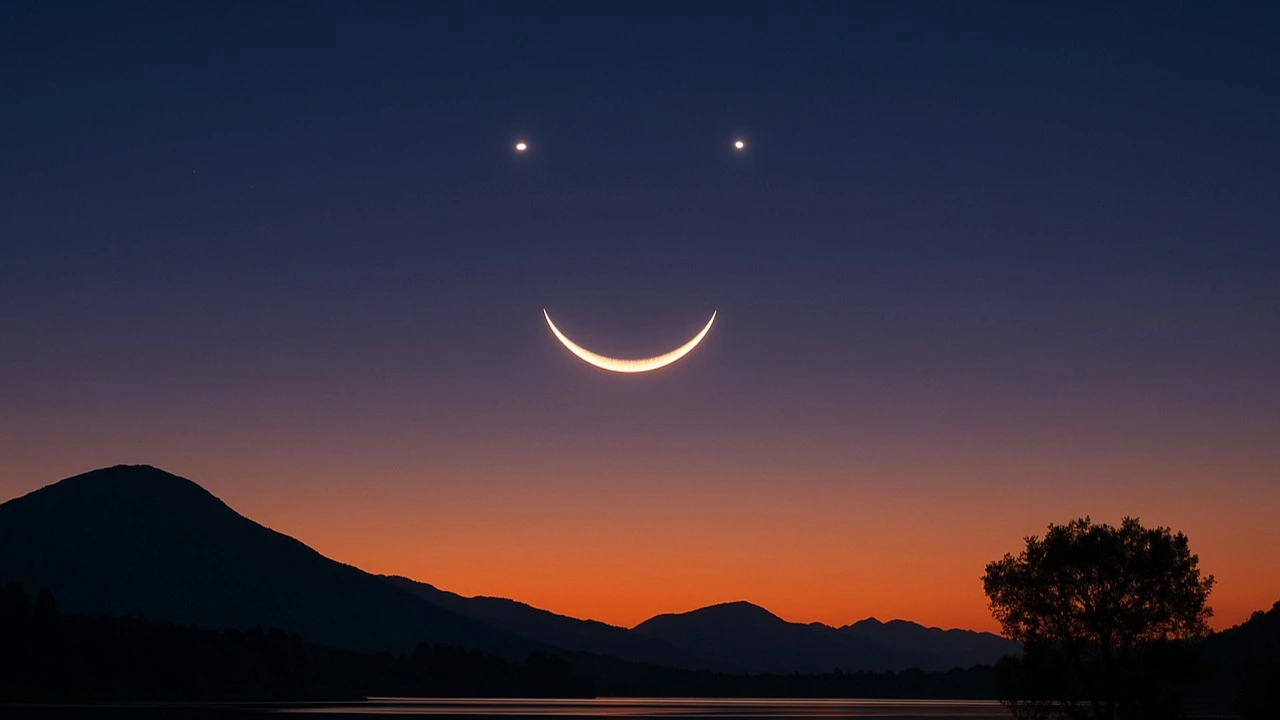
    On April 26, 2025, I captured the rare “smiley face” conjunction of the Moon, Venus, and Saturn.

    For a moment, it truly felt like the universe smiled right back at me. I’m not a morning person, but that day I woke up at 5:25 AM, driven by pure excitement. I rushed up to my terrace with sleepy eyes and a racing heart. Living in a small town really helped! The sky was clear, the air was fresh, and the scene was just perfect.

    The moon was the big, bright smile, and Venus and Saturn were like tiny, sparkling eyes. By the time I grabbed my camera, they had started drifting apart, but I quickly adjusted the settings to fit them all into one frame. This turned out to be one of my favorite shots ever.

    Picture Information

    • Date and Time: April 26, 2025, 5:43 AM IST
    • Location: Kolhapur, Maharashtra, India
    • Camera: Fujifilm FINEPIX HS35EXR
    • Camera Settings: ISO 200 | Shutter +2 sec | Aperture Auto | White Balance Auto
    • Photo Credit: Nihal Sayyad via wondersinspace.com

    Note for journalists/editors: This image was featured in BBC Sky at Night Magazine and Sky & Telescope under a CC BY-SA 4.0 license, and the image shall only be shared under these conditions. 

  • A rare triple conjunction; ‘smiley face’ planetary alignment will occur on April 25. Don’t miss it!

    A rare triple conjunction; ‘smiley face’ planetary alignment will occur on April 25. Don’t miss it!

    A rare triple conjunction, ‘smiley face planetary alignment,’ will occur on April 25, 2025, right before sunrise. During this event, the Moon, Venus, and Saturn will align to create a ‘smiley face’ in the sky. Mark your calendar to witness this rare occurrence, as it won’t happen again for several years!

    What Creates the Smiley Face Alignment?

    Venus and Saturn will serve as the “eyes,” and below them, the crescent Moon will curve into a gentle “smile.” Together, these three bodies will resemble a ‘smiley face.’

    How and when to watch it?

    The alignment will be visible worldwide, provided the sky is clear and the eastern horizon is unobstructed. You won’t need a telescope or binoculars to enjoy this celestial event, but using a telescope can help you get a closer look at the planets and the crescent moon.

    What is a conjunction?

    A conjunction occurs when two or more celestial bodies appear close together in the sky, and they occur frequently. However, a triple conjunction, like this one, is quite rare. The celestial bodies might appear close during a conjunction, but in reality, they are separated by vast distances.

    Catch the Lyrids and the triple conjunction on the same day!

    If you are planning to watch the triple conjunction on April 25, you can start your observations at night, and you can even catch the Lyrid meteor shower near its peak (April 22-23).