Category: Astronomy

Look deeper into the science of the stars. This section explores celestial events, cosmic phenomena, and the latest research that helps us understand how the universe came to be and where it’s headed.

  • Astronomy Guide: Basics, Career, Salary and Everything

    Astronomy Guide: Basics, Career, Salary and Everything

    What is astronomy?

    Astronomy is one of the most beautiful and adventurous hobbies. According to the American Museum of Natural History, astronomy is the study of every celestial object in the universe, like the sun, moon, planets, galaxies, space, black holes, supernovas, stars, nebulae, etc. Then what is astrology?


    Difference between Astronomy and Astrology

    People often confuse astronomy and astrology. Astronomy is the study of the universe and is a branch of science. Astrology is a nonscientific study in which people use the position of the stars and planets to predict a person’s future or a future event, says Dictionary.com.

    Astronomy uses various equipment such as telescopes and binoculars, whereas astrology involves horoscopes (a map of the positions of stars and planets). It is believed that the person’s future aligns with a constellation or zodiac sign that was in the sky when the person was born.


    History of Astronomy

    Astronomy is one of the oldest sciences. Ancient civilizations such as the Babylonians, Greeks, Egyptians, etc. made important contributions to the field by recording various celestial events and creating the early model of the universe. Later, Ptolemy proposed the geocentric model (a model of the solar system in which the Earth was believed to be at the center of the universe).

    However, the Renaissance period was when the real evolution started. A famous astronomer, Nicolaus Copernicus, proposed the heliocentric model (a model of the solar system in which the sun was at the center of the universe). Galileo’s telescopic observations and Kepler’s laws of planetary motion later accepted this model.

    And over centuries, discoveries, from Isaac Newton’s laws of gravity to Edwin Hubble’s revelation of the expanding universe, have transformed our understanding of space, making astronomy a continually evolving science.


    Branches of Astronomy

    There are various branches of astronomy, like observational astronomy, theoretical astronomy, astronomy, cosmology, and planetary science.

    • Observational astronomy: Observational astronomy is the study of the observable universe by using instruments such as telescopes and other equipment.
    • Theoritical astronomy: Theoritical astronomy is the branch of astronomy that involves the use of physics, chemistry, and other branches of sciences to explain astronomical events and phenomena.
    • Astrophysics: Astrophysics is a study that involves studying the physical characteristics of the celestial bodies.
    • Cosmology: Cosmology studies the events that lead to the foundations of the universe and other celestial objects that we observe today.
    • Planetary Science: This includes the study of planets and their systems, inviolating moons, rings, structure, formation, size, and other related characteristics.


    Astronomy as a career

    Astronomy is one of the most exciting and adventurous hobbies. It is also a continuously growing sector as humans are getting more involved in exploring and unfolding the mysteries of the universe. According to the Bureau of Labour Statistics, the overall employment rate of astronomers and physicists will increase by 7% between 2023 and 2033, which is faster than any other occupation.

    Thus, we can say that choosing astronomy as a career is beneficial, as there will be several job opportunities for an individual.

    One can get jobs at government space agencies like NASA, ESA, and ISRO or other private space companies like SpaceX, Blue Origin, etc. There are several companies to choose from.


    Necessary Skills

    To excel in astronomy, a strong foundation in various technical and analytical skills is essential. A deep understanding of physics and mathematics forms the backbone of astronomical research, as these subjects explain the fundamental forces and phenomena governing celestial bodies.

    Proficiency in computer programming, particularly in languages like Python or MATLAB, is crucial for analyzing vast datasets, running simulations, and modeling astronomical systems. Critical thinking and problem-solving abilities are also vital, enabling astronomers to interpret complex observations and develop theories.

    Additionally, familiarity with data analysis tools and software used for image processing, such as those handling telescope data, is important for deriving meaningful conclusions from observations. Strong communication skills are essential for writing research papers, collaborating with other scientists, and conveying findings to both scientific and general audiences.


    Academics and Education

    The educational path to becoming an astronomer typically begins with a strong emphasis on science and mathematics in high school, focusing on subjects like physics, mathematics, and chemistry. Afterwards, pursuing a bachelor’s degree in astronomy, astrophysics, or physics is essential, as these programs provide a comprehensive understanding of the universe’s mechanics.

    During undergraduate studies, students are encouraged to engage in internships, research projects, or observatory work to gain practical experience. For more advanced roles in research or academia, a master’s degree or a Ph.D. is required.

    Graduate studies allow for specialization in fields such as planetary science, cosmology, or stellar astronomy. Participation in research, publishing papers, and collaborating with scientific teams during this period is crucial for building expertise.

    Continuous learning and staying updated with the latest advancements through workshops, conferences, and online courses are also integral to a successful career in astronomy.


    How much does an astronomer make?

    Astronomers’ salaries vary significantly based on education, experience, location, and the sector they work in. Entry-level astronomers, often with a bachelor’s degree, can expect starting salaries of around $50,000 to $80,000 per year.

    Astronomers with advanced degrees like a PhD and more experience earn substantially more, with mid-level salaries averaging between $86,000 and $98,000 annually, according to PayScale and Jobted.

    The average salary for an astronomer in 2024 in the U.S. is approximately $90,470 per year. However, astronomers working in high-paying industries, such as government agencies like NASA, can earn up to $171,650, as reported by Osum.

    The location also plays a role, with astronomers in California earning a mean wage of about $149,390, and in India, the average salary of an astronomer is around ₹9,96,640 per year as stated on Glassdoor.com.


    A Degree in Astronomy or Astrophysics

    To become an astronomer, it is essential to pursue your academics and studies concerning the field. As discussed before, it is essential to pursue your secondary higher education in a science field, and getting a bachelor’s in astronomy, astrophysics, or physics, and then a master’s and a PhD in astronomy is essential to becoming an astronomer.

    However, finding a good college to get your degree is essential. Here’s a list of top 11 universities in the world to study astronomy and astrophysics.


    Online Astronomy Courses

    One can also pursue online astronomy courses to get a good introduction to the field of astronomy and astrophysics without going to a college or university.

    Various platforms like Coursera and Edx provide online astronomy courses that can help you get started.

    Links:


    Sources to stay updated

    Astronomy and space science is an ever-evolving discipline. Discoveries and mysteries are unfolding every day. It’s important to stay updated with the latest information to stay ahead of others.

    Using platforms like Space.com, NASA, Universe Today, Sky and Telescope, and Our Website (Wondersinspace.com), one can get the latest space and astronomy news and boost celestial knowledge. Reading books like “A Brief History of Time” by Stephen Hawking and “Cosmos” by Carl Sagan and watching shows and documentaries can help you dive further deeper into the vast field.

  • Annular Solar Eclipse October 2, 2024

    Annular Solar Eclipse October 2, 2024

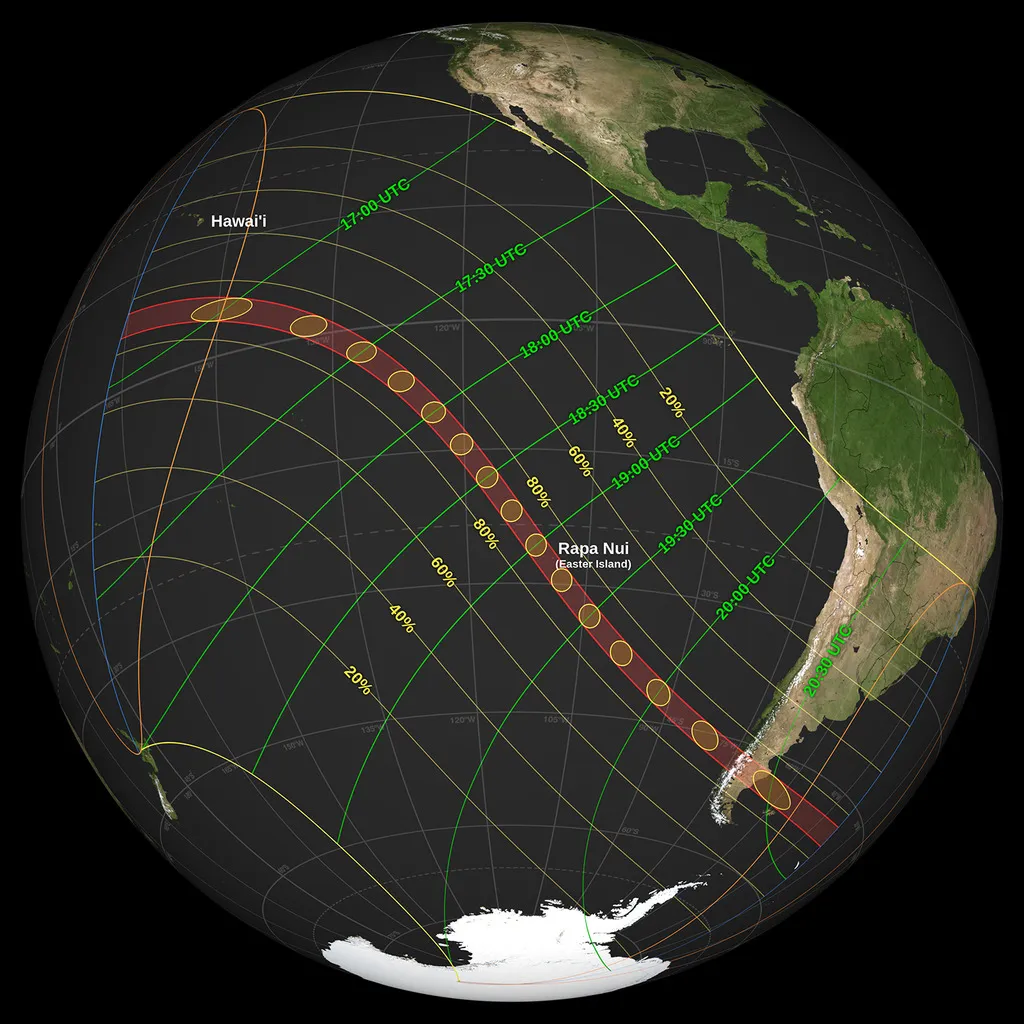
    An annular solar eclipse occurred on October 2, 2024, beginning at 11:42 a.m. EDT (1542 GMT) and peaking at 2:45 p.m. EDT (1845 GMT). The eclipse was fully visible as an annular eclipse from parts of Argentina and Chile, while a partial eclipse was observed in regions of South America, North America, Antarctica, and parts of the Atlantic and Pacific Oceans.

    The annular eclipse, visible from Santa Cruz, Argentina, and Easter Island, Chile, produced the characteristic ‘ring of fire’ as the moon, at its farthest point from Earth, appeared smaller than the sun. Approximately 93% of the sun was covered during the event, forming the annulus, Latin for ‘ring.’

    Partial solar eclipse visibility extended to Punta Arenas, Chile; Santiago, Chile; Buenos Aires, Argentina; Montevideo, Uruguay; and Rio de Janeiro and São Paulo, Brazil, as well as parts of Antarctica, Hawaii, Kiribati, Tokelau, Samoa, the Cook Islands, French Polynesia, Tuvalu, and Fiji.

    The detailed list is published on Timeanddate.com.

    Map of Annular solar eclipse
    A map showing the path of the eclipse. Image credit: NASA

    When does an Annular Solar Eclipse occur?

    Annular solar Eclipse diagram
    A diagrammatical representation of a solar eclipse.

    An annular solar eclipse occurs when the moon passes between the earth and the sun when it is at its farthest point from the earth, making it appear smaller than the sun and creating a ring around the moon, or what we call a ‘ring of fire’ in the sky.

    During this year’s annular solar eclipse, the sun will be 93% covered by the moon, creating an ‘annulus,’ Latin for ‘ring.’

    When does a Partial Solar Eclipse occur?

    A partial solar eclipse occurs when the moon passes between the earth and the sun. The partial solar eclipse is observed from places that lie away from the center of the eclipse but still within the moon’s shadow. The sun looks crescent, as it is not completely covered by the moon.

    Will the Annular Solar Eclipse be visible from India?

    The eclipse will be visible from parts of South America, North America, Antarctica, the Atlantic Ocean, and the Pacific Ocean, but it won’t be visible from India, as the eclipse will occur at night when the sun will be below the horizon, and thus the observers from India won’t be able to see it.

    How to see a Solar Eclipse safely?

    During an eclipse, the moon covers part of the sun. This scenic view is beautiful to watch, but looking straight at the sun can harm your eyes and make you blind. Using solar eclipse glasses is much better, as it will protect your eyes from any damage and will allow you to see other future celestial events.

    Also, you should never look at the sun with binoculars, a telescope, a camera lens, or any other type of optical object, as the concentrated sun rays collected by these objects can cause serious harm and permanent blindness in some cases if viewed through them.

  • Stunning Photos Capture Rare Supermoon Harvest Moon Eclipse on September 17-18, 2024

    Stunning Photos Capture Rare Supermoon Harvest Moon Eclipse on September 17-18, 2024

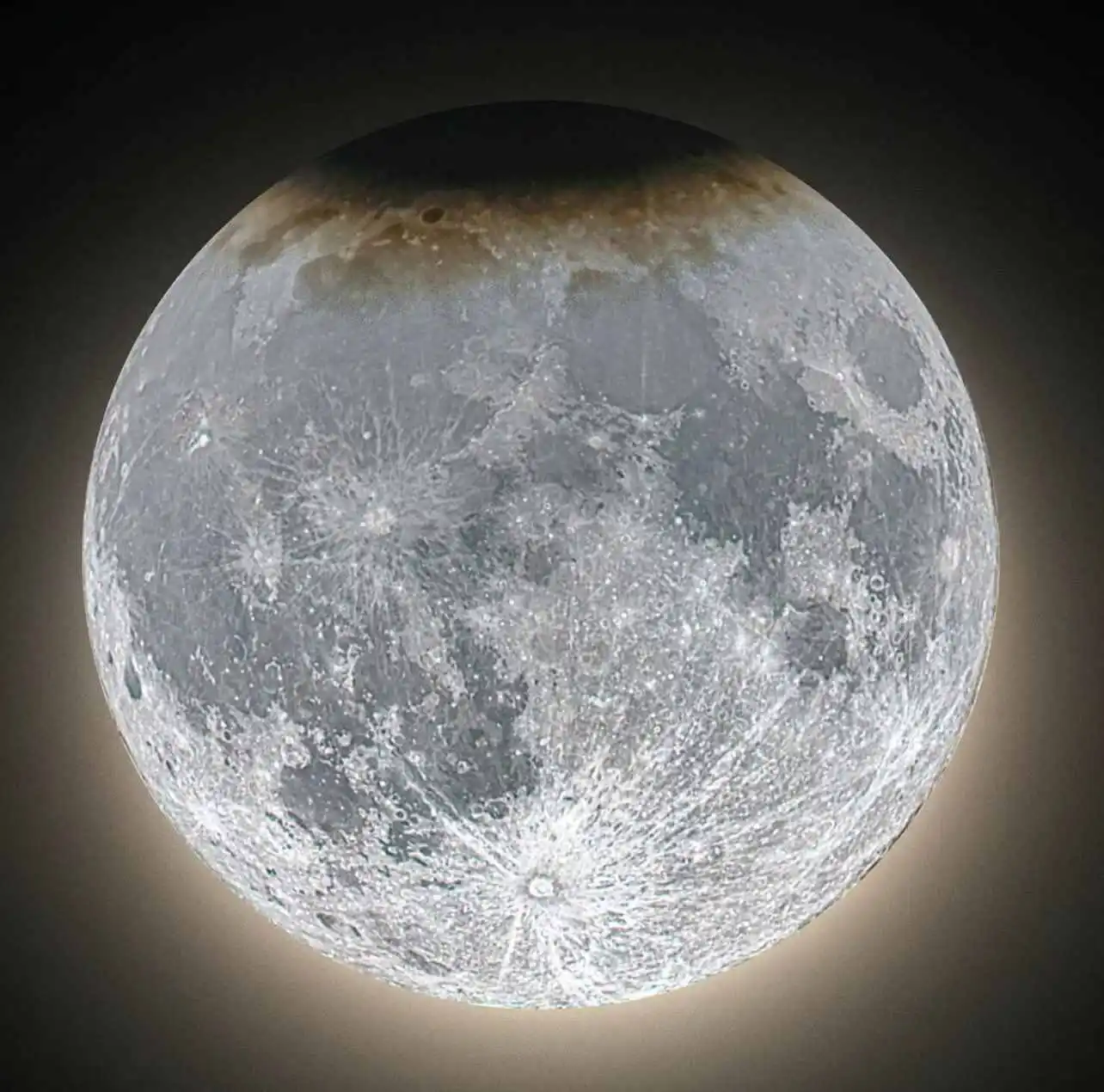
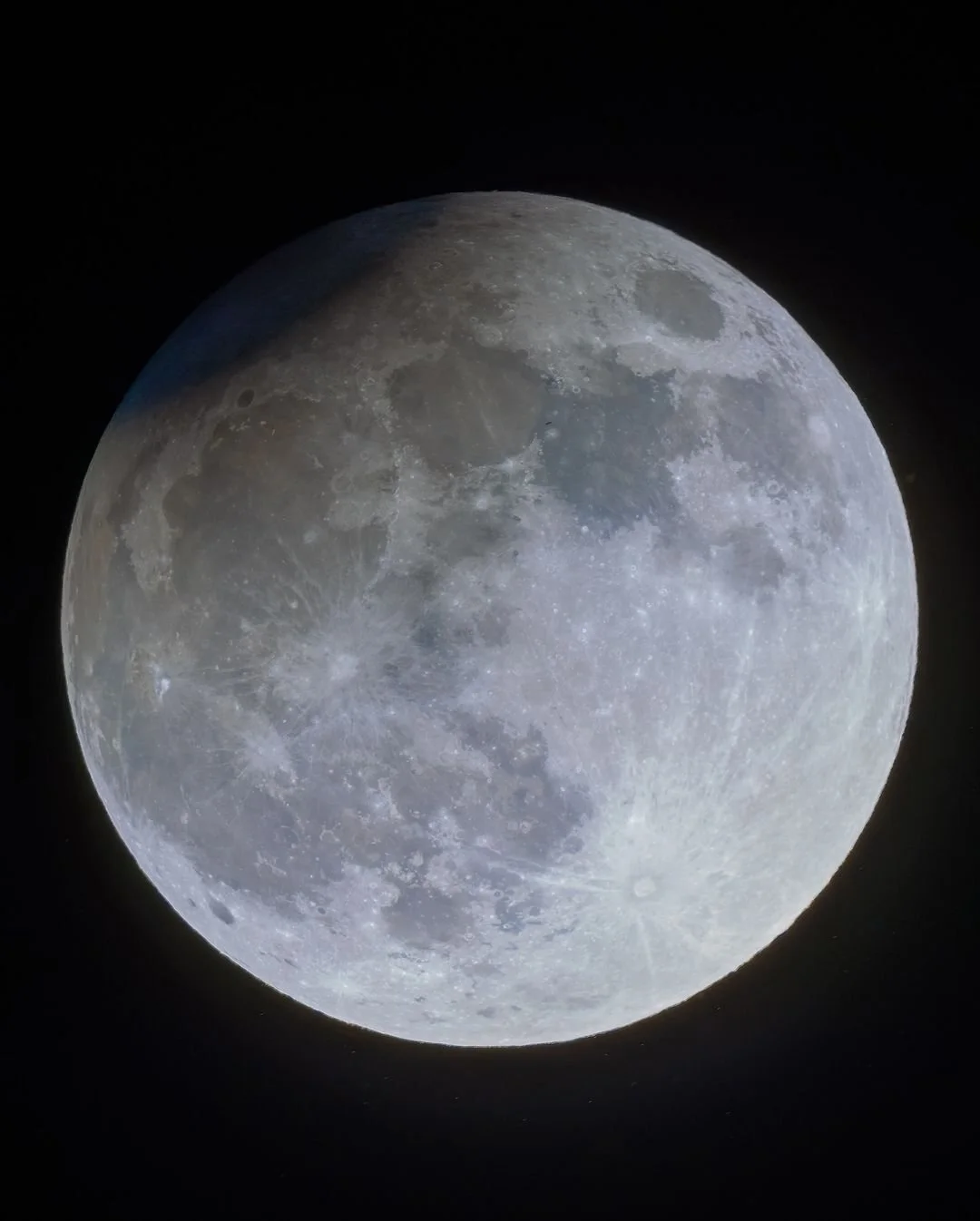
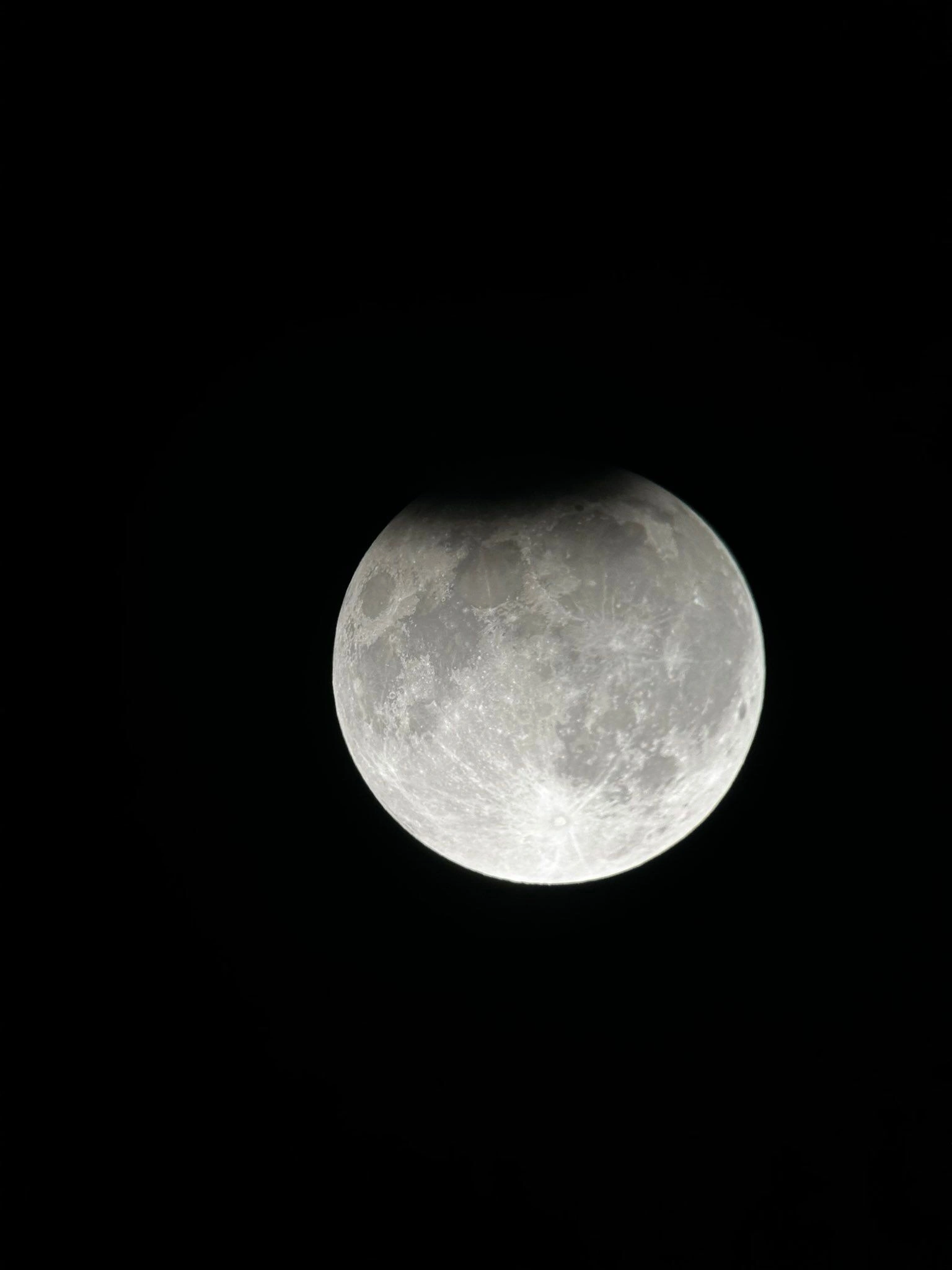
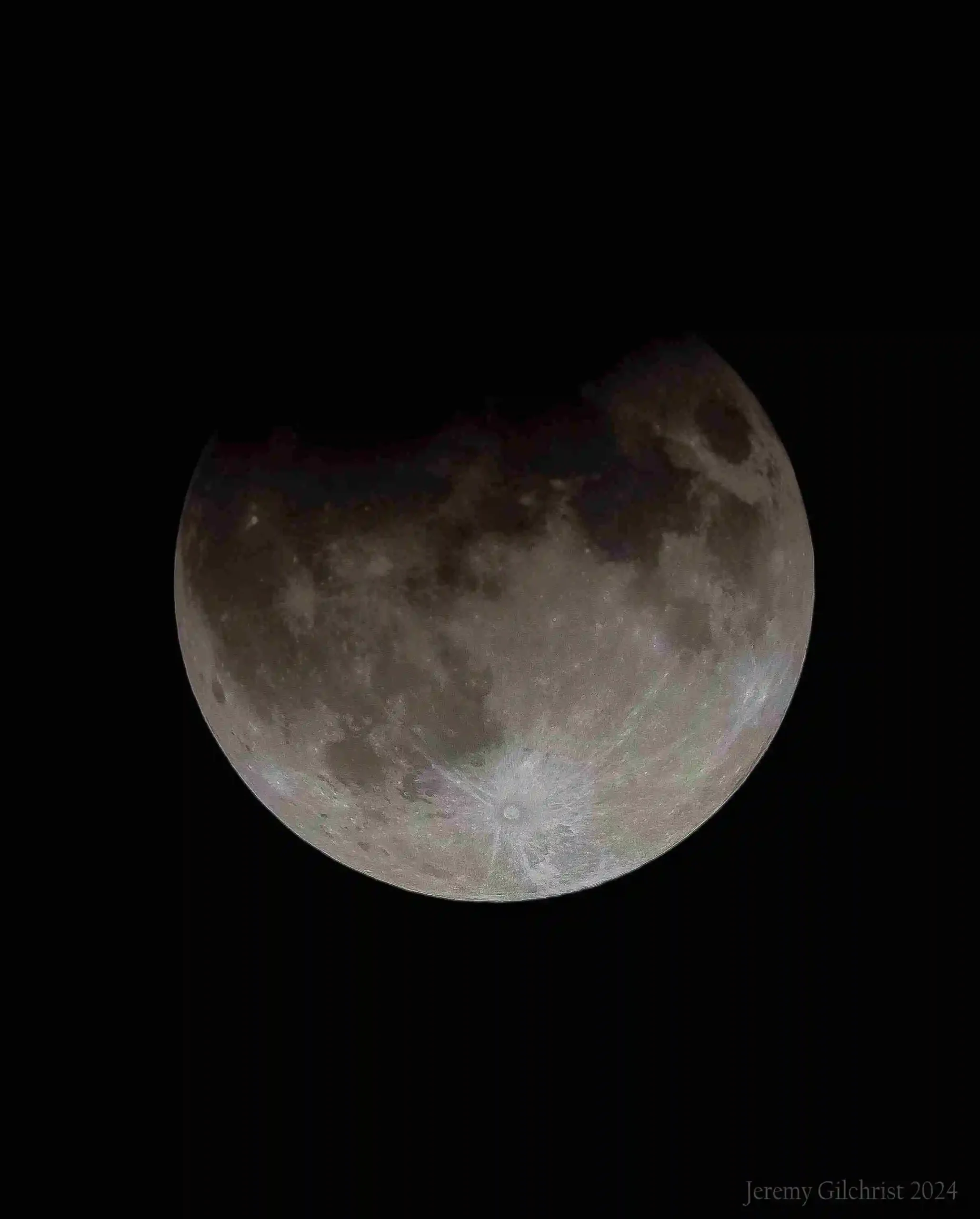
    The rare combination of a supermoon and the harvest moon eclipse on September 17-18, 2024, captivated observers around the world. The partial lunar eclipse coincided with the harvest moon, enhancing its visual impact and leaving witnesses amazed by the celestial display.

    Photographers, both professional and amateur, captured some remarkable images of the event. Highlights include shots from Abhimanyu Singh, Rami Ammoun, Evan Benko, and Jeremy Gil Chris. These photographs showcase the intricate details and rich colors of the moon during the eclipse.

    mini magick20240921 34469 mm49aw
    Image credit: Abhimanyu Singh
    The partial lunar eclipse right now PartialLunarEclipse
    Image credit: Rami Ammoun
    mini magick20240921 35446 6wnojw
    Image credit: Evan Benko
    mini magick20240921 34469 2jnv3v scaled
    Image credit: Jeremy Gil Chris

    Capturing such images requires knowledge of astrophotography techniques, telescope adjustments, and camera settings. Read our detailed astrophotography guide and telescope guide to learn more about photographing the night sky and experiencing the magic of celestial events firsthand.

  • Earth’s Temporary Mini-Moon 2024 PT5 Leaves Orbit After Two Months, Next Visit in 2055

    Earth’s Temporary Mini-Moon 2024 PT5 Leaves Orbit After Two Months, Next Visit in 2055

    Earth had a temporary mini-moon for the past two months as asteroid 2024 PT5 orbited the planet from September 29. The small asteroid left Earth’s orbit on November 25, with its next close approach scheduled for November 8, 2055, according to Space.com. Measuring about 10 meters (33 feet) in diameter, 2024 PT5 was too small to be seen with the naked eye, unlike larger asteroids such as Apophis or Bennu.

    NASA’s Asteroid Terrestrial-impact Last Alert System (ATLAS) discovered 2024 PT5 on August 7, 2024, from its Hawaii observatory. The asteroid’s designation reflects the year of discovery and its sequence. ATLAS, which tracks potentially hazardous asteroids, also discovered comet Tschunishan-Atlas, visible between September 27 and October 24.

    Classified as an Apollo-class near-Earth object (NEO), 2024 PT5 temporarily orbited Earth before returning to its regular orbit around the Sun. The asteroid did not pose any collision threat during its stay.

    Mini-moons are asteroids that get caught in Earth’s gravity during a flyby and orbit the planet briefly. NASA monitors around 28,000 NEOs, including such temporary satellites.

    Historically, mini-moons are rare. Asteroid 2022 NX1 orbited Earth in 1981 and again in 2022. Asteroid 2006 RH120 remained in orbit for a year, from 2006 to 2007. In 2020, a piece of space debris from a 1966 rocket launch became the third mini-moon.

  • NGC 1499 captured by a 14-year-old is amongst the winners of Astronomy Photographer of the Year 2024 

    NGC 1499 captured by a 14-year-old is amongst the winners of Astronomy Photographer of the Year 2024 

    Royal Observatory, Greenwhich, held the Astronomy Photographer of the Year 2024 competition this year. The competition is held every year in 11 categories. Many amateur and professional astrophotographers around the world participate in this competition.

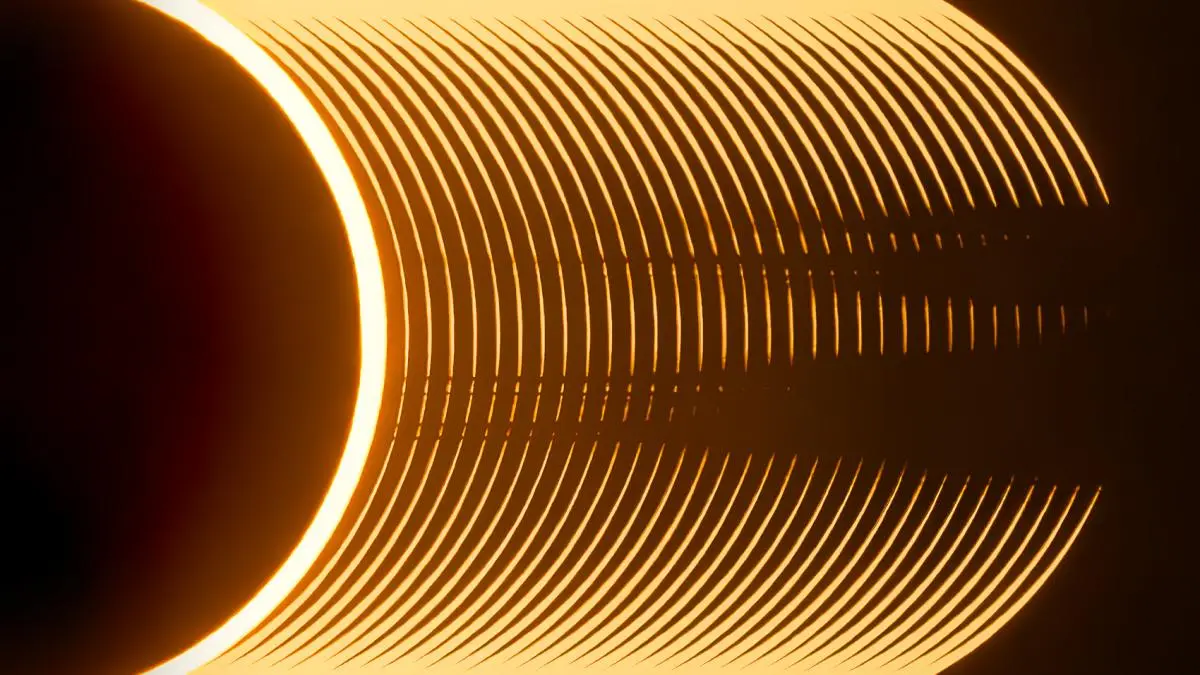
    A panel of judges selects the category winner and an overall winner. This year the Royal Observatory Greenwhich received around 3500 images, which is a great number for an astrophotography competition. The overall winner was a stunning annular solar eclipse image captured by Ryan Imperio.

    Here is a sneak peek of some of the category winners and the overall winner photograph.

    Overall Category Winner- Bailey’s Beads by Ryan Imperio

    Overall winner of the Astronomy Photographer of the Year contest 2024
    The image is a composite image of an annular solar eclipse showing Bailey’s beads is an overall winner of the Astronomy Photographer of the Year contest 2024. Image credit: Ryan Imperio via Royal Museum Greenwhich

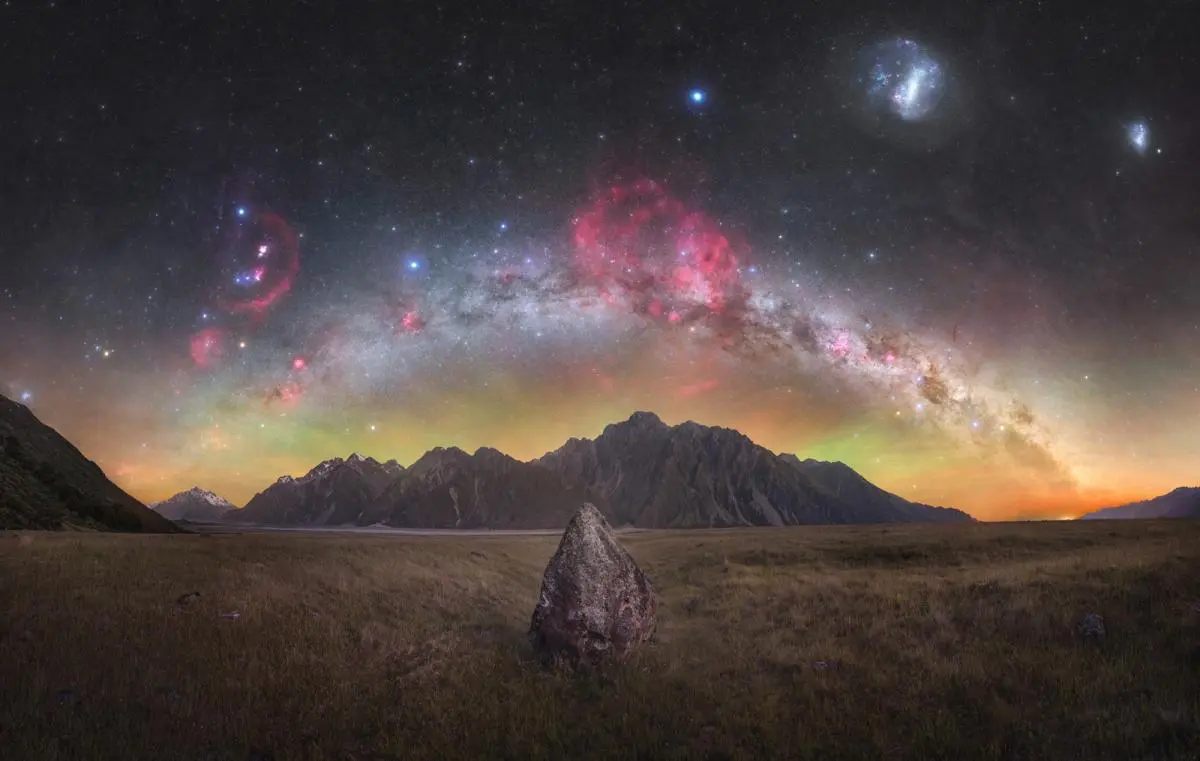
    Syscapes Category Winner- Tasman Gemsby Tom Rae

    'Skyscapes' category winner of the Astronomy Photographer of the Year Contest 2024
    The image shows the hydrogen clouds of the gum nebula above the peak of the Tasman Valley. The image is a ‘Skyscapes’ category winner of the Astronomy Photographer of the Year Contest 2024. Image credit: Tom Rae via Royal Museum Greenwhich

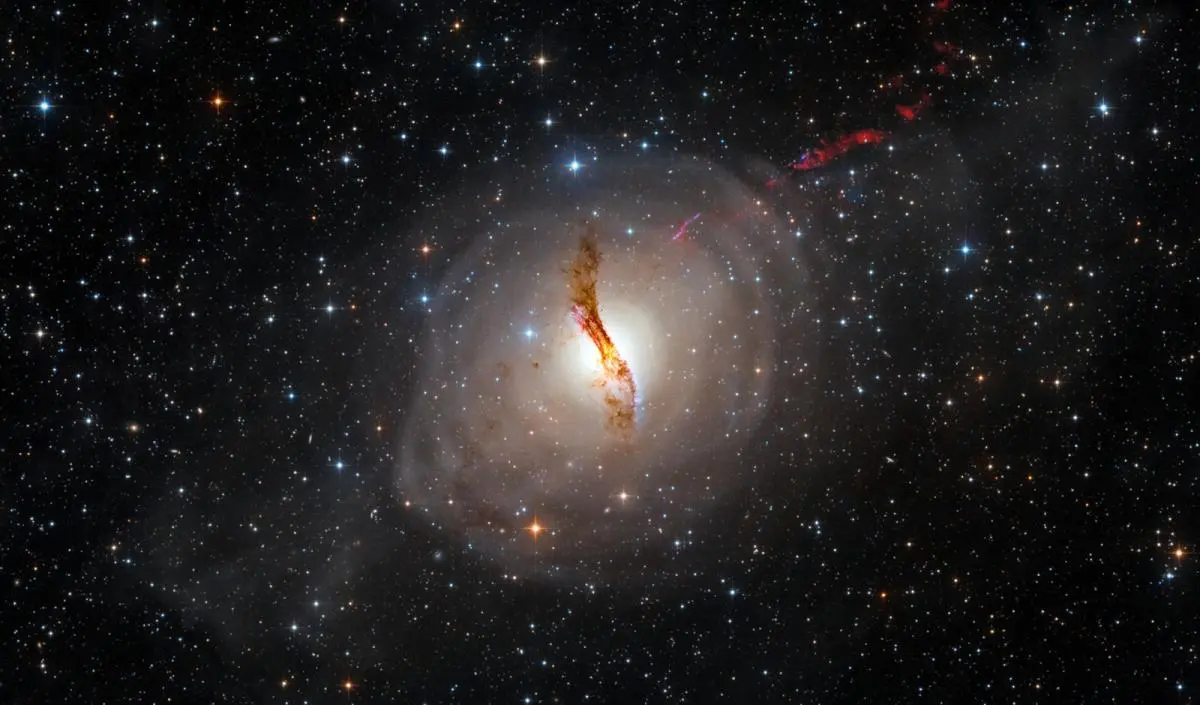
    Galaxies category winner- Echoes of the Past by Bence Tóth and Péter Feltóti

    'Galaxies' category winner of the Astronomy Photographer of the Year contest 2024
    The image shows the galaxy NGC 5128 and its surrounding tidal wave system. The image is a ‘Galaxies’ category winner of the Astronomy Photographer of the Year contest 2024. Image credit: Bence Tóth and Péter Feltóti via Royal Museum Greenwhich

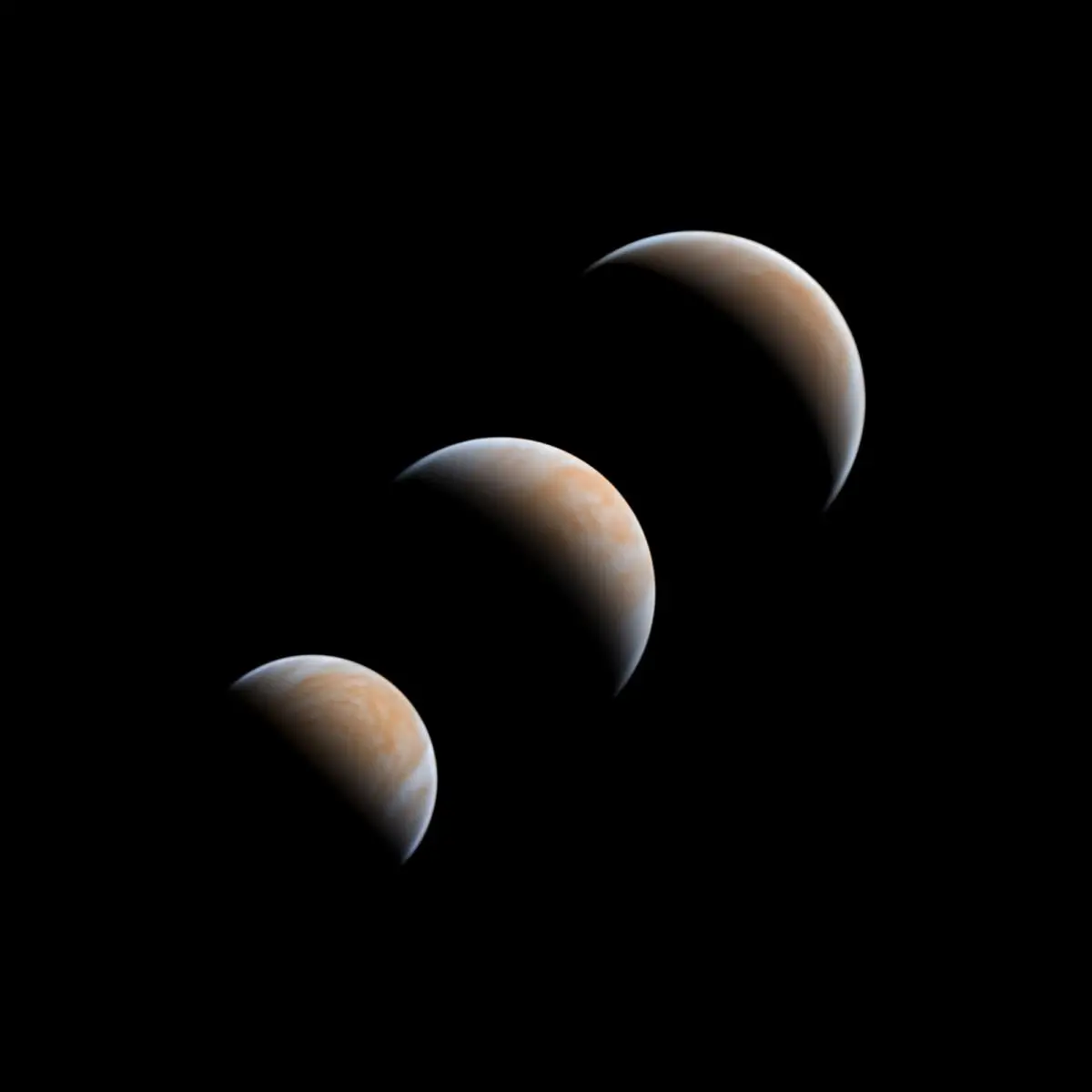
    Planets, Comets and asteroids category winner- On Approach by Tom Williams

    'Planets, Comets, and Asteroids' category winner of the Astronomy Photographer of the Year contest 2024
    The image is a false colour composite of the phases of Venus on approach to inferior conjunction. The image is a ‘Planets, Comets, and Asteroids’ category winner of the Astronomy Photographer of the Year contest 2024. Image credit: Tom Williams via Royal Museum, Greenwhich

    To see other stunning images of the winners and read the stories behind these mind-boggling captures, visit the Royal Museum, Greenwhich Astronomy Photographer of the Year 2024 page.

  • ISRO Chief Warns of Asteroid Apophis Threat, Calls for Global Cooperation on Planetary Defense

    ISRO Chief Warns of Asteroid Apophis Threat, Calls for Global Cooperation on Planetary Defense

    The Indian Space Research Organization (ISRO) is stepping up its monitoring of asteroid 99942 Apophis, a 370-meter-wide rock nicknamed the “God of Chaos,” which will make a close pass by Earth on April 13, 2029, and again in 2036.

    ISRO Chairman Dr. S. Somanath said in an interview with News18 that a large asteroid strike poses a real risk to humanity. “After all, we have only one Earth to live on. India will cooperate with all nations to ward off this and other such future threats,” he said.

    Apophis will pass within 32,000 kilometers of Earth in 2029, closer than many satellites in orbit. Although scientists say it is unlikely to hit Earth, even a small change in its path could have serious consequences.

    To track the asteroid and other near-Earth objects, ISRO uses its Network for Space Objects Tracking and Analysis (NETRA) system, based at ISTRAC in Bengaluru. Launched in December 2020, NETRA monitors space debris, space weather, and potential impact threats as part of India’s planetary defense efforts.

    Dr. Somanath stressed that studying Apophis is vital to improving global readiness. He said coordinated efforts between space agencies worldwide will be essential in building a reliable defense system to protect Earth from possible future collisions.

  • Asteroid Burns Up Over Philippines Creating Spectacular Fireball Display

    Asteroid Burns Up Over Philippines Creating Spectacular Fireball Display

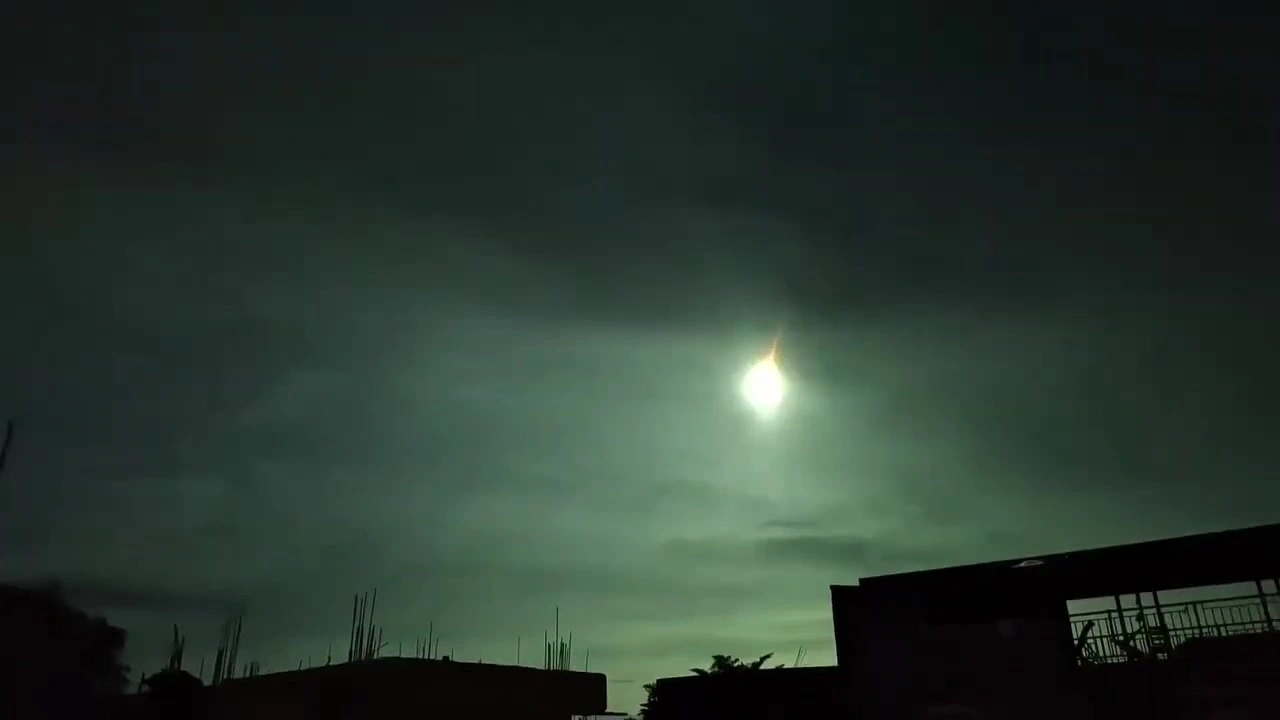
    A small asteroid streaked across Philippine skies Wednesday afternoon, creating a brilliant fireball that amazed onlookers before burning up in Earth’s atmosphere over Luzon Island.

    The space rock, designated 2024 RW1, measured roughly one meter across and struck the atmosphere at 17:08 UTC (1:08 a.m. local time Thursday). Scientists had tracked the asteroid’s approach for hours after its discovery earlier that morning.

    Research technologist Jacqueline Fazekas spotted the incoming asteroid using the NASA-funded Catalina Sky Survey telescope near Tucson, Arizona. The discovery came just hours before impact, giving astronomers time to predict its path and warn the public.

    The European Space Agency posted on social media platform X shortly before the strike, telling residents they might witness “a spectacular fireball” but that the object posed no danger.

    Video footage captured the asteroid’s final moments as it blazed through the atmosphere at tremendous speed. The space rock traveled at 17.6 kilometers per second (roughly 63,360 kilometers per hour), disintegrating completely.

    The timing allowed the asteroid to be visible during evening hours across parts of the Philippines. Witnesses reported seeing a bright streak of light followed by a glowing trail that lasted several seconds.

    Such small asteroids regularly enter Earth’s atmosphere, with most burning up completely before reaching the ground. NASA estimates that objects of this size hit our planet’s atmosphere about once every two weeks, though many occur over remote areas or during daylight hours when they’re harder to spot.

    The successful detection and tracking of 2024 RW1 represents another win for planetary defense systems. These networks of telescopes constantly scan the skies for potentially dangerous asteroids, though objects this small pose no real threat.

    Much larger near-Earth objects continue to pass by our planet regularly. Recent close approaches included asteroids 2024 PQ5, 2011 MW1, and 2020 RL, all significantly bigger than Wednesday’s visitor but still maintaining safe distances from Earth.

    The Philippines event marks the latest in a series of small asteroid impacts that have been successfully predicted in advance, showing how astronomical surveillance systems have improved in recent years.

  • Saturn enters opposition: Watch Saturn at its largest and brightest 

    Saturn enters opposition: Watch Saturn at its largest and brightest 

    The beautiful ringed planet Saturn entered opposition on September 7 and 8. This was significant, as Saturn appeared the largest and brightest from Earth during that time. On these dates, Earth was positioned right between Saturn and the Sun. This alignment allowed Saturn to shine brighter and larger than usual.

    Using a telescope or binoculars was recommended, as the majestic rings of Saturn weren’t visible to the naked eye. As estimated, Saturn rose around 6 pm local time on September 7, and it set between 5:30 and 6:30 am local time on September 8.

    For those who caught this event, it was a special opportunity, as the next Saturn opposition will occur on September 21, 2025. During this event, Saturn was located in the constellation Aquarius. Skywatching software or a sky chart was recommended to find Saturn’s exact location, and using a telescope enhanced the view. The planet reached its peak around midnight local time, appearing highest in the sky.

    During this once-in-a-year astronomical event, Saturn looked more beautiful than usual, as the bright direct sunlight made its rings more visible and appear brighter. This phenomenon is known as the Seeliger Effect, named after the German astronomer Hugo Seeliger, who first described it.

    On September 7, the moon was a waxing crescent, around 18% full, so moonlight did not interrupt skywatching sessions. Clouds, however, were a concern, as rains were increasing in some parts of India.

  • Partial Lunar Eclipse and Rare Super Harvest Moon Captivate Skywatchers Worldwide

    Partial Lunar Eclipse and Rare Super Harvest Moon Captivate Skywatchers Worldwide

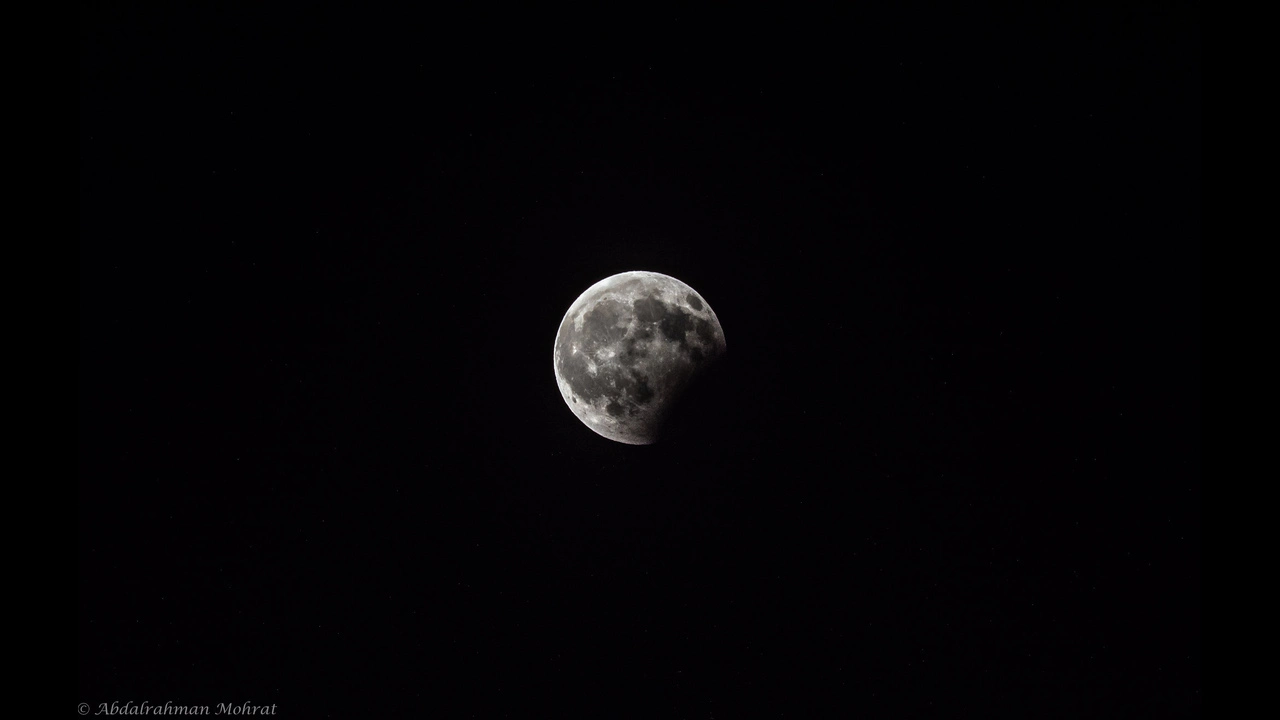
    A rare astronomical event unfolded on September 17–18, 2024, when a partial lunar eclipse coincided with the Super Harvest Moon. The spectacle was visible across large parts of Asia, Africa, North America, South America, and the world’s oceans, drawing attention from professional astronomers and casual stargazers alike.

    The eclipse lasted just over four hours, offering millions of people a chance to see the Moon partially darkened as Earth’s shadow moved across its surface.

    Timing and Visibility

    The eclipse began at 8:41 p.m. EDT on September 17, reached its maximum phase at 10:44 p.m. EDT, and ended at 12:47 a.m. EDT on September 18. At its peak, about a quarter of the Moon’s surface appeared darker as it passed through Earth’s umbra. The long duration and widespread visibility made it one of the most-watched lunar events of the year.

    What Made It Special?

    This eclipse stood out because it coincided with the Harvest Moon and a Supermoon. The Harvest Moon is the full moon nearest to the autumnal equinox, providing brighter evenings that historically helped farmers bring in crops.

    A supermoon occurs when the Moon is at perigee, its closest point to Earth, making it appear up to 14% larger and 30% brighter than average. The combination of these events with an eclipse made for an especially striking night sky.

    Observers also noted the Moon’s distinct orange hue, caused by its lower position in the sky during autumn and Earth’s atmosphere scattering shorter wavelengths of light.

    Understanding Lunar Eclipses

    A lunar eclipse happens when Earth moves between the Sun and the Moon, casting a shadow on the lunar surface. Eclipses only occur during full moons. There are three main types:

    • Total lunar eclipse: the entire Moon is covered by Earth’s shadow.
    • Partial lunar eclipse: only part of the Moon passes through Earth’s shadow.
    • Penumbral lunar eclipse: the Moon passes through the outer part of Earth’s shadow, often subtle and difficult to see.

    The most recent lunar eclipse before this one occurred on March 25, 2024, and was penumbral in nature.

    How to Watch and Capture an Eclipse?

    Unlike solar eclipses, lunar eclipses are safe to watch with the naked eye. Using binoculars or a telescope can enhance the view, allowing observers to see lunar craters and details more clearly. Many astronomy enthusiasts also took the chance to photograph the event.

    To capture sharp images, experts recommend using a DSLR or mirrorless camera with manual settings, mounted on a sturdy tripod. Adjusting ISO, aperture, and shutter speed can bring out different details, while a remote shutter or timer helps reduce camera shake.

    The September 2024 eclipse was the year’s last significant lunar eclipse, but more are on the horizon. According to astronomers, a total lunar eclipse is expected in March 2025, visible across parts of North and South America, Europe, and Africa. For those who missed this Super Harvest Moon eclipse, the coming year will provide another opportunity to witness one of nature’s most dramatic night-sky displays.

    Refer to our Full Moon Calendar for more!

  • 140-Foot Asteroid ‘2024 PQ5’ Speeds Past Earth at 3.2 Million Miles Away

    140-Foot Asteroid ‘2024 PQ5’ Speeds Past Earth at 3.2 Million Miles Away

    A 140-foot asteroid named 2024 PQ5 passed Earth on August 20, coming within 3.2 million miles of the planet, which is pretty close by astronomical standards, though still a safe distance. NASA monitored the object closely because any shift in its orbit could have posed a potential threat, but the asteroid passed without incident.

    The asteroid, roughly the size of a small ship, belongs to the Apollo group, a class of near-Earth asteroids whose orbits cross Earth’s path around the Sun. Traveling at a speed of about 28,128 miles per hour, 2024 PQ5 was classified as a near-Earth object (NEO), meaning its trajectory brings it within 120 million miles of Earth.

    NASA tracks thousands of NEOs using an array of telescopes and radar systems, including the Near-Earth Object Wide-field Infrared Survey Explorer (NEOWISE). These tools allow scientists to calculate asteroid paths years in advance and assess any potential risk to Earth.

    Flybys like this are not unusual. NASA says small- to medium-sized asteroids frequently pass by Earth at varying distances, most of them harmless. In fact, at least five more asteroids are expected to make close approaches before the end of the month, though none pose a danger.

    While 2024 PQ5’s flyby was uneventful, it underscores the importance of tracking near-Earth objects. Scientists continue to study asteroid movements as part of broader planetary defense efforts, which include projects like NASA’s DART mission that successfully tested deflecting an asteroid in 2022.