Category: Astronomy

Look deeper into the science of the stars. This section explores celestial events, cosmic phenomena, and the latest research that helps us understand how the universe came to be and where it’s headed.

  • ESA maps path of interstellar comet 3I ATLAS using rare images captured from Mars

    ESA maps path of interstellar comet 3I ATLAS using rare images captured from Mars

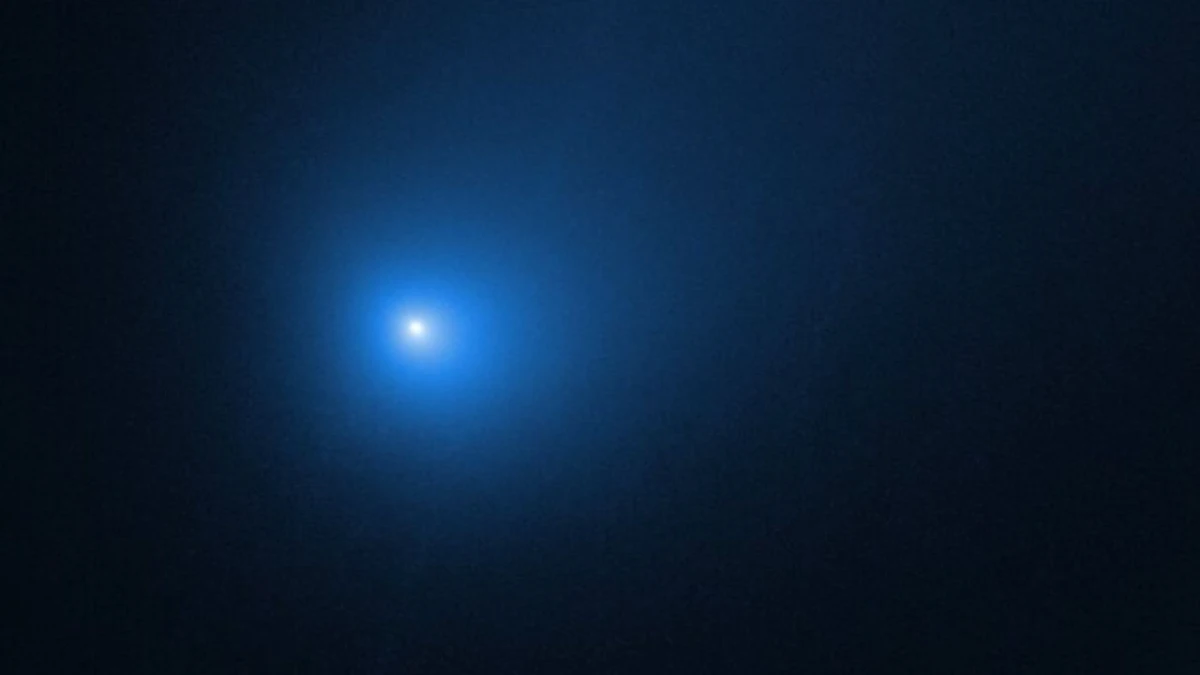
    Scientists at ESA (European Space Agency) have produced the clearest tracking yet of comet 3I ATLAS, an interstellar visitor first detected in July 2025 as it entered the Solar System at high speed. The agency combined telescope data from Earth with images taken by spacecraft orbiting Mars, which improved the comet’s predicted course by ten times. The comet is the third confirmed object from outside the solar system and will leave the region later this year.

    Astronomers first identified 3I ATLAS with the ATLAS telescope in Chile on July 1, 2025. Its speed and curved path showed that it was not bound to the Sun. Instead, it was passing through once before heading back into interstellar space. Only two similar objects have been confirmed before. One was 1I/Oumuamua in 2017, and the other was 2I/Borisov in 2019.

    Unlike Oumuamua, which behaved more like a rocky body, this comet produces a cloud of gas and dust around its nucleus. Observations from Hubble and the James Webb Space Telescope confirmed water, carbon monoxide, and traces of nickel coming from its surface. Early findings suggest the comet may be several billion years old, possibly older than the Sun.
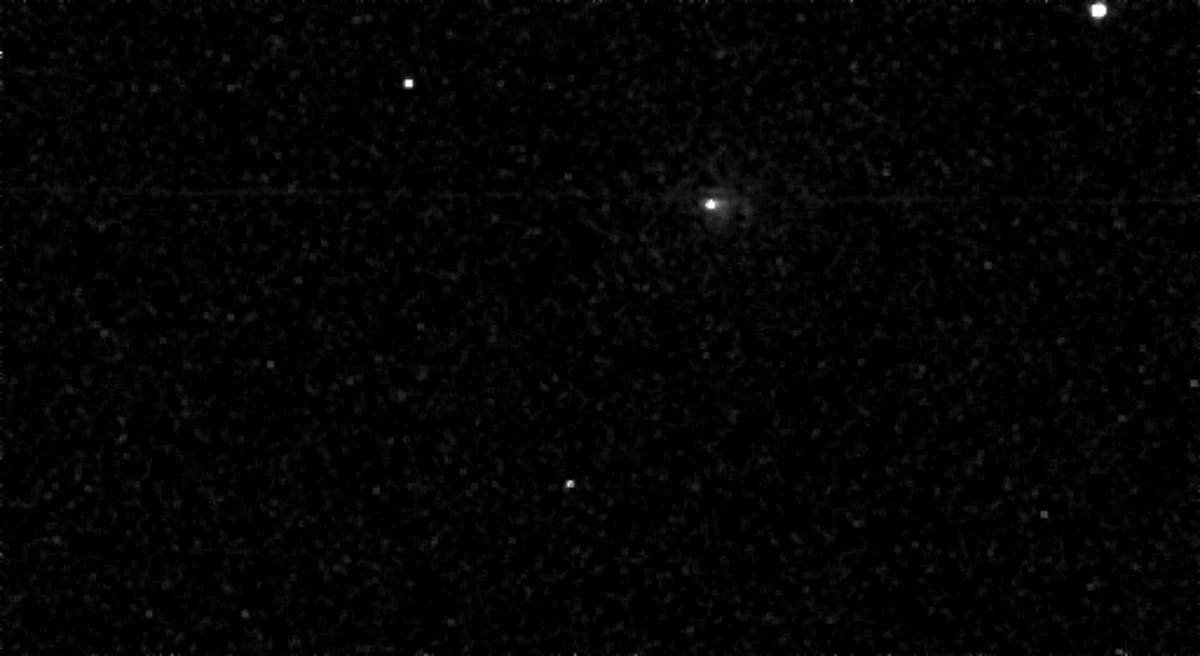
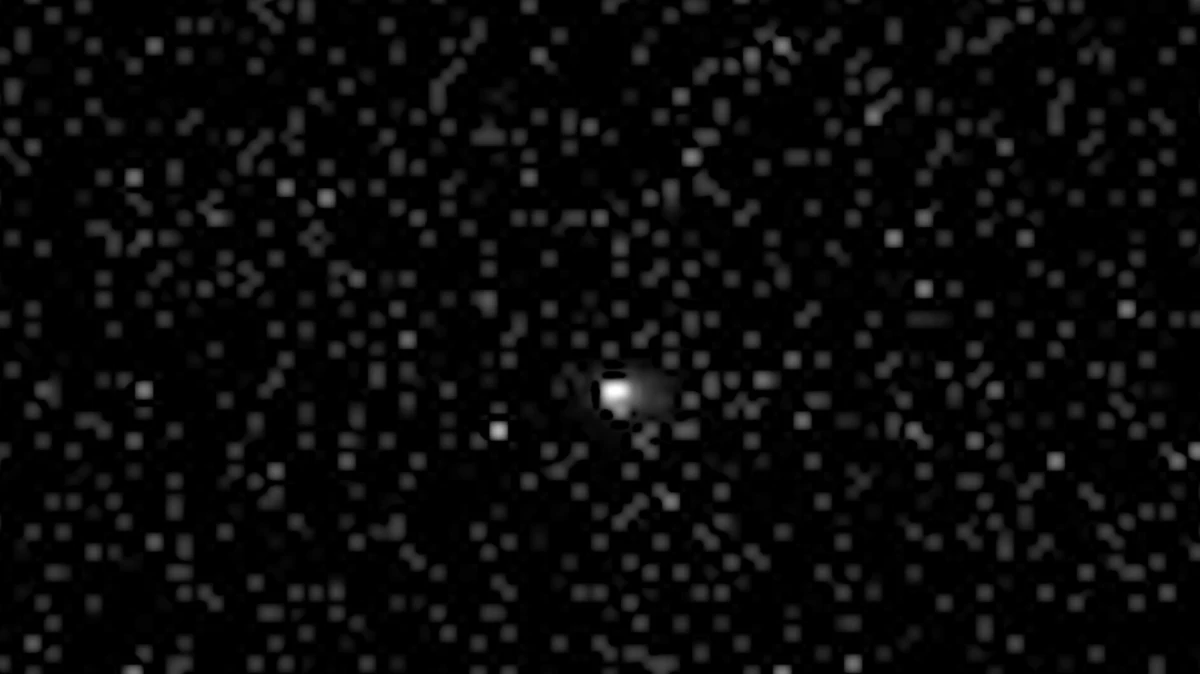
    IInterstellar comet 3I ATLAS captured by ESAs ExoMars trace gas orbiter.
    Interstellar comet 3I ATLAS captured by ESA’s ExoMars trace gas orbiter. Image credit: ESA

    The comet passed about 29 million kilometers from Mars on October 3, 2025. The distance was close enough for ESA’s ExoMars Trace Gas Orbiter to capture a set of images that showed the comet moving across a field of stars. Mars Express also observed it during the same period.

    These views from a different angle helped reduce the uncertainty in the comet’s position and improved predictions for its path. ESA said this was the first time measurements from a spacecraft orbiting another planet were added to the official Minor Planet Center database.

    The comet does not pose any danger to Earth. Its closest approach is far beyond the orbit of Mars. Even so, the event served as a practical test for teams that monitor objects that could one day threaten the planet. If a hazardous asteroid ever appears, data from spacecraft around other planets could help confirm its trajectory.

    The comet remained active as it passed the Sun on October 30, 2025. Telescopes have recorded long tails and narrow jets coming from its surface. Most researchers say the features match what they expect from an icy body heating up near the Sun. A few unusual details have drawn attention but do not change the overall picture.

    More images will arrive in 2026 from ESA’s Juice spacecraft, which observed the comet soon after its closest approach to the Sun. ESA also plans to use its upcoming NeoMIR mission to detect objects hidden in sunlight and its Comet Interceptor mission to target future visitors from deep space.

    Comet 3I ATLAS is already moving back toward the outer solar system, but the brief chance to track it from both Earth and Mars has given scientists a clearer look at material from another star system. The data shows how rare encounters like this can help identify and study objects that travel between the stars.
    Source: ESA pinpoints 3I/ATLAS’s path with data from Mars

  • Skydiver appears to cross the Sun in a once-in-a-lifetime shot captured over Arizona

    Skydiver appears to cross the Sun in a once-in-a-lifetime shot captured over Arizona

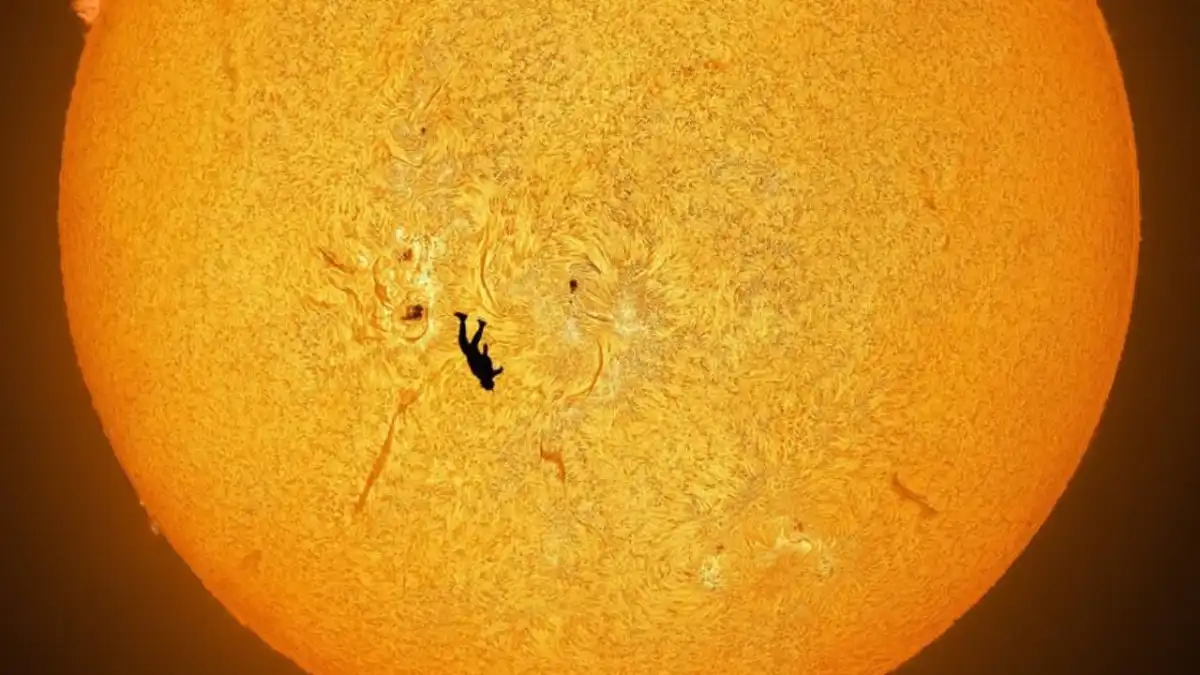
    An Arizona photographer and a skydiver captured a rare image on November 8 that shows a human figure crossing the face of the sun. Photographer Andrew McCarthy and skydiver Gabriel Brown spent months planning the attempt, making six passes over the desert before securing the frame that later spread across social media. Their aim was to line up a freefalling skydiver with the rising sun and capture the moment through a solar telescope.

    McCarthy, known for detailed images of the sun, had wondered whether a person could appear clearly in front of the bright disk without losing focus or contrast. Brown, an experienced skydiver, agreed to join the effort. They selected a site outside Phoenix where the terrain, the sun’s position, and the flight path could align.

    The idea came earlier in the year after the pair made a skydive together. The final shot was later titled The Fall of Icarus.

    We asked Andrew McCarthy about what went into creating this image. Here’s what he told us:

    What inspired you to attempt a shot of a skydiver crossing the sun?

    “My friend Gabriel Brown and I went skydiving together shortly after I released a photo of a different type of solar transit, which made us think of doing the shot.”

    How did you plan the timing and alignment for the capture?

    “The alignment was thanks to our pilot, Jim Hamberlin, who watched for the bloom created by the aircraft in sunlight on the ground and expertly guided it towards where I was on the ground.”

    What gear and settings made this shot possible?

    “This was shot using a telescope modified to see hydrogen-alpha light in a narrow enough bandpass to see the atmosphere of the sun. Exposures were short; I was shooting 1/1000 at 300 gain to properly expose with minimal motion blur.”

    Did you coordinate with the skydiver, or was it based on prediction?

    “Yes, this was highly planned and coordinated in real time via a 3-way call between myself, the pilot, and the skydiver.”

    What was the biggest challenge during the shoot?

    “Getting the alignment right was the biggest challenge in the moment. It took 6 passes where we got an attempt where the skydiver would pass through the narrow FOV of the telescope.”

    What went through your mind when you saw you got the frame?

    “I was almost stunned. I couldn’t believe we not only got the shot, but it was in focus and aligned.”

    How much post-processing did the final image need?

    “Similar to any hydrogen-alpha solar shot, the image was stacked for clarity and colored in post processing, as a monochrome camera was used.”

    Why do you think this shot has taken off on social media?

    “This is a hopeful image, one that displays the tenacious nature of humanity against the raw power of our star. It’s also unlike anything else out there, which I think helped make it popular.”

    What do you hope people notice or feel when they look at it?

    “I hope people realize that the sky is not the limit.”

    What’s the next idea you’re excited to work on?

    “I can’t really share yet, but let’s just say I hope it is as impactful as this one!”

    This project shows how much can happen when creativity, skill, and a bit of boldness come together. Capturing a skydiver crossing the face of the sun isn’t just a technical achievement. It’s a reminder that there’s still plenty of room to chase ideas that feel impossible at first.

  • Another Interstellar Comet appears out of nowhere! Amateur astronomer in Crimea discovers C/2025 V1

    Another Interstellar Comet appears out of nowhere! Amateur astronomer in Crimea discovers C/2025 V1

    An amateur astronomer has discovered a new interstellar comet, designated C/2025 V1. Found just ten days before its closest approach to Earth, the comet was spotted by Gennadiy Borisov at his observatory in Crimea. On November 11, it passed about 103 million kilometers from Earth, well beyond any danger zone, but near enough for scientists to determine that it probably originated from beyond our solar system.

    The same amateur observer found the first confirmed interstellar comet in 2019, making this a rare repeat discovery for a non-professional astronomer.

    Borisov works from a small observatory near Nauchnyj using a 0.65-meter telescope. On November 2, he recorded a faint object moving across the star field. He reported it to the Minor Planet Center, which collects and verifies such detections. Within hours, observatories in other countries confirmed the sighting. Independent confirmation is required before a new comet receives a formal designation, and C/2025 V1 cleared that step quickly.

    Tracking data shows the comet follows a hyperbolic orbit with an eccentricity of about 1.01. Objects that travel on these paths are not trapped by the Sun’s gravity. They enter the solar system, swing around the sun once, and leave for good.

    That path makes astronomers confident this object came from interstellar space. Its calculated speed far from the Sun is about 2 kilometers per second. That is slower than the 26 kilometers per second measured for the object known as ‘Oumuamua in 2017, but still fast enough that it is not bound to the Sun.

    This is Borisov’s second interstellar discovery. His earlier find, 2I/Borisov, flew through the solar system in 2019 with a clear tail and unusual chemical traces, including large amounts of carbon monoxide. C/2025 V1 appears fainter. Observers measure it at around magnitude 14.6, with only a small glow and no long visible tail. The comet will reach perihelion, its closest point to the Sun, on November 16 at about 0.46 astronomical units.

    For anyone hoping to view it, astronomers say the comet sits in the constellation Virgo before sunrise. From London, it rises around 4:30 a.m. and climbs to more than 40 degrees above the horizon. A small telescope or sensitive camera can detect it, though city lights make viewing harder. Sky-mapping apps can help locate it near the star Spica.

    Interstellar objects are uncommon. Only a small number have ever been confirmed. Because they formed around other stars, they may contain ices and dust that differ from comets native to this solar system.

    Large telescopes, including Hubble and the Vera Rubin Observatory, will study the new object as long as it remains bright enough. Researchers hope the data will improve models for how comets form around other stars and how often these visitors reach our neighborhood.

    For now, the comet is moving back toward deep space. It will fade over the next few weeks as it travels away from the Sun. Even so, the discovery gives astronomers another chance to study material that did not originate here, and it places Borisov in a rare group of observers who have found more than one interstellar traveler.

  • JWST detects rare Phosphine gas in distant Brown Dwarf, solving a long unsolved mystery

    JWST detects rare Phosphine gas in distant Brown Dwarf, solving a long unsolved mystery

    Astronomers have found phosphine gas in the atmosphere of a brown dwarf named Wolf 1130C, about 55 light-years away. The signal comes from new James Webb Space Telescope (JWST) data and matches predicted levels for the first time. The find helps explain why other cool objects in space appear to lack this gas, even though models say it should be present.

    Brown dwarfs sit between planets and stars. They are too small to shine through steady hydrogen fusion but too large to count as planets. Wolf 1130C is one of the cooler examples, with a temperature of around 600 Kelvin. It has a mass about 40 times greater than Jupiter and a similar size.

    The system that hosts it is unusual. Wolf 1130 includes a close pair: a small red dwarf star and a white dwarf formed from an older star. Wolf 1130C moves far from that pair, at a distance thousands of times greater than the space between Earth and the Sun. The entire system belongs to an old region of the Milky Way known as the thick disk. Stars in this region contain fewer heavy elements than younger stars closer to us.

    That low metal level turns out to be key. Heavy elements like iron and phosphorus formed in earlier stellar explosions. Many older stars have less iron, but some show higher phosphorus than expected. Wolf 1130C appears to be one of them.

    JWST used two instruments to study the object. First, the NIRSpec spectrograph recorded infrared light between 0.6 and 5.2 microns. Then, MIRI mapped longer wavelengths. Together, they produced clean signals with high clarity, letting scientists separate Wolf 1130C’s light from the bright pair nearby.

    In that data, researchers saw a small dip at a wavelength around 4.3 microns. That dip matches a pattern caused by phosphine gas. It includes several narrow features that rule out carbon dioxide, which can mimic this signal. Models that assume still, unchanging layers in the atmosphere fail to produce phosphine. But when mixing is added, the match becomes clear.

    The levels detected reach about 0.1 parts per million. That is 100 times higher than readings for another cold brown dwarf called WISE 0855-0714. It also lines up closely with predictions made before the observation.

    On Jupiter and Saturn, phosphine rises from deeper, hotter layers. Under calm conditions it would break apart, so its presence points to strong mixing. Until now, brown dwarfs and giant planets outside our solar system only showed upper limits, far below predicted levels. In many cases, carbon dioxide blocks the signal scientists look for.

    Wolf 1130C appears different. Its low metal level cuts carbon dioxide to tiny amounts. That opens a clear window where phosphine can be seen. Low metals change other chemistry too. A salt that normally removes phosphine forms deeper in the atmosphere, letting some phosphine reach higher layers instead of disappearing.

    The data also suggest that water, methane, and hydrogen sulfide match simple expectations. Carbon monoxide and phosphine do not, which again supports strong mixing. Carbon dioxide comes in far below one part per billion.

    The phosphorus level matches what astronomers see in other thick-disk stars, where it can be higher than iron. It could come from ancient supernova explosions that enriched some parts of the galaxy or past activity from the white dwarf in the system.

    The result matters for studies of distant planets. Phosphine once raised excitement on Venus as a possible sign of life, until later work showed non-biological ways to make it. Wolf 1130C is a clear example of a lifeless world that produces it through normal chemistry and motion in its atmosphere.

    Researchers plan to examine more cold objects using JWST. Early results have already found clear carbon dioxide on a hot planet called WASP-39b. With more data, astronomers hope to learn how common phosphine is and what that says about weather and chemistry on planets and brown dwarfs across our galaxy.

  • AI model Gemini learns to spot real supernovae with only a handful of examples!

    AI model Gemini learns to spot real supernovae with only a handful of examples!

    A team of researchers has shown that Google’s Gemini AI can identify real supernova alerts with high accuracy, even when it is given only a small number of training examples. The work involved scientists from Google Cloud and the University of Oxford, and the tests used real data from major sky surveys that search for exploding stars.

    Astronomers rely on robotic telescopes that scan the night sky and send alerts when something brightens suddenly. A real supernova can help measure the universe’s expansion and show how heavy elements form. But the systems produce thousands of false alarms from camera faults, space debris, or passing aircraft. Human checks take time, and many real events are missed.

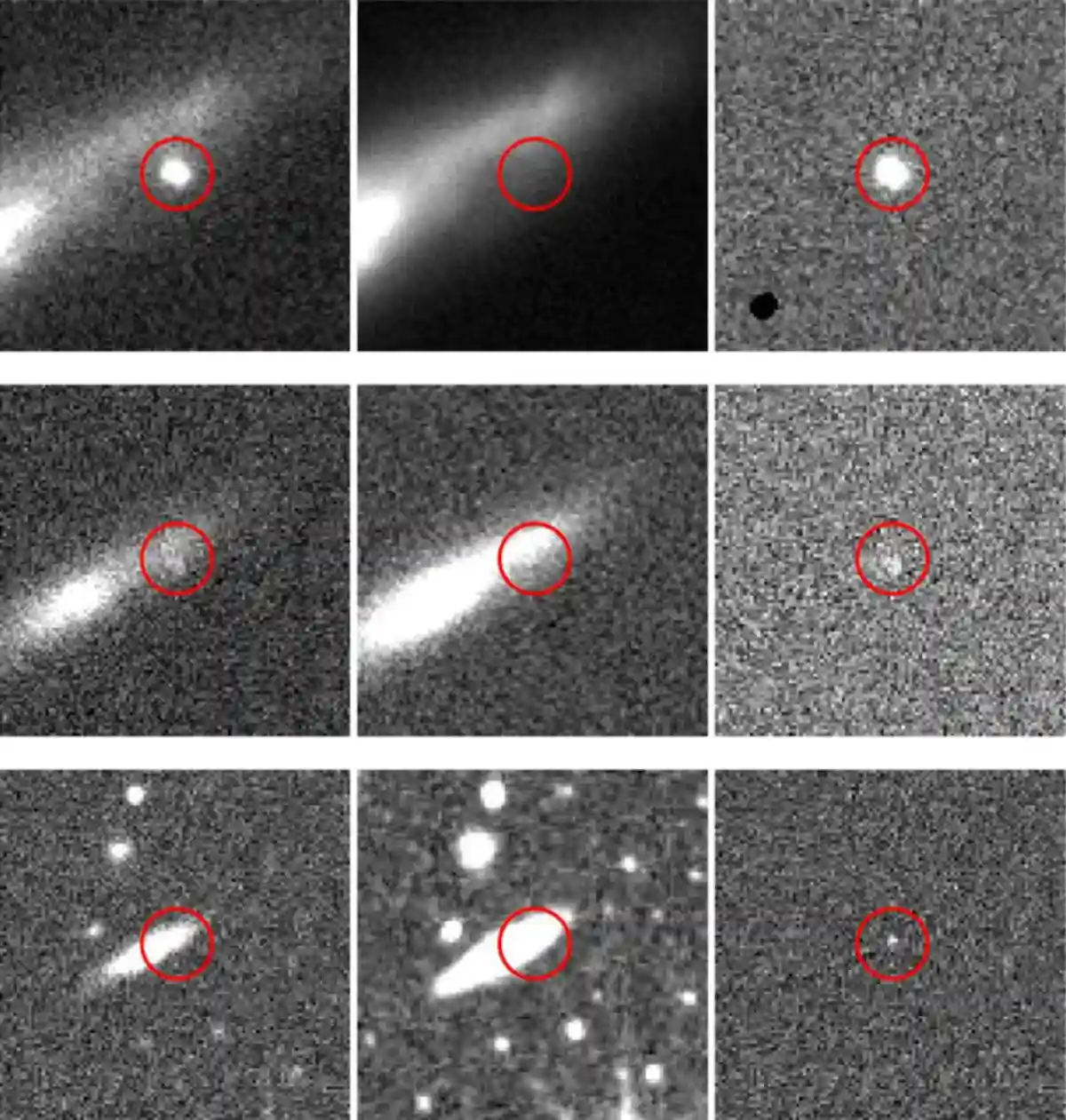
    The researchers gave Gemini just 15 examples from each telescope survey. Each example included a current image, an older reference image, and a “difference” image used in astronomy to highlight changes. With simple written instructions, Gemini reached an accuracy of about 93 percent. Older tools needed millions of labeled images to reach similar results.

    The tests covered surveys with very different views. Telescopes like Pan-STARRS produce sharp images with small pixels. Others, such as ATLAS, have much lower resolution. Objects appear larger or smaller depending on the camera. Gemini still found the same type of events and did not need special tuning for each system.

    The model also explained how it made decisions. Instead of returning only “real” or “false,” it wrote short descriptions in plain language. It noted shapes, brightness, and time changes. Experts reviewed these notes and rated them highly for clarity. Astronomers say this level of detail helps them trust the results, especially when time is short.

    The AI also offered a confidence score. When the score dropped, the result was often incorrect. Scientists used that signal to focus on the hardest cases. After adding a few more examples, accuracy climbed close to 97 percent. That process took minutes instead of days.

    Researchers say the method will matter most in the next few years. The Vera C. Rubin Observatory in Chile will soon scan the sky every night and produce millions of alerts. Human teams cannot inspect all of them, and automatic filters will decide which targets get follow-up telescopes. Fast mistakes waste time that could be spent on real supernovae.

    The same approach may work on other tasks, such as finding variable stars or spotting rare objects like gravitational lenses. Because the model needs only a small number of examples, it can adapt to new telescopes with new image styles. Scientists say this will help new space missions that begin collecting data without years of labeled training sets.

    The team did not suggest that AI will replace human astronomers. Instead, they say it can handle early sorting and pass interesting cases to experts. For now, Gemini’s test shows that small training sets can handle a job once thought to require huge data.

  • China’s Tianwen-1 Orbiter Captures Rare Interstellar Comet 3I/ATLAS During Mars Flyby

    China’s Tianwen-1 Orbiter Captures Rare Interstellar Comet 3I/ATLAS During Mars Flyby

    China’s Tianwen-1 orbiter has captured rare images of interstellar comet 3I/ATLAS as it passed Mars in early October. Astronomers say the object, discovered on May 7, 2025, came from outside our solar system and released gas and dust as it moved closer to the Sun.

    Tianwen-1 photographed the faint comet from about 30 million kilometers away, giving researchers an unusually close look at a visitor that does not belong to our planetary neighborhood.

    The comet is only the third confirmed interstellar object ever seen near the Sun. The first was ‘Oumuamua in 2017, which behaved more like a fast-moving rock. The second was Borisov in 2019, which looked and acted like a normal comet. 3I/ATLAS fits the second category.

    It contains frozen materials that turn into gas when heated. That process formed a thin cloud and tail, which is what astronomers expect from comets that form around distant stars.

    Researchers are interested in objects like this because they may carry unaltered material from faraway solar systems. Studying that material helps scientists compare how planets form in different parts of the galaxy. Instead of sending spacecraft to other stars, these passing objects bring samples close enough for remote observation.

    Tianwen-1 took the images with an instrument normally used to map the surface of Mars. Engineers spent weeks running models and tests to make sure the camera could pick up something so dim and distant. Individual images were later combined into an animation that shows the comet’s movement.

    Capturing the comet was not easy. It measures roughly 5.6 kilometers across and was far from the orbiter. It was also moving fast. The comet traveled at about 58 kilometers per second, while Tianwen-1 moved at about 86 kilometers per second around Mars. The comet looked tens of thousands of times dimmer than the bright features on Mars, and the final images were grainy but clear enough to confirm the sighting.

    Europe’s Mars Express and the ExoMars Trace Gas Orbiter also aimed their cameras at 3I/ATLAS on October 3. Each craft used imaging tools designed for Martian landscapes, not distant comets. Even so, all three missions succeeded. Their teams say these joint results were a rare example of multiple spacecraft observing an interstellar object at the same time.

    Interstellar objects remain one of the biggest unanswered questions in astronomy. Experts want to know what they are made of and how common they are. Some may carry organic molecules, which are the building blocks of life. Others may be fragments from disrupted planets or frozen debris left over after stars formed.

    Several missions will try to study similar visitors more directly. China’s Tianwen-2 mission plans to study a near-Earth asteroid and then a comet.

    The European Space Agency’s Comet Interceptor will wait in space until a fast-moving comet or interstellar object comes close enough to chase. NASA and other agencies have also discussed sending craft designed to catch up with interstellar objects as soon as they are spotted.

    If better detection systems pick up more of these objects earlier, scientists may be able to observe them at closer range. What seems rare today could become a routine part of space research in the future.

    Source: China’s Tianwen-1 Mars orbiter captures image of interstellar object older than the solar system

  • Meteoroid Impact on Apollinaris Mons Triggers 100 Dust Avalanches on Ancient Martian Volcano

    Meteoroid Impact on Apollinaris Mons Triggers 100 Dust Avalanches on Ancient Martian Volcano

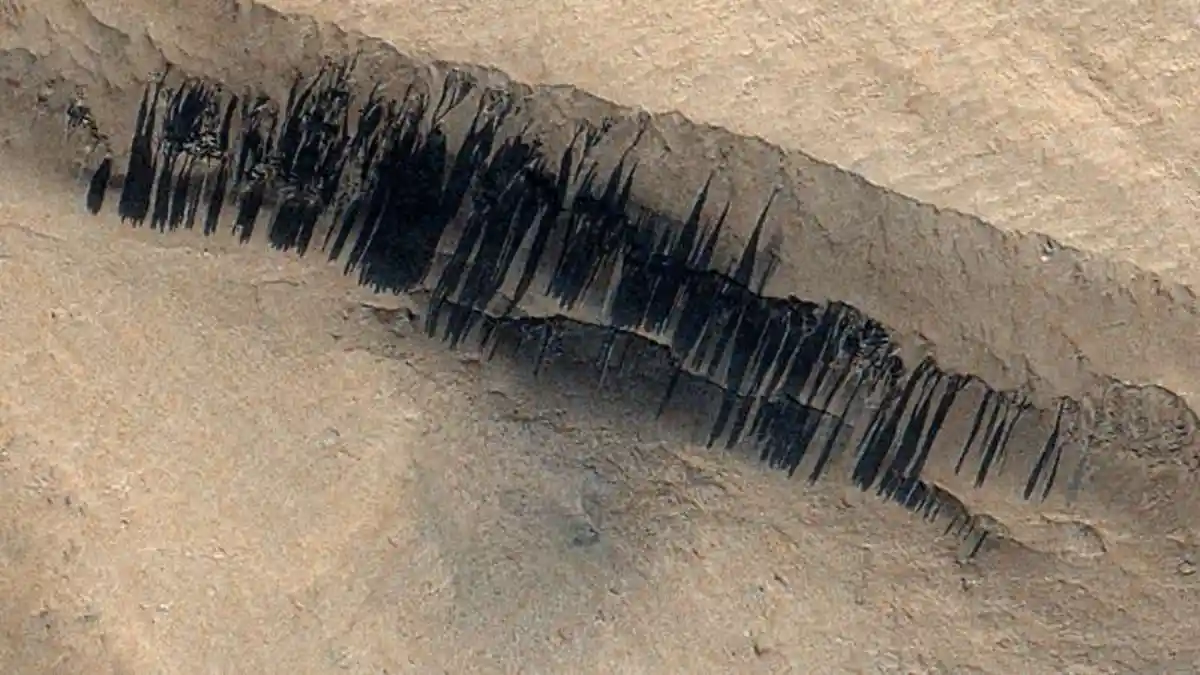
    A meteoroid strike on the slopes of Apollinaris Mons, a long-dormant volcano near Mars’ equator, sent dust cascading down its walls sometime between 2013 and 2017. Scientists confirmed the event after the European Space Agency’s ExoMars Trace Gas Orbiter captured a December 24, 2023, image showing more than 100 new dark streaks. Researchers say the impact shook loose fine dust on the steep terrain and created sudden avalanches that are still visible today.

    The orbiter used its main imaging camera to spot a small cluster of fresh craters at the base of the volcano. These craters appeared with pale patches where dust settled after sliding downhill. NASA’s Mars Reconnaissance Orbiter later reviewed older images of the same area and confirmed that the streaks were not present a decade ago.

    Slope streaks look like narrow, dark lines stretching down a hillside. Many can reach hundreds of meters long. They stand out against the lighter surface and slowly fade as new dust lands on them. They do not contain water, ice, or mud. They are simply dust slides on a very dry world.

    Scientists rarely see slope streaks triggered by meteoroid impacts. A study published in Nature Communications examined millions of detections from 2006 to 2024. It found that only a tiny fraction come from impacts. Most form when wind pushes sand grains into dust layers, which then fall under their own weight. The team counted about 1.6 million unique streaks across the planet.

    Dust and wind drive most of Mars’ surface changes today. When winds reach a certain strength, they can push sand grains into dust piles. The pressure lifts the dust and sends it downhill. This usually happens during the southern summer and autumn seasons, when storms are more common. The darkest streak clusters appear in dusty regions at low elevation where loose soil builds up.

    The new streaks at Apollinaris Mons offer a look at an old volcano reacting to a modern impact. The mountain is about 200 kilometers wide and 5 kilometers tall. Although it has been inactive for a long time, dust continues to pile on its slopes. When the meteoroid hit the ground nearby, vibration and shock waves disturbed the buildup, exposing darker ground underneath.

    These findings also tie into a long-running debate in Mars research. For years, some scientists suggested that slope streaks or similar features might involve small amounts of briny water. The new study supports a dry explanation. Researchers say they see no sign of liquid water in these streaks, even in regions where they appear very often.

    Understanding how Mars moves dust around is important for future missions. Dust shapes the climate, affects solar power for landers, and changes the surface that rovers explore. The ExoMars orbiter continues to study gases and the surface to learn more about Mars’ past and present. As more high-resolution images come in, scientists expect to find more examples of changes on the planet’s surface happening in real time.

    Source: Dust, sand and wind drive slope streaks on Mars

  • Interstellar Comet 3I/ATLAS Skims Past the Sun, Drawing Attention From Space Agencies Worldwide

    Interstellar Comet 3I/ATLAS Skims Past the Sun, Drawing Attention From Space Agencies Worldwide

    Comet 3I/ATLAS will reach its closest point to the Sun on Wednesday, October 29, 2025, giving astronomers a rare look at a visitor from outside our solar system. The object was discovered in July by the ATLAS survey telescope in Chile and is now under close study because it may carry material from another star system.

    DetailInformation
    NameComet 3I/ATLAS
    TypeInterstellar comet
    Discovered OnJuly 1, 2025
    Discovered ByATLAS Telescope, Chile
    Closest Approach to Sun (Perihelion)October 29, 2025
    Distance at Perihelion0.25 AU (closer than Mercury)
    Estimated SizeAbout 10 km across
    Current Brightness (October 29, 2025)Magnitude 12–14
    Constellation LocationVirgo (evening sky)
    Will It Return?Not for thousands of years

    Scientists first saw the comet on July 1. ATLAS normally watches for space rocks that might come near Earth, but this one stood out. Its path is not an orbit. It moves through space on a straight route, which shows that it came from far beyond our Sun.

    3I/ATLAS is the third known interstellar object after ‘Oumuamua in 2017 and Comet Borisov in 2019. Unlike ‘Oumuamua, which looked like a rocky fragment, this comet is made of ice and dust and is about 10 kilometers wide. Its size and speed make it one of the most interesting objects to cross our region of space in recent years.

    At perihelion today, the comet sits about 0.25 astronomical units from the Sun. That is closer than Mercury. The heat is forcing gas and dust out of its surface and forming a bright cloud around the comet. Researchers say this activity could increase over the next several days.

    Space agencies are watching. ESA reported that cameras on the Mars Express and ExoMars probes recorded bursts of material coming from the comet’s surface. NASA’s Hubble Telescope captured a green glow around it last week, produced by carbon compounds boiling off in sunlight.

    For skywatchers, seeing the comet will not be easy yet. Its brightness is between magnitude 12 and 14, far too dim for the naked eye. Observers will need a telescope with at least an 8-inch mirror and dark skies. It appears low in the evening sky in the direction of Virgo.

    The comet may brighten as it moves away from the Sun, potentially reaching magnitude 10 by mid-November. That would make it faintly visible in binoculars under ideal conditions, though still challenging for most people.

    Scientists want to learn what the comet is made of. Interstellar comets may contain ice and organic matter from the system they came from. Testing that material could reveal how planets form around other stars. It may also help researchers improve systems that warn of dangerous objects headed toward Earth.

    Online rumors claim the comet will pass behind the Sun or rival the Moon in brightness. Astronomers say neither is true. The comet remains visible to ground instruments, and its brightness will stay far below moonlight levels. Even so, its tails may stretch for millions of kilometers, making it a striking object through a large telescope.

    3I/ATLAS will continue moving outward after today and should fade from sight by early 2026. It will not return for thousands of years. Some researchers hope a future probe could collect dust from its tail, but no mission has been approved.

    For now, scientists will track every change they can. Interstellar visitors are rare, and each one helps researchers learn more about the wider galaxy. Clear skies to anyone giving it a try tonight.

  • Citizen Astronomers in India Help Discover the Most Distant and Powerful Radio Rings

    Citizen Astronomers in India Help Discover the Most Distant and Powerful Radio Rings

    Astronomers working with citizen scientists in India have discovered three colossal cosmic rings glowing faintly in radio light, among them the most distant and powerful “Odd Radio Circle” ever seen. Using data from the Low Frequency Array (LOFAR) telescope network, the team at the University of Mumbai and the RAD@home Astronomy Collaboratory identified the structures in skies billions of light-years away.

    The findings, announced by the Royal Astronomical Society this month, may reveal how galaxies and black holes shaped the young universe and how star systems grew in its violent early years.​

    The largest of the three, catalogued as RAD J131346.9+500320, sits almost 10 billion light-years away (redshift 0.94) and displays two immense, overlapping radio rings spanning around 800,000 light-years. This makes it both the most remote and the most energetic of its kind ever detected. Researchers say its radio power exceeds that of typical quasars, implying its formation from a galaxy-scale superwind driven by a central black hole.

    The twin-ringed pattern suggests a pair of massive outflows rather than a single jet, supporting theories that galactic winds can blow giant plasma bubbles into space. The team believes these loops are relics from repeated jet activity, visible only at LOFAR’s low frequencies of 54–240 MHz.​

    The second discovery, RAD J122622.6+640622, extends more than 900,000 light-years and lies inside a galaxy cluster. Its southern jet abruptly bends, inflating into a glowing ring, while its northern jet continues straight, likely a result of pressure from the cluster’s hot gas.

    Scientists say the distortion shows how million-degree plasma sculpts radio jets over millions of years and traces turbulence inside clusters. The ring’s bright edge is thought to be energized by old plasma flowing back from the jet’s endpoint.​

    The third case, RAD J142004.0+621715, shows a 440,000-light-year jet unraveling into filaments that form a partial loop. Its host galaxy, an edge-on disk, appears to be shedding gas under ram pressure as it sweeps through its cluster’s environment.

    The ring lights up where this outflow collides with older plasma, an event that may have reaccelerated electrons and reignited lost radio emission. Together, these systems show how feedback from jets and winds shapes galaxies and redistributes matter between stars and intergalactic space.​

    Odd Radio Circles first came to light in 2019 and remain among the rarest known structures in the cosmos. Only a dozen have been confirmed worldwide, each spanning hundreds of thousands of light-years (up to 20 times the diameter of the Milky Way).

    Most radiate only at very low frequencies, meaning their electrons are ancient and far from any active galaxy nucleus. Many once seemed to be aftermaths of black hole mergers, but the new findings hint instead at “superwinds” from disk galaxies that repeatedly blow out plasma shells. The revised picture suggests these rings mark where cosmic energy escapes into space and cools over billions of years.​

    What makes the current study stand out is who found them. The RAD@home Astronomy Collaboratory, based in Navi Mumbai, links hundreds of trained volunteer students, engineers, and amateurs who examine giant radio sky surveys from their home computers.

    They compare images from projects like LOFAR’s Two-meter Sky Survey and India’s TGSS to look for structures that automated algorithms miss. While AI tools often overlook unusual shapes, human eyes can detect faint, irregular rings hidden in fuzzy data. Once confirmed, these finds feed back into machine-learning databases to help future telescopes classify complex radio sources faster.​

    LOFAR, operated mainly from the Netherlands, is the world’s largest low-frequency radio telescope, with stations spread across Europe. Its sensitivity allows scientists to trace weak, ancient emissions that higher-frequency arrays cannot see.

    The new research, published in the peer-reviewed Monthly Notices of the Royal Astronomical Society, argues that ORCs serve as “time capsules” of galaxy evolution records of the feedback cycles that switch star formation on and off across billions of years.​

    Dr. Ananda Hota, who leads RAD@home, says these rings provide rare windows into how black holes and galaxies grow together. The discovery extends ORC observations to nearly half the age of the universe, revealing that such structures have persisted since the era when galaxies first assembled.

    Teams from Poland’s National Centre for Nuclear Research and several Indian universities contributed analysis and modeling. More powerful arrays, including the upcoming Square Kilometre Array, are expected to reveal thousands more such rings in the next decade.​

    Citizen scientists have helped push back the cosmic horizon. By combining global telescope data and human pattern recognition, they have uncovered structures too subtle for computers and too vast for a single observatory. In doing so, they have opened a new chapter in understanding how long-dead galaxy outbursts still echo through space nearly 10 billion years later.

    Source: RAD@home discovery of extragalactic radio rings and odd radio circles: clues to their origins

  • Astronomers Discover New ‘Quasi-Moon’ 2025 PN7 that will Orbit Near Earth Until the 2080s

    Astronomers Discover New ‘Quasi-Moon’ 2025 PN7 that will Orbit Near Earth Until the 2080s

    Astronomers have identified a small asteroid, 2025 PN7, that appears to be temporarily locked in step with Earth’s orbit around the sun. The discovery, made on August 2, 2025, by the Pan-STARRS telescope in Hawaii, reveals a 19-meter-wide object that has been accompanying Earth since the mid-20th century and is expected to remain nearby until about 2083.

    The asteroid belongs to the Apollo group, a class of near-Earth objects whose elongated orbits cross Earth’s and extend toward Mars. Its current path keeps it close enough to act as a “quasi-moon,” a companion that orbits the sun but appears to move alongside Earth due to their synchronized motion.

    Unlike the moon, which is bound by Earth’s gravity, quasi-moons orbit the sun on nearly the same timeline as Earth. From our perspective, they seem to loop or hover near the planet in a stable but temporary arrangement.

    2025 PN7 follows what astronomers describe as a horseshoe-shaped orbit. The sun’s gravity dominates, but Earth’s pull subtly alters its path, causing it to drift back and forth across our orbit. This gravitational balance keeps it near us for decades without risk of collision.

    Models show that 2025 PN7 has been sharing Earth’s orbital neighborhood since around 1965. Its distance from Earth varies from about 299,000 kilometers to as far as 17 million kilometers. The asteroid’s motion is influenced by Jupiter’s gravity, which gradually shifts its path over time.

    At just 19 meters across, 2025 PN7 is faint and hard to detect without powerful telescopes. Scientists estimate it will remain stable for nearly six more decades before slowly drifting away, possibly toward an orbit near Venus.

    Early observations suggest that 2025 PN7 is likely a rocky or stony asteroid, possibly originating from the main asteroid belt between Mars and Jupiter. Like other Apollo-type asteroids, it may have been nudged inward after ancient collisions.

    Future spectroscopy will help determine its composition, whether it’s primarily silicate rock, metal, or a mix of both. Such data could offer clues about how material moves through the inner solar system and what resources small asteroids may hold.

    Tracking objects like 2025 PN7 helps refine our understanding of orbital mechanics and near-Earth object behavior. Quasi-moons provide insight into how asteroids interact with planets and how gravitational resonances form.

    The asteroid poses no danger to Earth, but studying its orbit improves our ability to model others that might pass closer in the future. These findings also aid planetary defense research, as predicting the paths of small bodies is key to identifying real threats.

    Astronomers plan to monitor 2025 PN7’s brightness and rotation using both optical and radar observations. NASA’s upcoming NEO Surveyor mission, designed to detect near-Earth objects in infrared light, may capture more detailed data once operational.

    If its orbit remains stable, 2025 PN7 will continue to share Earth’s path for nearly 60 more years before it drifts away. Until then, it joins a short list of known quasi-moons, including 3753 Cruithne and Kamo‘oalewa, reminding us that even near our planet, space is full of quiet companions.