
China’s Chang’e-6 mission returned the first soil ever gathered from the Moon’s farside in June 2024, and researchers now say it behaves very differently from any samples collected before. Tests show the dust and tiny rock grains stick together far more than material from the near side, a result that could affect how future landers, rovers, and astronauts move and build on that part of the Moon.
After the samples arrived on Earth, scientists began careful lab work. They placed small amounts of the soil into controlled test setups to see how the grains behaved. They focused on how steep the material could pile up before sliding down.
When a 5-gram portion was poured through a simple funnel, the soil formed a cone that held at around 53 degrees. That angle is much steeper than anything recorded from Apollo or Chang’e-5 sites on the near side.
In a second test, researchers placed the soil inside a slowly spinning drum. As the drum turned, the soil clung to the wall and built up slopes of about 70 degrees before collapsing. This is close to vertical when compared with most natural materials.
On Earth, normal beach sand usually collapses at around 35 degrees. Even the soil from Chang’e-5, which landed on the Moon’s near side, only reached about 45 degrees in the same type of test.
Two main reasons explain this behavior.
First, the particles are far smaller. About 60 percent of the Chang’e-6 soil measures less than 48 micrometers across, which is thinner than a human hair. Smaller grains tend to grip each other through weak natural forces.
Second, the particles are rough and sharply shaped. Instead of smooth, rounded grains, they look cracked and uneven. These uneven edges lock together and resist sliding.
The landing area lies inside the South Pole-Aitken basin, one of the Moon’s oldest and most heavily hit regions. Over billions of years, countless tiny impacts have crushed the rock into fine dust and sharp fragments. The soil in this region also contains more plagioclase, a type of mineral that breaks apart easily into flat, jagged pieces. This adds even more fine and angular material to the mix.
Unlike the near side of the Moon, this area was not covered by later lava flows. The nearside saw newer rock spread across large areas, mixing and smoothing older layers. The far side remained exposed much longer, allowing the surface to be broken down further.
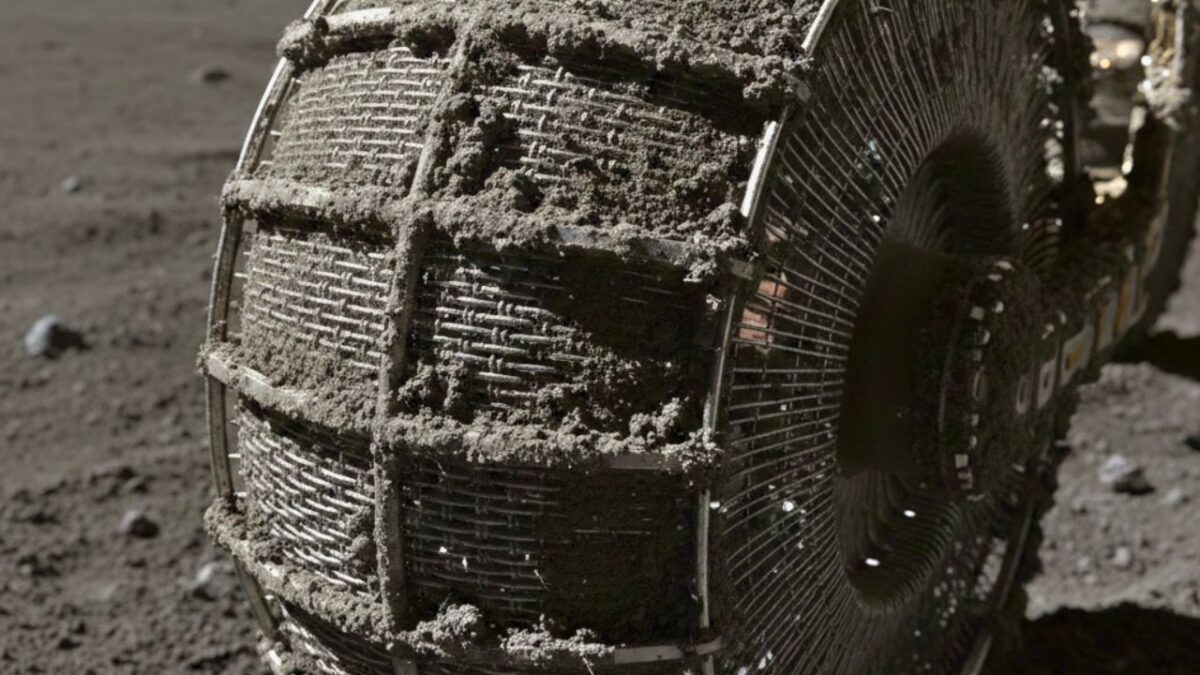
This type of soil can change how machines work on the Moon. Rover wheels may sink more easily. Drills and digging tools could face extra resistance. Dust stirred up by engines may settle and stick instead of floating away. There may also be one benefit. Because the soil holds together, slopes and crater walls can remain steeper without collapsing. This could matter when placing equipment near hills or building barriers for protection.
For future bases, the sticky soil could help in some construction tasks. It packs closely and may hold shapes better for structures made from local material. At the same time, builders may need stronger machines to cut, move, and sift it.

Leave a Reply