

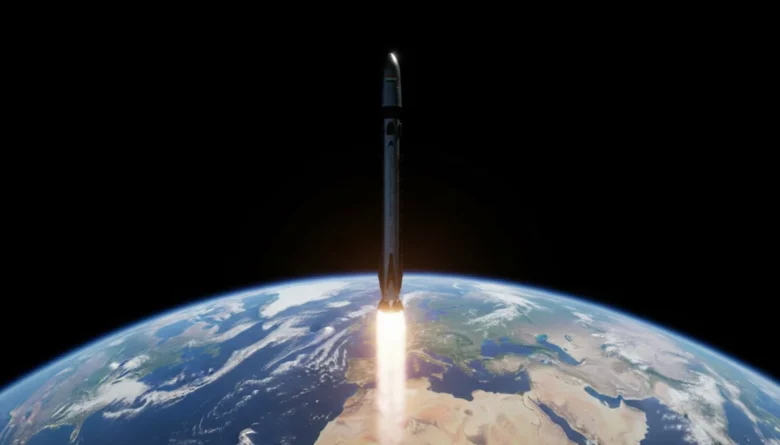
EtherealX, a Bengaluru-based space launch startup, has raised $20.5 million in a Series A funding round, raising its valuation to $80.5 million, according to TechCrunch. The funding places the company among the more highly valued private launch vehicle firms emerging from India’s growing commercial space sector.
The round was led by TDK Ventures, with participation from BIG Capital. The investment reflects rising interest in reusable launch systems developed by private Indian companies, following regulatory reforms that opened the sector to non-government players in 2020.
EtherealX is developing a fully reusable orbital launch vehicle aimed at reducing launch costs through repeated use of the booster stage, like SpaceX but cheaper! The company plans to recover and relaunch its rockets rather than discard them after a single flight, a method that has reshaped launch economics in other markets.
The vehicle will rely on two methane-fueled engines built in-house. The Pegasus engine, producing 80 kilonewtons of thrust, is intended for the upper stage. The larger Stallion engine, with 1.2 meganewtons of thrust, will power the booster. Both engines use liquid oxygen and methane, a propellant combination that supports cleaner burns and simpler refurbishment compared to older fuel systems.
EtherealX plans to begin hot-fire engine testing in mid-2026. These ground-based tests are designed to run the engines under launch-like conditions to verify performance, thermal limits, and control behavior. A demonstration flight is targeted for late 2027, subject to test outcomes and regulatory approvals.
To support manufacturing and testing, the company has secured about 150 acres of land in Andhra Pradesh for a dedicated rocket development campus. The facility is expected to consolidate engine production, vehicle assembly, and test operations at a single location. EtherealX aims to begin commercial launches by 2028.
The funding comes amid broader growth in India’s private space ecosystem. ISRO has completed more than 400 satellite launches, while startups such as Skyroot Aerospace and Agnikul Cosmos have carried out suborbital and early orbital test flights. Private launch providers are expected to play a larger role in meeting demand for small and medium satellite missions.
Reusable launch vehicles could help Indian firms compete in a global launch services market. Lower launch costs may also expand access for scientific research missions, Earth observation programs, and communications satellites.
EtherealX faces technical and schedule risks common to launch vehicle development, including engine reliability, reentry heating, and landing precision. Progress in upcoming engine tests will be a key indicator of the company’s ability to move toward flight operations.