

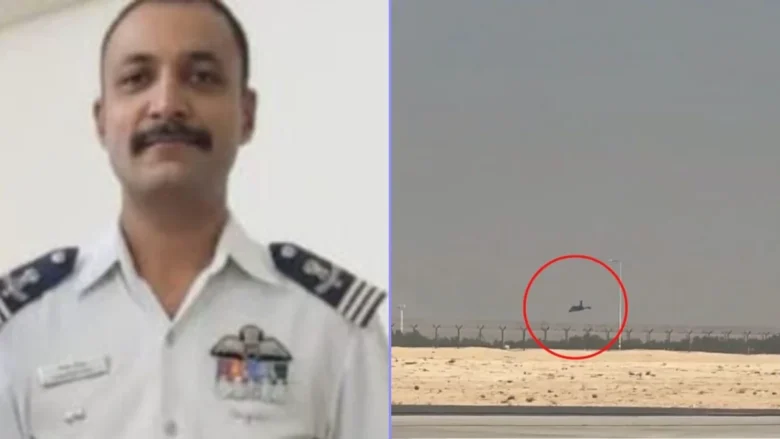
On November 21, 2025, a demonstration by India’s Tejas fighter jet at the Dubai Airshow ended in tragedy when the aircraft crashed into the runway while performing at low altitude over Al Maktoum International Airport. The jet was flying less than 500 feet above the ground as it moved into an inverted loop.
BREAKING: An Indian Tejas fighter jet crashed during an aerial display at the Dubai Air Show. pic.twitter.com/TvwUoe3juh
— Clash Report (@clashreport) November 21, 2025
Within seconds, its nose dropped sharply, and the aircraft struck the runway, erupting into a large fire. The pilot, Wing Commander Namansh Syal, was killed in the crash. No one on the ground was injured due to swift evacuations by event staff and security teams.
Footage recorded by spectators shows the jet entering a tight roll before pitching downward too early. The impact sent thick smoke across the airport grounds. Emergency crews reached the site within minutes. Firefighters brought the flames under control while medical teams secured the area. The airshow paused briefly before continuing later in the day, but the atmosphere had changed, with many in attendance visibly shaken by the incident.
Wing Commander Syal was 34 years old and came from Himachal Pradesh. He belonged to a family with a long history of service. His father is a retired army officer, and his wife is a pilot undergoing training. The couple also had a young daughter. Fellow officers described Syal as calm under pressure and highly skilled in complex flight operations. His death has left his unit in mourning, and messages of condolence have poured in from across the aerospace and defense community.
Early findings point towards an aerodynamic stall during the maneuver. When a jet’s nose rises too steeply, air can stop flowing smoothly over the wings, causing a sudden loss of lift. At low altitude, pilots have only seconds to correct this by lowering the nose and adjusting thrust. In this case, the aircraft was already too close to the ground for a full recovery. The demanding nature of such displays, combined with the speed and angle of the turn, may have left no margin for error.
The Tejas is India’s first fully indigenous fighter aircraft, built by Hindustan Aeronautics Limited. Powered by a GE F404 engine, it is designed for high-speed performance and sharp turns. Its delta-wing shape makes it highly agile, but that same design can become unforgiving at slower speeds and tighter angles. The aircraft has been a central part of India’s push toward defense self-reliance and has drawn interest from several foreign buyers.
This is not the first setback for the Tejas program. In 2024, another aircraft went down during a routine training flight due to a software issue, although the pilot ejected safely in that case. Worldwide, airshow crashes are rare but often linked to low-altitude maneuvers, where even a slight miscalculation can prove fatal. Aviation safety data shows that loss of lift during such displays remains a common cause of military aircraft accidents.
In response to the crash, the Indian Air Force has ordered a formal court of inquiry. Investigators will study flight recorder data, analyze wreckage, and review videos and witness statements. They will determine whether the crash was caused by a technical fault, a control issue, or a human factor. UAE authorities are assisting in the investigation, and organizers have confirmed that all safety protocols were followed during the event.
Despite the tragedy, the Tejas program is expected to continue. India plans future upgrades, including a more powerful Tejas Mk II, and officials have indicated that one accident will not halt progress. Still, the loss of Wing Commander Syal stands as a sobering reminder of the risks behind high-speed aerial displays and the human cost that can come with pushing the limits of flight.