

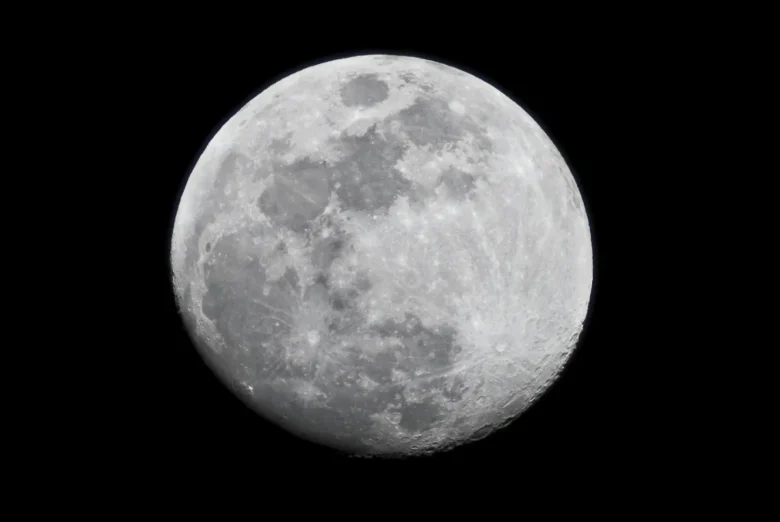
The Moon will reach its greatest distance from Earth in 18 years on November 20, hours before the new moon. Astronomers say the timing of this apogee, which places the Moon about 406,690 kilometers from Earth, creates an unusual mix of weak tides, a smaller lunar appearance, and sky positions that match an 18.6-year cycle of extreme rises and sets.
The event happens early on November 20 around 02:46 UTC, when the Moon moves to the farthest point in its orbit. At this range, radio signals take noticeably longer to travel to the Moon and back compared with regular days. The distance is the highest since 2007 and will not occur again until late 2043.
The Moon travels around Earth in an oval path, so its distance changes from month to month. It comes closest at perigee and farthest at apogee. These distances shift slightly each orbit because the Sun’s gravity pulls on the Moon and slowly changes the shape and direction of its path. When this gradual wobble lines up with Earth’s own position around the Sun, the most distant apogees appear.
This month’s alignment pushes the Moon to one of its most distant points in nearly two decades. Astronomers have been expecting this peak for months because the orbit cycle is well measured and repeats on a predictable schedule.
The apogee arrives during the new moon phase, when the moon sits between Earth and the sun. The side facing us is unlit, so the moon is not visible. New moons usually bring strong tides, but the distance this month weakens them. In many coastal regions, high tides drop by about 10 to 15 centimeters. Low tides can reveal patches of mud and rock that usually stay underwater.
Although no one can see the Moon that day, its size change is noticeable over the month. At this distance, the Moon looks about 14 percent smaller than it does at a close perigee. The area it covers in the sky drops by almost a quarter. Anyone who compares recent photographs of the moon from earlier this month with those taken in December will see the difference.
This distant apogee also connects to the lunar standstill, a cycle that peaks every 18.6 years. During these periods, the Moon rises and sets at its most extreme points in the sky. For many locations in the Northern Hemisphere, moonrises and moonsets drift far to the south right now. Historic sites such as Stonehenge and Callanish were designed to track these extremes, and observers still study them during standstill years.
Most people will not notice anything unusual on November 20 itself because the Moon remains lost in daylight. The best viewing comes in the days after the new moon, when a thin crescent rises very high or low at dawn or dusk. Through binoculars, the Moon appears smaller and sharper than usual, marking this rare point in its long orbital cycle.