

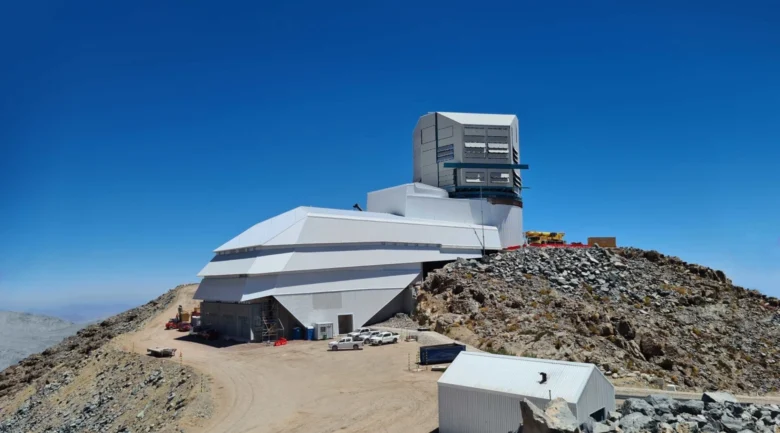
The Vera C. Rubin Observatory has opened a new chapter in astronomy after detecting 800,000 changes in the night sky in a single night on February 24, 2026. Operating from Cerro Pachón in Chile, the observatory activated its near real-time alert system, sending notifications to scientists worldwide within minutes of spotting new asteroids, supernovae, and variable stars. The milestone clears the way for its decade-long Legacy Survey of Space and Time, which will map the southern sky in motion.
The observatory uses the 3,200-megapixel LSST Camera, the largest digital camera ever built for astronomy. Every 30 seconds, it captures a massive image of the sky. Software compares each new frame with earlier images and flags anything that changes in brightness or position. Within about 60 seconds, alerts reach a global network of researchers.
This week’s 800,000 alerts are only a preview. Once the system reaches full capacity, it is expected to generate up to seven million alerts per night. That flow of data will allow astronomers to track fast-moving asteroids, catch supernovae at their earliest moments, and monitor distant active galactic nuclei as they flare and fade.
The data travels through fiber optic cables from Chile to processing centers in the United States, including facilities at SLAC National Accelerator Laboratory. Automated pipelines filter images, remove satellite trails, and prepare science-ready files. Intelligent broker systems then sort alerts so researchers receive only the events relevant to their work.
The observatory’s wide-field design sets it apart. Instead of targeting one object at a time, it scans vast sections of sky every few nights. Over ten years, it will build a time-lapse record of billions of stars and galaxies. Scientists expect it to discover millions of supernovae, tens of thousands of near-Earth objects, and detailed maps of dark matter through gravitational lensing.
The impact extends beyond research labs. The alerts are public, and citizen scientists can take part through platforms such as Zooniverse. Amateur astronomers can also respond to alerts with personal telescopes.
The observatory is named after Vera Rubin, whose work provided strong evidence for dark matter. Fittingly, her namesake facility will now gather the data needed to test ideas about dark matter, dark energy, and the structure of the universe.
After years of construction and testing, the system is finally watching the sky at scale. If the first night is any guide, astronomers are about to receive more cosmic updates than ever before.