
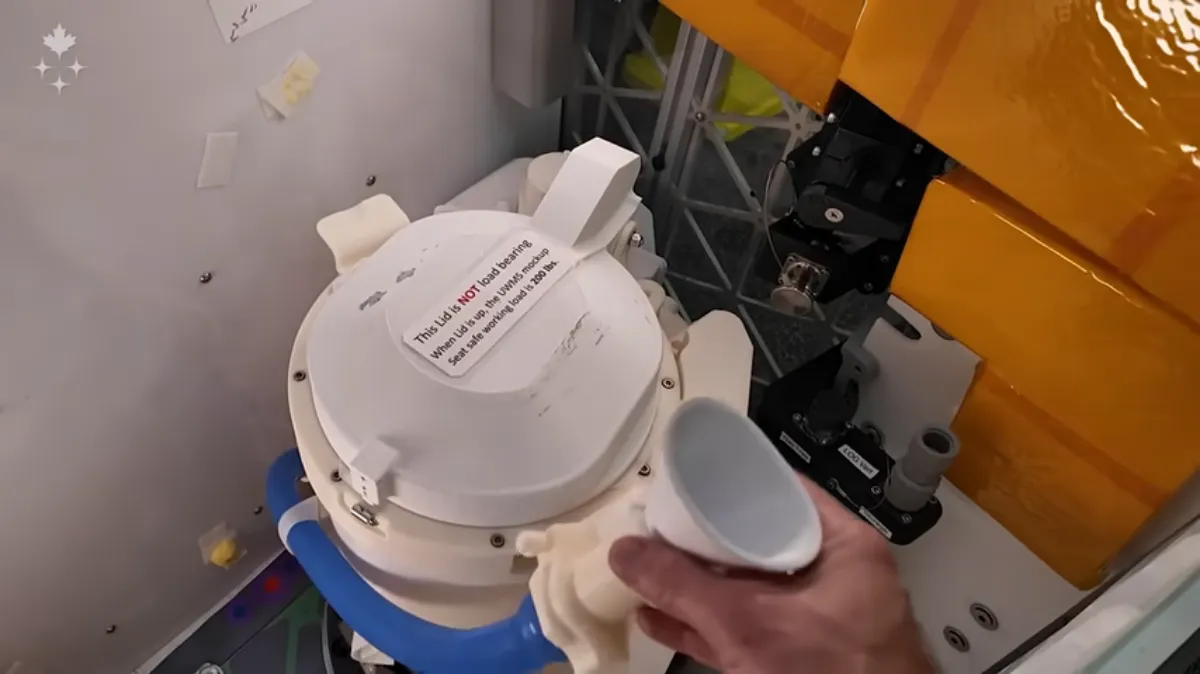
A toilet malfunction aboard NASA’s Artemis II mission created an early challenge for astronauts just hours after launch, temporarily disabling part of the waste system on the Orion spacecraft before it was successfully repaired in orbit. The issue affected the urine collection system, requiring mission specialist Christina Koch to work with ground teams to restore functionality.
The problem began when a fan inside Orion’s toilet system jammed, disrupting airflow that is essential for waste collection in microgravity. The system, known as the Universal Waste Management System (UWMS), depends on controlled suction to function, so even a minor fault can make it unusable.
While the toilet remained functional for solid waste, astronauts could not use the urine collection system. The crew switched to backup equipment designed for short-term use, including collapsible contingency devices. At least one of these units was used before the main system was restored.
Mission control guided Koch through troubleshooting steps to restart the system. Engineers later identified the issue as a controller-related fault rather than a major hardware failure. The system returned to normal operation within a few hours.
“I’m the space plumber, I’m proud to call myself the space plumber.” said Mission specialist Christina Koch after resolving the issue.
The UWMS onboard Orion cost an estimated $23 million to $30 million to develop and produce. It is a compact, high-tech vacuum toilet built for deep space missions, including future journeys to the Moon and Mars. Engineers designed it to support mixed-gender crews, improving usability compared to older systems.
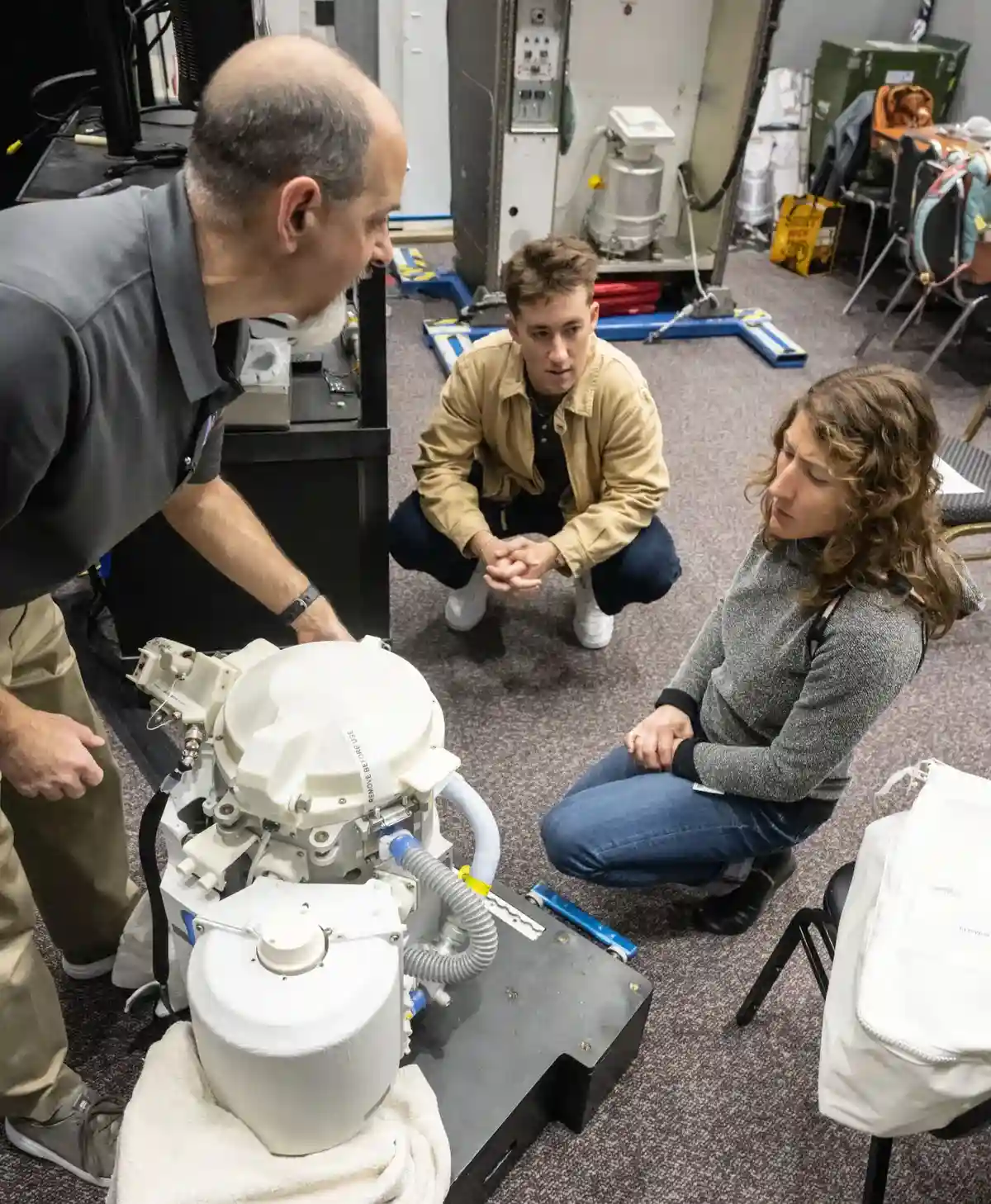
The toilet is smaller and lighter than earlier versions used on the International Space Station, reduced by about 65 percent in size and 40 percent in weight, with a mass of around 45 kilograms. It uses vacuum suction to collect waste and includes design changes that make it more practical and comfortable for all astronauts. The system is installed inside a private hygiene bay within Orion’s small cabin, offering limited but important privacy during the mission.
Before Artemis II, NASA tested the system on the International Space Station to confirm its performance in microgravity. The upgrade was part of a broader effort to improve comfort and hygiene during long-duration missions.
Even so, the malfunction shows that no system is immune to failure in space. Orion carries only one toilet for its four-person crew, leaving little margin for error. Unlike the International Space Station, deep space missions operate with limited redundancy and no quick replacement options.

Leave a Reply