Tag: Blue Origin

  • NASAโ€™s EscaPADE Mission Heads to Mars. New Glenn Scores First Successful Booster Landing

    NASAโ€™s EscaPADE Mission Heads to Mars. New Glenn Scores First Successful Booster Landing

    NASA launched two small spacecraft toward Mars on Wednesday, using Blue Origin’s New Glenn rocket in a high-profile flight from Cape Canaveral. The twin probes, named Blue and Gold, will spend two years traveling through deep space before reaching the Red Planet in September 2027, where they will study how solar radiation stripped Mars of its thick atmosphere billions of years ago.

    The mission was New Glenn’s cleanest performance to date. Its debut flight in January reached orbit but did not complete its landing. This time, the fairing opened on schedule, and the upper stage placed the EscaPADE spacecraft into a parking orbit. Engineers later confirmed the probes powered up and sent back signals. A ViaSat prototype satellite rode along to test new communication hardware.

    Teams postponed earlier launch attempts on November 9 and 11 because of high winds near the Cape. Conditions improved on November 13, allowing New Glenn’s seven BE-4 engines to ignite at 3:55 p.m. EST. The rocket climbed through clear skies as crowds watched from beaches.

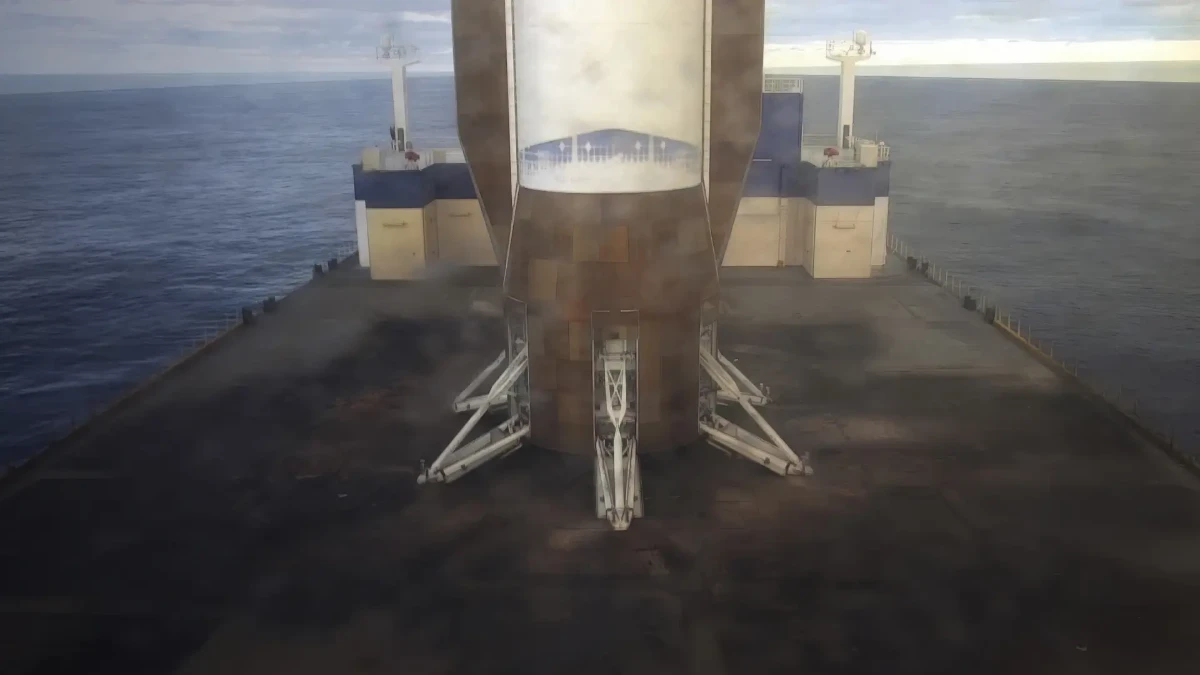
    Seven minutes after liftoff, the first stage separated as planned, then steered itself to a landing on the barge Jacklyn about 375 miles offshore. It was New Glenn’s first successful booster recovery at sea.

    “Today was a tremendous achievement for the New Glenn team, opening a new era for Blue Origin and the industry as we look to launch, land, repeat, again and again,” said Jordan Charles, Vice President, New Glenn.

    Jeff Bezos posted a video of the booster landing on X shortly after the launch. The clip shows the rocket slowing above the barge before touching down. His post drew wide attention.

    SpaceX CEO Elon Musk, whose company dominates the commercial launch industry, offered congratulations despite being a business rival.

    “Congratulations, Jeff Bezos and the Blue Origin team!” Musk wrote in response to the landing announcement.

    The probes, Blue and Gold, will track how charged particles from the Sun strike Mars and interact with its weak magnetic field. Mars once had a thick atmosphere but lost most of it across billions of years. Scientists want to better understand those losses and how they continue today.

    Each spacecraft is about the size of a microwave oven and carries two simple tools: a magnetometer and a particle detector. NASA kept the mission under $100 million by using compact hardware and a high-altitude orbit that gives a wide view of the planet’s upper atmosphere.

    EscaPADE will remain near Earth for about a year before using a gravity-assist maneuver in late 2026. A close pass in November 2026 will give the satellites the speed they need for the trip to Mars. They are expected to arrive in September 2027 and settle into long, stretched orbits.

    Once there, Blue and Gold will measure the solar wind’s effect on the planet’s thin atmosphere and gather data linked to dust storms and radiation levels. NASA plans to use the results to support future crewed missions and work on Mars Sample Return.

    EscaPADE joins decades of missions sent to Mars but stands out for its small design and focus on the planet’s outer atmosphere during a period of rising solar activity.

    NASA sees the mission as a step toward better planning for future human travel. For Blue Origin, the flight strengthens New Glenn’s place in the heavy-lift market. The probes are now circling Earth, beginning a long journey toward a planet that continues to raise new questions.

  • Blue Origin Launches Project Oasis with Luxembourg to Map Lunar Resources

    Blue Origin Launches Project Oasis with Luxembourg to Map Lunar Resources

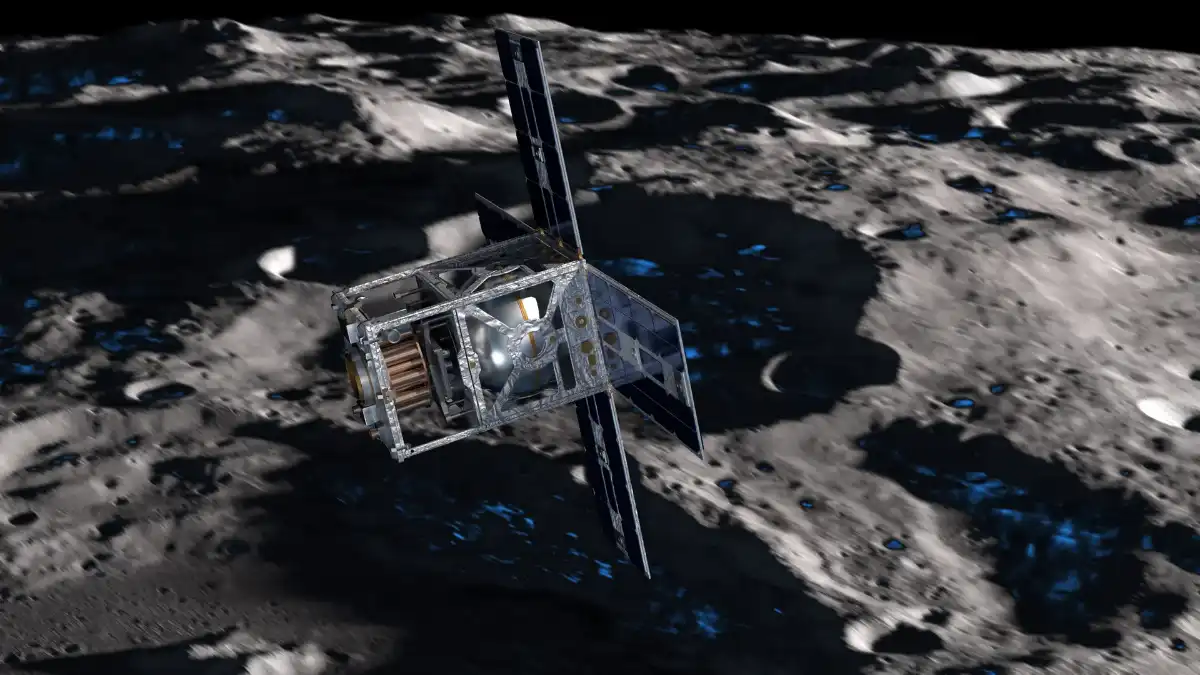
    Blue Origin has announced Project Oasis, a new program that will search for and eventually use resources on the Moon. The first mission, Oasis-1, will fly in a close orbit around the lunar poles with help from Luxembourg, beginning the process of identifying materials such as water ice, Helium-3, and rare metals.

    The company says the project could transform the Moon into a supply stop for space travel, cutting the cost of missions beyond Earth.

    Project Oasis starts with detailed surveys from orbit. Oasis-1 will carry instruments that can look beneath the Moon’s surface to locate and measure resources. Future missions would send landers to confirm findings on the ground and attempt extraction. The long-term goal is to reduce the need to bring fuel and raw materials from Earth, making space travel more practical and affordable.

    A major focus is water ice, which is trapped in permanently shadowed craters at the lunar poles. India’s Chandrayaan-1 mission first detected signs of it in 2009.

    Oasis-1 aims to produce sharper maps of ice deposits, capable of detecting layers up to one meter deep. The water can be split into hydrogen and oxygen, creating rocket fuel and breathable air, making it one of the most valuable resources for future crews.

    Another target is Helium-3, an isotope deposited on the Moon’s surface by the solar wind. Although rare on Earth, it is found in higher amounts on the Moon and is being studied as a fuel for nuclear fusion reactors. If fusion technology advances, Helium-3 could provide clean energy without radioactive waste. Oasis-1’s sensors will track its distribution, giving scientists a clearer picture of where it could be mined.

    The mission will also search for rare earth elements and precious metals within lunar soil, known as regolith. These are critical for electronics and could also be used to build infrastructure on the Moon. Radioactive elements in the soil could support on-site power generation. Mapping these materials could help reduce mining pressure on Earth while supporting off-world manufacturing.

    To achieve this, Oasis-1 will use neutron spectroscopy to detect hydrogen, magnetometers to identify metals, and cameras to collect multispectral geological data. The satellite will fly in an unusually low orbit to improve resolution, and at the end of its mission, it will be guided into the surface to expose deeper layers for final analysis.

    Luxembourg is contributing through its national space agency, its Space Resources Innovation Centre, and companies like GOMSpace. The country has been promoting space mining laws since 2017 and has invested in developing technology for resource use in space. Much of Oasis-1’s design and coordination is being managed from Luxembourg.

    Project Oasis links directly to Blue Origin’s other programs, including Blue Alchemist, which can turn lunar soil into solar panels and wires. Together, the projects aim to reduce the cost of future missions by enabling fuel production and construction on the Moon itself. Blue Origin says this could cut expenses by up to 90 percent and help turn deep space travel into routine missions.

    If the project works as planned, the Moon may no longer be seen only as a scientific target but as a supply hub for humanity’s expansion into space.

  • Blue Origin System to Turn Lunar Dirt into Solar Panels Clears Key Design Review

    Blue Origin System to Turn Lunar Dirt into Solar Panels Clears Key Design Review

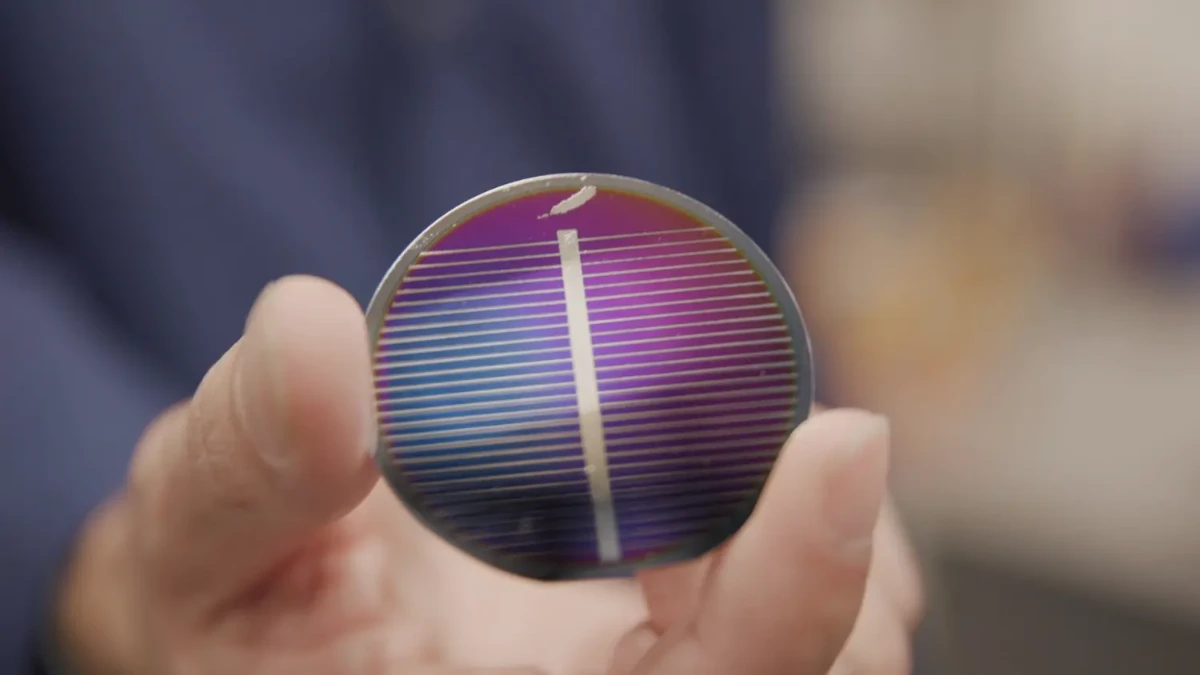
    Blue Origin’s lunar resource system, known as Blue Alchemist, has passed a key milestone, completing its Critical Design Review in September 2025, Blue Origin announced. The technology is designed to turn lunar soil into solar panels, metals, and oxygen, potentially lowering the cost of Moon missions by more than half. The company plans to test the system in 2026 in a simulated lunar environment.

    Blue Origin says the project is aimed at supporting NASA’s Artemis program and future missions to Mars by cutting down the need to launch heavy supplies from Earth. Instead, astronauts could use what’s already on the Moon to build long-term bases and power systems.

    Blue Alchemist uses a process called molten regolith electrolysis. Lunar regolith, the dusty soil covering the Moon, is heated above 1,600°C. An electrical current then separates oxygen from metals like iron, aluminum, and silicon. The silicon is refined to ultra-high purity, clean enough to produce efficient solar cells. Oxygen produced in the process could be used for life support or as rocket fuel.

    Unlike Earth-based silicon production, which relies on toxic chemicals, Blue Alchemist only needs sunlight and regolith. Blue Origin says this makes it safer and more suitable for operations on the Moon.

    The Moon’s regolith contains high amounts of silicon, aluminum, and iron, all useful for construction and energy systems. Blue Origin has developed Earth-made versions of this soil, matching its chemistry and texture, for testing in labs. Using local resources instead of transporting them from Earth could save thousands of dollars per kilogram in mission costs.

    The system can create solar cells, protective glass covers, and wires for energy transmission. These products could last for more than a decade on the Moon, even under extreme conditions. They could power habitats, rovers, and other equipment needed for human presence on the surface.

    NASA has already awarded Blue Origin $35 million under its Tipping Point program to support the development. A demo is planned for 2026 to prove the system can run without direct human control. This fits with Artemis’s goals of building a permanent lunar presence later this decade.

    Blue Origin says Blue Alchemist could also have applications on Earth. The system’s zero-carbon process might be able to turn desert sand into solar cells, avoiding the use of water and harmful chemicals. It could also provide high-purity silicon and other materials for electronics, easing reliance on global supply chains.

    Operating at such high heat is difficult. Engineers must prevent oxygen bubbles from damaging equipment while ensuring electrodes can withstand intense heat and chemical reactions. Scaling up the process for use on the Moon will require durable, lightweight systems capable of surviving harsh lunar conditions.

    Blue Origin has dedicated more than 65 staff at its 60,000-square-foot Space Resources Center of Excellence to address these issues.

    Blue Alchemist fits into Blue Origin’s wider lunar plans, including the Blue Moon Mark 1 lander scheduled for a test flight in 2025. The lander could eventually deliver the system to the Moon for trials on the surface. If it succeeds, it would support Artemis V in 2030, which aims to land astronauts using a larger Mark 2 lander.

    The push to develop lunar resources is not limited to the US. China is pursuing its own technologies to support human missions to the Moon by 2030. Blue Origin’s progress adds to the growing competition over who will build the first sustainable base on the lunar surface.

  • American pop star Katy Perry is going to space in a historic all-female spaceflight
    American pop star Katy Perry is going to space in a historic all-female spaceflight
    Blue Origin officially announced that Pop singer Katy Perry is set to join Blue Origin’s first all-female spaceflight crew, scheduled for spring 2025. The crew includes journalist Lauren Sรกnchez, CBS anchor Gayle King, former NASA scientist Aisha Bowe, activist Amanda Nguyen, and film producer Kerianne Flynn.

    This mission will take them to the edge of space aboard the New Shepard rocket, offering a brief experience of weightlessness before returning to Earth.

    The New Shepard is a suborbital rocket designed for space tourism, featuring a fully automated capsule with large windows for panoramic Earth views. The flight will last about 11 minutes, reaching an altitude of over 100 km (Kรกrmรกn line) before making a parachute-assisted landing.

    Lauren Sรกnchez, who is engaged to Amazon founder Jeff Bezos, expressed enthusiasm about leading this historic flight. The mission aims to inspire more women to explore careers in aerospace and science while promoting commercial space travel as an accessible experience.

    While the exact launch date has not been announced, the flight is anticipated to occur in the coming months. This initiative reflects Blue Origin’s commitment to making space travel more inclusive and advancing the future of space tourism.