Tag: CNSA

  • Space debris delays homecoming of Chinese astronauts; engineers inspect damaged craft in orbit

    Space debris delays homecoming of Chinese astronauts; engineers inspect damaged craft in orbit

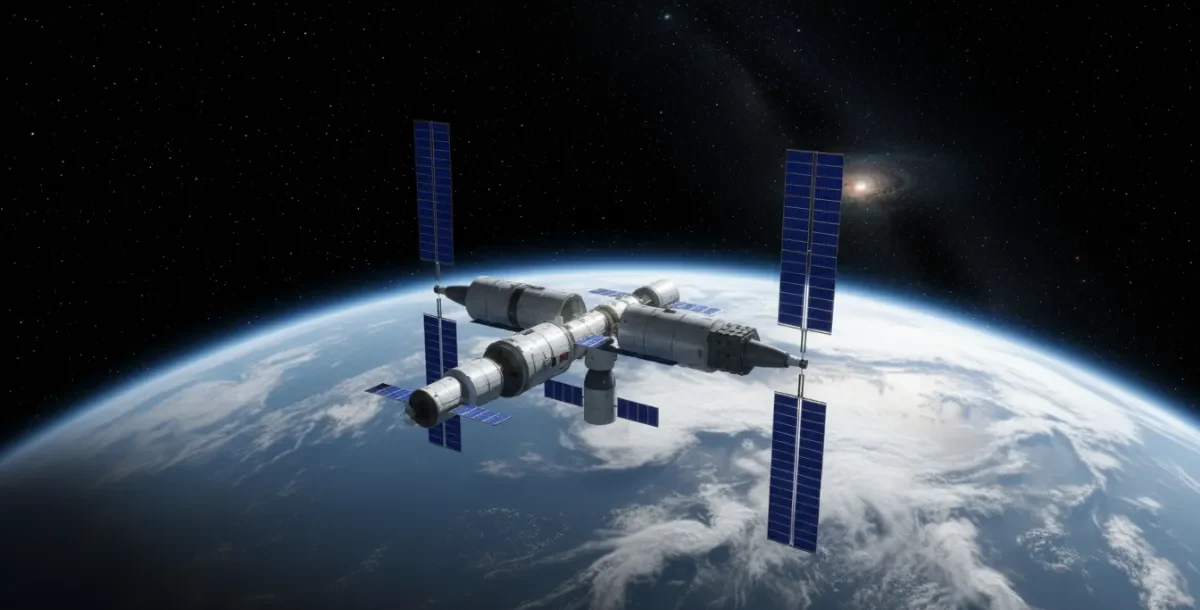
    China has delayed the return of its Shenzhou 20 astronauts after engineers detected what may be a debris strike on their reentry capsule, keeping the crew aboard the Tiangong space station longer than planned. The three astronauts were due to come back this week, but officials halted the landing while they inspect the damage and confirm the spacecraft is safe to fly.

    The China Manned Space Agency found the issue during routine checks. Engineers believe a small piece of debris hit the capsule’s outer shell. They have not given a size or timeline for repairs, but mission controllers say the delay is a precaution. The current landing zone remains Inner Mongolia.

    The crew Chen Dong, Chen Zhongrui, and Wang Jie launched in April for a mission of science experiments and maintenance tasks. They recently handed daily station duties to members of the Shenzhou 21 mission, who arrived in late October. That overlap means Tiangong now holds six astronauts at once, which allows the schedule to continue without interruption.

    Space debris is the suspected cause. At Tiangong’s height, even a tiny object can punch through metal because it moves faster than a bullet. China, the United States, and Europe track more than 36,000 large objects in orbit. Millions of smaller fragments remain untracked. Space stations dodge close calls several times a year by firing onboard thrusters.

    Officials say the debris hit shows the risks that long-term crews face as more satellites and spent rocket parts fill low orbit. Tiangong uses protective shields and safe docking paths, and the crew carried out four spacewalks to install extra bumpers earlier in the year. Those shields are built to vaporize small objects before they reach the main hull.

    Life on the station continues during the delay. The crew has completed medical tests, plant growth studies, and power system checks. They also observed cultural events and recorded video classes for students on Earth. With six people now onboard, researchers have added more lab work, including protein crystal studies and solar sail tests.

    Shenzhou spacecraft use a design based on older Russian capsules, but China has updated the controls and landing systems. Once the damaged area is cleared, mission planners will set a new date. Crews parachute down to the Gobi Desert, where teams recover them within minutes.

    China has flown nine crewed missions to Tiangong since 2021. The station is expected to run for at least a decade. Space officials say the delay will not change future launch dates, but it may speed up work on cleanup tools and ground-based lasers that can push debris into safe orbits.

    Currently, the Shenzhou 20 astronauts will wait until engineers finish their checks. Mission control says the team is safe, and the station continues to operate normally.

  • China Launches First Commercial Long March-12 Rocket in Milestone for Space Industry

    China Launches First Commercial Long March-12 Rocket in Milestone for Space Industry

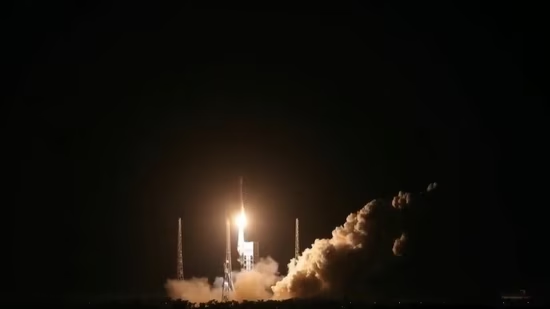
    China has achieved a major milestone in its space ambitions with the successful launch of its first commercial rocket, the Long March-12 Y1, on November 30, 2024. The mission lifted off from the new Wenchang Commercial Space Launch Site on Hainan Island, signaling Chinaโ€™s push to expand its role in the global space market.

    The Long March-12 Y1 was developed by the Shanghai Academy of Spaceflight Technology. Standing 62 meters tall and 3.8 meters in diameter, it is the first Chinese rocket of this width, allowing it to carry about 30% more fuel than earlier designs. The two-stage vehicle can deliver payloads of up to 12,000 kilograms into low Earth orbit and 6,000 kilograms into sun-synchronous orbit.

    The rocket carried two experimental payloads into orbit: the Satellite Internet Technology Test Satellite and the Technology Test Satellite-3. While details of the satellites remain undisclosed, their successful deployment confirmed the rocketโ€™s capability.

    Chinaโ€™s commercial launch effort comes at a time when global competition in space is intensifying. The state-run China National Space Administration has already achieved milestones such as a lunar sample return and a landing on the far side of the Moon. However, the countryโ€™s private sector lags far behind rivals such as SpaceX, which completed about 100 launches in 2023 alone.

    China plans roughly 70 Long March launches and 30 additional missions from commercial providers in 2024. The country continues to face challenges including limited launch pad access and the absence of reusable rockets, which have helped SpaceX dominate the market. Still, the Long March-12 Y1โ€™s successful debut highlights Chinaโ€™s determination to build a stronger commercial presence in orbit.

    Analysts say the expansion of commercial launch capabilities could play a key role in future space exploration, satellite internet projects, and international partnerships as China positions itself to compete in the rapidly growing space economy.