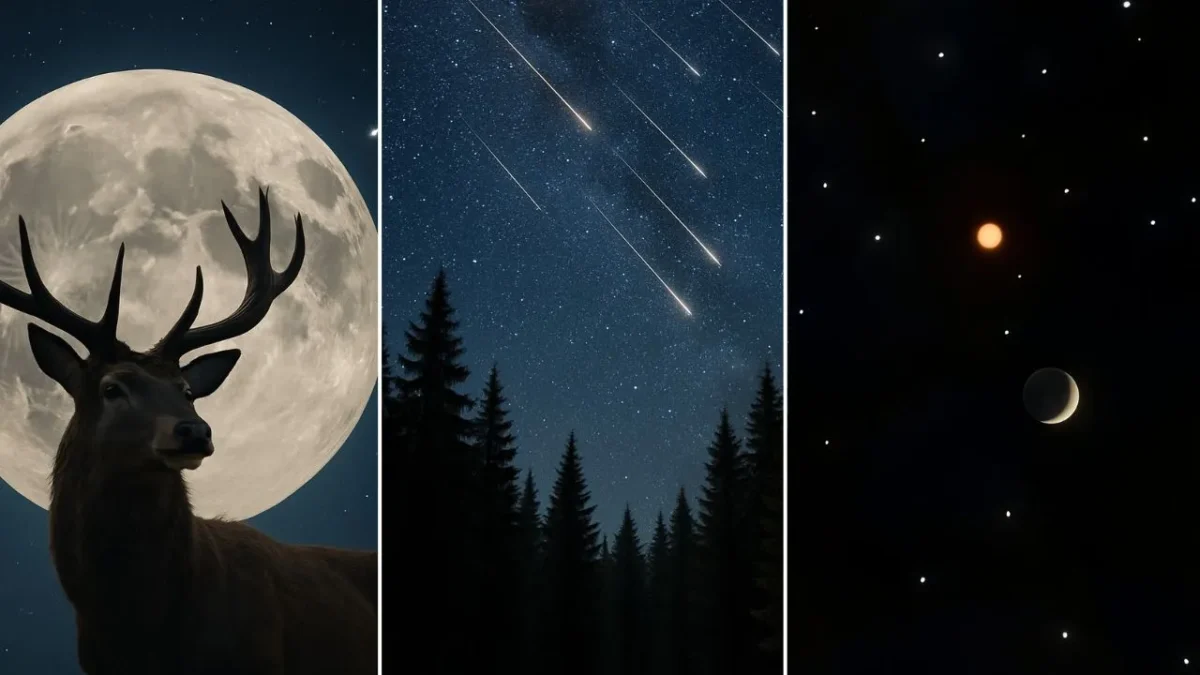
Tag: Full Moon

  • A Total Lunar Eclipse Will Turn the Moon Red on September 7โ€“8, 2025

    A Total Lunar Eclipse Will Turn the Moon Red on September 7โ€“8, 2025

    A total lunar eclipse will paint the Moon red on September 7–8, 2025, visible across Europe, Africa, Asia, and Australia. Known as a “Blood Moon,” the event happens when Earth blocks direct sunlight from reaching the Moon, causing it to glow in shades of red. The eclipse will last for about five hours, with totality peaking at 6:11 p.m. UTC on September 7.

    During this eclipse, observers in North America may see the start or end, depending on time zones. The rest of the world can watch the full sequence unfold, from the faint penumbral stage to the deep red of totality.

    What is a Blood Moon?

    The term “Blood Moon” refers to the reddish color the Moon takes on during a total lunar eclipse. The color isn’t mystical; it comes from basic physics. When the Sun, Earth, and Moon line up, Earth blocks sunlight. But Earth’s atmosphere bends some of that light around its edges. Shorter blue wavelengths scatter, leaving behind longer red wavelengths that illuminate the Moon.

    The exact shade depends on the atmosphere at the time. Dust, smoke, or volcanic ash can make the Moon appear darker or more orange. On clearer nights, the red can look brighter.

    How does a Lunar Eclipse occur?

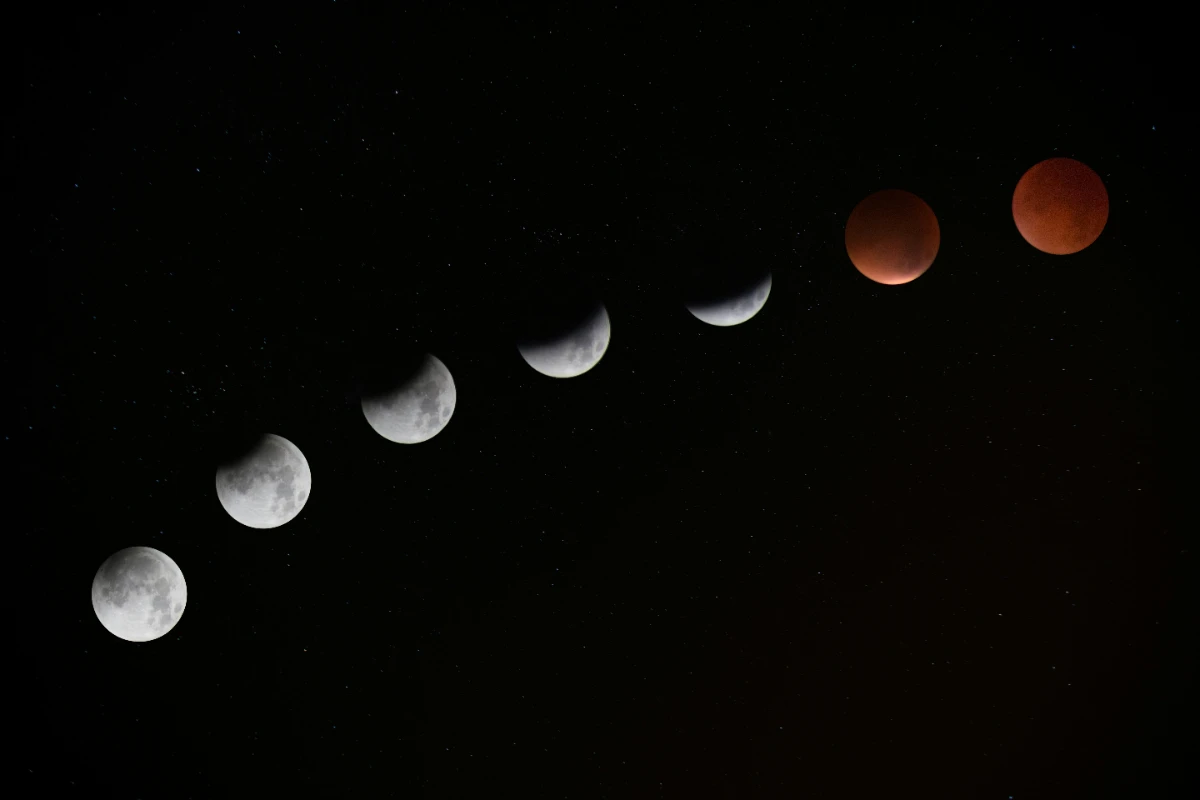
    A lunar eclipse occurs when the Moon moves into Earth’s shadow. The process has three stages. First, the penumbral phase makes the Moon appear slightly dimmer. Next, the partial phase begins as Earth’s central shadow takes a bite out of the Moon. Finally, the total phase, or umbra, covers the Moon completely.

    Unlike solar eclipses, lunar eclipses are safe to watch with the naked eye. No special glasses are needed, though binoculars or a telescope can reveal surface details during the dim red glow.

    History

    Ancient cultures often saw lunar eclipses as omens. The Incas, for example, believed a jaguar was attacking the moon during an eclipse. Today, astronomers understand it as a natural alignment of Earth and its satellite.

    In some cases, lunar eclipses line up with perigee (the point when the Moon is closest to Earth), creating what’s called a “supermoon eclipse.” That makes the Moon appear slightly larger in the sky. The September 2025 eclipse won’t coincide with perigee, but the view will still be striking.

    Why observe an Eclipse?

    Eclipses connect sky watchers to the rhythms of the solar system. They happen a few times a year, but total lunar eclipses are less frequent and widely anticipated. This one offers a long viewing window and a clear display of Earth’s shadow at work.

    Astronomers recommend finding a dark location away from city lights for the best view. Apps such as SkySafari and NASA’s Eclipse Explorer will provide local timings. With clear skies, millions of people worldwide will have the chance to see the Moon turn red in real time.

  • Purnima Dates 2025 with Tithi Timings

    Purnima Dates 2025 with Tithi Timings

    Purnima marks the full moon day in the Hindu lunar calendar. People observe it with fasts and prayers, often honoring Lord Vishnu. Astronomically, it’s when the moon sits opposite the sun from Earth’s view, fully lit.
    This day falls on the 15th tithi of the bright half, or Shukla Paksha. The tithi measures the moon’s position relative to the sun.

    Purnima Dates and Tithi Timings for 2025

    Hereโ€™s the complete list for 2025, based on standard Indian panchang calculations for New Delhi (times in IST). The date listed is the full moon day, when the tithi ends.

    January (Pausha)

    • Date: January 13 (Monday)
    • Tithi Start: 5:03 AM, January 13
    • Tithi End: 3:56 AM, January 14
    • Cultural Significance: Shakambhari Purnima is good for river baths.

    February (Magha)

    • Date: February 12 (Wednesday)
    • Tithi Start: 6:56 PM, February 11
    • Tithi End: 7:23 PM, February 12
    • Cultural Significance: Maghi Purnima, a time for charity and holy dips.

    March (Phalguna)

    • Date: March 14 (Friday)
    • Tithi Start: 10:36 AM, March 13
    • Tithi End: 12:24 PM, March 14
    • Cultural Significance: Holi falls around this, with bonfires the night before.

    April (Chaitra)

    • Date: April 12 (Saturday)
    • Tithi Start: 3:22 AM, April 12
    • Tithi End: 5:52 AM, April 13
    • Cultural Significance: Hanuman Jayanti often coincides.

    May (Vaishakha)

    • Date: May 12 (Monday)
    • Tithi Start: 8:02 PM, May 11
    • Tithi End: 10:25 PM, May 12
    • Cultural Significance: Buddha Purnima, marking Buddha’s birth.

    June (Jyeshtha)

    • Date: June 11 (Wednesday)
    • Tithi Start: 11:36 AM, June 10
    • Tithi End: 1:13 PM, June 11
    • Cultural Significance: Vat Savitri Vrat for married women.

    July (Ashadha)

    • Date: July 10 (Thursday)
    • Tithi Start: 1:37 AM, July 10
    • Tithi End: 2:06 AM, July 11
    • Cultural Significance: Guru Purnima, honoring teachers.

    August (Shravana)

    • Date: August 9 (Saturday)
    • Tithi Start: 2:12 PM, August 8
    • Tithi End: 1:25 PM, August 9
    • Cultural Significance: Raksha Bandhan day.

    September (Bhadrapada)

    • Date: September 7 (Sunday)
    • Tithi Start: 1:41 AM, September 7
    • Tithi End: 11:38 PM, September 7
    • Cultural Significance: Start of Pitru Paksha.

    October (Ashvina)

    • Date: October 7 (Tuesday)
    • Tithi Start: 12:24 PM, October 6
    • Tithi End: 9:17 AM, October 7
    • Cultural Significance: Sharad Purnima, with moonlight rituals.

    November (Kartika)

    • Date: November 5 (Wednesday)
    • Tithi Start: 10:36 PM, November 4
    • Tithi End: 6:49 PM, November 5
    • Cultural Significance: Kartik Purnima, lantern festivals.

    December (Margashirsha)

    • Date: December 4 (Thursday)
    • Tithi Start: 8:38 AM, December 4
    • Tithi End: 4:44 AM, December 5
    • Cultural Significance: Dattatreya Jayanti.

    These timings can vary slightly by location due to local sunrise rules in the panchang. To know accurate tithi timings for your location, visit Drik Panchang.

    Why Do Tithi Timings Matter?

    Tithi timings help decide when to start fasts or pujas. If the tithi spans two days, the vrat day is usually when it covers midday.

    Astronomers calculate these using the moon’s position. The 12-degree shift for each tithi comes from the moon’s faster orbit compared to the sun’s apparent motion.

    The Astronomy of Full Moons

    The moon orbits Earth every 27.3 days, but full moons happen roughly every 29.5 days due to Earth’s movement around the sun. During a full moon, sunlight hits the moon straight on, making it appear round and bright.

    The exact moment comes when the sun, Earth, and moon align, with Earth in the middle. This alignment shifts slightly each month because of the moon’s tilted orbit.

    Full moons influence tides through gravity, pulling harder on Earth’s water. They don’t cause major behavior changes in people, though some studies note minor sleep effects from the extra light.

    Cultural and Scientific Importance

    Many link full moons to calm minds, though science sees them as brighter nights affecting sleep. Rituals like offering water to the moon aim to reduce stress.

    In 2025, watch for eclipses; none directly on these Purnimas, but nearby dates might bring partial ones. Purnima reminds us of the moon’s steady cycle amid our busy lives. Track one this year and see the sky light up.

    Check the Moon Phase on your Birthday.

  • Must see Astronomical events in July 2025

    Must see Astronomical events in July 2025

    Attention, stargazers! July 2025 offers some exciting stargazing opportunities for both casual observers and professional astronomers around the globe. Starting with the conjunction of Antares and the Moon, the month will end with the peak of the Delta Aquarids meteor shower.

    This article serves as a clear and reliable guide to help you navigate the celestial events of July, offering detailed insights into each event so you can make the most of your stargazing experience.

    Key astronomical events in July 2025

    • July 1-7: Mercury appears bright and easy to see low in the western sky 30 to 45 minutes after sunset. A clear horizon is required for visibility before it sets.
    • July 3: Mercury lies near the Beehive Cluster in the western sky after sunset, visible until around 8:20 p.m. At the same time, Spica appears close to the Moon and remains in view until midnight.
    • July 4: Earth reaches its farthest distance from the Sun (Aphelion): 152 million kilometers. Mercury reaches its greatest eastern elongation, offering its widest separation from the Sun in the evening sky.
    • July 21-22: A crescent moon appears close to Venus and Jupiter in the eastern sky just before sunrise. Several bright stars remain visible in the same region.
    • July 28: A crescent moon appears near Mars in the western sky after sunset.
    • July 30-31: The Delta Aquariids meteor shower peaks, with as many as 25 meteors per hour visible from 9:30 p.m. until dawn. (Check Radiant Point.)

    The Buck Moon

    The Buck Moon/the July full moon.
    (Artists’s Concept)

    According to Forbes, the Buck Moon (Full Moon of July) will reach its full phase at 4:38 p.m. EDT on Thursday, July 10. While it will appear full the night before and after its peak, the most breathtaking view will be during moonrise at dusk on July 10. That is when the full moon will hang low on the horizon, appearing larger, brighter, and more dramatic.

    According to Farmer’s Almanac, the name comes from Native American traditions, referring to the time of year when male deer, or bucks, begin to grow new antlers covered in soft velvet. The term has since become widely recognized in modern lunar calendars.

    This yearโ€™s Buck Moon does not coincide with the Delta Aquariids peak, allowing clearer views of the meteor shower later in the month.

    Planets and constellations visible in July 2025

    • Venus shines brightly in the eastern sky during the two hours before sunrise, appearing near the Pleiades star cluster, Aldebaran, and Capella throughout the month.
    • Mars appears low in the west after sunset and remains visible for a couple of hours. Its brightness gradually fades as the month continues.
    • Jupiter begins rising in the east around an hour before sunrise from mid-July onward, climbing higher each morning.
    • Saturn rises around midnight and stays high in the southern sky through the early morning hours.
    • The Aquila constellation is visible in the eastern sky during the first half of the night. Its brightest star, Altair, forms one corner of the Summer Triangle and remains easy to locate, even from areas with light pollution.

    Space History

    The month of July 2025 marks 60 years since NASAโ€™s Mariner 4 performed the first successful flyby of Mars in July 1965. It was the first mission to send back close-up images of another planet and revealed that Mars has a very thin, cold atmosphere.

    Moon phases for July 2025

    • First quarter: July 2
    • Full Moon: July 10
    • Third quarter: July 17
    • New Moon: July 24

    Darker skies around the new moon offer ideal conditions for viewing faint stars, planets, and meteor showers. Topped with multiple conjunctions, July remains a rewarding month for skywatching.

  • Strawberry Moon 2025 in Pictures

    Strawberry Moon 2025 in Pictures

    The Strawberry Moon occurred on June 11 this year. Photographers around the world managed to capture some stunning shots of the Strawberry Moon; however, only a few pictures have made a spot in the viewers’ hearts and, apparently, in this article.

    Here are some of the best images of this year’s Strawberry Moon captured from different locations worldwide.

    1) Washington, USA

    Strawberry Moon captured in Washington DC, USA
    Image credit: Drew Giggity via Instagram

    2) Bogor, Indonesia

    Starwberry Moon captured in Bogor, Indonesia
    Image credit: Bima Nasution via Instagram

    3) Madura, Sumenep, Indonesia

    Strawberry Moon captured in Madura ,Sumenep, Indonesia
    Image credit: badutlangit_ via Instagram

    4) Mount Erciyes, Turkey

    Strawberry Moon captured behind Mount Erciyes, Turkey
    Image credit: Betul Turkosy via Instagram

    5) Brentwood, Tennessee, USA

    Starwberry Moon captured in Brentwood, Tennessee, USA
    Image credit: Rami Ammoun via Instagram

    And that’s a wrap for today! A huge shoutout to the incredibly talented photographers who captured and shared these stunning images with the world.

    Note: The order and numbering of these images are purely random and do not indicate any ranking or preference.

    Disclaimer: All image credits go entirely to the respective photographers. The images featured in this article are used under the Fair Use policy for educational and illustrative purposes only. Mail: contact@wondersinspace.com for queries or removal requests.

  • June Skywatching Tips: Strawberry Moon, Solstice, and World Asteroid Day!

    June Skywatching Tips: Strawberry Moon, Solstice, and World Asteroid Day!

    If you missed stargazing in May, there’s no need to worry! June offers some exciting stargazing events. From the Strawberry Moon to World Asteroid Day, immerse yourself in the wonders of the night sky this month.

    Celestial EventDate
    Milky Way Core SeasonAll June
    Strawberry MoonJune 11
    Moon-Saturn ConjunctionJune 19
    June SolsticeJune 20
    Moon-Venus ConjunctionJune 22
    Moon-Mars ConjunctionJune 29-30
    World Asteroid DayJune 30

    Milky Way core season

    The beginning of June usually means the Milky Way core season is here. According to NASA, this is the time of year when the Milky Way is visible as a faint band of hazy light arching across the sky all night. Just head to a dark sky site away from the city lights and observe the bright central core of our galaxy.

    Strawberry Moon

    The full moon of June, also known as the ‘Strawberry Moon,’ will occur on June 11. According to the Farmer’s Almanac, the term ‘Strawberry Moon’ is used by the Native American Algonquian tribes in the northeastern United States, as well as by the Ojibwe, Dakota, and Lakota peoples, to signify the ripening of โ€œJune-bearingโ€ strawberries that are ready for harvesting; i.e., the name ‘Strawberry Moon’ has nothing to do with the appearance or color of the moon.

    Moon-Saturn conjunction

    On June 19, the moon and Saturn will be aligned close to each other in the eastern sky a few hours before dawn.

    June solstice

    June marks the beginning of a solstice for both hemispheres. It brings the summer solstice in the northern hemisphere and the winter solstice in the southern hemisphere. This means that the northern hemisphere will experience the longest day of the year, whereas the southern hemisphere will experience the shortest day of the year.

    Moon-Venus conjunction

    The moon and Venus will be aligned close to each other on June 22 in the eastern sky a few hours before sunrise.

    Moon-Mars conjunction

    On June 29-30, the moon and Mars will be closely aligned in the evening sky in the western direction after the sunset.

    World Asteroid Day

    June 30, i.e., the anniversary of the Tunguska event, is celebrated as World Asteroid Day. The first celebration took place on June 30, 2015. World Asteroid Day aims to raise awareness about asteroids and what can be done to protect the Earth, its families, communities, and future generations from a catastrophic event.

    We hope you are now all set to observe and celebrate these beautiful events this June. Bookmark this page so that you don’t forget any of these events!

  • Stunning Photos Capture Rare Supermoon Harvest Moon Eclipse on September 17-18, 2024
    Stunning Photos Capture Rare Supermoon Harvest Moon Eclipse on September 17-18, 2024

    The rare combination of a supermoon and the harvest moon eclipse on September 17-18, 2024, captivated observers around the world. The partial lunar eclipse coincided with the harvest moon, enhancing its visual impact and leaving witnesses amazed by the celestial display.

    Photographers, both professional and amateur, captured some remarkable images of the event. Highlights include shots from Abhimanyu Singh, Rami Ammoun, Evan Benko, and Jeremy Gil Chris. These photographs showcase the intricate details and rich colors of the moon during the eclipse.

    mini magick20240921 34469 mm49aw
    Image credit: Abhimanyu Singh
    The partial lunar eclipse right now PartialLunarEclipse
    Image credit: Rami Ammoun
    mini magick20240921 35446 6wnojw
    Image credit: Evan Benko
    mini magick20240921 34469 2jnv3v scaled
    Image credit: Jeremy Gil Chris

    Capturing such images requires knowledge of astrophotography techniques, telescope adjustments, and camera settings. Read our detailed astrophotography guide and telescope guide to learn more about photographing the night sky and experiencing the magic of celestial events firsthand.