Tag: Planet

  • Astronomers capture earliest stages of Planet formation around a baby star HOPS-315

    Astronomers capture earliest stages of Planet formation around a baby star HOPS-315

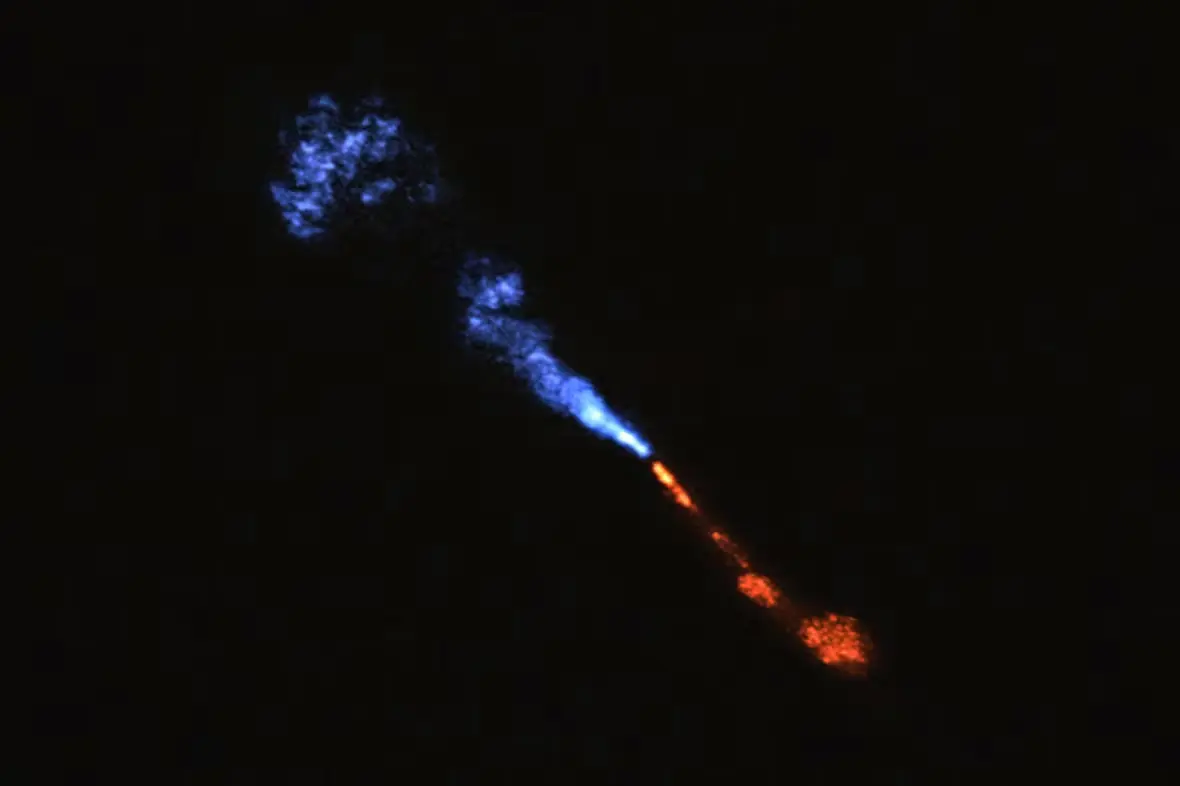
    Astronomers have detected the earliest stages of planet formation around a young star named HOPS-315, located 1,370 light-years away. Using NASAโ€™s James Webb Space Telescope (JWST) and the European Southern Observatoryโ€™s ALMA telescopes in Chile, scientists observed solid particles forming in the gas disk surrounding this star, which is only 100,000 to 200,000 years old. The findings were published in Nature on July 16, 2025.

    โ€œWeโ€™ve captured the moment when rocky planets like Earth start to take shape,โ€ said Melissa McClure, who led the research team from Leiden Observatory in the Netherlands. The team identified silicon monoxide gas and crystalline silicate minerals (materials that were key to forming our own solar system over 4.5 billion years ago) in a region similar to the asteroid belt between Mars and Jupiter.

    A gap in the starโ€™s gas disk, combined with its tilt toward Earth, allowed astronomers to study this process closely. Images from ALMA show the system glowing brightly against the dark backdrop of space. โ€œThis is a major step in understanding how planets form,โ€ said Fred Ciesla, a University of Chicago scientist not involved in the study. โ€œWeโ€™re seeing evidence of processes weโ€™ve long theorized about.โ€

    The gas disk around HOPS-315 is massive, suggesting it could eventually form multiple planets, possibly as many as eight, over the next million years. McClure noted that this discovery indicates planet formation may be a common process around young stars. โ€œWe didnโ€™t know if this was unique to our solar system or something that happens often,โ€ she said.

    Researchers, including Purdue Universityโ€™s Merel van โ€™t Hoff, plan to study more young stars to compare their findings. โ€œWe want to learn if this process is typical and what it means for the chances of finding Earth-like planets elsewhere,โ€ van โ€™t Hoff said. This discovery offers a new perspective on the origins of planets and our place in the universe.

  • Venus, Saturn, Jupiter, and Mars to Align in the sky for a Planetary Parade

    Venus, Saturn, Jupiter, and Mars to Align in the sky for a Planetary Parade

    NASA has announced that four planetsโ€”Venus, Saturn, Jupiter, and Marsโ€”will align in a planetary parade on January 21, 2025. This rare event will be visible from Earth, offering skywatchers the chance to see all four planets line up along the ecliptic. The planetary parade is expected to provide a clear view for observers around the world, with minimal equipment required.

    A planetary parade occurs when multiple planets appear in a straight line in the night sky. These alignments, although not common, occur several times each year. The 2025 parade will feature Venus, Saturn, Jupiter, and Mars, the planets most often visible during such events.

    To view the parade, find a location away from city lights and tall structures that could block the view. While the planets are visible to the naked eye, a telescope or binoculars will enhance the experience, allowing viewers to see finer details such as the rings of Saturn or the surface features of Mars.

    Observers should plan to watch after sunset, as the planets will be positioned along the horizon and gradually move higher into the night sky. Experts recommend checking local sky charts or astronomy apps to confirm the precise positions of the planets based on your location.

    This alignment offers not only a visual spectacle but also a chance for amateur astronomers and educators to engage with the solar system. Events and viewing parties may be organized at observatories and science centers, encouraging communities to explore the planets together.