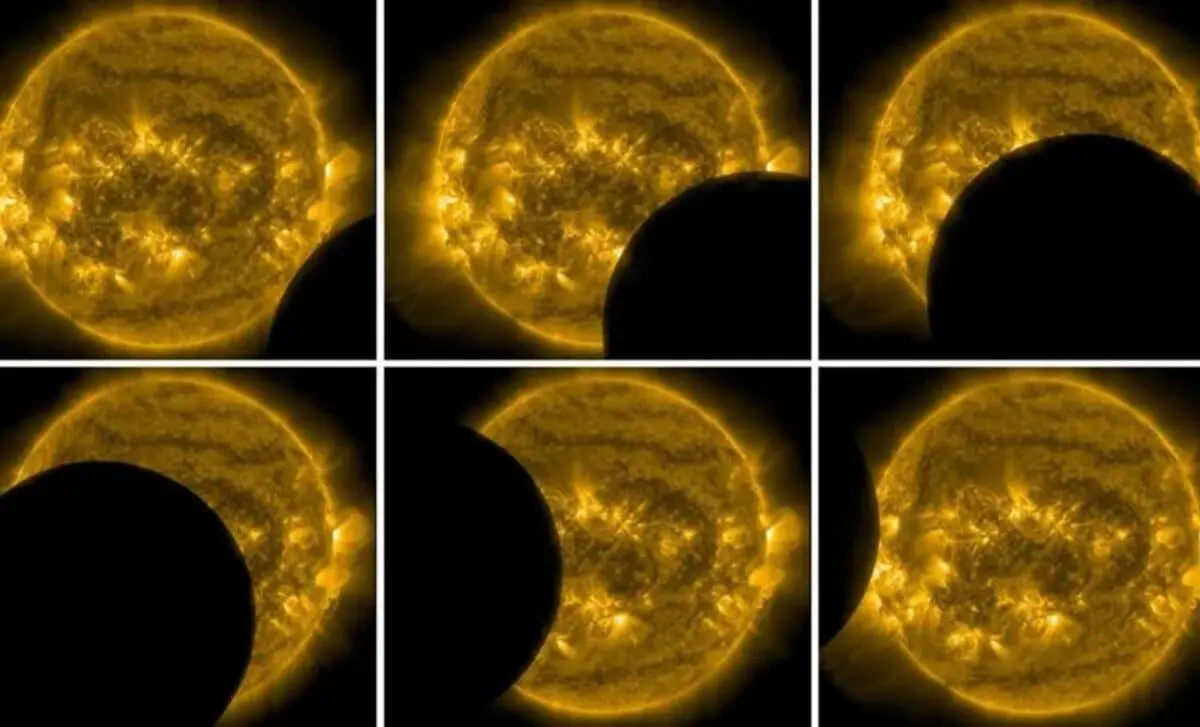
On July 25, 2025, NASAโs Solar Dynamics Observatory (SDO) captured a rare solar eclipse from orbit, revealing 62% of the sun blocked by the moon for 35 minutes. This event, invisible from Earth because the moonโs shadow missed the planetโs surface, marked the second space-based eclipse of 2025, following the European Space Agencyโs Proba-3 mission that used satellites to block the sun.
Scientists at NASA aim to study solar activity and its effects on Earthโs technology through these observations. The SDOโs images, taken from its unique vantage point, provide clear data on the sunโs behavior.
NASA launched the SDO on February 11, 2010, to orbit Earth at 19,000 miles per hour, matching the planetโs rotation. Its three tools, the Atmospheric Imaging Assembly, Helioseismic and Magnetic Imager, and Extreme Ultraviolet Variability Experiment, gather 1.5 terabytes of data daily. These instruments record the sun in multiple wavelengths, avoiding distortion from Earthโs atmosphere.
The eclipse showed the sunโs outer layer, the corona, normally hidden by the starโs bright light. The sunโs magnetic fields sometimes break and reconnect, causing solar flares and bursts of charged particles. These events can harm satellites, power grids, and radio signals. โWe saw glowing coronal loops and bright flares at the sunโs edge,โ said NASA scientist Dr. Emily Mason.
NASA charged the SDOโs batteries before the eclipse to keep it running during the dimming. The spacecraftโs solar panels lost sunlight briefly, but its design ensured steady operation. This planning allowed the SDO to capture clear images without interruption.
The SDO sees lunar transits a few times yearly, but this eclipse stood out for its 62% coverage. Its images revealed jagged edges and glowing coronal patterns, offering a rare view of the sunโs atmosphere. Proba-3โs earlier eclipse, created by aligning satellites, supports these findings by mimicking a total eclipse.
Solar activity affects Earthโs space environment, disrupting technology like GPS and communication systems. The SDOโs data helps NASA and agencies like NOAA predict when flares or particle bursts might occur. This information protects satellites and ground-based systems from damage.
The public can view a partial solar eclipse on September 21, 2025, in New Zealand, Tasmania, parts of the Indian Ocean, and Antarctica. Up to 80% of the sun will be blocked, but viewers need solar eclipse glasses or filters for safe observation.
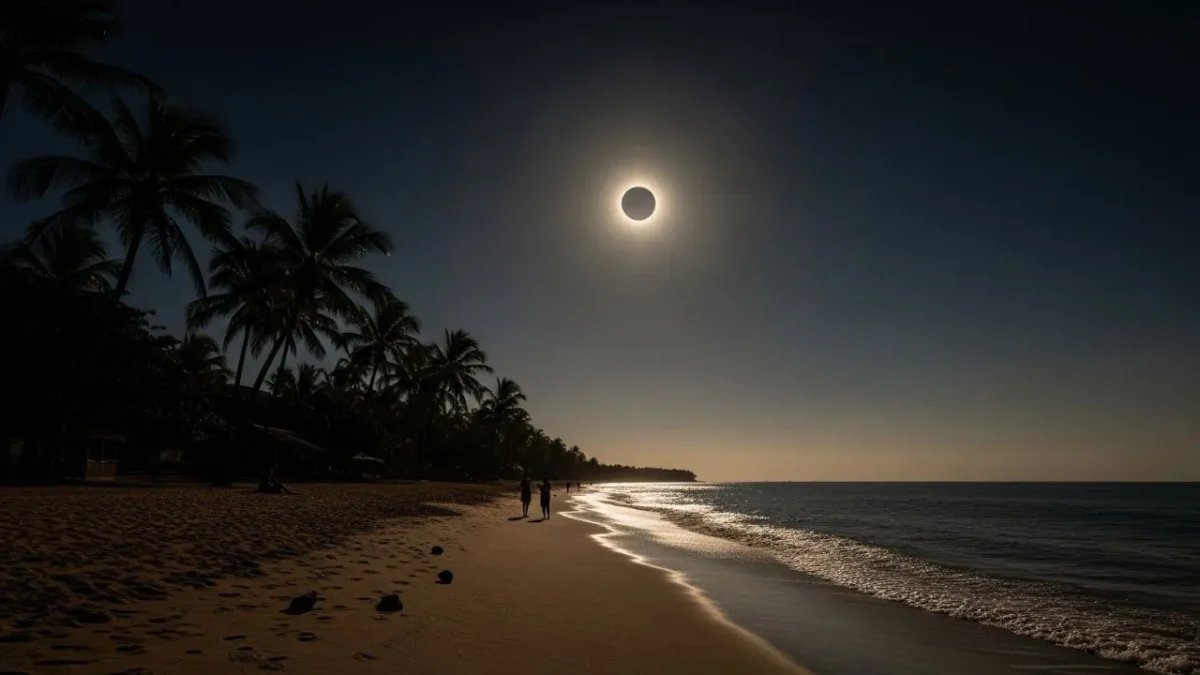
A total solar eclipse on August 12, 2026, will cross Greenland, western Iceland, and northern Spain. For about 2 minutes and 18 seconds in Iceland, the sunโs corona will be visible. This event draws crowds for its rare beauty.
The SDOโs work helps scientists understand the sunโs impact on Earth. Its July 25 images, showing vivid coronal loops and surface flares, will fuel research for months. Proba-3โs data adds to this effort, improving space weather predictions. Eclipse fans on Earth can prepare for the next solar spectacle.