Tag: Starlink

  • Maharashtra becomes the first Indian State to sign a deal with Elon Musk’s Starlink

    Maharashtra becomes the first Indian State to sign a deal with Elon Musk’s Starlink

    The Maharashtra government has signed a plan with Elon Musk’s satellite network, Starlink, to bring high-speed internet to remote districts that still lack stable broadband. The agreement, announced on Wednesday, makes Maharashtra the first state in India to formally adopt satellite internet as part of its digital rollout. Officials say the goal is to give schools, health centers, and disaster response teams fast connections without waiting for cables or cell towers.

    “With this landmark decision, Maharashtra will lead India in satellite-enabled digital infrastructure.
    This is a giant leap towards future-ready Maharashtra. Congratulations, Maharashtra!” Chief Minister Mr. Devendra Fadnavis posted X.

    The trial will run for 90 days. It will begin in tribal schools in Nandurbar and at primary health posts in Washim, where slow or unreliable service has long held back online classes and telemedicine. A government team led by Chief Minister Devendra Fadnavis will check the results every month and issue recommendations before wider use.

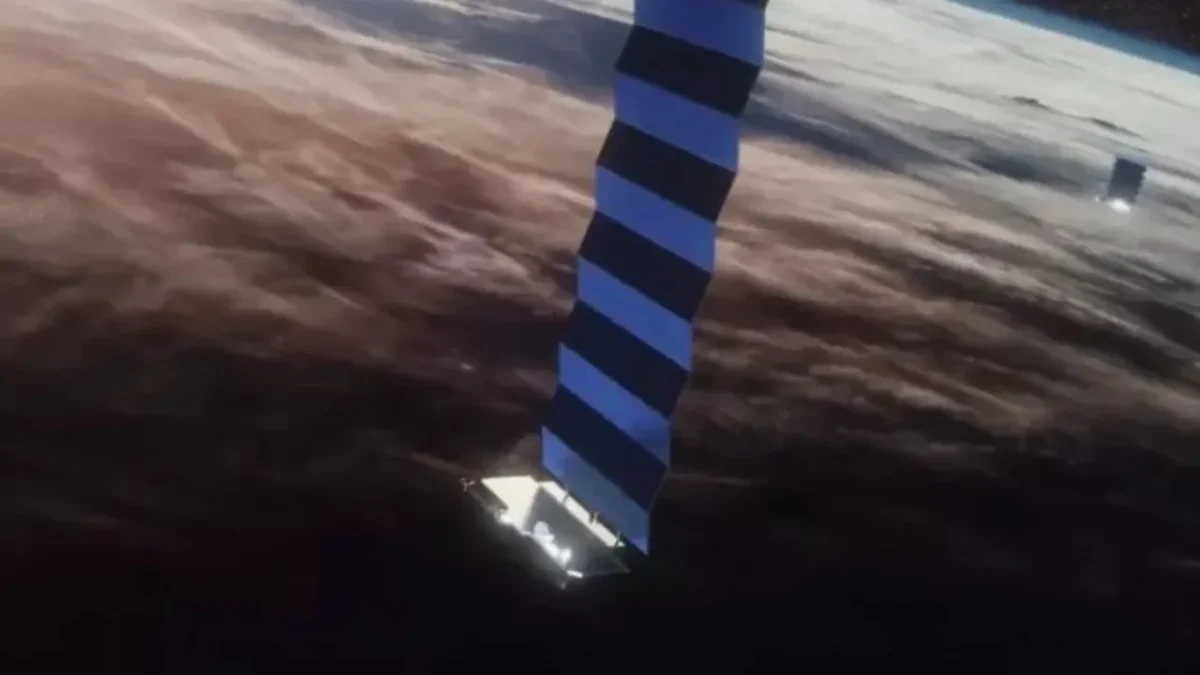
    Starlink uses satellites in low-Earth orbit, flying a few hundred kilometers above the ground. Their short distance cuts network delays to under 50 milliseconds, which is close to the speed of normal broadband in cities. Because these satellites are always moving, signals pass from one to the next as they circle the planet. Each craft uses solar power and lasers to send data between neighbors before it reaches an antenna on the ground.

    Maharashtra officials say this avoids the problems of building fiber networks in rough terrain. Rural districts include hills, plateaus, and long forest routes where cables are expensive to lay and often damaged by weather. Many villages also face routine mobile blackouts during storms. Satellite links do not depend on towers, so service continues even when local networks fail.

    The state wants to test Starlink for emergency communication too. Police boats along the Konkan coast and control rooms on the Samruddhi Mahamarg highway will use it during the trial. Heavy rain and floods cut several districts off in 2024. Leaders believe satellite coverage could keep rescue teams online through medical calls, tracking data, and live weather reports.

    SpaceX has launched thousands of Starlink satellites in recent years using reusable Falcon 9 rockets. Each satellite weighs about 260 kilograms and unfolds a solar array in orbit. As of late 2025, the network has passed 6,000 active satellites worldwide. The company advertises download speeds of 100 to 200 Mbps, enough for video calls, online classes, and digital payments.

    Engineers will install small dish antennas. They resemble flat white plates and lock onto satellites through software guidance. Local workers will be trained to maintain and replace them. Government officials say launch costs and hardware prices have dropped due to frequent commercial flights, which makes satellite service cheaper than it was a decade ago.

    Astronomers have raised concerns about satellite brightness. Reflections from large constellations have shown up as streaks in long-exposure images. Starlink has said it is testing darker coatings and hardware to reduce glare. The state expects to hold further talks as the network expands.

    The agreement fits into the Digital Maharashtra program, which aims to give internet access to every district by the end of the decade. State leaders say the long-term plan includes connected schools, telemedicine hubs, and smart systems for coast security. Data collected from the trial will decide how fast the service expands.

    If the pilot works, remote villages that have never had stable internet could come online within months. The next review of the project is expected at the end of the first 30-day report.

  • Astronomers detect Starlink signals leaking into protected Radio Astronomy bands

    Astronomers detect Starlink signals leaking into protected Radio Astronomy bands

    SpaceXโ€™s Starlink network has revolutionized global internet access, but itโ€™s also creating new challenges for radio astronomy. A recent study from Curtin University, which analyzed 76 million images from a prototype of the Square Kilometre Array (SKA) telescope, shows that Starlink satellites are interfering with radio observations.

    In some datasets, up to 30% of the images were affected by emissions from Starlink satellites. Using the Engineering Development Array 2 (EDA2) in Western Australia, researchers detected 112,534 emissions from 1,806 individual Starlink satellites. Many of these signals were unintentional, leaking from satellite electronics into frequency bands specifically reserved for astronomy.

    The study found that 703 satellites emitted signals at 150.78 MHz, a frequency protected by the International Telecommunication Union (ITU) for radio astronomy. Another 13 satellites were detected in the 73.00โ€“74.60 MHz protected band.

    โ€œStarlink is the most immediate and frequent source of potential interference for radio astronomy: it launched 477 satellites during this studyโ€™s four-month data collection period alone,โ€ said Dylan Grigg, the studyโ€™s lead author and a Ph.D. candidate at Curtin University, in a statement. The interference doesnโ€™t come from the satellitesโ€™ communication systems but from other components such as propulsion and avionics, which makes it more difficult to control.

    A SpaceX Starlink satellite trail captured in an image by a telescope.
    SpaceX Starlink satellites seen interrupting telescope observations. Image credit: Victoria Girgis/Lowell Observatory

    As of September 2024, Starlink has over 7,000 satellites in orbit, making it the largest satellite network around Earth. SpaceX adds about 40 new satellites each week. Newer models, like the v2-mini satellites, give off stronger radio signals than earlier ones. Thatโ€™s a growing problem for astronomers who rely on quiet radio frequencies to detect faint signals from distant galaxies and nebulae.

    The Curtin University study also found that Starlink satellites reflect FM radio signals from the ground. At 99.70 MHz, four satellites were seen bouncing signals from a 10 kW transmitter in Geraldton, Australia, located 300 kilometers from the telescope. These reflections were strongest when the satellites were closest to the transmitter, and their position in orbit may be making this worse.

    Steven Tingay, executive director of the Curtin Institute of Radio Astronomy, pointed out that Starlink isnโ€™t breaking any rules. โ€œIt is important to note that Starlink is not violating current regulations, so is doing nothing wrong. Discussions we have had with SpaceX on the topic have been constructive,โ€ he said. The team released its data publicly in the hope that it will help shape future rules.

    The effect on astronomy is clear. Radio telescopes like SKA-Low are built to pick up signals as faint as 1 millijansky. But Starlinkโ€™s emissions averaged 93 jansky per beam in the study, easily drowning out the weaker signals researchers are trying to measure.

    An earlier study conducted by the Netherlandsย Institute for Radio Astronomy (ASTRON), using the LOFAR telescope in the Netherlands, found similar issues in 2023. That work covered the 10โ€“188 MHz range. The Curtin team expanded on that, tracking emissions up to 235 MHz and finding changing signal patterns that may help trace the source of the noise, though the exact cause is still being looked into.

    Astronomers are now urging updates to existing rules to help limit these kinds of emissions. For now, the challenge is how to keep both global internet access and sky observations working side by side.

    The studyย was published in the Astronomy & Astrophysics journal.

  • SpaceX launches 21 Starlink satellites to strengthen text and data cellphone service

    SpaceX launches 21 Starlink satellites to strengthen text and data cellphone service

    SpaceX launched the Falcon 9 rocket with 21 Starlink satellites aboard on Wednesday at 10:27 am EST from the Launch Complex 39A (LC-39A) at NASAโ€™s Kennedy Space Center, reported Spaceflight Now. Of these 21 satellites, 13 are equipped to provide text and data cellphone services.

    The first stage of the Falcon 9 rocket returned to Earth and landed on the droneship in the Atlantic Ocean around 8 minutes after the liftoff. The rocket’s 418 launch was the third launch of this particular booster. The Falcon 9 rocket successfully deployed the satellites into lower Earth orbit 65 minutes after the liftoff.

    These 21 satellites are now part of the world’s largest satellite constellation, Starlink, which had around 7000 active satellites in low Earth orbit (LEO) as of December 2024, according to the Starlink launch statistics website.

    You can watch the launch video below!