Tag: Telescope

  • Astronomers discover a rare type of Radio Source using the CHIME telescope

    Astronomers discover a rare type of Radio Source using the CHIME telescope

    Using the Canadian Hydrogen Intensity Mapping Experiment (CHIME) telescope, researchers have detected a rare type of long-period radio transient, dubbed CHIME J1634+44, that emits powerful, circularly polarized radio bursts every 84 hours.

    This discovery, detailed in a July 15, 2025, research paper on arxiv.org, hints at an unusual object, possibly a neutron star or a white dwarf binary behaving in ways that challenge current theories. Unlike typical pulsars, which pulse every few seconds, CHIME J1634+44 belongs to a class called Long Period Radio Transients (LPTs). These objects emit bursts over much longer timescales, from tens of seconds to hours.

    What makes this source stand out is its 100% circular polarization, a rare feature where the radio waves oscillate in a circular pattern, detected strongly in one polarization type by the Karl G. Jansky Very Large Array (VLA). This polarization suggests the bursts come from a highly magnetized environment, but the exact mechanism remains a puzzle.

    CHIME Radio Telescope/CHIME Experiment.
    CHIME Radio Telescope/CHIME Experiment. Image credit: CHIME

    The team, led by researchers from institutions like MIT and Caltech, first spotted the signal on October 31, 2022, with subsequent bursts observed occasionally over the next year. The sourceโ€™s period is shortening, or โ€œspinning up,โ€ at a significant rate, which is unusual for such objects.

    Typically, rotating celestial bodies lose energy and slow down. The researchers propose that CHIME J1634+44 could be part of a binary system, possibly two white dwarfs or a white dwarf and a neutron star, where gravitational wave emission drives this acceleration. Their calculations suggest a merger might occur in about 1.1 million years, a blink in cosmic terms.

    Located within our Milky Way, as indicated by its low dispersion measure, CHIME J1634+44 emits bursts far more energetic than similar systems like AR Scorpii, ruling out some white dwarf models. Its quasi-periodic bursts, occurring roughly every 0.13 seconds within a single burst, donโ€™t align with patterns seen in typical neutron stars.

    Observations from the Swift telescope found no X-ray or ultraviolet counterparts, suggesting the sourceโ€™s emissions are primarily radio-based.

    As telescopes like CHIME and the VLA continue to scan the skies, scientists hope to uncover more clues about these strange radio signals that are reshaping our understanding and previous theories.

  • Rubin Observatorys’ Early Data Release: Globular Star Cluster 47 Tucanae

    Rubin Observatorys’ Early Data Release: Globular Star Cluster 47 Tucanae

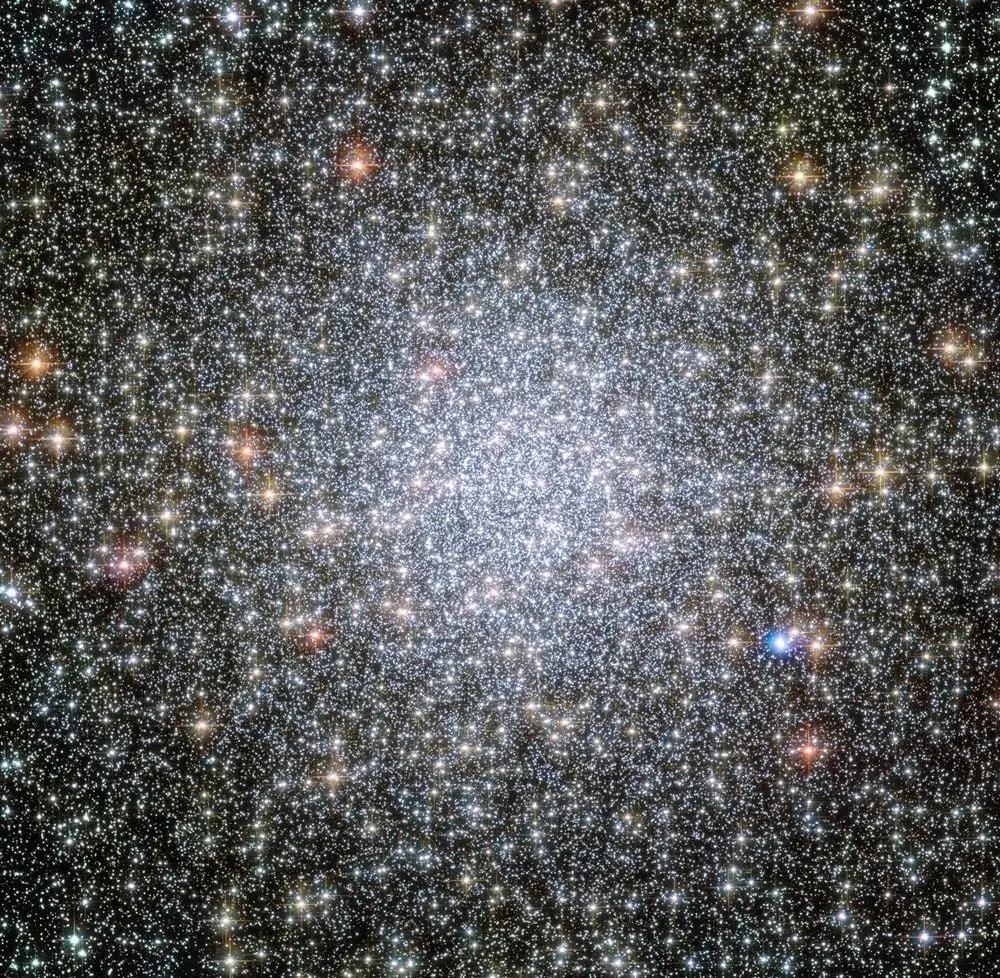
    Astronomers have revealed a remarkably detailed view of 47 Tucanae, one of the most intriguing globular clusters in the night sky. This insight comes from the Vera C. Rubin Observatoryโ€™s first public dataset from its Legacy Survey of Space and Time (LSST).

    Led by Yumi Choi of the University of Washingtonโ€™s DIRAC Institute, this early study, published on July 3, 2025, on arXiv, uses the observatoryโ€™s Data Preview 1 (DP1).

    Located 14,700 light-years away in the constellation Tucana, 47 Tucanae, also known as NGC 104, is the second-brightest globular star cluster. This stellar metropolis, packed with hundreds of thousands of stars more than 12 billion years old, stands as a relic from the universeโ€™s earliest days.

    On June 23, 2025, the observatory amazed the scientific community by releasing its first images and detecting 2,104 previously unknown asteroids, including seven near-Earth objects, in just 10 hours of test observations. This remarkable achievement, representing more than 10 percent of the annual global asteroid discoveries, demonstrates Rubinโ€™s exceptional capabilities.

    The methodical process to pinpoint 47 Tuc 3576 member stars.
    The methodical process to pinpoint 47 Tuc 3576 member stars. Image credit: Choi et al. 2025

    The DP1 dataset, processed at the SLAC National Accelerator Laboratory, spans over 5 terabytes and catalogs 23 million celestial objects. Focusing on a field centered on 47 Tuc, the team used multi-band imaging (g, r, i, y) to study the clusterโ€™s stellar composition.

    By combining color-magnitude diagrams, Gaia DR3 proper-motion data, and advanced color-color filtering, they identified 3,576 member stars. This careful analysis confirms the clusterโ€™s distance at 4.5 kiloparsecs (14,700 light-years) and reveals an old, metal-rich stellar population. The team also identified variable stars, including three RR Lyrae and two eclipsing binaries, highlighting the observatoryโ€™s sensitivity to changes in stellar brightness despite limited observation time.

    The clusterโ€™s dense core poses significant challenges. Saturation and overlapping starlight, along with contamination from the nearby Small Magellanic Cloud, led to gaps in the data. To address this, the team applied polynomial fitting in color-color diagrams to better separate stars from background galaxies compared to traditional methods.

    A map showing how crowding and SMC stars limit object detection near the 47 Tuc core.
    A map showing how crowding and SMC stars limit object detection near the 47 Tuc core. Image credit: Choi et al. 2025

    They also studied photometric scatter, or changes in star brightness, and linked it to crowding, uneven dust, and instrumental noise. By simulating the clusterโ€™s stellar population, they quantified these effects, laying the groundwork for more accurate future studies.

    The Rubin Observatoryโ€™s early findings highlight its ability to observe dense stellar systems like 47 Tucanae, even amid crowding and saturation. As LSST moves toward its next data preview and first public release, astronomers look forward to even sharper views of this ancient cluster, offering new insights into stellar evolution and the early universe.

    Read the full research paper on astro-ph.SR

  • Astrophotographer Captures the ISS as It Transits a Flaring Solar Region

    Astrophotographer Captures the ISS as It Transits a Flaring Solar Region

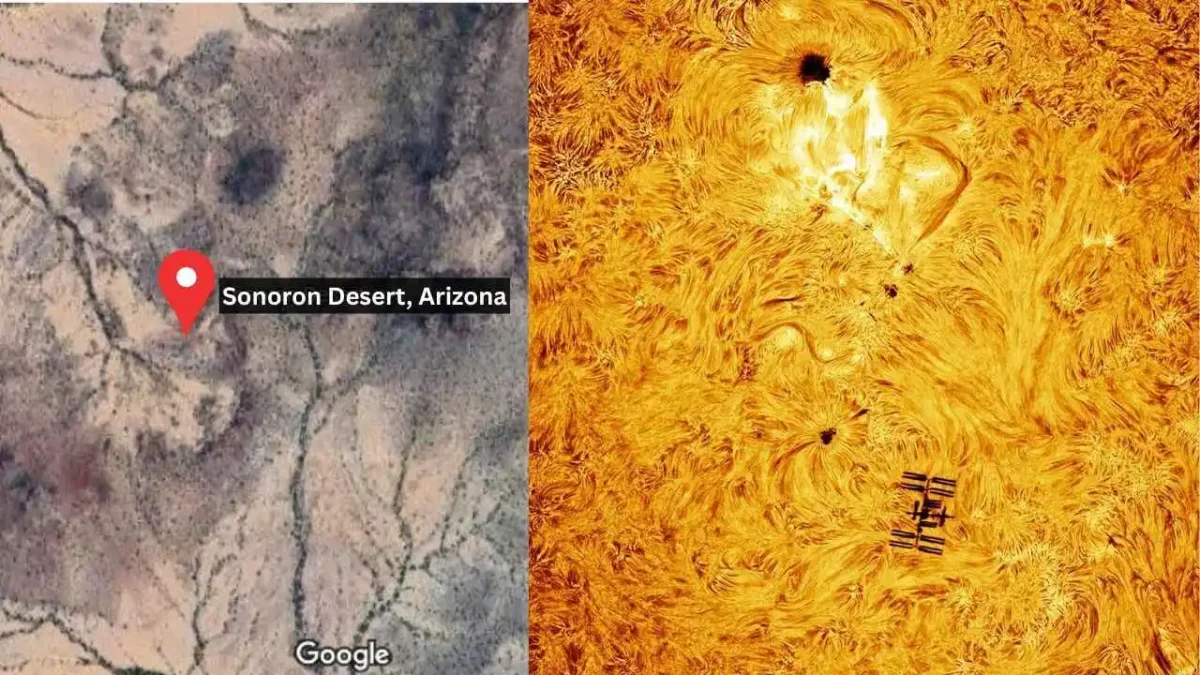
    Arizona-based astrophotographer Andrew McCarthy, known for his creative and stunning astrophotos, has captured a remarkable image of the International Space Station (ISS) transiting the Sun, framed perfectly against a flaring solar region. This photograph reflects his technical mastery and relentless dedication.

    With over 1.5 million followers on Instagram and more than 400K followers on X, Andrew has made significant contributions to astrophotography and astronomy.

    ISS transiting the Sun, framed perfectly against an flaring solar region
    International Space Station (ISS) transiting the sun against a flaring solar region. Credit: Andrew McCarthy (@cosmic_background) via Instagram

    His recent capture of the ISS transit has captivated audiences on social media platforms, including Instagram and X (formerly Twitter).

    Commenting on his work, users on Instagram expressed their admiration, saying, “Your work is absolutely awesome. Thank you for sharing your patience, effort, and skills with the world.” Another user remarked, “This has to win an award. Where can I vote?”

    Andrew McCarthy shared the story behind the image in an exclusive interview with Wonders In Space.

    Here’s the full interview:

    What inspired you to attempt this particular shot?

    Andrew: I have always wanted to combine hydrogen alpha solar imaging with International Space Station transits and have previously attempted many with mixed results. This upcoming transit was the first that had a large active region towards the center of the disc, so I thought it was a great opportunity to try and get a really unique composition.

    Where did you go to capture the event, and when was it taken?

    Andrew: I went to a remote location in the middle of the Sonoran Desert, near Gila Bend, AZ. I had to get there via a dirt road, with many warning signs along the route about the dangers of the desert. I found a clearing amidst many Saguaro cacti and cholla plants where I set up my telescope. The best time to capture a transit like this is when the sun is right overhead, so it was captured shortly after noon in the heat of the day.

    What equipment and settings did you use?

    Andrew: I had several telescopes running for redundancy, but the main system I used was a modified Esprit 150 telescope with a Player One Apollo M-Max camera. The image was captured at 0.3 milliseconds, with 100 gain, and in 16-bit SER format for maximum quality.

    Were there any special preparations or difficulties you faced?

    Andrew: Definitely, the biggest challenge was the heat. I had a temp reading of 121ยฐ from my car’s exterior thermometer while I was working, and some of my equipment reached 130ยฐF. At those temps, computers shut down and cameras stop working right. These conditions have caused many previous attempts to fail. To mitigate this, I brought several ice packs and thermoelectric coolers to keep the electronics (and me) cool.

    How did it feel when you finally saw the image come through?

    Andrew: It was quite thrilling, particularly as the active region began flaring right before the transit. I knew the moment it appeared on screen the shot was something special. (Buy the prints here: Cosmic Background).

    What advice would you give to beginners who want to try capturing ISS transits?

    Andrew: Start small. You donโ€™t need fancy gear right away; a telephoto lens and a basic white-light solar filter are enough to start capturing these events. Once youโ€™re comfortable, you can level up to longer focal lengths or hydrogen-alpha imaging. Itโ€™s definitely more challenging but very rewarding.

    Read a guide by him: Capturing the International Space Station.

    Andrewโ€™s dedication, technical skill, and passion for astrophotography shine through in every frame he captures. This latest shot not only captures the beauty of space but also the incredible persistence it takes to chase these fleeting moments.

    Stay connected with Andrewโ€™s work; follow him on Instagram & X.

  • Best Telescopes for Observing Planets and Galaxies for Beginners

    Best Telescopes for Observing Planets and Galaxies for Beginners

    Many first-time observers assume that viewing planets and galaxies requires expensive equipment. In reality, several beginner-friendly telescopes from internationally trusted brands offer excellent optical performance at reasonable prices. With the right telescope, beginners can clearly observe the Moon, Jupiterโ€™s moons, Saturnโ€™s rings, star clusters, and even nearby galaxies under dark skies.

    Here are some of the best affordable telescopes for beginners, selected for their ease of use, optical quality, and global availability. All models listed are well-known in the astronomy community and suitable for beginners worldwide.

    Telescope ModelBrandApertureMount TypeBest ForSkill Level
    Travel Scope 70Celestron70 mmAlt-AzimuthPortable stargazing, Moon & planetsBeginner
    AstroMaster 70AZCelestron70 mmAlt-AzimuthMoon and planetary viewingBeginner
    AstroMaster 130EQCelestron130 mmEquatorialPlanets, galaxies, deep-sky objectsBeginnerโ€“Intermediate
    Heritage 130PSky-Watcher130 mmTabletop DobsonianGalaxies, nebulae, star clustersBeginner
    StarBlast 4.5 AstroOrion114 mmTabletop DobsonianWide-field and deep-sky observingBeginner

    Celestron Travel Scope 70

    The Celestron Travel Scope 70 is designed for beginners who value portability and ease of use. Its lightweight design makes it ideal for outdoor and travel stargazing. Despite its compact size, it provides clear views of the Moon, planets, and bright star clusters.

    Best for: Casual stargazing and travel
    Strength: Easy setup and portability

    Celestron AstroMaster 70AZ

    This refractor telescope offers sharp lunar and planetary views with a stable alt-azimuth mount. It is well-suited for beginners who want straightforward operation without complex adjustments.

    Best for: Moon and planetary observation
    Strength: Stable mount and simple controls

    Celestron AstroMaster 130EQ

    With a larger 130 mm aperture, this reflector telescope gathers significantly more light, making it suitable for observing galaxies, nebulae, and star clusters. While the equatorial mount requires some learning, it offers smoother tracking once mastered.

    Best for: Beginners ready to explore deep-sky objects
    Strength: Bright images and improved detail

    Sky-Watcher Heritage 130P

    The Sky-Watcher Heritage 130P is a compact tabletop Dobsonian telescope widely praised for its optical performance. Its collapsible design makes it portable, while the 130 mm aperture delivers impressive views of galaxies and nebulae.

    Best for: Deep-sky observing under dark skies
    Strength: Excellent light-gathering capability

    Orion StarBlast 4.5 Astro Reflector

    This beginner-friendly Dobsonian telescope is known for its durability and ease of use. Its wide field of view makes it excellent for scanning star clusters and large deep-sky objects.

    Best for: Wide-field and deep-sky observing
    Strength: Simple design and robust construction

    Why Choosing the Right Telescope Matters for Beginners

    A beginnerโ€™s first telescope often determines whether astronomy becomes an enjoyable hobby or a frustrating experience. Telescopes that are too complex, unstable, or poorly built can discourage new users.

    Choosing the right beginner telescope offers several advantages:

    • Simple setup and operation
    • Clear and stable views of celestial objects
    • Low maintenance requirements
    • Balanced performance for planets and deep-sky objects

    Beginner telescopes should prioritize usability and optical quality over advanced features.

    How to Choose a Telescope for Beginners

    Aperture and Light Gathering

    The aperture is the diameter of the telescopeโ€™s main lens or mirror. Larger apertures collect more light, producing brighter and more detailed images. For beginners, telescopes with apertures between 70 mm and 130 mm provide an excellent balance between performance and portability.

    Telescope Type

    • Refractor telescopes are ideal for beginners due to their sharp planetary views and minimal maintenance.
    • Reflector telescopes offer brighter images for galaxies and nebulae but may require occasional alignment.

    Mount Type

    A stable mount is essential for comfortable viewing.

    • Alt-azimuth mounts are intuitive and beginner-friendly.
    • Equatorial mounts allow more precise tracking but have a steeper learning curve.

    Portability

    Lightweight and compact telescopes are easier to transport, especially for beginners who observe from multiple locations.

    Tips for Beginners Starting Stargazing

    • Start with the Moon and bright planets
    • Use astronomy apps or star charts to locate objects
    • Observe from dark locations away from city lights
    • Allow your eyes time to adapt to darkness
    • Handle optics carefully and store your telescope properly

    Frequently Asked Questions

    What is the best telescope for beginners?

    A beginner telescope should be easy to use, stable, and have good optical quality. Refractors and small reflectors from trusted brands are ideal starting points.

    Can beginners see galaxies with affordable telescopes?

    Yes. Under dark skies, brighter galaxies like Andromeda can be observed with mid-range beginner telescopes, though fine details may be limited.

    Is a larger aperture always better?

    Larger apertures provide brighter views, but they also increase size and weight. Beginners should balance aperture with ease of use.

    Do beginners need expensive accessories?

    No. Most beginner telescopes include essential eyepieces. Additional accessories can be added later as experience grows.

  • A Telescope guide for beginners; Types, Mounts and more
    A Telescope guide for beginners; Types, Mounts and more
    Looking at the stars is always exciting. Telescopes are like doors into other galaxies, stars, and planets, thus making it easier to observe the universe properly. Proper telescope choice is another important aspect of stargazing.

    Types of telescopes

    Refracting telescopes

    Image showing the working of keplarian refracting telscope. A telescope guide for beginners
    Keplarian Refracting Telescope. Image credit: Wikimedia Commons

    Refracting telescopes provide clear and crisp views of heavenly bodies through their lens-based optics. Think about how pleased Galileo was the first time he pointed a telescope at the night sky. They are the most appropriate for people who are starting in astronomy; they are simple to operate and do not require regular maintenance.

    Reflecting telescopes

    Image showing working of a reflecting telescope.
    A Reflecting Telescope. Image credit: Wikimedia Commons

    Reflecting telescopes are based on mirrors for image creation, and their construction allows them to have bigger apertures, which in turn helps capture more light and display dimmer objects; hence, it is like advancing from using small to larger cosmic lenses that reveal all secrets about the universe.

    Know how the telescopes work:

    Catadioptric telescopes

    A catadiaoptric Maksutov telescope.
    A 150 mm aperture catadioptric Maksutov telescope. Image credit: Wikimedia Commons

    Having lenses and mirrors, catadioptric telescopes are tailored for versatility, thus giving a small yet heavyweight package. When it comes to optical observation and astrophotography, telescopes such as the renowned Schmidt-Cassegrain design stand out like none other.

    A telescope that is capable of multitasking and that can be altered in line with the conditions is beneficial.

    Factors to consider while buying a telescope

    Aperture and light gathering

    At any given time, the amount of light a telescope collects is determined by its aperture. The image of an object that is too faint can be increased in brightness using a large piece of equipment. Simply put, an aperture is just like having a big eye that is used to watch the dimmest cosmic bodies.

    The smaller oneโ€™s field of view, the more opportunities one has to see more details within it.

    Focal length and magnification

    If you know the relationship between focal length and magnification, you can identify a cosmic sweet spot. In other words, when studying these celestial objects, our vision should just be right within a range that is not too narrow or too wide.

    Telescope mount types

    A telescope on an Altazimuth mount on lush green grass.
    Altazimuth mount. Image credit: Wikimedia Commons

    The most important thing to consider is the stability of your telescope. The Altazimuth mount usually follows the Earthโ€™s pole, which makes it capable of being used in shooting images that would require a long time. It normally offers the advantage of simplicity over the equatorial when it comes to viewing images through an eyepiece.

    What we mean is that this is just as important as choosing the appropriate mode of transport because in both scenarios stabilization ensures comfort.

    How to maintain a telescope?

    A delicate touch is important when it comes to cleaning and maintaining a telescope’s optics. Dust can be removed without causing scratches by using a soft brush and breathing gently. It is the regular maintenance of your telescope that will guarantee that it remains performing at its best as it goes through the cosmos.

    Keeping telescopes safe from environmental hazards during storage and transportation is very important. Buy strong carrying bags as well as protective covers for your stargazing partner.

    Budget considerations

    If you are an amateur astronomer or someone interested in taking up astrophotography as a hobby, then rest assured because there are many affordable telescopes.

    For instance, there is Celestronโ€™s AstroMaster series, which starts at just under $200, while the Orion SkyScanner series, though marketed at about $199.99+, is still cost-effective, allowing one to start studying stars right from Earth.

    Recommended telescopes

    5 best telescopes for astrophotography

    1. Meade LX200 Series
    2. Sky-Watcher Evostar Pro Series
    3. Celestron EdgeHD Series
    4. Orion Astrograph Refractors
    5. William Optics RedCat Series

    5 best beginner-friendly astronomy telescopes

    1. Celestron NexStar 130SLT
    2. Celestron PowerSeeker 127EQ
    3. Orion SkyQuest XT8
    4. Meade Instruments Infinity 102mm AZ
    5. Sky-Watcher Heritage 130P

    You can also read Best Telescopes for Observing Planets and Galaxiesย for a much more detailed guide.