

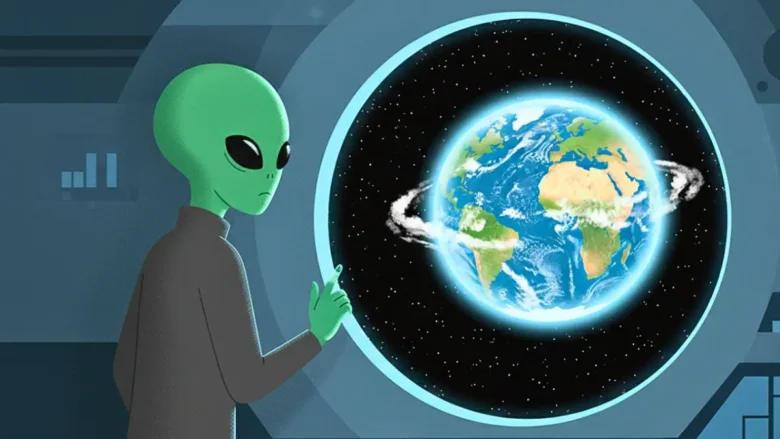
Incubation theory suggests that advanced civilizations in the universe monitor and protect emerging civilizations like ours without directly interfering. The idea is that these advanced beings, if they exist, allow less developed societies to grow and evolve naturally while ensuring their survival and progress.
This protective approach aims to avoid disruption, allowing civilizations to reach a stage where they can engage as equals on a cosmic scale.
How does the incubation theory work?
If incubation is real, advanced civilizations would need methods of observation that are difficult for humans to detect. Hypothetical possibilities include remote sensing, advanced probes, or technologies beyond our current understanding.
Any intervention would likely be limited to preventing catastrophic outcomes such as planetary destruction, self-annihilation, or events that could erase a developing civilization entirely. These ideas remain speculative, but they highlight how incubation theory tries to explain both silence and protection at the same time.
A key part of the theory is timing. Direct contact could disrupt a society that is socially or technologically unprepared. Making contact too early could create dependency, conflict, or cultural collapse. For that reason, the theory suggests a civilization must meet certain criteria before being invited into a wider cosmic network. These criteria could involve peaceful cooperation, responsible use of technology, and long-term planetary stability.
Where the Theory Comes From
The idea first appeared in mid-20th-century UFO discussions, grew online over the years, and now shows up in podcasts, documentaries, and the occasional late-night debate. It took shape during the Cold War, when reports of strange aerial objects spread across the United States and other regions. As the public wondered who or what controlled those objects, some writers suggested that if the objects were not human, then the visitors might be watching Earth with care, waiting for the right moment to make contact.
That thought caught on because it gave people a simple story: if someone is out there, maybe they are checking our growth the way we check animal groups in the wild.
Why Supporters Think It Could Be True
Supporters point to a few common arguments.
First, many cultures have stories about mysterious visitors who arrive from the sky.
Second, modern UFO sightings often describe objects that move in ways pilots cannot explain.
Third, if a far-advanced group wanted to watch us, distance would be safer than a public landing.
None of these claims prove anything, but they help the idea survive. And to be fair, the theory is more comforting than the thought of total silence in the universe.
Why Scientists Push Back
Scientists say the theory has no direct proof. They also point out that even if alien life exists, the universe is huge, travel is hard, and there is no clear reason outsiders would track a young species that still argues about traffic rules. The scientific view is simple: show evidence, then we can talk.
Connection to the Fermi Paradox
The incubation theory is often discussed alongside the Fermi Paradox, which questions why, despite the high probability of extraterrestrial life, humanity has not yet encountered it. which proposes that Earth is intentionally isolated as part of a larger strategy by advanced civilizations. Incubation theory builds on this, emphasizing a nurturing role rather than mere observation.
One explanation is the Zoo Hypothesis. It suggests Earth is isolated in a controlled environment, similar to animals observed in a reserve. Incubation theory goes a step further, proposing that this isolation has a purpose: to protect and prepare a civilization rather than simply watch it.
The Bottom Line
The Incubation Theory has no confirmed scientific support, but it reflects our urge to ask if we are alone. Until we have clear proof, the idea remains an open question, one that invites debate and probably keeps a few aliens laughing, if they exist.