
NASA is preparing to launch a new satellite named after physicist George Carruthers to study a little-known feature of Earth’s atmosphere: the geocorona, a massive but faint cloud of hydrogen that stretches far beyond the planet.
The Carruthers Geocorona Observatory will lift off from Kennedy Space Center on September 23, 2025, aboard a SpaceX Falcon 9. Once in space, it will travel to the Sun-Earth L1 point, about 1.5 million kilometers away, where it will track how this hydrogen halo shifts during solar storms.
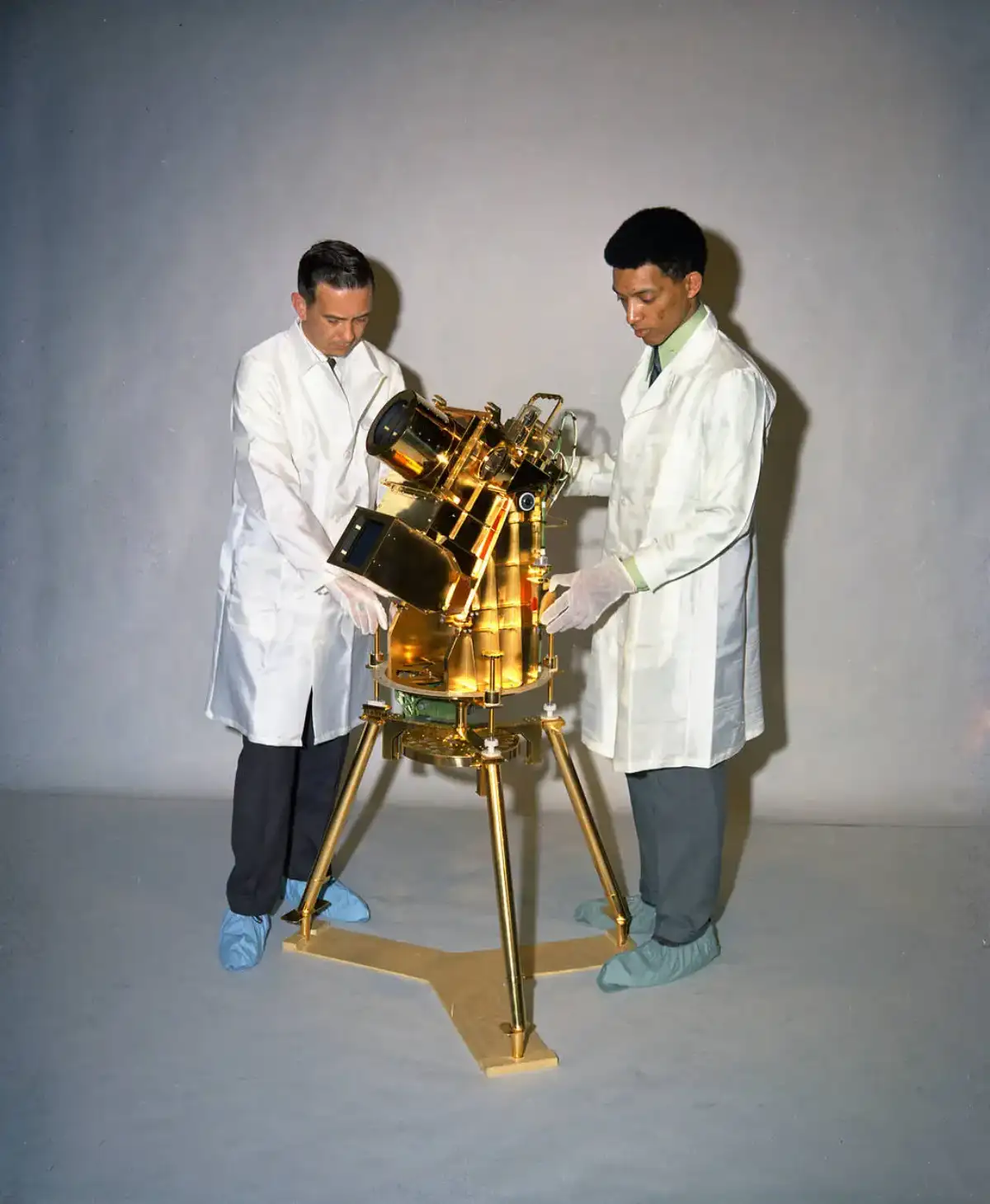
The mission pays tribute to George Carruthers, who first photographed the geocorona from the lunar surface during Apollo 16 in 1972. Carruthers, an African-American physicist and engineer, invented ultraviolet imaging instruments that revealed details of Earth’s upper atmosphere invisible to the naked eye.
His work earned him the National Medal of Technology in 2012. He died in 2020, and NASA renamed the mission in his honor in 2022.
Carruthers’ camera on Apollo 16 showed that Earth’s atmosphere does not end suddenly but fades into space, with hydrogen atoms forming a glowing outer shell.
These atoms mostly come from water vapor broken apart by sunlight before drifting into the uppermost layers. The result is the geocorona, which extends as far as 630,000 kilometers, nearly twice the distance to the moon.
At its L1 vantage point, the 240-kilogram observatory will carry two far-ultraviolet cameras. The instruments, designed by the University of Illinois and managed by NASA’s Goddard Space Flight Center, will map the geocorona’s structure in three dimensions. They can track rapid changes caused by solar activity, something previous missions could not do with only brief snapshots.
The mission is expected to begin science operations in March 2026, after a four-month cruise to L1 and a one-month systems check. It will run for at least two years, with the potential to continue for up to a decade.
Scientists say monitoring the geocorona could improve space weather forecasts. Strong solar storms can interfere with satellites, GPS, and power grids on Earth. The density of hydrogen in the upper atmosphere also affects drag on satellites, including the International Space Station (ISS). Beyond Earth, understanding how hydrogen escapes into space can help explain how planets like Mars lost their atmospheres.
The Carruthers Observatory will share its ride into space with two other missions: NASA’s Interstellar Mapping and Acceleration Probe, which will study particles entering the solar system, and NOAA’s Space Weather Follow-On satellite, which will monitor the sun’s outer layers.
For NASA, the launch marks not just a step forward in studying Earth’s outer atmosphere, but also a recognition of Carruthers’ lasting contributions. His instruments once opened a new view of Earth from the moon. More than 50 years later, a satellite bearing his name will return to that discovery, this time with the ability to watch it unfold in real time.
Source: Honoring a Pioneer: Dr. George Carruthers’ Legacy Reaches Space Again

Leave a Reply