Tag: NASA

  • Sunita Williams Addresses Delhi: “Itโ€™s really humbling to be here in India”

    Sunita Williams Addresses Delhi: “Itโ€™s really humbling to be here in India”

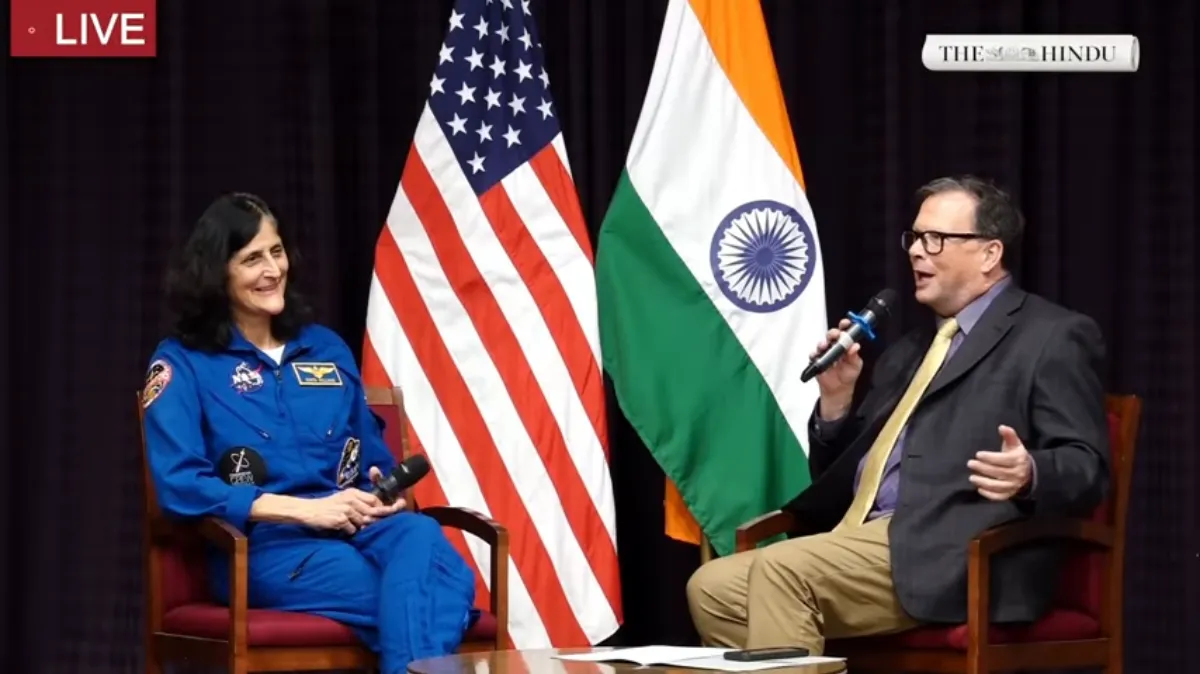
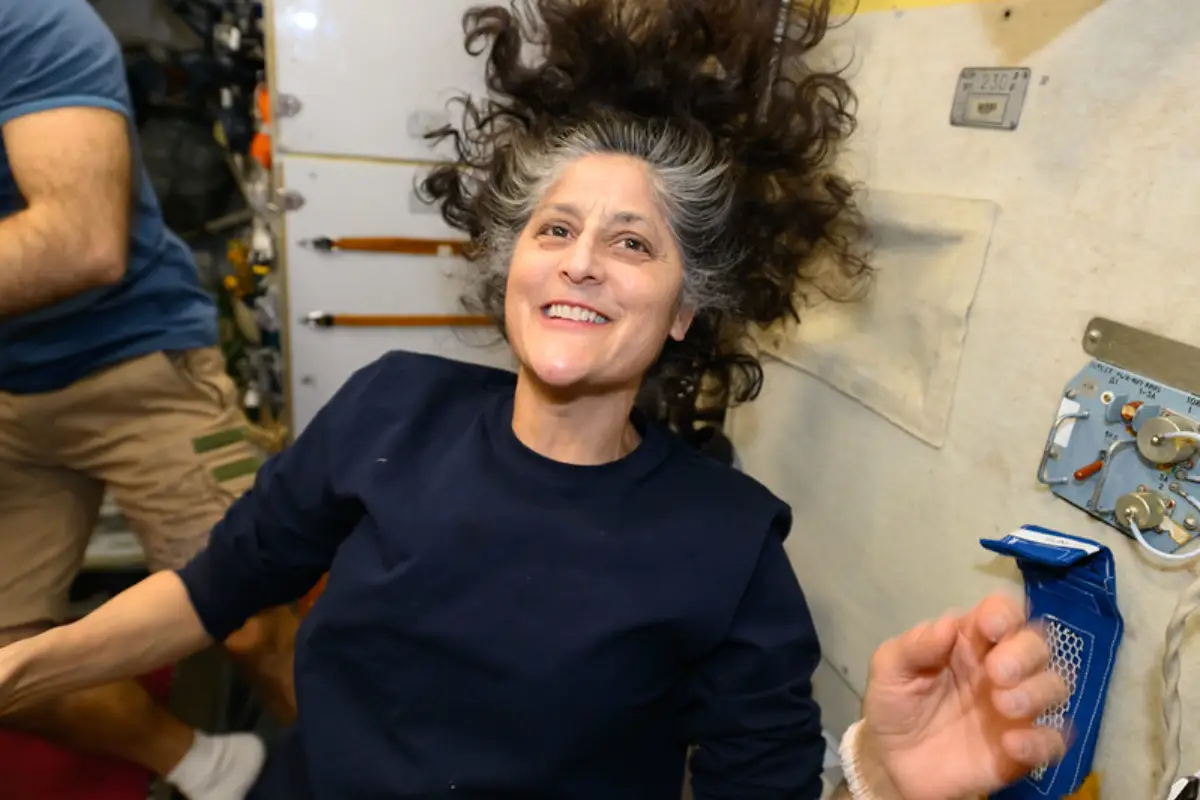
    Sunita Williams came to New Delhi this week with a story that few astronauts can tell. What began as a short, eight-day test flight in June 2024 turned into an unplanned stay of nearly nine months aboard the International Space Station (ISS) after problems forced NASA to change how she and her crewmate would return to Earth. Speaking at the American Center, the veteran astronaut reflected on the mission, the risks involved, and why human spaceflight still matters.

    Williams launched on Boeingโ€™s Starliner spacecraft atop an Atlas V rocket, marking the first crewed flight of that system. During docking, five thrusters failed. The crew took manual control and worked with mission control to restart the engines. Engineers later decided the spacecraft was not ready to bring them home. As Williams put it, โ€œAll the tees were not crossed.โ€ NASA chose a safer option. A SpaceX Dragon arrived at the station with only two astronauts, leaving open seats for Williams and Butch Wilmore.

    The delay pushed the ISS close to its limits. At one stage, 12 people lived on a station built for about seven. Williams said daily life still ran smoothly. The crew ran experiments on stem cells, DNA sequencing, and microbes collected from open space. They also handled repairs themselves. โ€œWeโ€™re our own IT guys,โ€ she joked, recalling a spacewalk where a simple crowbar helped remove outdated radio gear.

    Staying healthy remained a daily task. Astronauts trained on treadmills, bikes, and the Advanced Resistive Exercise Device to slow bone and muscle loss. Williams even ran the Boston Marathon in orbit, strapped to a treadmill. Holiday meals offered small comforts. Thanksgiving included smoked turkey and vegetables, though she admitted missing her husbandโ€™s grilled cheese and fresh bread.

    Williams also spoke openly about mental health. Astronauts meet a flight surgeon weekly and a psychology support specialist every two weeks. Small gestures help. A care package once included 3D-printed figures of her dogs. โ€œThey can actually tellโ€ฆ if thereโ€™s something thatโ€™s going on,โ€ she said.

    Her path to space was far from planned. A former student athlete, she first aimed to become a veterinarian. She joined the US Navy, became a helicopter pilot, and later attended test pilot school, where she realized her skills fit future lunar missions.

    Looking ahead, Williams warned about growing space debris, noting how often Starlink satellites now pass the stationโ€™s orbit. She also pointed to needs in long-duration missions, from better bathrooms to medical robots. With private companies playing a larger role, she said students will have more ways to work across the space sector.

    Her visit struck a personal chord in India. โ€œItโ€™s really humbling to be here in India,โ€ Williams said, thanking those who prayed for her safe return. From delayed spacecraft to crowded stations, her story showed how spaceflight still tests limits, demands patience, and connects people far beyond Earth.

  • NASA Astronaut Suni Williams Retires After 27 Years of Service and 608 Days in Space

    NASA Astronaut Suni Williams Retires After 27 Years of Service and 608 Days in Space

    NASA astronaut Sunita โ€œSuniโ€ Williams retired on December 27, 2025, closing a 27-year career that reshaped how long humans can live and work in orbit. Across three missions to the International Space Station (ISS), Williams spent 608 days in space, ranking second among NASA astronauts for total time off Earth, behind Peggy Whitson, who has spent 695 days. Williams leaves NASA after serving as a station commander, test pilot, spacewalker, and steady hand during one of the agencyโ€™s most difficult crewed missions.

    “Anyone who knows me knows that space is my absolute favorite place to be,” said Williams to NASA. “Itโ€™s been an incredible honor to have served in the Astronaut Office and have had the opportunity to fly in space three times. I had an amazing 27-year career at NASA, and that is mainly because of all the wonderful love and support Iโ€™ve received from my colleagues.”

    Born in 1965 in Euclid, Ohio, Williams grew up in Massachusetts in a family that valued science and discipline. Her father, a neuroanatomist from Gujarat, India, encouraged curiosity early. She later earned a degree in physical science from the U.S. Naval Academy and a masterโ€™s in engineering management from Florida Institute of Technology. Before joining NASA in 1998, she built a long Navy career, flew more than 40 aircraft types, and logged over 4,000 flight hours. That background shaped her calm approach to high-risk missions.

    Williams first flew to the ISS in 2006 aboard Space Shuttle Discovery. During a 195-day stay, she completed four spacewalks and helped rewire the stationโ€™s power systems. She also became the first person to run a marathon in orbit, finishing the Boston Marathon on a treadmill while circling Earth.

    Her second mission in 2012 marked a new chapter. Williams commanded the ISS, repaired a failing coolant system during spacewalks, and completed a full triathlon using onboard exercise gear. The mission showed how astronauts protect muscle and bone health during long stays in microgravity.

    Her final flight, launched in 2024 on Boeingโ€™s Starliner, tested that experience to the limit. The mission, planned as a short demonstration, stretched to 286 days after thruster failures and helium leaks delayed the spacecraftโ€™s return. Williams and fellow astronaut Butch Wilmore joined the station crew, adjusted schedules, and kept operations stable. She commanded the ISS again and completed two more spacewalks, raising her career total to nine and setting a new record for women.

    Williams also supported long-term research on fluid behavior and human health in orbit. That work continues to guide NASAโ€™s plans for future Moon missions under Artemis. In retirement, she is expected to advise space programs and promote science education. Her career shows how preparation, adaptability, and teamwork keep human spaceflight moving forward.

  • NASA’s Artemis II rocket and Orion spacecraft have reached Launch Pad 39B

    NASA’s Artemis II rocket and Orion spacecraft have reached Launch Pad 39B

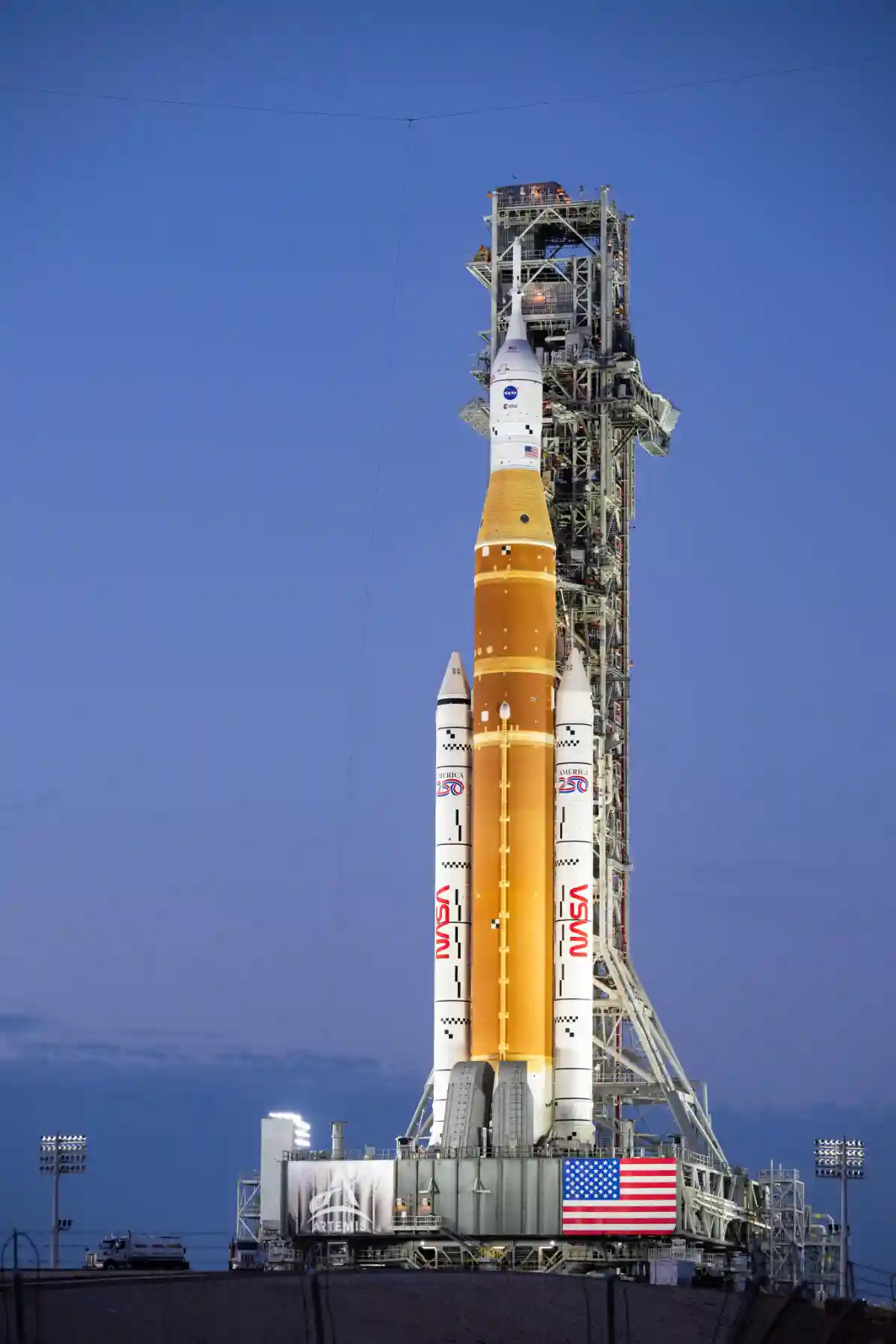
    NASA has moved the Artemis II rocket and Orion spacecraft to Launch Pad 39B, marking a major step toward the first crewed flight to lunar space in more than five decades. The rollout finished at 6:42pm ET on January 17, 2026, at Kennedy Space Center in Florida, placing the vehicle where final ground testing will determine launch readiness.

    NASA's Space Launch System (SLS) rocket on a crawler transporter.
    NASA’s Space Launch System (SLS) rocket on a crawler transporter. Image credit: NASA Administrator Jared Isaacman via X

    The Space Launch System (SLS) rocket traveled about four miles from the Vehicle Assembly Building to the pad. The trip took nearly 12 hours and used NASAโ€™s crawler-transporter, a tracked vehicle first built for the Apollo program and later upgraded. The crawler carried the 11-million-pound rocket stack at under one mile per hour. Teams paused during the move to adjust the crew access arm, which astronauts will use to enter the Orion capsule before launch.

    With the rocket now secured at the pad, engineers have begun pad integration work. Crews will connect power, communications, cooling, and fueling systems. These steps confirm that the rocket and spacecraft operate correctly outside the assembly building and under real launch conditions.

    The next major milestone is the wet dress rehearsal, planned no later than February 2. During this test, teams will load more than 700,000 gallons of liquid hydrogen and liquid oxygen into the rocketโ€™s tanks. They will run through a full launch countdown and stop just before engine ignition. Afterward, they will drain the propellants. If teams identify leaks, valve issues, or timing problems, NASA may repeat the test or roll the rocket back for repairs. Officials have said safety decisions will override schedule targets.

    Artemis II will carry four astronauts. Reid Wiseman will serve as mission commander, with Victor Glover as pilot and Christina Koch as mission specialist. Canadian Space Agency astronaut Jeremy Hansen completes the crew. The mission will last about 10 days and send the astronauts on a loop around the Moon, reaching nearly 280,000 miles from Earth. Glover will become the first Black astronaut to travel beyond Earth orbit, and Hansen will be the first Canadian to do so.

    The mission will not include a lunar landing. Instead, it will test Orionโ€™s life support, navigation, and heat shield systems with a crew onboard. Orion will reenter Earthโ€™s atmosphere at about 25,000 miles per hour, placing heavy demands on the spacecraftโ€™s thermal protection.

    Artemis II follows the uncrewed Artemis I mission in 2022 and supports NASAโ€™s plan to return astronauts to the Moon later this decade. Data from this flight will guide future missions aimed at long-term human activity near the Moonโ€™s south pole and beyond.

  • NASA’s Voyager 1 will soon reach one light-day Distance from Earth breaking it’s own Record!

    NASA’s Voyager 1 will soon reach one light-day Distance from Earth breaking it’s own Record!

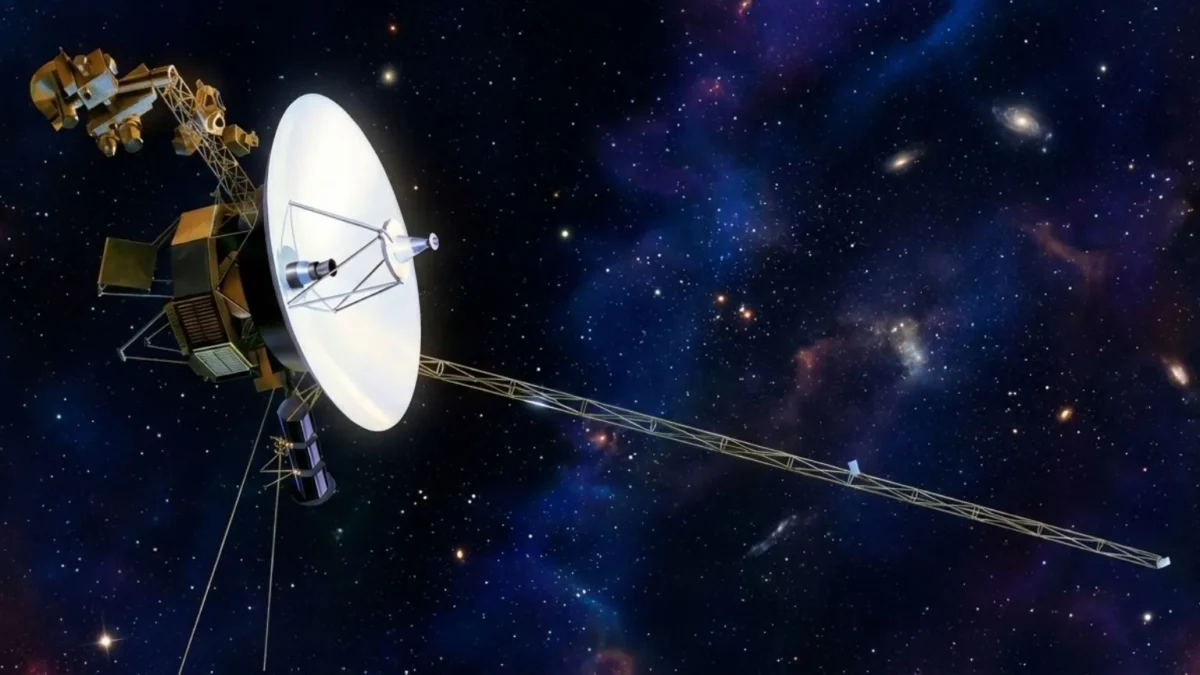
    Voyager 1, NASAโ€™s longest-running spacecraft, will reach a distance of one light-day from Earth in November 2026, breaking its own record of the farthest human-made object ever! At that range, a radio signal from Earth will take a full 24 hours to reach the probe. Every command will require patience, planning, and trust in hardware launched nearly five decades ago.

    A light-day is the distance light travels in 24 hours, about 26 billion kilometers. The Moon sits just over one light-second away, while sunlight reaches Earth in eight minutes. Voyager 1 will become the first spacecraft to cross this threshold, placing it far beyond the planets and deep into interstellar space.

    NASA launched Voyager 1 in 1977 to study the outer solar system. The mission delivered close-up views of Jupiter and Saturn, revealed active volcanoes on Jupiterโ€™s moon Io, and documented Saturnโ€™s rings in sharp detail. After finishing its planned flybys, the spacecraft continued outward. In 2012, scientists confirmed it had exited the Sunโ€™s domain and entered interstellar space.

    By early 2026, Voyager 1 is about 170 astronomical units from Earth, or roughly 25.4 billion kilometers away. It travels at nearly 61,000 kilometers per hour and increases its distance by more than 500 million kilometers each year. Communication delays already stretch close to a full day for a round trip.

    Power is the missionโ€™s main constraint. Voyager 1 relies on a plutonium-based generator that now produces about half the energy it did at launch. Even so, engineers at NASAโ€™s Jet Propulsion Laboratory (JPL) keep the spacecraft operating. In 2024, the team resolved a computer problem that briefly threatened the mission.

    From its remote location, Voyager 1 studies cosmic radiation and magnetic fields between stars. The data shows the boundary around our solar system allows more outside particles to pass through than expected. This work helps scientists better judge how the Sun interacts with the wider galaxy.

    Voyager 1 also carries the Golden Record, a gold-plated disc filled with sounds, images, and greetings from Earth. Long after its instruments fall silent, the spacecraft will continue drifting through space, carrying a small snapshot of human life far from home.

  • Hubble Captures largest Protoplanetary Disk ever Observed

    Hubble Captures largest Protoplanetary Disk ever Observed

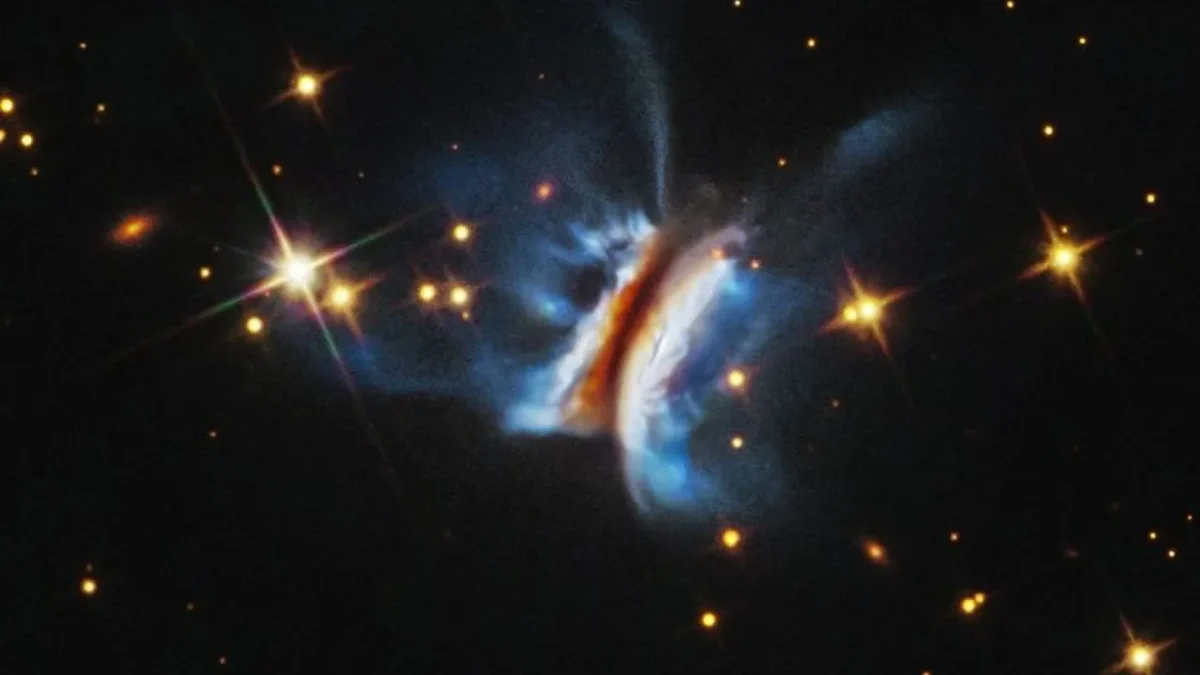
    NASAโ€™s Hubble Space Telescope has captured its sharpest visible-light image yet of the largestย protoplanetary disk ever observed. The object, known as IRAS 23077+6707, lies about 1,000 light-years from Earth and hosts a disk nearly 400 billion miles wide, making it one of the largest ever observed. Scientists shared the findings in The Astrophysical Journal.

    โ€œThe level of detail weโ€™re seeing is rare in protoplanetary disk imaging, and these new Hubble images show that planet nurseries can be much more active and chaotic than we expected,โ€ said lead author Kristina Monsch of the Center for Astrophysics | Harvard & Smithsonian (CfA).

    The image shows a disk so large it dwarfs our own solar system. From edge to edge, it stretches around 40 times farther than the Kuiper Belt. Hubble captured the structure in visible light, which allowed researchers to see surface details that radio telescopes often miss. The disk blocks the star at its center, leaving a dark band flanked by glowing layers of dust above and below.

    What caught scientists off guard was how uneven the disk looks. On one side, tall streams of dust and gas rise high above the main disk. On the other, the structure ends sharply, almost like it was cut short. Researchers say this imbalance likely points to recent activity, such as gas falling in from nearby space or a close pass from another star.

    โ€œWe were stunned to see how asymmetric this disk is,โ€ said co-investigator Joshua Bennett Lovell, also an astronomer at the CfA.

    The disk also holds a huge amount of material. Estimates suggest it contains the mass of 10 to 30 Jupiters. That is more than enough to form several large planets. The central star itself may be heavy or even part of a pair, which could explain the strong motion seen in the disk.

    Most known planet-forming disks appear calm and flat. This one looks busy and unsettled. Dust and gas swirl instead of settling into neat rings. That motion could affect how planets grow, where they form, and whether their paths stay stable. Some planets here could grow fast and large, while others may drift far from where they start.

    The system is young, likely no more than two million years old. That puts it right in the early stage of planet formation, before much of the gas fades away. Observing a disk at this moment helps scientists test ideas about how planets begin.

    The research team gave the disk a playful nickname, โ€œDraculaโ€™s Chivito,โ€ a nod to their mixed backgrounds and the diskโ€™s layered look. Future studies with the James Webb Space Telescope (JWST) will look deeper into the disk to study its dust and heat.

  • NASA and NOAA Improve Solar Storm Forecasts, Cutting CME Arrival Errors by Several Hours

    NASA and NOAA Improve Solar Storm Forecasts, Cutting CME Arrival Errors by Several Hours

    Scientists from NASA and NOAA have reported advancements in predicting when solar storms will reach Earth, cutting forecast errors by several hours in some cases. The progress comes from upgraded computer models tested on dozens of past coronal mass ejections, or CMEs, using real spacecraft data. The findings matter as solar activity remains high and modern society depends more than ever on satellites, power networks, and space missions that solar storms can disrupt.

    CMEs erupt from the Sun when magnetic fields snap and fling huge clouds of charged particles into space. These clouds can race toward Earth at speeds of up to 2,000 kilometers per second and arrive within two to four days. When they hit, they can trigger bright auroras but also interfere with GPS signals, damage satellites, and stress power grids. Even a few extra hours of warning helps operators protect equipment or adjust operations.

    The new report examined 38 Earth-directed CMEs recorded between 2012 and 2019. Researchers ran more than 1,200 simulations to compare older forecasting methods with updated ones. They used observations from the ACE spacecraft near Earth to measure how close each prediction came to the real arrival time.

    At the center of the work are two linked models that simulate conditions from the Sun to Earth. One estimates solar wind speed near the Sun, while the other tracks how a CME moves through space. In the past, these models relied on a single daily snapshot of the Sunโ€™s surface. That approach ignored how fast the Sun changes as it rotates.

    The team tested time-updated magnetic maps that refresh every few hours. They also added an ensemble system that runs multiple versions of the Sunโ€™s magnetic field to cover unknowns, especially on the far side of the Sun that telescopes cannot see directly. In addition, they corrected long-standing measurement offsets in ground-based data, which improved how the models matched real solar wind conditions.

    Results varied by time period. For older events, some upgrades showed little benefit. For storms after 2017, however, the improved setup reduced average arrival-time errors by three to six hours compared with earlier methods. Time-updated maps helped most when CMEs traveled through fast or uneven solar wind.

    Challenges remain. Storms that clip Earth rather than hit head-on remain hard to time, and far-side solar changes still introduce uncertainty. Even so, the study shows clear progress.

    NOAA plans to move these tools into daily operations later this decade. As solar cycle 25 slowly declines toward its next quiet phase, better forecasts will remain essential. Solar storms may be natural events, but with smarter prediction, their impact on life and technology does not have to be a surprise.

    Source: NASA/NOAA MOU Annex Final Report: Evaluating Model Advancements for Predicting CME Arrival Time

  • NASA’s Parker Probe Reveals Sun’s Magnetic Edge Swells With Solar Activity

    NASA’s Parker Probe Reveals Sun’s Magnetic Edge Swells With Solar Activity

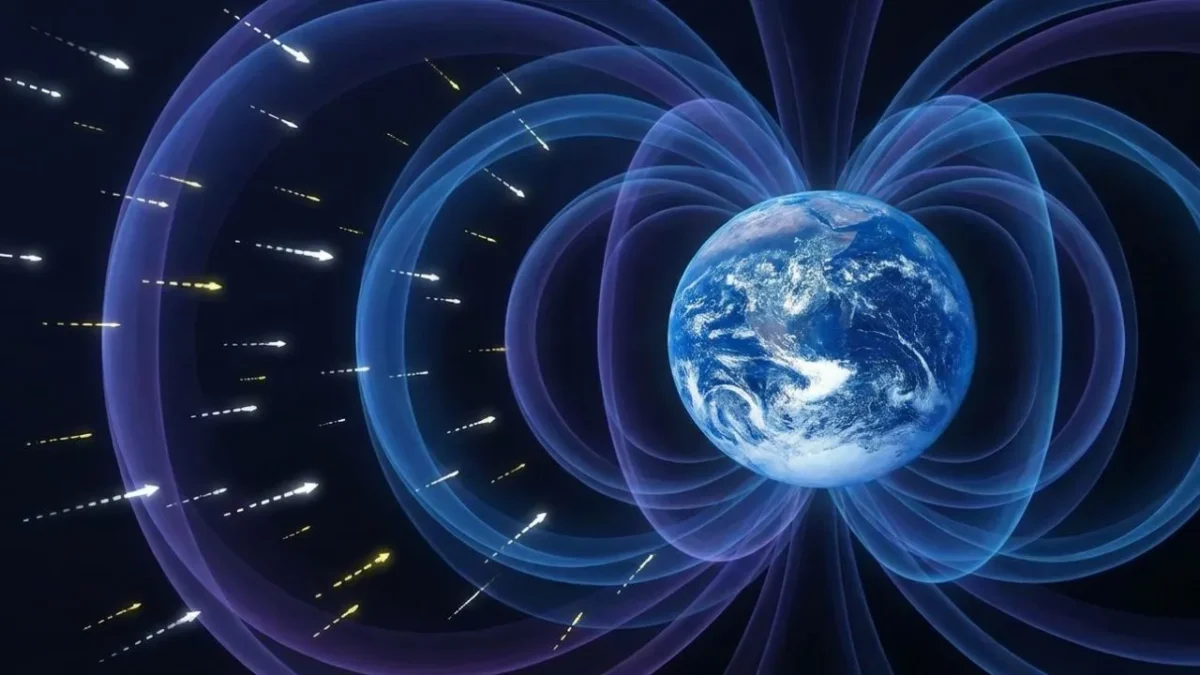
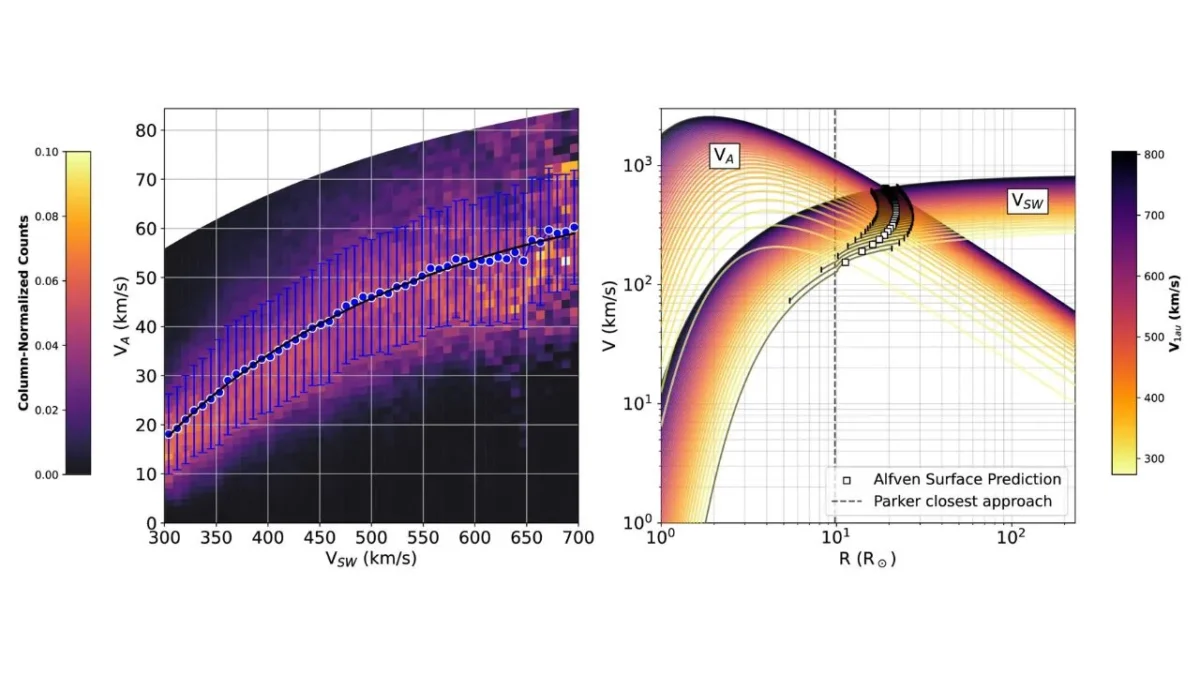
    NASAโ€™s Parker Solar Probe has crossed a hidden boundary around the Sun that shapes how solar wind escapes into space, and new research shows that this boundary expands, contracts, and grows more uneven as the Sun moves through its activity cycle. By combining close-range measurements from Parker with data from Europeโ€™s Solar Orbiter and spacecraft near Earth, scientists tracked how this zone, known as the Alfvรฉn surface, changed from the calm phase of solar cycle 25 to its recent peak.

    Parker has flown closer to the Sun than any spacecraft before, reaching about 3.8 million miles above the surface. During several of these close passes, the probe moved inside the Alfvรฉn surface, where the Sunโ€™s magnetic field still controls the motion of charged particles. Above that boundary, the solar wind escapes freely and carries energy and rotation away from the star.

    The study shows that the height of this surface is not fixed. Near the quiet period of 2019, it sat roughly 12 to 17 solar radii from the Sun. As solar activity climbed toward its peak in 2024, the boundary swelled outward to about 15 to 23 solar radii. This expansion matters because a higher boundary allows the Sun to lose spin more efficiently over time, shaping how stars age.

    To map this shifting region, researchers blended observations from multiple spacecraft. Parker supplied direct crossings close to the Sun, Solar Orbiter filled in the middle distances, and satellites near Earth provided steady long-range measurements. By tracking wind speed, magnetic strength, and particle density, the team reconstructed the surfaceโ€™s shape and confirmed their results against Parkerโ€™s direct encounters.

    The maps also show that the boundary grows rougher during busy solar periods. Its shape becomes more uneven, with bumps and dips linked to solar storms and erupting regions on the Sunโ€™s surface. During quieter times, the boundary appears smoother and closer in.

    These findings carry practical value for space weather forecasting. Changes in this boundary affect how energetic particles travel through the solar system, which can influence satellites, astronauts, and missions to the Moon and Mars. The results also help scientists understand how stellar winds may affect planets around other stars.

    Parker Solar Probe will continue its close passes for several more years as solar activity declines again. Along with future high-latitude views from Solar Orbiter, these observations will help build a clearer picture of how our star breathes, spins, and shapes the space around it.

    Source: Multispacecraft Measurements of the Evolving Geometry of the Solar Alfvรฉn Surface over Half a Solar Cycle

  • Hubble Captures New Images of Interstellar Comet 3I/ATLAS

    Hubble Captures New Images of Interstellar Comet 3I/ATLAS

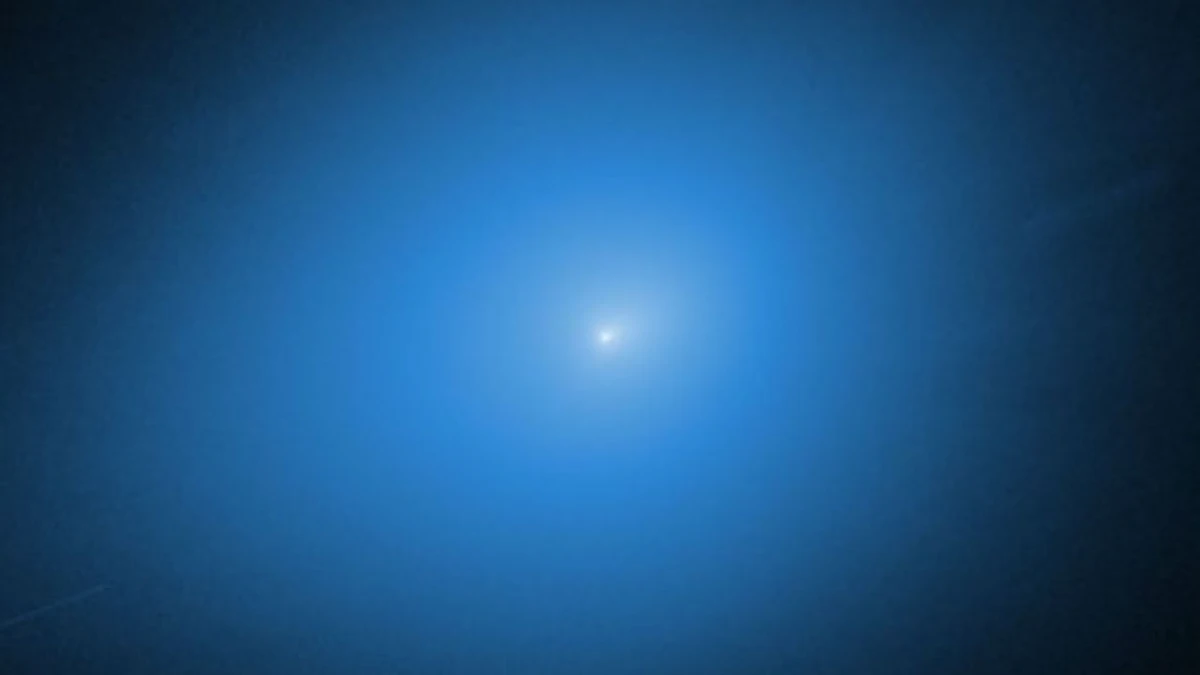
    The Hubble Space Telescope has taken a second set of images of 3I/ATLAS, a comet from outside our solar system that made a brief pass near the Sun in late 2025. The updated view, recorded on November 30, shows the comet still active as it moves away, giving scientists another chance to study material that formed around a distant star.

    Hubble used its Wide Field Camera 3 to photograph the visitor from about 286 million kilometers. The comet appears as a bright, hazy drop of dust and gas, while background stars stretch into faint streaks because the telescope tracked the cometโ€™s quick motion. These new images help astronomers follow how the object behaves after its closest approach to the Sun.

    This session followed Hubbleโ€™s first look in July 2025, captured shortly after the cometโ€™s discovery. Those early images suggested a small icy core, likely under one kilometer wide, surrounded by a broad dust cloud. The November images show the coma slightly uneven, which hints that the nucleus is still venting gas as it cools.

    The comet was first spotted on July 1, 2025, by the ATLAS survey telescope in Chile. It moved at 61 kilometers per second and followed a path that proved it came from beyond the solar system. By the next day, observatories around the world confirmed it. With that, 3I/ATLAS joined a very short list as only the third known interstellar visitor, after Oumuamua in 2017 and comet Borisov in 2019.

    Once confirmed, the discovery set off a coordinated effort across the solar system. JWST observed the comet in August and detected carbon dioxide along with smaller amounts of water ice and gas. The Very Large Telescope (VLT) found cyanide and nickel.

    NASAโ€™s Psyche and Lucy spacecraft captured long-distance views that helped refine trajectory models. Even the Perseverance rover managed to spot a faint blur from the surface of Mars.

    Comet 3I Atlas captured by the JUICE instrument.
    ESAโ€™s Juice spacecraft captured a NavCam image of interstellar comet 3I/ATLAS on 2 November 2025, showing its bright coma and hints of both a plasma tail and a faint dust tail. Image credit: ESA/Juice/NavCam

    ESAโ€™s Juice spacecraft observed interstellar comet 3I/ATLAS in November 2025 using five of its science instruments. While the full data set will not reach Earth until February 2026, the team downloaded a small portion of a single Navigation Camera image to get an early look. The camera, meant for navigation rather than detailed science, still captured the comet with surprising clarity.

    The cropped image, taken on 2 November from about 66 million kilometers, shows the cometโ€™s glowing coma and hints of two tails: a plasma tail extending upward in the frame and what may be a fainter dust tail stretching toward the lower left. The view came during the spacecraftโ€™s first observation window and just before its closest approach on 4 November.

    Juice is currently using its main antenna as a heat shield, so it must rely on a slower backup antenna to send data home. That is why the full instrument data from JANUS, MAJIS, UVS, SWI, and PEP will not arrive until 18 and 20 February 2026.

    Scientists say the combined data gives a rare chance to compare material from another system with comets in our own. Early results show familiar ingredients, although the high level of carbon monoxide hints that the object formed in a colder region around its parent star.

    The comet will skim near Jupiterโ€™s orbit in March 2026 before fading from view. Hubble and JWST plan more observations into early next year.

  • JWST Spots Perfect Spiral Galaxy That Formed Just 1.5 Billion Years After the Big Bang

    JWST Spots Perfect Spiral Galaxy That Formed Just 1.5 Billion Years After the Big Bang

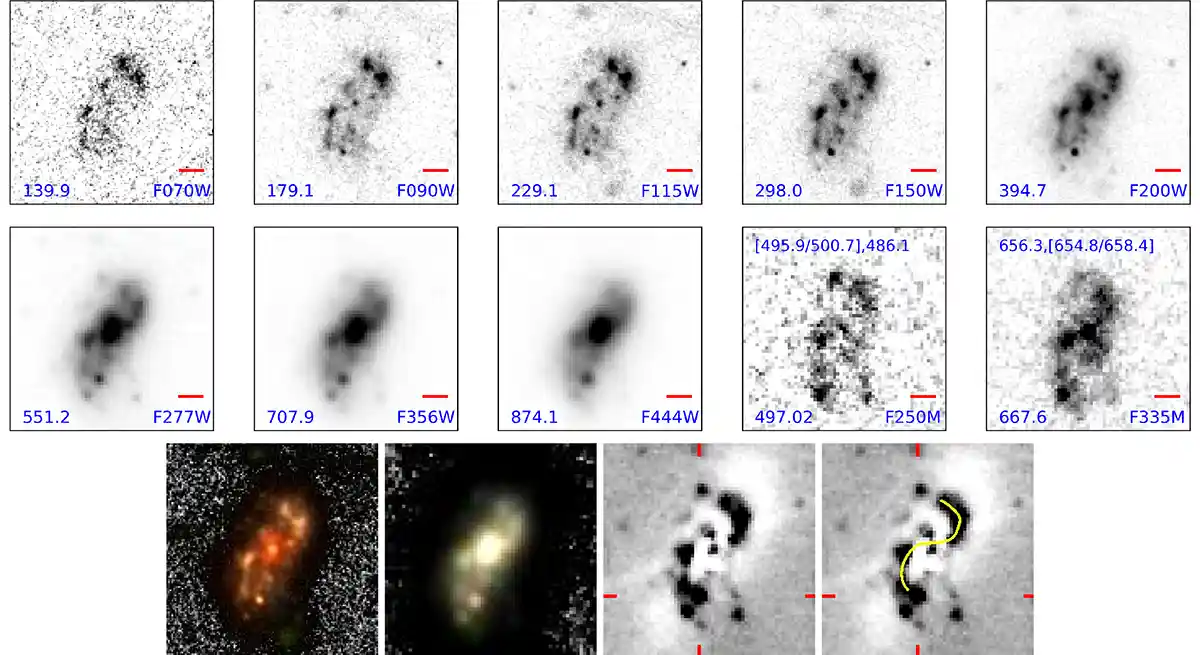
    Astronomers have found a fully formed spiral galaxy from a time when the universe was only 1.5 billion years old. The galaxy, named Alaknanda, sits behind the massive cluster Abell 2744 and was spotted with help from the James Webb Space Telescope (JWST). Its clear spiral arms, bright center, and wide disk challenge ideas about when large, organized galaxies could first appear.

    Researchers saw the galaxy through the natural magnifying effect of the Abell 2744 cluster. The clusterโ€™s gravity made the distant light brighter and easier to study. Without this help, the spiral structure would have been hard to see. The light from Alaknanda began its journey when the universe was less than 12 percent of its current age. This places the galaxy at a time long before galaxies like the Milky Way were thought to have stable spiral forms.

    Most galaxies from this early period look uneven and broken, with scattered regions of star birth. Many are still forming and lack clear structure. Alaknanda does not match that picture. It shows a smooth disk, a small central bulge, and two clear spiral arms.

    In ultraviolet light, the arms show bright spots where stars are forming. In visible light, those areas blend into clean and continuous arms. These patterns match what astronomers usually see in nearby spiral galaxies today. The disk spans about 10 kiloparsecs, which is about 32,000 light-years across. Around 85 percent of its light comes from this flat disk, not from the center. That means the galaxy is already dominated by an organized structure rather than a growing core.

    Alaknanda contains roughly 16 billion times the mass of the Sun in stars. That is around 15 percent of the current mass of the Milky Way. It is forming stars at a rate of about 63 suns per year, far faster than our galaxy does today.

    Scientists estimate that most of its stars formed in the 200 million years before the light we now see was released. This shows that the galaxy built up its mass very quickly, yet still kept a clear and stable shape. A smaller nearby galaxy sits close to the edge of Alaknandaโ€™s disk. Measurements show it lies at nearly the same distance. Researchers think it may be a satellite galaxy that is starting to interact with the larger one.

    This nearby object could have affected the shape of the spiral arms. Gravitational pull between galaxies can change their structure and trigger star formation. It may have helped give Alaknanda its clean, detailed pattern.

    For years, models suggested that spiral shapes take a long time to develop. They were thought to need calm conditions or special events that the early universe did not often provide. Alaknanda shows that this may not always be true.

    Recent surveys using the JWST have found more disk-shaped galaxies at great distances. These new discoveries suggest that organized galaxies appeared much earlier than expected, not just in rare cases.

    Astronomers now want to measure how the stars and gas within Alaknanda are moving. If the disk is rotating in a smooth way, it would support the idea that it is truly stable and settled. Future studies using Webb and radio telescopes on Earth will map how material moves across the spiral arms. These results will help explain whether the structure is long-lasting or still changing.

    Alaknanda offers a clear view of a young universe that was already capable of forming ordered, mature galaxies. It is now a key target for learning how the first large galaxies grew so fast and took on such clean shapes.

    Source: A grand-design spiral galaxy 1.5 billion years after the Big Bang with JWST

  • JWST may have captured the earliest known star cluster, offering strongest evidence yet for first-generation stars
    JWST may have captured the earliest known star cluster, offering strongest evidence yet for first-generation stars
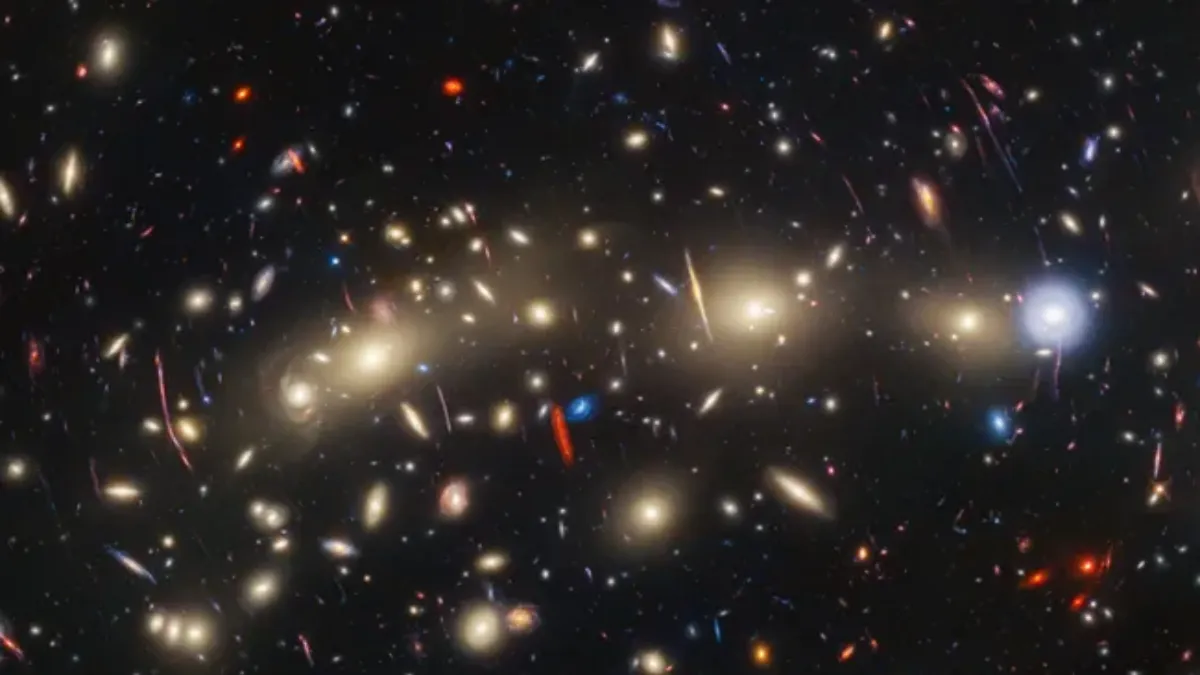
    Using the James Webb Space Telescope (JWST), astronomers have identified a tiny, distant object that may be the strongest evidence yet for the universeโ€™s first stars. The source, called LAP1-B, lies behind the massive galaxy cluster MACS J0416, which magnifies its light by about a factor of one hundred. JWST captured a detailed spectrum of the object this year, revealing almost no elements heavier than helium. That absence of heavier elements is a key sign of the very first generation of stars, known as Population III.

    These stars formed when the universe contained only hydrogen and helium. With no heavier elements to help gas clouds cool, early stars grew extremely large, sometimes hundreds of times more massive than the sun. They lived for only a few million years before exploding and spreading the first carbon, oxygen, and iron.

    None survive today, and any that did would be far too faint or distant for ground telescopes to detect. Their light also shifts deep into the infrared as it travels across the universe, which makes instruments above Earthโ€™s atmosphere essential.

    LAP1-B sits at redshift 6.6, so we see it as it was about nine hundred million years after the Big Bang. The galaxy cluster in front of it bends and boosts its light, making it bright enough for JWST to study. Without that natural lens, the object would be far too dim to detect. JWSTโ€™s observations revealed strong helium emission lines but almost no sign of heavier elements. That pattern matches what scientists expect if LAP1-B is dominated by hot, massive stars formed from untouched primordial gas.

    A team led by Eli Visbal tested the data against the expected conditions for a Population III system. Their model suggests that LAP1-B formed inside a small dark matter halo with the right temperature for early star formation. The stars seem to follow a pattern in which many are very massive, and the entire cluster contains only a few thousand solar masses of material. Earlier candidates were rejected because they showed too many heavy elements or were far larger than theory allows.

    The result is promising but not confirmed. The exact amount of magnification from the lensing cluster can shift, and those changes affect estimates of LAP1-Bโ€™s size and mass. Future JWST observations may help measure the metal content more accurately or detect signs of supernovae from massive early stars. JWST cannot isolate individual stars in the cluster; it can only record the combined light.

    These first stars played an important role in shaping the young universe. Their explosions seeded space with the elements needed to form later stars, planets, and eventually life. They also contributed to reionization, the period when the earliest bright objects cleared the fog of neutral hydrogen and allowed light to travel more freely. Understanding when and how they formed helps explain how the first galaxies grew.

    JWST is continuing to scan lensing clusters for faint, distant objects, and many of its targeted fields are ideal for this search. The upcoming Nancy Grace Roman Space Telescope will survey much larger areas and could uncover more candidates. If LAP1-B is confirmed, it could be the first solid glimpse of the universeโ€™s earliest stellar generation and likely not the last.

    Source: LAP1-B is the First Observed System Consistent with Theoretical Predictions for Population III Stars