Tag: NASA

  • NASAโ€™s Perseverance rover records the first-ever clear sounds of Lightning on Mars

    NASAโ€™s Perseverance rover records the first-ever clear sounds of Lightning on Mars

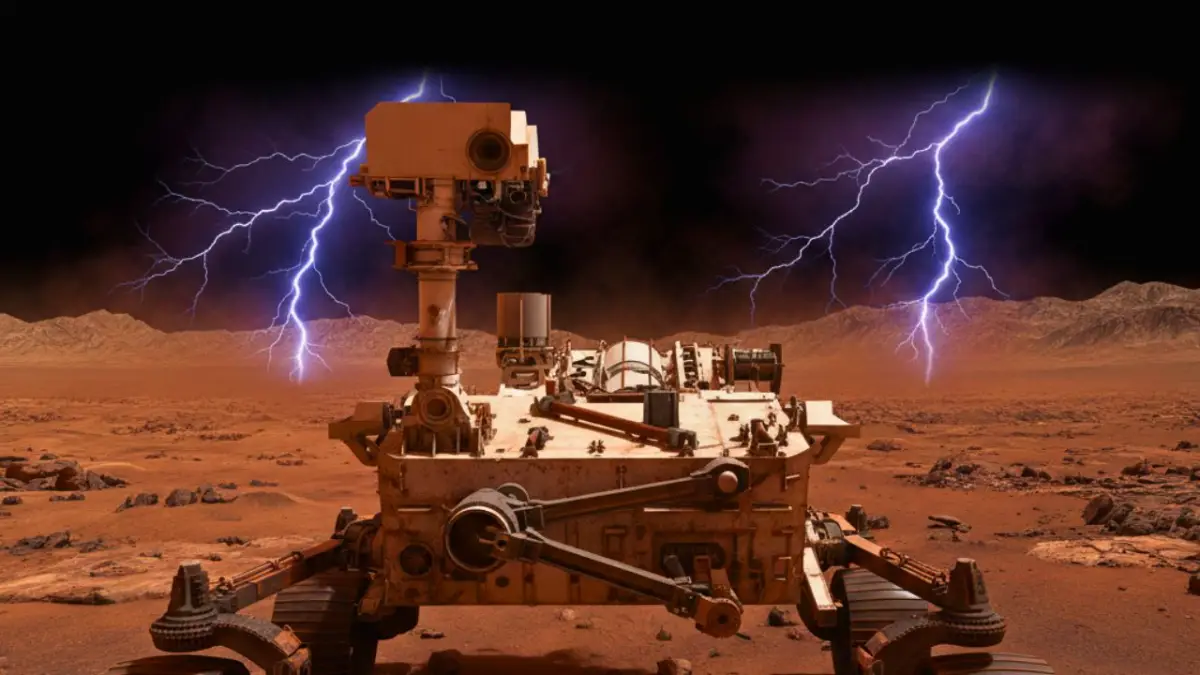
    NASA’s Perseverance rover has picked up the first confirmed sounds of lightning on Mars while operating inside Jezero Crater over the past two Martian years, recording 55 electrical discharges during dust devils and storm fronts and proving that the red planet can produce small bursts of thunder.

    The discovery came from the rover’s SuperCam microphone, which is mounted on its mast. While its main job is to study rocks, the microphone also stays on during windy periods. During these times, it captured sharp clicks followed by faint snaps. These short sounds lasted less than a tenth of a second and matched what scientists expect from small electrical sparks in Mars’ thin air.

    Out of the 55 detections, seven were full events. Those included both an electrical signal and a small sound that followed. This confirmed that the discharges were real and not just background noise from moving dust or the rover’s parts.

    On Earth, lightning carries massive energy. A single strike can hold around a billion joules. On Mars, the numbers were far lower. Most of the events measured between 0.1 and 150 nanojoules. One stronger discharge reached about 40 millijoules. Scientists believe this larger event happened when the rover itself built up charge and released it into the ground.

    Even this stronger discharge was still around a million times weaker than a normal lightning bolt on Earth. The thin air on Mars limits how much energy can build up before it jumps between surfaces.

    These sparks did not come from storm clouds filled with water. Mars has little water in its air. Instead, the charges formed when dry dust particles rubbed against each other. This happens most when winds rise sharply. The data shows that the discharges happened when wind speeds were in the highest 30 percent of all readings taken by the rover.

    Sixteen of the detected sparks came from dust devils, which are fast, spinning columns of air filled with dust. The rest were linked to the front edges of larger regional storms moving across the surface.

    To confirm the results, the team built a copy of the SuperCam microphone setup on Earth. They used a Wimshurst machine, which creates static electricity, to make controlled sparks near the device. The sound pattern it recorded was the same as what Perseverance picked up on Mars. This confirmed that the Martian signals were caused by real electrical discharges.

    Mars’ atmosphere plays a big role in how this sounds. It is about 99 percent thinner than Earth’s and mostly made of carbon dioxide. Sound moves more slowly, and high tones fade quickly. That is why there is no deep rumble like on Earth. Instead, the sound is short and sharp, and then it stops.

    These tiny sparks also matter for chemistry on Mars. When a discharge hits carbon dioxide, it can break the molecule apart. This can create reactive compounds such as nitrates and peroxides. On early Earth, similar reactions helped form basic building blocks for life. Scientists think the same process may have taken place on ancient Mars, when it had rivers and lakes.

    Today, these reactions could still leave traces in the soil. Future missions may look for those signs to learn more about the planet’s past environment. The discovery also raises safety questions for future missions. Spacecraft and habitats could slowly build up static charge on the surface. A sudden discharge may not harm a person, but it could damage unprotected electronics. Engineers may need better grounding and shielding on equipment sent to Mars.

    Perseverance continues to listen during each storm season. Thousands of hours of audio are already stored. As more storms pass over the rover, researchers expect to collect many more events. Combined with images from the rover’s cameras, this will create the first detailed audio and visual record of weather activity on another planet.

    Mars is not silent. It produces quiet, brief sounds that carry real science and real risk, and they are now finally being heard.

  • JWST spots four dust spirals and a hidden third star in the strange Apep system

    JWST spots four dust spirals and a hidden third star in the strange Apep system

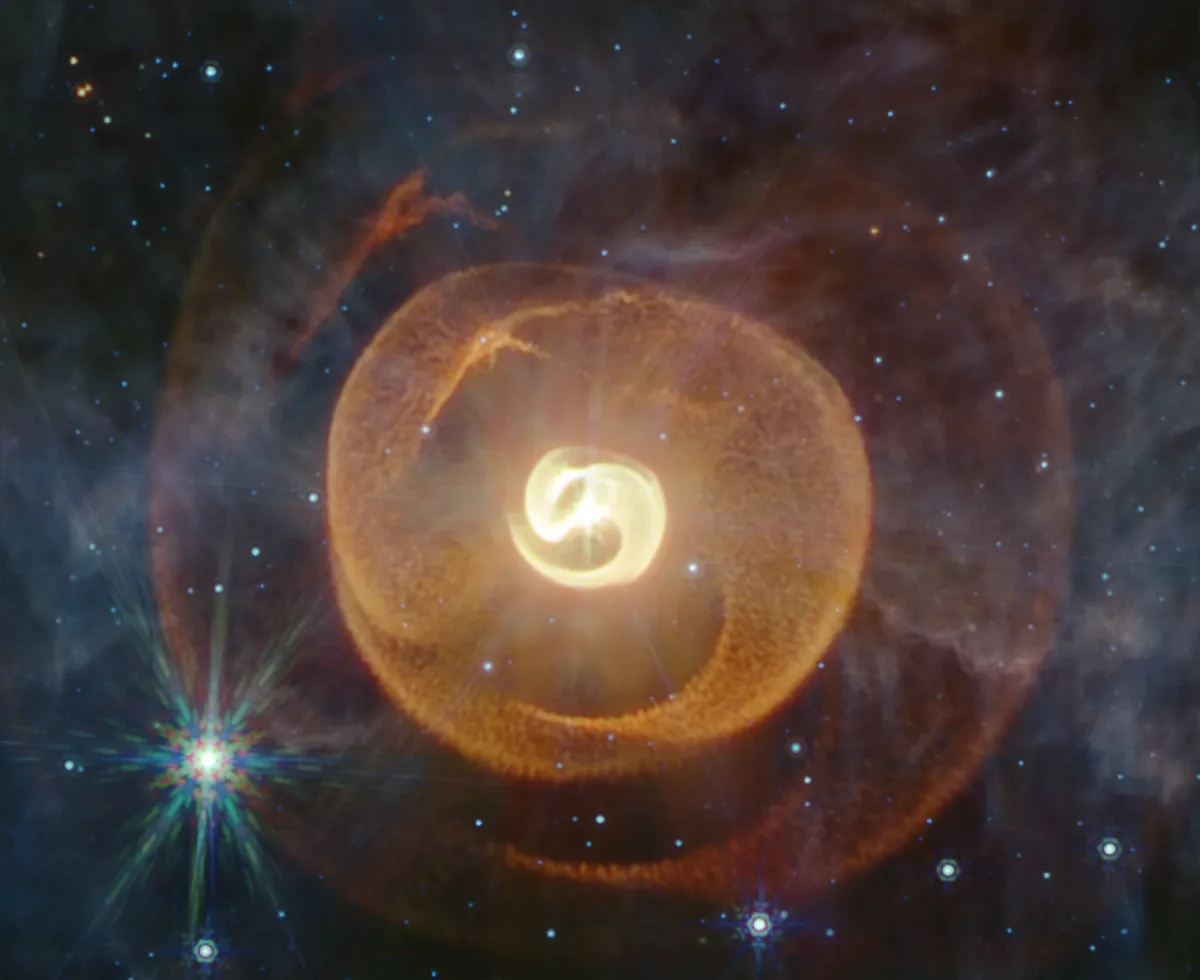
    NASA’s James Webb Space Telescope (JWST) has revealed that the Apep star system, located in our galaxy, is made up of three massive stars forming four repeating dust spirals over a 190-year cycle, a pattern created by violent stellar winds and a sneaky third star that cuts a path through the dust each time it swings past.

    Webb’s Mid-Infrared Instrument captured the clearest image ever taken of Apep. For the first time, scientists could see four thin, evenly spaced spiral shells wrapped around the center of the system. Each shell marks a period when two large, aging stars moved close enough for their winds to crash into each other and create thick clouds of carbon dust.

    Those two stars are known as Wolf-Rayet stars. They are hot, heavy, and in the final stage of their lives. They orbit each other once every 190 years. During about 25 of those years, their winds collide hard enough to produce large amounts of dust. That dust expands and forms a new spiral. Webb’s image shows shells formed from events going back around 700 years.

    In the center of the image is a bright point that earlier telescopes could not clearly explain. Webb confirmed that this point is actually three stars, not two. The third one is a large supergiant that circles the pair from far away. When it passes by, its wind cuts a clear V-shaped gap through the dust being released by the other two stars.

    That same gap appears in every shell. This shows the third star has been taking the same path for centuries. This detail helped scientists confirm that the supergiant is truly part of the system and not just passing through space by chance.

    Apep’s dust is made mostly of carbon. These tiny grains stay warm and glow in mid-infrared light. That is why Webb, which is built to see this type of light, could detect the faint outer shells that ground-based telescopes missed.

    Apep stands out because of its long cycle. Most similar systems create dust every few years or few decades. Apep’s 190-year period is the longest of its kind known in our galaxy, which gives scientists a rare chance to study how powerful winds behave over long periods of time.

    Over the next few hundred thousand years, both Wolf-Rayet stars are expected to explode as supernovae. Because of how fast they spin and how they lose material, one of those explosions could send out a narrow, powerful burst of energy through space.

    Source: The Serpent Eating Its Own Tail: Dust Destruction in the Apep Colliding Wind Nebula

  • Mars โ€œLakeโ€ Near South Pole Likely Not Liquid Water After New Radar Check by NASA Orbiter

    Mars โ€œLakeโ€ Near South Pole Likely Not Liquid Water After New Radar Check by NASA Orbiter

    Scientists now say the supposed lake of liquid water beneath Mars’ south pole is probably not real. The claim, first made in 2018 using data from the European Space Agency’s Mars Express orbiter, has been challenged after NASA engineers used a new method with the Mars Reconnaissance Orbiter in May 2025. The fresh scan showed a weak signal that does not match what liquid water would produce. This matters for the search for life and future human missions to Mars.

    Back in 2018, a team using Mars Express reported a bright radar return from beneath the south polar ice. They said the signal looked like water trapped under thick frozen layers. The idea of a hidden lake on Mars quickly gained attention.

    For years, NASA’s Mars Reconnaissance Orbiter tried to check the same area using its SHARAD radar system. It could not see the same strong signal. The target area sits under thick ice, and the spacecraft’s position made it hard to get a clean view.

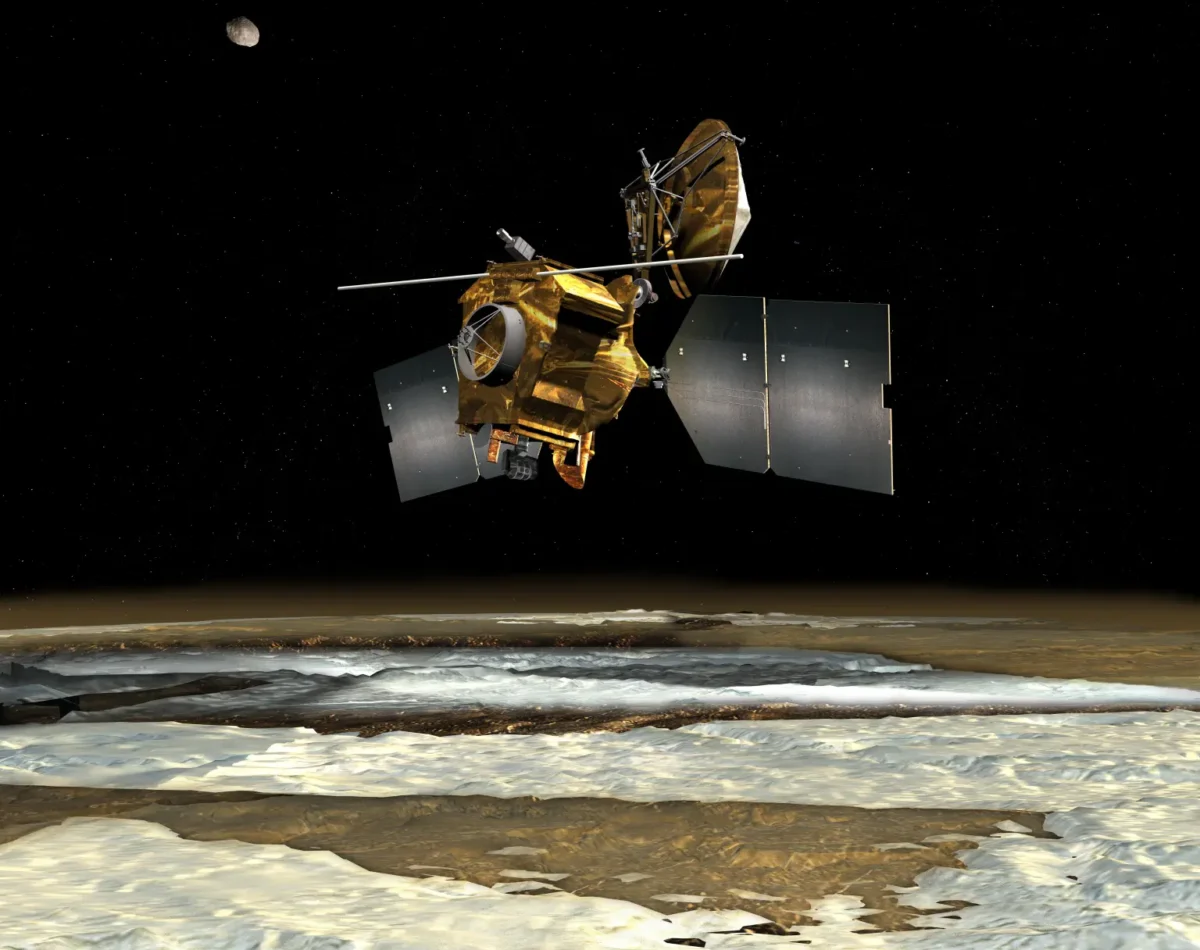
    In May 2025, engineers tried something different. They rolled the entire orbiter about 120 degrees so the radar antenna could point more directly at the surface below. This extreme move gave SHARAD a clearer path to the exact spot that caused the excitement in 2018.

    The map marks the 2018 Mars Express lake signal and nearby Mars Reconnaissance Orbiter paths.
    This map shows where ESA’s Mars Express detected a possible underground lake in 2018, along with the nearby flight paths of NASA’s Mars Reconnaissance Orbiter. Image credit: Planetary Science Institute

    On May 26, the orbiter passed over the area and sent back new data. Instead of a strong return, the signal was faint. Nearby areas showed nothing unusual. A real body of liquid water would have reflected the radar much more clearly.

    Researchers now think the earlier signal came from solid features, not water. The region includes buried craters, old lava layers, and mixed dust and rock under the ice. Smooth rock or thin, dusty layers can sometimes reflect radar in strange ways. That is likely what misled the earlier study.

    Even though the lake idea is fading, the new method is a big step forward. Rolling the spacecraft gave scientists a deeper and clearer look under the surface. This approach can now be used in other places on Mars.

    One key area is Medusae Fossae, a massive deposit near the planet’s equator. Some data suggest it may hide large amounts of ice under dry material. If confirmed, this ice would sit in a warmer and sunnier region than the poles. That makes it a strong candidate for future human landings.

    Mars is known to hold a lot of frozen water. Thick ice covers both poles, and buried glaciers sit in several regions. What scientists have not yet confirmed is stable liquid water on the surface today. Average temperatures near the South Pole drop to around minus 80 degrees Fahrenheit. The air pressure is also very low. Under these conditions, water struggles to stay in liquid form unless it is very salty or trapped at the correct depth.

    Each new study helps researchers better understand how radar behaves on Mars. It also shows how easy it is to mistake rock and dust for water. For now, there is no underground lake at the South Pole. But the tools used to search for one just became more precise.

    Source: NASA Orbiter Shines New Light on Long-Running Martian Mystery

  • NASA releases new images of interstellar comet 3I/ATLAS

    NASA releases new images of interstellar comet 3I/ATLAS

    NASA has released a new set of images showing the interstellar comet 3I/ATLAS as it crossed the inner solar system in October 2025. Spacecraft orbiting the Sun, traveling through deep space, and working around Mars all turned their cameras toward the object after its close pass. The goal was to capture its shape, motion, and makeup before it fades from view and leaves the solar system for good.

    The images were published on November 19, weeks after the comet passed near Mars in early October. NASA confirmed that missions including MAVEN, Psyche, Lucy, and SOHO collected data from different positions in space. Together, they created a rare, multi-angle record of an object that formed around another star.

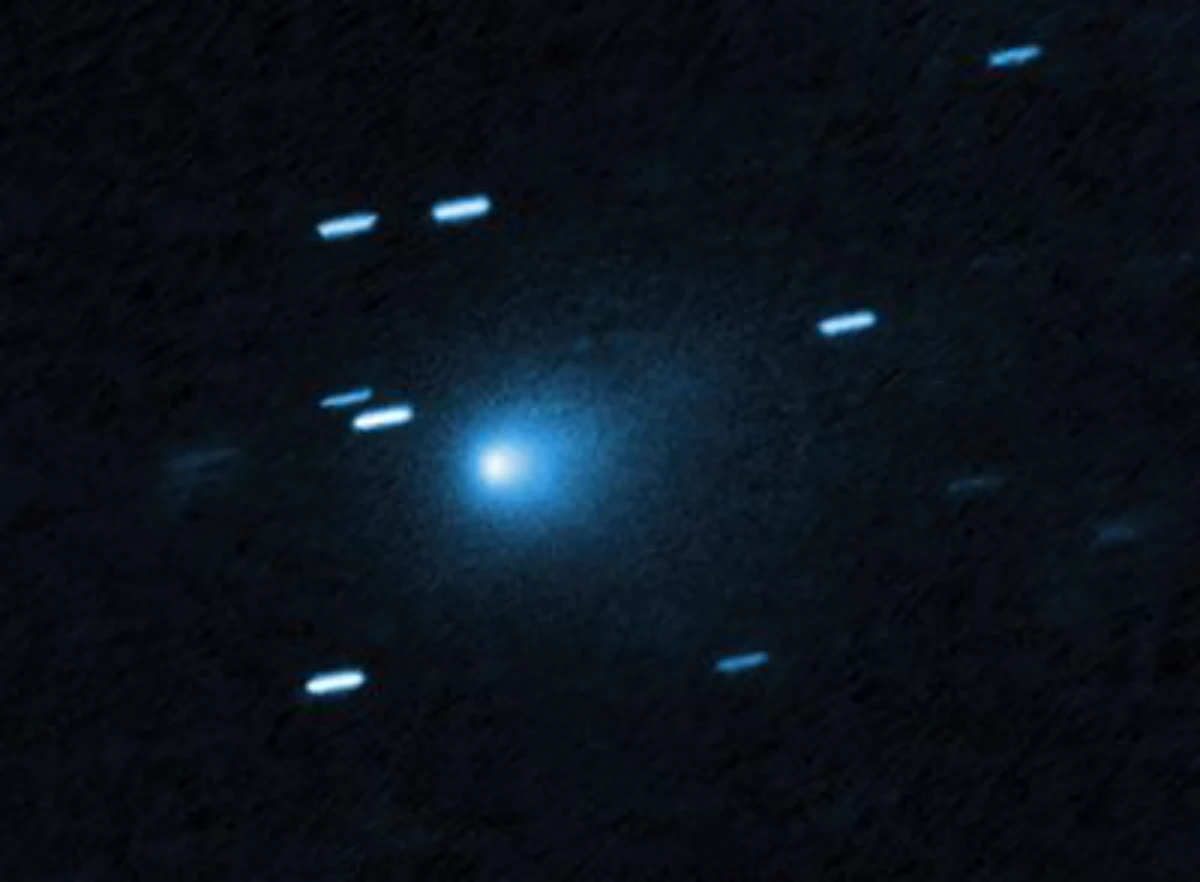
    In most of the images, the comet appears as a faint, blurred ball surrounded by a cloud of gas and dust. A short tail can also be seen in some views. Despite coming from another star system, it behaves much like comets that formed in our own.

    Interstellar comet 3I/ATLAS captured by MAVEN spacecraft
    Interstellar comet 3I/ATLAS captured by MAVEN spacecraft. Image credit: NASA

    MAVEN, which orbits Mars, used its ultraviolet camera to detect a wide cloud of hydrogen around the comet. This cloud formed as sunlight broke down gases released from the surface. The solar wind then pushed this material away, stretching it through space.

    Interstellar comet 3I/ATLAS captured by the Psyche spacecraft.
    Interstellar comet 3I/ATLAS captured by Psyche spacecraft. Image credit: NASA

    The Psyche spacecraft observed the comet for nearly eight hours as it passed about 33 million miles away. These long observations helped scientists calculate its exact path and speed with better accuracy.

    Interstellar comet 3I/ATLAS captured by LUCY spacecraft
    Interstellar comet 3I/ATLAS captured by LUCY spacecraft. Image credit: NASA

    Farther out, the Lucy spacecraft captured faint images from roughly 240 million miles away. Scientists combined several of these pictures to reveal the dusty cloud and a short tail against the background of stars.

    Interstellar comet 3I/ATLAS captured by the Perseverance rover.
    Interstellar comet 3I/ATLAS captured by the Perseverance rover. Image credit: NASA

    Even on the Martian surface, the Perseverance rover managed to spot a weak trace of the comet in the sky. From Earth’s orbit, the Hubble Space Telescope collected clearer data on the gases surrounding the object. Ground-based telescopes added more detail about its size and activity.

    Chemical readings show large amounts of carbon monoxide and cyanide in the gas cloud around 3I/ATLAS. These substances are also common in comets within our own solar system. This suggests similar conditions may exist in many star systems when comets form.

    The comet is only the third confirmed visitor from outside our solar system, following ‘Oumuamua in 2017 and Borisov in 2019. It is moving at nearly 150,000 miles per hour on a path that will send it back into deep space, never to return.

    The ATLAS survey first discovered the object on July 1, 2025. It made its closest pass to the Sun on October 30 at a distance of about 1.4 times the gap between Earth and the Sun, close to the orbit of Mars. Scientists estimate the solid center of the comet may be between one and five kilometers wide. It appears to be covered in reddish dust, similar to objects found on the edge of our own solar system.

    Large telescopes will continue tracking 3I/ATLAS into early 2026 as it fades. The James Webb Space Telescope has already observed it, and more data is being processed. Each set of images adds to a small but growing record of objects that travel between stars. For now, 3I/ATLAS is offering one of the clearest chances yet to study material formed around another sun.

  • NASA launches Sentinel 6B to expand global sea level record as oceans keep rising

    NASA launches Sentinel 6B to expand global sea level record as oceans keep rising

    A new satellite built to track rising oceans is now in orbit after a night launch from California. Sentinel 6B rode a SpaceX Falcon 9 from Vandenberg Space Force Base on November 16, 2025, lifting off at 9:21 p.m. local time. The mission aims to deliver the most detailed sea level data yet as coastal cities face higher tides and more frequent flooding.

    The Falcon 9 returned its booster to a landing site a few minutes after liftoff, marking the company’s 500th flight with a reused stage, and the satellite sent its first signal home less than an hour after separating from the rocket.

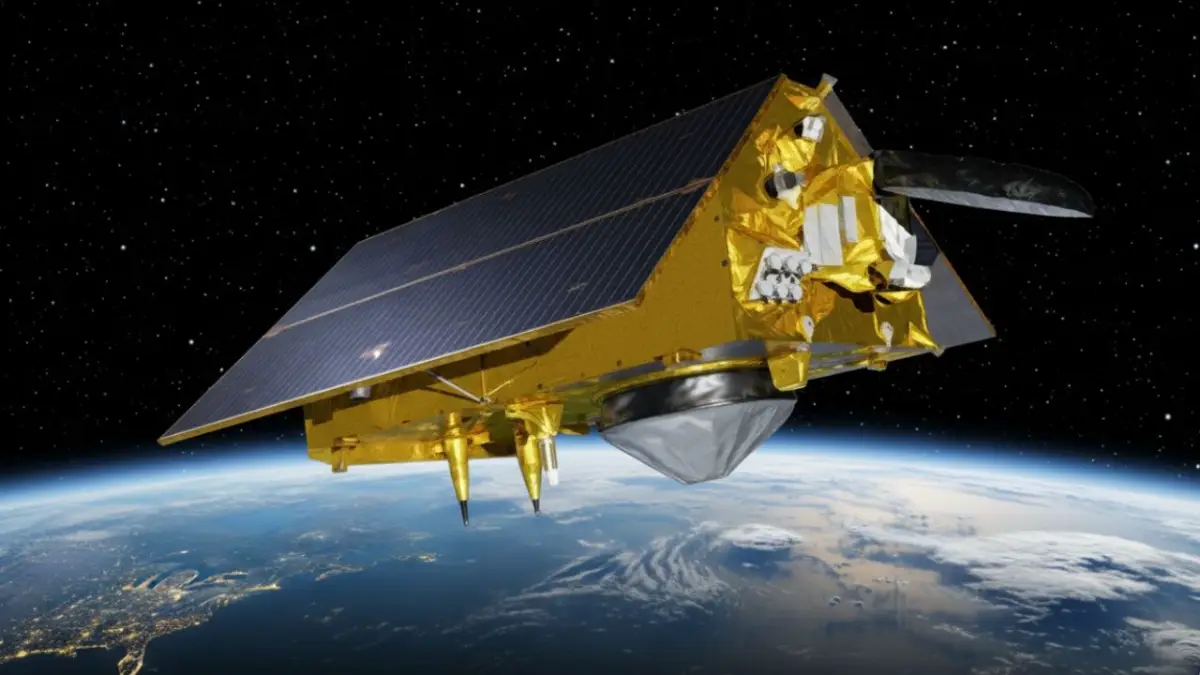
    Sentinel 6B carries a radar instrument that sends pulses toward the ocean and measures the time it takes for the signal to return. This lets scientists track sea height across most of the planet with accuracy to a few centimeters.

    The readings work through clouds and at night, which keeps the record steady even in storms. The satellite also measures wave heights, wind speeds over the ocean, and temperature layers in the atmosphere, details that feed into weather models used for daily forecasts and hurricane tracking.

    The mission comes as sea levels continue to rise. Global averages have climbed about 10 centimeters in the last 25 years, and the pace has increased as oceans warm and ice sheets add more water. Some regions see faster change than others because of shifting currents.

    Cities including Miami, Shanghai, and Dhaka already face higher tides and stronger storm surges. Governments use sea level data to plan coastal barriers, guide new construction, and decide when to move people out of high-risk areas.

    Sentinel 6B will operate with its twin, Sentinel 6 Michael Freilich, which launched in 2020. Both satellites will fly in the same orbit for about a year so teams can compare readings and check for calibration errors. After that period, the older satellite will shift to a new orbit where it will help map features on the seafloor by tracking tiny changes in the ocean surface caused by underwater mountains. Sentinel 6B will then take over as the primary source for global records.

    The launch continues a record of sea level measurement that began in 1992 with the joint NASA and French space agency mission TOPEX/Poseidon. Jason 1, Jason 2, and Jason 3 followed. Together, these satellites produced a continuous dataset that now spans more than three decades.

    With Sentinel 6B active, the record is expected to extend close to 40 years by the end of the decade. Long records allow scientists to separate natural shifts, such as temporary dips from cooler ocean cycles, from long-term change driven by warming.

    The project involves NASA, the European Space Agency (ESA), NOAA, EUMETSAT, and the Copernicus program. Airbus in Germany built the satellite and prepared it for storage before launch. The French space agency supplied instruments and technical support. Data from the mission will be shared openly with researchers and governments.

    Sentinel 6B now circles Earth at about 1,336 kilometers and completes one orbit in 112 minutes. Engineers will spend the next few months testing every system. Routine sea level measurements are expected to begin in early 2026. Once active, the satellite will be one of the main tools used by scientists and coastal planners as communities face rising water and more frequent flooding.

  • JWST detects rare Phosphine gas in distant Brown Dwarf, solving a long unsolved mystery

    JWST detects rare Phosphine gas in distant Brown Dwarf, solving a long unsolved mystery

    Astronomers have found phosphine gas in the atmosphere of a brown dwarf named Wolf 1130C, about 55 light-years away. The signal comes from new James Webb Space Telescope (JWST) data and matches predicted levels for the first time. The find helps explain why other cool objects in space appear to lack this gas, even though models say it should be present.

    Brown dwarfs sit between planets and stars. They are too small to shine through steady hydrogen fusion but too large to count as planets. Wolf 1130C is one of the cooler examples, with a temperature of around 600 Kelvin. It has a mass about 40 times greater than Jupiter and a similar size.

    The system that hosts it is unusual. Wolf 1130 includes a close pair: a small red dwarf star and a white dwarf formed from an older star. Wolf 1130C moves far from that pair, at a distance thousands of times greater than the space between Earth and the Sun. The entire system belongs to an old region of the Milky Way known as the thick disk. Stars in this region contain fewer heavy elements than younger stars closer to us.

    That low metal level turns out to be key. Heavy elements like iron and phosphorus formed in earlier stellar explosions. Many older stars have less iron, but some show higher phosphorus than expected. Wolf 1130C appears to be one of them.

    JWST used two instruments to study the object. First, the NIRSpec spectrograph recorded infrared light between 0.6 and 5.2 microns. Then, MIRI mapped longer wavelengths. Together, they produced clean signals with high clarity, letting scientists separate Wolf 1130C’s light from the bright pair nearby.

    In that data, researchers saw a small dip at a wavelength around 4.3 microns. That dip matches a pattern caused by phosphine gas. It includes several narrow features that rule out carbon dioxide, which can mimic this signal. Models that assume still, unchanging layers in the atmosphere fail to produce phosphine. But when mixing is added, the match becomes clear.

    The levels detected reach about 0.1 parts per million. That is 100 times higher than readings for another cold brown dwarf called WISE 0855-0714. It also lines up closely with predictions made before the observation.

    On Jupiter and Saturn, phosphine rises from deeper, hotter layers. Under calm conditions it would break apart, so its presence points to strong mixing. Until now, brown dwarfs and giant planets outside our solar system only showed upper limits, far below predicted levels. In many cases, carbon dioxide blocks the signal scientists look for.

    Wolf 1130C appears different. Its low metal level cuts carbon dioxide to tiny amounts. That opens a clear window where phosphine can be seen. Low metals change other chemistry too. A salt that normally removes phosphine forms deeper in the atmosphere, letting some phosphine reach higher layers instead of disappearing.

    The data also suggest that water, methane, and hydrogen sulfide match simple expectations. Carbon monoxide and phosphine do not, which again supports strong mixing. Carbon dioxide comes in far below one part per billion.

    The phosphorus level matches what astronomers see in other thick-disk stars, where it can be higher than iron. It could come from ancient supernova explosions that enriched some parts of the galaxy or past activity from the white dwarf in the system.

    The result matters for studies of distant planets. Phosphine once raised excitement on Venus as a possible sign of life, until later work showed non-biological ways to make it. Wolf 1130C is a clear example of a lifeless world that produces it through normal chemistry and motion in its atmosphere.

    Researchers plan to examine more cold objects using JWST. Early results have already found clear carbon dioxide on a hot planet called WASP-39b. With more data, astronomers hope to learn how common phosphine is and what that says about weather and chemistry on planets and brown dwarfs across our galaxy.

  • Impulse Space Plans 2028 Moon Cargo Missions to Support NASAโ€™s Future Lunar Outposts

    Impulse Space Plans 2028 Moon Cargo Missions to Support NASAโ€™s Future Lunar Outposts

    California-based Impulse Space aims to begin delivering cargo to the Moon by 2028, joining the growing race to build infrastructure for future lunar bases. Founded by former SpaceX engineer Tom Mueller in 2021, the company plans to pair its new lunar lander with its Helios transfer vehicle to carry up to three tons of equipment per trip, filling a gap between small NASA landers and large vehicles like SpaceX’s Starship.

    Impulse’s approach focuses on reliability and simplicity. Its lunar lander will use thrusters powered by nitrous oxide and ethane fuels that remain stable for months in space, unlike cryogenic propellants that evaporate quickly. The Helios stage will push the lander from low Earth orbit to lunar orbit in about a week before releasing it for descent to the surface.

    The company expects its first Helios mission to launch in late 2026. If all goes to plan, two lunar lander missions per year will follow by 2028, delivering about six tons of cargo annually. Mueller said the project targets a “missing middle” in lunar logistics payloads between 0.5 and 13 tons that current missions struggle to accommodate.

    These deliveries could prove vital for upcoming scientific and crewed efforts. NASA’s Artemis program aims to return astronauts to the Moon around 2026 or 2027, with early missions focused on building a long-term presence. Cargo flights like Impulse’s would supply the tools, power systems, and science equipment needed before humans arrive.

    Much of this work will center on the Moon’s south pole, where frozen water lies in permanently shadowed craters. Extracting and studying that ice could support life support systems and even provide fuel for future Mars missions. NASA’s VIPER rover, scheduled for 2027, will explore those deposits; Impulse’s landers could later deliver follow-up instruments or construction gear.

    Mueller, who helped design SpaceX’s Merlin engines, believes smaller, storable-fuel systems can make lunar transport more affordable. By skipping complex in-orbit refueling and using proven hardware, Impulse hopes to cut costs while keeping schedules tight. The company faces competition from Blue Origin and other commercial players pursuing similar goals.

    Beyond logistics, these missions could help scientists place telescopes on the Moon’s surface, offering clearer views of space without atmospheric interference. They could also test materials for radiation shielding and resource extraction.

    “The Moon needs regular deliveries before it can support a real base,” Mueller said. “If we can get that right, everything else will follow.”

    For astronomers and engineers alike, Impulse’s 2028 target marks another step toward making the Moon a permanent part of humanity’s reach into space.

  • NASA Shutdown and JPL Layoffs Disrupt Space Projects and Threaten Scientific Progress

    NASA Shutdown and JPL Layoffs Disrupt Space Projects and Threaten Scientific Progress

    NASA is facing significant disruption as a U.S. government shutdown began on October 1, 2025, leaving thousands of employees furloughed and delaying key projects. The shutdown occurred after Congress failed to approve a federal budget.

    At the same time, NASA’s Jet Propulsion Laboratory (JPL) in Pasadena, California, announced it would lay off 550 staff, about 11% of its workforce, due to flat budgets and anticipated funding cuts for 2026. These combined setbacks are affecting operations across the agency.

    NASA employs more than 18,000 people nationwide. During the shutdown, around 15,000 staff face furloughs, which means forced time off without pay.

    Essential operations continue, such as monitoring the International Space Station (ISS), which houses seven astronauts, and maintaining satellites that observe Earth’s weather or space. However, most non-essential research and administrative functions are halted, creating delays across missions.

    The layoffs at JPL add another layer of strain. JPL is responsible for planetary exploration and robotic spacecraft, including rovers on Mars and probes to the outer planets. Leadership says the cuts are part of a reorganization to prioritize critical projects in light of flat budgets and a proposed 24% funding reduction for NASA in 2026. Still, staff worry about the loss of expertise and the long-term impact on research and development.

    Several major NASA projects continue with minimal interruption. The International Space Station (ISS) remains staffed by a skeleton crew of 200 workers who monitor life support systems, maintain equipment, and ensure the safety of experiments.

    Artemis, the program to return humans to the Moon, also continues under pre-funded contracts. Recent launches, such as the October 5 Atlas V carrying a reconnaissance satellite, proceeded as scheduled. However, no new grants or research initiatives can start, delaying studies in fields such as astrophysics and Earth sciences.

    Data analysis from Mars missions is particularly affected. The Perseverance rover collects rock samples and conducts experiments, but furloughs prevent teams from processing the data. This creates backlogs in identifying organic molecules and other signs of past life.

    Earth science missions also face delays. Satellites tracking hurricanes, wildfires, and climate trends see slower data processing, affecting forecasts and emergency planning. Previous shutdowns have caused days-long delays in storm tracking, illustrating the real-world consequences.

    Research from space telescopes like Hubble and James Webb continues, but scientists lack access to communication channels and computing resources. This slows collaboration and the release of findings to the global community. International partners must adjust schedules, which can strain cooperative projects and slow the overall pace of discovery.

    Repeated shutdowns and layoffs risk long-term impacts. JPL has implemented job cuts four times in two years, prompting concerns that skilled engineers may leave for private companies. This could reduce public sector capacity to carry out complex space missions. NASA’s budget, about 0.5% of federal spending, supports technologies used in everyday life, including GPS and medical advancements.

    Despite the challenges, NASA has recovered from previous shutdowns. The agency has resumed major missions after disruptions, relying on volunteers, private sector partnerships, and careful prioritization. Still, morale and efficiency are affected, and prolonged uncertainty threatens the agency’s ability to maintain scientific momentum.

    NASA’s situation underscores the link between government funding and scientific progress. Furloughs and layoffs not only delay current missions but also impact future research and technological development. To continue exploring space effectively, stable funding and consistent staffing are essential for the agency and the broader scientific community.

  • NASA’s AVATAR Project Uses Astronaut Cells to Study Space Radiation in Deep Space

    NASA’s AVATAR Project Uses Astronaut Cells to Study Space Radiation in Deep Space

    NASA is preparing to send pieces of human biology into deep space to find out how radiation and weightlessness harm the body. The AVATAR project, short for A Virtual Astronaut Tissue Analog Response, will fly on the Artemis II mission in 2026. The experiment uses small organ chips containing real astronaut cells to study how bone marrow reacts to cosmic conditions.

    The findings will help protect future crews traveling to the Moon, Mars, and beyond while advancing cancer treatment research on Earth.

    Each AVATAR chip is about the size of a thumb drive. Inside, it holds living human cells that behave like miniature organs. These chips mimic bone marrow, made from stem cells taken from the Artemis II astronauts. They reproduce how blood-forming cells grow and react inside the body, allowing scientists to study deep-space effects without endangering crew members.

    To build each chip, researchers extract stem cells from the astronauts’ blood. They place them inside narrow channels lined with blood vessel cells. Fluid circulates through these channels to simulate the movement of blood.

    Sensors record how the tissue responds to space conditions such as microgravity and cosmic radiation. This approach comes from microfluidic technology developed in the 2010s and replaces some forms of animal testing with realistic human cell models.

    NASA chose bone marrow for AVATAR because it produces red, white, and platelet cells essential for oxygen transport, immunity, and clotting. Radiation and weightlessness disrupt all three. In deep space, radiation exposure can be hundreds of times stronger than on Earth, especially during solar quiet periods. Understanding how bone marrow responds is vital for maintaining astronaut health on long missions.

    Artemis II will be NASA’s first crewed flight of the Orion spacecraft and the Space Launch System rocket. The 10-day mission will loop around the Moon and return to Earth. The AVATAR hardware, designed by Space Tango, will run automatically inside the spacecraft while astronauts focus on flight tasks.

    The chip technology itself is supplied by Emulate, a company specializing in organ-on-a-chip systems that can function for months without direct maintenance.

    Outside Earth’s magnetic field, the chips will experience real radiation that cannot be fully simulated in labs on Earth. Scientists expect to see DNA damage, altered gene expression, and weakened cell growth. Early lab tests already show that marrow cells change how they produce proteins when exposed to radiation.

    After the mission, researchers will analyze the returned samples using RNA sequencing to measure how spaceflight changed each gene’s activity.

    These results will build on earlier studies like NASA’s Twins Study, which compared astronaut Scott Kelly’s year in orbit with his twin brother on Earth. AVATAR goes a step further by testing astronaut-derived tissue directly in deep space. The project may explain why some people handle radiation better, leading to more personalized space medicine.

    For Mars missions lasting up to three years, this data could help NASA create individual medical kits and drug plans. Each astronaut’s cells could reveal unique sensitivities, allowing doctors to design custom countermeasures before launch. The same knowledge could improve care for cancer patients on Earth, where radiation therapy often damages bone marrow and causes fatigue, infections, or anemia.

    AVATAR’s benefits extend to drug testing, too. Organ chips already allow pharmaceutical companies to predict side effects and test treatments without animal trials. By using astronaut tissue, NASA adds an extreme testing ground that could improve how therapies are designed for both space and Earth.

    NASA plans to expand the project after Artemis II to include organ chips representing the liver, kidneys, and heart. In the future, astronauts could even carry chips that monitor their health in real time, warning of radiation damage before symptoms appear.

    The AVATAR project bridges the gap between spaceflight and medicine. By sending human cells where no lab can go, NASA hopes to better protect astronauts on future deep-space missions and bring home discoveries that improve lives on Earth.

  • NASA and Blue Origin prepare Mars mission with twin probes to study atmosphere loss
    NASA and Blue Origin prepare Mars mission with twin probes to study atmosphere loss
    NASA and Blue Origin are preparing to launch two small spacecraft to Mars later this year to study how the planet lost most of its atmosphere. The ESCAPADE mission, carried by Blue Origin’s New Glenn rocket from Cape Canaveral, will send twin probes into orbit around Mars to track how solar particles strip away its air.

    The spacecraft are part of NASA’s low-cost planetary program and are scheduled to launch in late October or early November. The mission is led by the University of California, Berkeley’s Space Sciences Laboratory, with spacecraft built by Rocket Lab. NASA says the data could help explain how Mars changed from a wetter, potentially habitable world into the desert planet seen today.

    Each probe, named Blue and Gold, is about the size of a carry-on suitcase and powered by solar panels. They carry instruments such as magnetometers and plasma analyzers to measure the interaction between charged particles from the sun and Mars’ thin atmosphere. By flying in different orbits, the two will give scientists simultaneous readings from multiple points around the planet.

    The mission focuses on the effect of the solar wind, the constant flow of charged particles from the sun. On Earth, a strong global magnetic field deflects most of these particles, but Mars has only weak, patchy magnetic fields. As a result, the solar wind directly hits the atmosphere, knocking particles into space.

    NASA has studied this process before with the MAVEN mission, launched in 2014, which first mapped how solar wind affects Mars. ESCAPADE adds another dimension by providing two vantage points at once, allowing researchers to track changes in real time. The goal is to learn how quickly the atmosphere escapes and how that process shapes climate and habitability.

    The New Glenn rocket carrying the probes is a heavy-lift vehicle capable of hauling more than 45 tons into low Earth orbit. It runs on methane fuel and is designed for reuse, with the first stage returning to land after launch. This will be the rocket’s second flight, a major milestone for Blue Origin as it builds up its launch record. A hotfire test is expected in the coming weeks.

    NASA’s Heliophysics Division is funding the mission, which ties into research on how the sun affects planets across the solar system. Understanding these effects is also important for planning human missions to Mars, since space weather can interfere with communications and safety during future crewed flights.

    Reporters wishing to cover the launch must apply for media credentials by October 13. NASA is posting updates on its ESCAPADE mission blog ahead of the launch.