
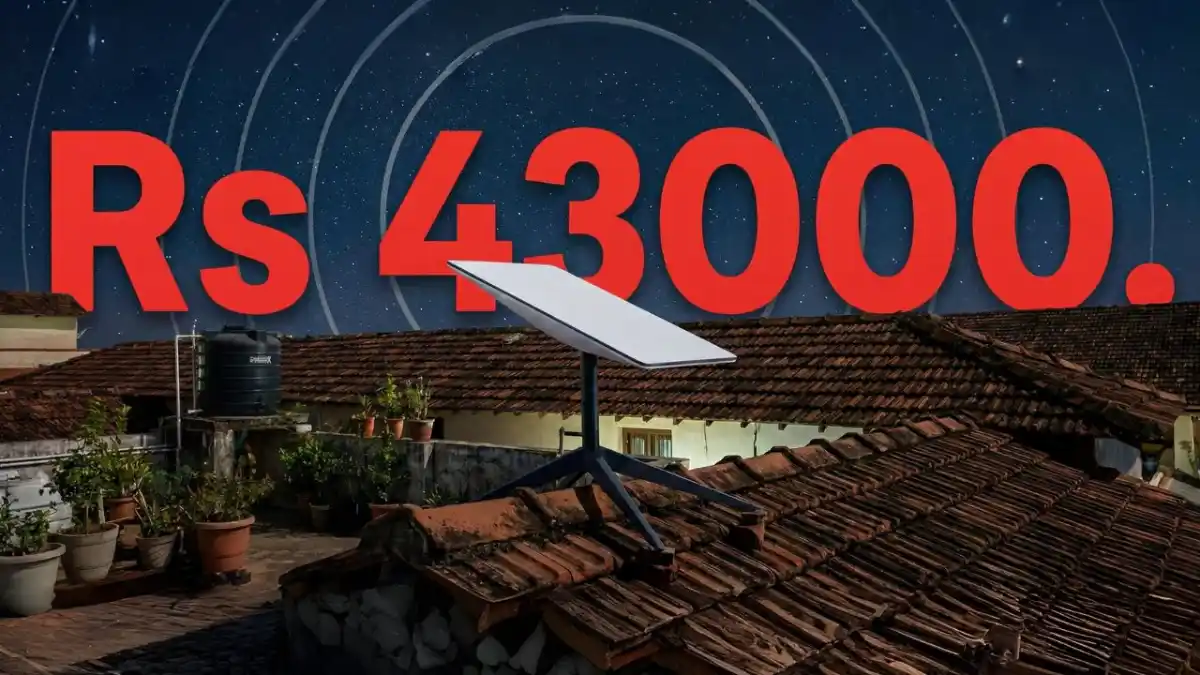
SpaceX has announced Starlink will charge Indian customers ₹34,000 for hardware and ₹8,600 per month for satellite internet when service starts in early 2026, setting off a debate about whether rural users can afford prices that dwarf typical broadband bills below ₹1,000. The hardware package includes a dish, router, and cables. The monthly plan offers unlimited data and a 30-day trial. The company says it’s targeting rural areas where fiber and cable don’t reach, not cities with established internet options.
Many villages across India still face weak mobile coverage or rely on a single tower shared by entire communities. Starlink argues these gaps justify higher prices, even though the monthly cost exceeds what many rural residents pay for phones. Some observers noted the irony online.
The satellite system uses low-orbit technology already operating in other countries. The network sits closer to Earth than traditional satellites, which cuts lag and keeps speeds consistent. Users only need a clear sky view, common in rural settings. But the price remains a sticking point. Bangladesh pays roughly half the Indian rate, which intensified the debate. Critics question why India faces higher charges when the technology is identical.
Starlink has cleared initial hurdles with IN-SPACe and the Department of Telecommunications but needs final spectrum approval from the telecom ministry before switching on service. Gateway stations are under construction in Mumbai, Delhi, and Pune. Maharashtra signed a deal with SpaceX to connect remote districts. Test links started in October, though full service remains offline.
If approvals come through on schedule, rural homes could gain stable access for schoolwork, online services, and daily communication in 2026. The price will block many potential customers, but some may accept the cost where storms and power cuts regularly knock out mobile signals.
Lower prices could attract more users, but SpaceX hasn’t shown interest in matching local rates. Higher prices might limit adoption to wealthier rural households or businesses willing to pay for reliability.
The next year will reveal whether India grants final approvals and whether SpaceX adjusts its strategy. Rural internet access has long been a problem in India, and satellite service could help solve it. Whether enough people can afford the solution is another question entirely.

Leave a Reply