Tag: SpaceX

  • SpaceX targets $1.5 Trillion IPO and this could change the Space Industry forever!

    SpaceX targets $1.5 Trillion IPO and this could change the Space Industry forever!

    SpaceX insiders say the company may go public in 2026 with a valuation target near $1.5 trillion, more than double its recent private share sale price and a figure that would rank among the largest stock market debuts in history. If this plan moves forward, it would give investors their first chance to buy into the world’s busiest launch company.

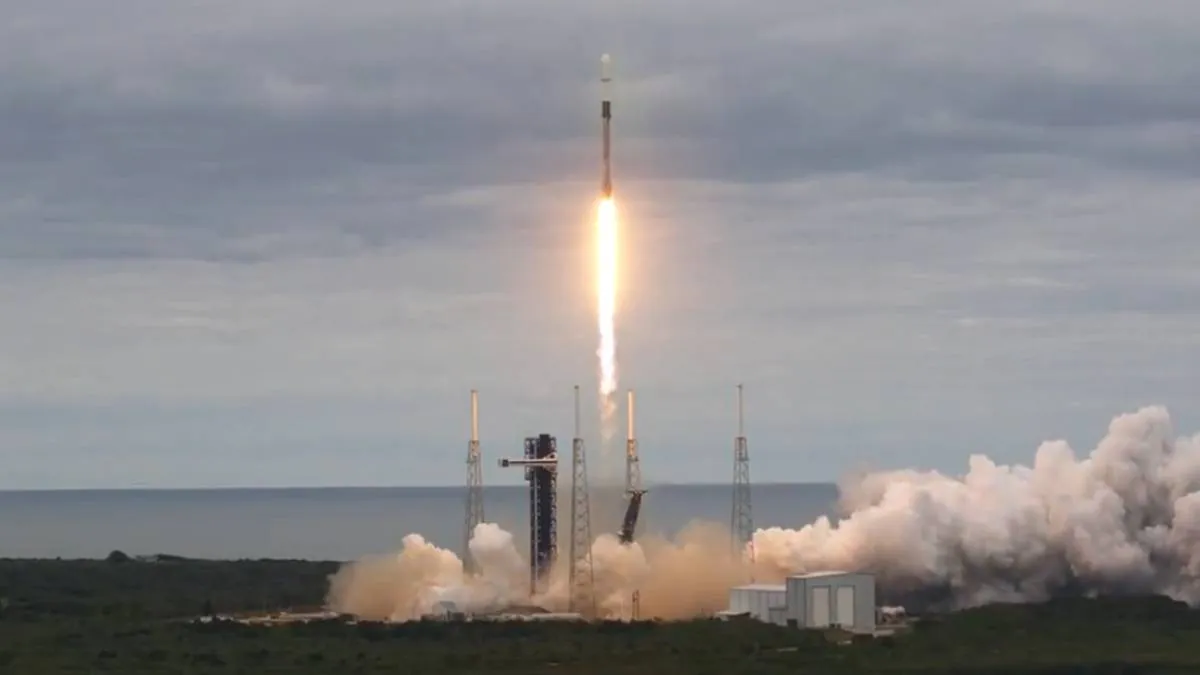
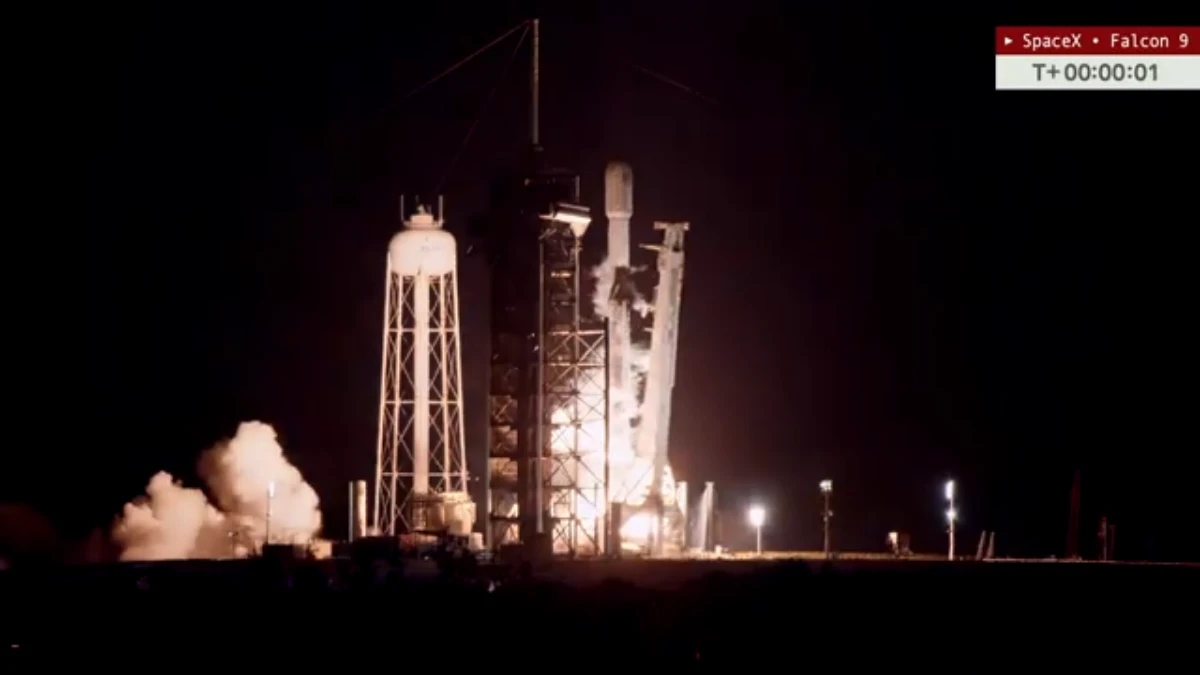
    SpaceX completed 132 orbital launches in 2025, flying more missions than every other launch provider combined. Its reusable Falcon 9 rockets cut costs and brought in steady money from commercial flights and crew trips to the International Space Station.

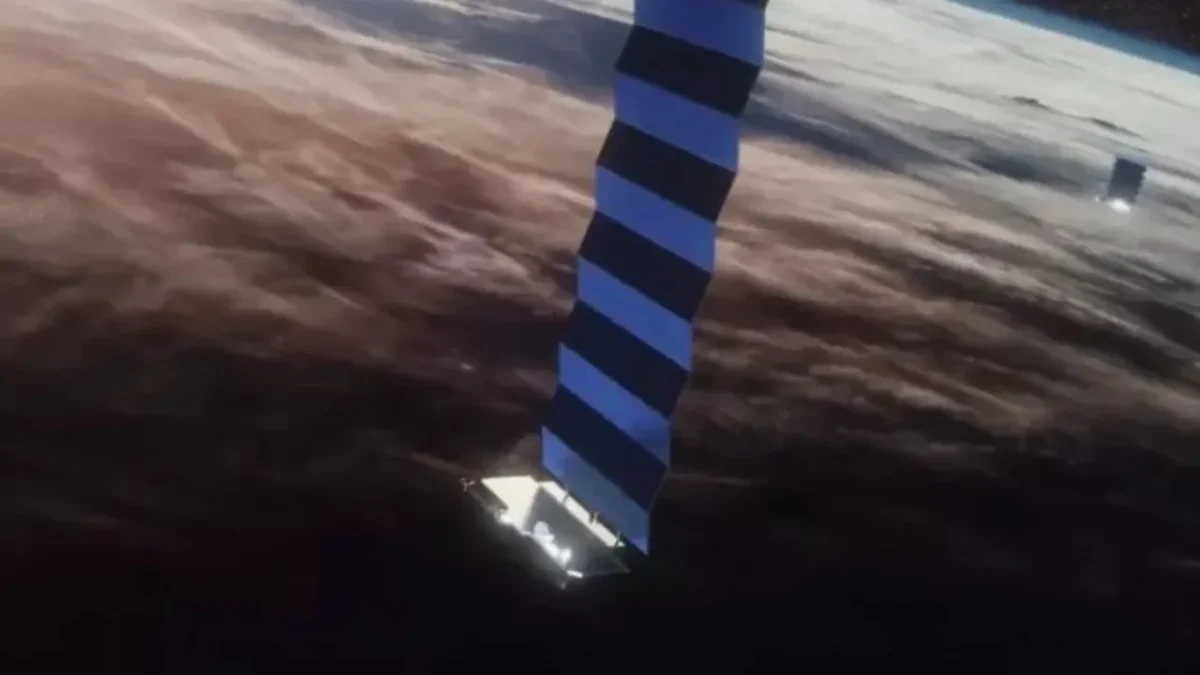
    Much of the valuation talk centers on Starlink, the satellite internet network now serving about 8.5 million users worldwide. With thousands of satellites already in orbit, analysts expect revenue to top $10 billion this year. The network brings fast internet to areas with limited service and gives SpaceX a reliable income stream that sets it apart from competitors who rely only on launch contracts.

    The system has drawbacks. Astronomers say the bright satellites streak through telescope images and ruin observations. The company has worked to dim the hardware, but scientists still lose data. Some joke about cosmic photobombs, though the frustration is real.

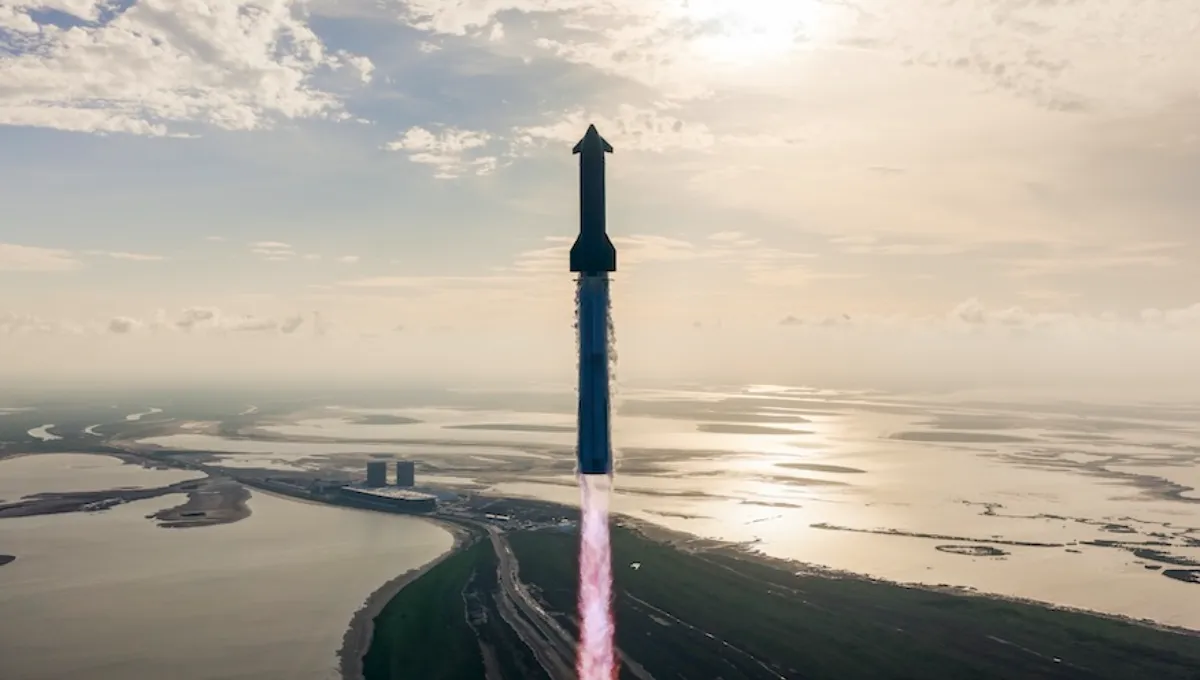
    SpaceX’s long-term bet is on Starship, the massive rocket designed to send large payloads to space at far lower costs. Recent tests showed the booster can return to its launch tower for catch attempts, a step Elon Musk says is necessary for quick reuse. NASA has backed the system for upcoming moon missions, and early cargo plans for Mars sit further down the timeline.

    If Starship reaches full reuse, launch prices could drop enough to open new business opportunities, from space factories to high-volume research missions. That potential helps justify the ambitious valuation.
    But challenges remain.

    Tech stocks can swing wildly, and Musk’s public comments often shift investor expectations in real time. Regulators watch Starlink’s growing presence closely and have placed limits on radio bands to protect other uses. With more satellites planned, space debris worries continue to grow and could bring new restrictions.

    The timing matters too. A 2026 listing would come during a period when market conditions can change fast. The company would need to convince investors that its growth can support a valuation that dwarfs most corporations.

    If SpaceX proceeds, it could raise more than $30 billion for rocket development and network expansion. Supporters see it as a major moment for the space industry. Skeptics say the numbers look stretched. Either way, the next year will show whether the company can turn big talk into an actual market debut.

  • Starlink Disappoints Indian Users With โ‚น34,000 Setup Fee and โ‚น8,600 Monthly Bill

    Starlink Disappoints Indian Users With โ‚น34,000 Setup Fee and โ‚น8,600 Monthly Bill

    SpaceX has announced Starlink will charge Indian customers โ‚น34,000 for hardware and โ‚น8,600 per month for satellite internet when service starts in early 2026, setting off a debate about whether rural users can afford prices that dwarf typical broadband bills below โ‚น1,000. The hardware package includes a dish, router, and cables. The monthly plan offers unlimited data and a 30-day trial. The company says it’s targeting rural areas where fiber and cable don’t reach, not cities with established internet options.

    Many villages across India still face weak mobile coverage or rely on a single tower shared by entire communities. Starlink argues these gaps justify higher prices, even though the monthly cost exceeds what many rural residents pay for phones. Some observers noted the irony online.

    The satellite system uses low-orbit technology already operating in other countries. The network sits closer to Earth than traditional satellites, which cuts lag and keeps speeds consistent. Users only need a clear sky view, common in rural settings. But the price remains a sticking point. Bangladesh pays roughly half the Indian rate, which intensified the debate. Critics question why India faces higher charges when the technology is identical.

    Starlink has cleared initial hurdles with IN-SPACe and the Department of Telecommunications but needs final spectrum approval from the telecom ministry before switching on service. Gateway stations are under construction in Mumbai, Delhi, and Pune. Maharashtra signed a deal with SpaceX to connect remote districts. Test links started in October, though full service remains offline.

    If approvals come through on schedule, rural homes could gain stable access for schoolwork, online services, and daily communication in 2026. The price will block many potential customers, but some may accept the cost where storms and power cuts regularly knock out mobile signals.

    Lower prices could attract more users, but SpaceX hasn’t shown interest in matching local rates. Higher prices might limit adoption to wealthier rural households or businesses willing to pay for reliability.

    The next year will reveal whether India grants final approvals and whether SpaceX adjusts its strategy. Rural internet access has long been a problem in India, and satellite service could help solve it. Whether enough people can afford the solution is another question entirely.

  • SpaceX Wins $2 Billion Pentagon Deal to Build Satellite Shield Under Trumpโ€™s Golden Dome Plan

    SpaceX Wins $2 Billion Pentagon Deal to Build Satellite Shield Under Trumpโ€™s Golden Dome Plan

    Elon Musk’s SpaceX has been awarded a $2 billion Pentagon contract to build a new line of satellites for the United States, as per a recent report by the Wall Street Journal. The work will support the Golden Dome missile defense system, a program launched during Donald Trump’s administration. The network will use small satellites in low Earth orbit to spot missile launches and aircraft in real time, giving commanders faster warning of incoming attacks.

    Golden Dome is meant to create a space-based security shield. Instead of relying only on ground radars, the satellites will watch the planet from a few hundred miles up. They will use infrared cameras that detect the heat from rocket engines the moment a missile leaves the ground. U.S. officials say this will help track threats over long distances and allow interceptors more time to respond.

    The Pentagon expects the system to operate with hundreds of satellites. They will fly in low Earth orbit, roughly 300 to 600 miles above the surface, passing over the same region every few minutes. This rapid movement allows them to update data often and send alerts to control rooms on the ground.

    Engineers say this setup will reduce blind spots and provide constant monitoring rather than waiting for a few large satellites to come back into range.

    SpaceX was chosen because it already runs a massive satellite network. Its Starlink system has thousands of spacecraft in orbit, and the company launches new ones on a regular basis. SpaceX builds satellites at a fast rate, cuts launch costs with reusable rockets, and has a history of classified missions for U.S. intelligence agencies. Lockheed Martin and other defense giants competed for the contract, but SpaceX offered a cheaper and faster plan.

    Musk proposed a subscription-style model. Instead of owning the hardware, the government will pay for access to the network and upgrades over time. Supporters say this approach keeps technology current and reduces repair and storage costs. Critics fear it could lock national defense systems to a private company.

    The satellites will detect missile launches using heat signatures. When a rocket fires, its engines burn hot and bright in infrared light. Specialized sensors capture that signal, and onboard computers calculate the missile’s path. By comparing speed, angle, and altitude, the software can predict where the missile is heading. The data then moves to military command centers, where operators can order interceptors or raise alerts.

    Low Earth orbit helps because it provides sharp images and less distortion. The shorter distance also means faster data transfer. The same technology can track aircraft and possibly drones. Although Golden Dome is a military program, its sensors could also support emergency response efforts, like spotting wildfires or volcanic activity.

    The deal raises questions about the growing militarization of space. Defense officials argue that orbital surveillance is needed as Russia, China, and North Korea test new weapons. Others warn that more satellites may worsen the risk of collisions and space debris.

    More launches are expected from Cape Canaveral in the next few years as the network expands. Supporters hope the project will deter attacks by giving the United States clearer warning of threats. Opponents worry about a new era of competition in orbit.

    For now, the contract marks another step in SpaceX’s influence over U.S. space operations. It puts the company at the center of a major national defense effort, turning satellite surveillance into a key part of future security planning.

  • SpaceX launches 21 satellites for U.S. militaryโ€™s new global communications and missile-tracking network

    SpaceX launches 21 satellites for U.S. militaryโ€™s new global communications and missile-tracking network

    SpaceX launched 21 satellites for the U.S. military on September 10 from Vandenberg Space Force Base in California. The flight marked the start of the Pentagon’s new low-Earth orbit communications and missile-tracking network, known as the Proliferated Warfighter Space Architecture.

    The mission placed the first group of York Space Systems satellites into orbit. They form part of the Transport Layer, a planned fleet of 126 data relay satellites. When combined with 28 missile-tracking satellites, the initial phase will consist of 154 operational spacecraft and several demonstration units.

    The network’s purpose is to connect U.S. forces worldwide through a secure, low-latency system. Using the Link 16 tactical data link, troops on the ground, at sea, and in the air can pass information beyond line of sight. Because the satellites orbit at about 1,000 kilometers, communication speed is faster than from higher orbits.

    A key feature of the system is the use of optical inter-satellite links. Each spacecraft carries laser terminals that pass data between one another until it reaches a ground station. This creates a resilient mesh design that can continue functioning even if individual satellites fail.

    The Pentagon’s Space Development Agency (SDA), created in 2019, is overseeing the program. Instead of relying on a few large satellites, the agency is deploying many smaller, cheaper ones. York received a $382 million contract in 2022, while Lockheed Martin and Northrop Grumman are building additional units for later launches. The average cost of each transport satellite is about $14 million.

    The September launch is the first of 10 planned for Tranche 1. Six will carry transport satellites, and four will carry tracking satellites, with deployment expected to finish by 2026. The tracking spacecraft will be equipped with infrared sensors to detect missile launches, including hypersonic weapons.

    Ground operations will be based in North Dakota and Alabama, supported by overseas stations. Initial tests will raise the satellites into their final orbits and verify systems before they are declared operational. The first units are expected to support U.S. forces in the Indo-Pacific, where long distances make satellite communications essential.

    Military officials have compared the network to Starlink, SpaceX’s commercial internet system, which also uses low-Earth orbit satellites and laser crosslinks. The SDA’s version, however, is designed specifically for secure defense operations.

    The spacecraft follow polar orbits, allowing global coverage, including high latitudes. If one fails, atmospheric drag ensures it will eventually burn up, reducing long-term debris risks. However, astronomers caution that tracking will be necessary to prevent interference with telescopes and other spacecraft.

    By 2027, the full system is expected to provide secure communications and missile detection for real-world operations, reshaping how the U.S. military uses space-based technology.

  • SpaceX Strikes $17 Billion Deal for EchoStar Spectrum to Expand Starlink Service

    SpaceX Strikes $17 Billion Deal for EchoStar Spectrum to Expand Starlink Service

    SpaceX has agreed to buy wireless spectrum licenses from EchoStar in a deal worth about $17 billion, giving Elon Musk’s company control of radio frequencies that will allow Starlink satellites to connect directly to mobile phones.

    The purchase combines cash, stock, and debt coverage and is set to expand Starlink’s internet service from homes and businesses to everyday handsets. The move also resolves regulatory pressure on EchoStar, which faced the risk of losing the spectrum for not deploying its 5G network quickly enough.

    The agreement includes up to $8.5 billion in cash, up to $8.5 billion in SpaceX stock, and coverage of $2 billion in EchoStar’s debt interest payments through 2027. EchoStar, which owns Dish Network, has been struggling with debt and slow progress in building its wireless network. By selling, the company avoids penalties from the Federal Communications Commission (FCC), while SpaceX gains access to spectrum it plans to use actively.

    The licenses cover the AWS-4 and H-block bands near 2 gigahertz, frequencies that travel long distances and can pass through walls. That makes them well suited for connecting satellites to ground devices like smartphones. With these bands, SpaceX can expand its service beyond fixed satellite internet and offer direct-to-device connections.

    Starlink already provides internet from thousands of low-Earth orbit satellites. The new spectrum strengthens ongoing tests with T-Mobile, where satellites act like cell towers to connect regular phones without extra hardware. SpaceX says this will improve coverage in remote areas such as mountains, oceans, and rural regions.

    EchoStar faced years of pressure from regulators to build out its 5G network using these licenses. The FCC had raised the possibility of revoking them if deployment targets were not met. Reports say former President Donald Trump encouraged a deal to settle the matter. By transferring the spectrum to SpaceX, regulators can expect the frequencies to be put to use quickly.

    For astronomy, the deal brings both opportunities and concerns. Starlink satellites already interfere with telescope images, leaving streaks across the night sky. Expanding the constellation to provide phone service could worsen this. Astronomers also worry about radio interference, though certain science bands are protected. At the same time, reliable internet from space could help remote observatories in places like Hawaii and Chile share data more easily.

    Radio astronomers often work in protected frequencies, such as the hydrogen line at 1.42 GHz, but nearby commercial bands can still create problems if not carefully managed. Scientists are pushing for coordination to limit the effect of satellite networks on research.

    If approved by the FCC, the purchase cements SpaceX’s lead in satellite broadband. Amazon’s Kuiper project remains in early stages with fewer satellites launched. The deal shows how space companies are increasingly tied to the telecom industry, with networks in orbit expected to support not only consumers but also future missions to the Moon and Mars.

    Regulators are expected to make a final decision soon. If cleared, Starlink’s reach will grow from households to handsets, changing how people stay connected on Earth and potentially beyond.

  • Indian Space Firms Pixxel and Dhruva Launch Satellites Abroad SpaceX Falcon 9 Rocket

    Indian Space Firms Pixxel and Dhruva Launch Satellites Abroad SpaceX Falcon 9 Rocket

    Two Indian startups have taken another step into space. Bengaluru-based Pixxel and Hyderabad’s Dhruva Space launched satellites aboard SpaceX’s Falcon 9 rocket from Vandenberg Space Force Base in California on August 27, 2025. The mission, a shared flight carrying multiple international payloads, marks fresh progress for India’s private space sector.

    Pixxel sent three Earth-imaging satellites, named Firefly-1, 2, and 3, into a sun-synchronous orbit at 550 kilometers. Each weighs around 50 kilograms and captures data in more than 135 color bands, far beyond the range of human vision. These satellites join three others launched earlier this year, creating a six-satellite network designed to monitor Earth daily at a resolution of five meters.

    Dhruva Space, meanwhile, launched LEAP-1, its first full commercial satellite. The spacecraft carries two Australian payloads: an artificial intelligence processor from Akula Tech and a hyperspectral camera from Esper Satellites. The setup allows the satellite to process information in orbit instead of sending all data back to Earth, speeding up alerts on issues such as deforestation, crop damage, or disaster response.

    Hyperspectral imaging, a key feature of both companies’ satellites, separates light into hundreds of narrow bands. This method can identify stressed crops, track oil spills, detect minerals, and monitor pollution with high accuracy. Pixxel’s satellites can scan 40 kilometers of terrain in a single pass, enabling daily observations of any point on Earth.

    The Falcon 9 rocket carried out the launch as part of a rideshare program that lets smaller firms share costs. The booster, flying for the 27th time, landed successfully after liftoff. Indian firms opted for SpaceX’s service because of its flexible schedule and precise orbit placement, even though Indian launch vehicles remain an option.

    Both startups are expanding rapidly. Pixxel has raised $95 million to build the first private Earth observation network from India and plans to add more satellites, nicknamed Honeybees, with real-time data processing. Dhruva Space, which has raised $15 million, is preparing further missions to showcase its technology to customers around the world.

    India’s private space industry has grown quickly since the government opened the sector to non-state players. With Pixxel and Dhruva Space now putting commercial satellites into orbit, Indian companies are positioning themselves as global competitors in Earth observation and satellite services.

  • SpaceXโ€™s Starship Completes First Fully Successful Test Flight in Years

    SpaceXโ€™s Starship Completes First Fully Successful Test Flight in Years

    SpaceX achieved a milestone on Tuesday evening as its Starship rocket completed its 10th flight test with a successful launch from South Texas, marking the first time the system carried out all major mission goals without failure. The August 26 launch from Starbase came at 6:30 p.m. local time, following two days of delays caused by technical checks and stormy weather.

    The two-stage rocket, the largest ever built, lifted off with 33 methane-fueled Raptor engines on its Super Heavy booster. Engineers had struggled with leaks, fires, and engine damage in earlier attempts, but the latest flight showed those problems had been addressed with new shielding and better fuel management.

    In this test, Booster 16 and Ship 37 were loaded with more than 10 million pounds of propellant, producing over twice the thrust of NASA’s Saturn V, which carried astronauts to the Moon. After a clean separation, the Super Heavy booster carried out a controlled descent and splashed down in the Gulf of Mexico. It was the first time the company completed the recovery phase without a loss of vehicle.

    SpaceX Starship on the launchpad during a sunset.
    SpaceX’s Starship rocket at Starbase, Texas, at sunset on Monday, Aug. 25, 2025. Image credit: SpaceX

    The upper stage, Ship 37, continued on a suborbital flight path and released eight mock Starlink satellites to simulate cargo deployment. The vehicle then tested reentry procedures, reaching heating levels of about 1,400 degrees Celsius. Surviving this trial is essential for future missions that will return from orbit or beyond.

    Starship’s test campaign has been troubled since Flight 7, when vibrations damaged engines and triggered explosions. Investigators traced the failures to leaks and fires in the aft section. Engineers responded with hardware upgrades that were put to the test in this tenth flight.

    The launch has also generated excitement on social media. On X, one user wrote, “Incredible! Beautiful! Successful.” “Sorry, but what a beautiful launch, amazing vapor cones, booster sep and boost back complete, and Starship flying nominally. Just awesome. This is the only way to ensure the survival of life as we know it.” Another user expressed.

    The rocket’s development is central to NASA’s Artemis program, which plans to use a modified Starship as a lunar lander. SpaceX says the vehicle’s full reuse could reduce launch costs from millions to just thousands of dollars per ton, a change that could reshape how cargo and people are sent to space.

    Looking ahead, SpaceX intends to test booster catches using the launch tower’s mechanical arms, called ‘Mechazilla,’ a move that would cut recovery times. Data from this flight will also guide the design of future “Block 2” Starship models, expected to feature stronger structures and more reliable systems.

    With Flight 10 completed, the company showed it is moving closer to making Starship operational. For the first time, the rocket demonstrated the ability to launch, separate, land, and carry a payload in one mission, laying the groundwork for more ambitious goals, including missions to the Moon and eventually Mars.

  • Astronomers detect Starlink signals leaking into protected Radio Astronomy bands

    Astronomers detect Starlink signals leaking into protected Radio Astronomy bands

    SpaceXโ€™s Starlink network has revolutionized global internet access, but itโ€™s also creating new challenges for radio astronomy. A recent study from Curtin University, which analyzed 76 million images from a prototype of the Square Kilometre Array (SKA) telescope, shows that Starlink satellites are interfering with radio observations.

    In some datasets, up to 30% of the images were affected by emissions from Starlink satellites. Using the Engineering Development Array 2 (EDA2) in Western Australia, researchers detected 112,534 emissions from 1,806 individual Starlink satellites. Many of these signals were unintentional, leaking from satellite electronics into frequency bands specifically reserved for astronomy.

    The study found that 703 satellites emitted signals at 150.78 MHz, a frequency protected by the International Telecommunication Union (ITU) for radio astronomy. Another 13 satellites were detected in the 73.00โ€“74.60 MHz protected band.

    โ€œStarlink is the most immediate and frequent source of potential interference for radio astronomy: it launched 477 satellites during this studyโ€™s four-month data collection period alone,โ€ said Dylan Grigg, the studyโ€™s lead author and a Ph.D. candidate at Curtin University, in a statement. The interference doesnโ€™t come from the satellitesโ€™ communication systems but from other components such as propulsion and avionics, which makes it more difficult to control.

    A SpaceX Starlink satellite trail captured in an image by a telescope.
    SpaceX Starlink satellites seen interrupting telescope observations. Image credit: Victoria Girgis/Lowell Observatory

    As of September 2024, Starlink has over 7,000 satellites in orbit, making it the largest satellite network around Earth. SpaceX adds about 40 new satellites each week. Newer models, like the v2-mini satellites, give off stronger radio signals than earlier ones. Thatโ€™s a growing problem for astronomers who rely on quiet radio frequencies to detect faint signals from distant galaxies and nebulae.

    The Curtin University study also found that Starlink satellites reflect FM radio signals from the ground. At 99.70 MHz, four satellites were seen bouncing signals from a 10 kW transmitter in Geraldton, Australia, located 300 kilometers from the telescope. These reflections were strongest when the satellites were closest to the transmitter, and their position in orbit may be making this worse.

    Steven Tingay, executive director of the Curtin Institute of Radio Astronomy, pointed out that Starlink isnโ€™t breaking any rules. โ€œIt is important to note that Starlink is not violating current regulations, so is doing nothing wrong. Discussions we have had with SpaceX on the topic have been constructive,โ€ he said. The team released its data publicly in the hope that it will help shape future rules.

    The effect on astronomy is clear. Radio telescopes like SKA-Low are built to pick up signals as faint as 1 millijansky. But Starlinkโ€™s emissions averaged 93 jansky per beam in the study, easily drowning out the weaker signals researchers are trying to measure.

    An earlier study conducted by the Netherlandsย Institute for Radio Astronomy (ASTRON), using the LOFAR telescope in the Netherlands, found similar issues in 2023. That work covered the 10โ€“188 MHz range. The Curtin team expanded on that, tracking emissions up to 235 MHz and finding changing signal patterns that may help trace the source of the noise, though the exact cause is still being looked into.

    Astronomers are now urging updates to existing rules to help limit these kinds of emissions. For now, the challenge is how to keep both global internet access and sky observations working side by side.

    The studyย was published in the Astronomy & Astrophysics journal.

  • Google’s AI-powered FireSat satellite to help manage wildfires more precisely

    Google’s AI-powered FireSat satellite to help manage wildfires more precisely

    Google’s FireSat initiative is a partnership between Google Research, Muon Space, the Earth Fire Alliance, and the Moore Foundation, for early wildfire detection and mitigation. The first FireSat was launched from Vandenberg Space Force Base in California aboard SpaceX’s Transporter-13 mission on March 15, 2025.

    It is the first satellite in this constellation designed to identify wildfires as small as 5×5 meters within 20 minutes. This capability is crucial, especially as wildfires become more frequent and devastating due to climate change.

    “FireSat represents the latest addition to Google Researchโ€™s efforts to improve wildfire tracking and understanding, ultimately benefiting communities around the globe,” said Google in an article.

    The FireSat constellation will eventually consist of over 50 satellites, significantly improving global coverage and monitoring capabilities. As these satellites become operational, they will transform how we detect and manage wildfires, providing critical information that can lead to quicker and more effective responses.

    The Technology Behind FireSat

    Google's FireSat Satellite
    AI-powered cameras and sensors on the FireSat satellite will help early wildfire detection and mitigation. Image credit: Screengrab from a YouTube video by Google.

    FireSat utilizes advanced artificial intelligence to analyze real-time images from its onboard sensors. By comparing these images with historical data, the satellite can quickly determine if a fire is present. This is a game-changer compared to traditional methods that often rely on low-resolution imagery and are updated infrequently, leading to delayed responses.

    Collaboration and Funding

    The project is a collaboration between Google Research, Muon Space, the Earth Fire Alliance, and the Moore Foundation. Google.org has invested $13 million to support this initiative, reflecting the company’s commitment to leveraging technology for environmental solutions.

    Impact on Wildfire Management

    With its ability to provide near real-time data, FireSat enhances the capacity of emergency responders to act swiftly against wildfires. This could potentially save lives and reduce damage to property and ecosystems. The satellite’s data will also contribute to a global record of fire behavior, aiding scientists in understanding and modeling wildfire dynamics better.

  • SpaceX Starship Flight 7 Ends in Explosion: Debris Rains from the Sky

    SpaceX Starship Flight 7 Ends in Explosion: Debris Rains from the Sky

    The SpaceX Starship Flight 7 exploded on Thursday a few minutes after launch. The debris rained from the sky, leading to a change in flight courses above the area.

    X user @KingDomRedux shared a stunning video of the Starship debris falling from the sky:

    The Starship Flight 7 was launched from the Boca Chica, Texas, launch facility at 5:38 pm EST. The first stage of the flight test went smoothly, with the Super Heavy booster successfully caught by Mechazilla. However, communication was lost with the Starship a few minutes later, which ultimately resulted in an explosion.

    “Success is uncertain, but entertainment is guaranteed!” Elon Musk posted on X.


    What went wrong in Starship Flight 7?

    This next-gen starship was one of the most capable starships flown so far! Sadly, not everything went as planned. Communication with the upper stage was lost shortly after lift-off.

    SpaceX Communications Manager Dan Huot confirmed on a live stream that they had lost the starship, and a few minutes later, videos of the starship explosion were shared across social media by the witnesses confirming the Starship loss. Investigations are underway to determine the cause behind this loss of contact.


    What does a successful Starship Flight test look like?

    Below is the sequence of events that occur during a successful Starship Flight test:

    1. Lift off: The super heavy, powered by 33 Raptor engines, takes off from the launch pad. Taking the starship to the desired altitude
    2. Hotstage maneuver: This innovative technique ignites the upper stage engines while still attached to the booster, ensuring continuous acceleration.
    3. Mechzilla booster catch: the super heavy booster returns to the Starbase for a catch after the hot stage maneuver.
    4. Test satellite deployment: The starship continues to go into space, getting into its suborbital trajectory and deploying test satellites.
    5. Reentry of Starship: A raptor engine on the starship is reignited to put the starship into the reentry trajectory.
    6. Flip maneuver: As the starship reenters Earth’s atmosphere, the raptor engine will be reignited, and the spacecraft will perform a flip maneuver for a soft water landing in the Indian Ocean.


    Was Starship Flight 7 different from previous flight tests?

    Yes, the Starship Flight 7 was much different from the previous flight tests. Flight 7 aimed to test the next-gen starship with a number of structural and functional upgrades on the starship and the ground station.

    Here are some of the major upgrades that were done in the Starship Flight 7:

    • Redesigned forward flaps: The starship was redesigned to reduce reentry heating. The forward flaps of the spacecraft’s upper stage were reduced in size andย shifted upwards away from the heat shield.
    • Tile removal: like the previous flight, multiple tiles were removed from the entire vehicle to stress test the vulnerable areas.
    • Propellant capacity upgrade: The starship spacecraft was made 2 meters taller, which allowed the starship to carry 25% more propellant.
    • Propulsion Upgrades: Enhancements such as vacuum jacketing on the feed lines and a new feed line system improve overall performance.
    • Payload Deployment: The mission aimed to deploy 10 simulated Starlink satellites that would enhance Starlinkโ€™s global internet reach and conduct several re-entry tests. Each satellite is designed to simulate the next generation of Starlink, testing payload capacity.
    • Multiple Re-entry Experiments: To improve re-entry survivability, various metallic tiles with active cooling systems will be tested.
    • Radar testing: Several new radar systems were fitted on the tower catch arms to measure the distance between the superheavy booster and the catch arms, enabling efficient booster catch.


    Achievements of the Starship Flight 7

    The starship exploded during Flight 7; however, not everything was negative about this flight test.

    Mechazilla successfully caught the Super Heavy Booster. The super heavy booster returned to the launch site for a catch attempt, which proved to be successful once again. Thousands of catch-commit criteria had to be fulfilled to make the catch successful.

    This booster catch technology will be crucial for future space missions, as it enables the company to refurbish and reuse the booster in significantly less time.

    Despite the catastrophic end of this mission, we should remember that every flight offers lessons; understanding this anomaly is crucial for future success.