Tag: SpaceX

  • SpaceX launches 21 Starlink satellites to strengthen text and data cellphone service

    SpaceX launches 21 Starlink satellites to strengthen text and data cellphone service

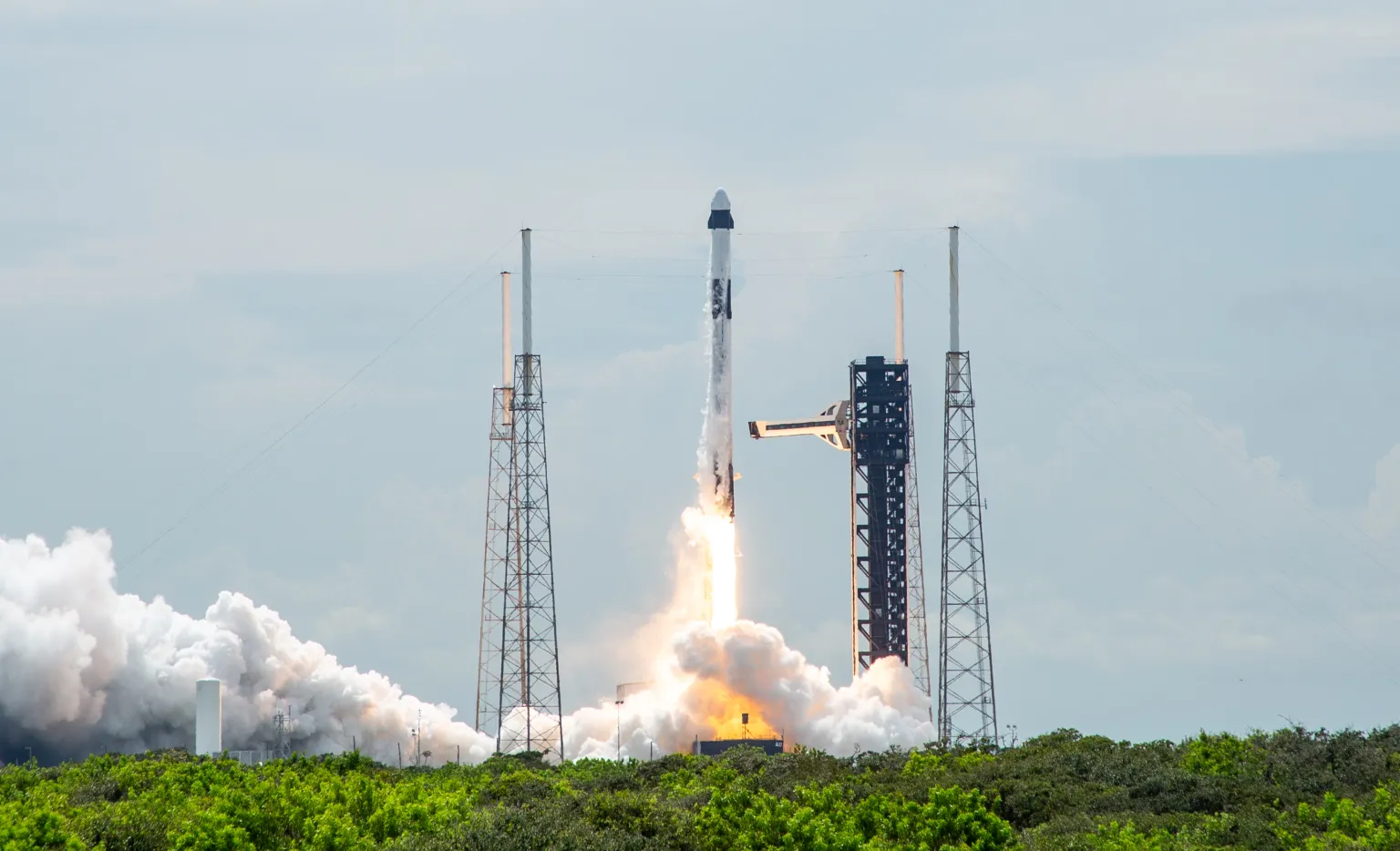
    SpaceX launched the Falcon 9 rocket with 21 Starlink satellites aboard on Wednesday at 10:27 am EST from the Launch Complex 39A (LC-39A) at NASAโ€™s Kennedy Space Center, reported Spaceflight Now. Of these 21 satellites, 13 are equipped to provide text and data cellphone services.

    The first stage of the Falcon 9 rocket returned to Earth and landed on the droneship in the Atlantic Ocean around 8 minutes after the liftoff. The rocket’s 418 launch was the third launch of this particular booster. The Falcon 9 rocket successfully deployed the satellites into lower Earth orbit 65 minutes after the liftoff.

    These 21 satellites are now part of the world’s largest satellite constellation, Starlink, which had around 7000 active satellites in low Earth orbit (LEO) as of December 2024, according to the Starlink launch statistics website.

    You can watch the launch video below!

  • SpaceX Launches GSAT-N2 for ISRO, Boosting India’s High-Speed Communication Network

    SpaceX Launches GSAT-N2 for ISRO, Boosting India’s High-Speed Communication Network

    SpaceX successfully launched the GSAT-N2 communication satellite, also known as GSAT-20, from Cape Canaveral Space Force Station in Florida on November 19, 2024, at 12:01 AM IST, reported the Hindustan Times. The launch marks a major collaboration between SpaceX and the Indian Space Research Organisation (ISRO) through its commercial arm, NewSpace India Limited (NSIL). The satellite was placed into orbit 34 minutes after liftoff.

    The GSAT-N2 satellite, weighing around 4,700 kg, was deployed aboard a Falcon 9 rocket into a Geosynchronous Transfer Orbit (GTO). Operational control has been transferred to ISRO’s Master Control Facility (MCF). The satellite aims to enhance India’s communication infrastructure, especially in remote and underserved regions.

    GSAT-N2 is designed to provide high-throughput communication across India, operating in the Ka-band for faster and more reliable data transmission. It features 32 user beams, including eight narrow spot beams for the Northeast and 24 wide beams for the rest of the country.

    With a throughput of around 48 Gbps, it improves broadband access and enables in-flight internet connectivity for commercial airlines. The satellite has an expected operational lifespan of approximately 14 years.

    Technically, GSAT-N2 uses a multi-beam architecture to maximize frequency reuse and overall throughput. It carries three 2.5-meter parabolic deployable reflectors, a bipropellant chemical propulsion system for orbital adjustments, and sensors such as Sun and Earth sensors to maintain precise attitude control.

    The launch represents a significant milestone for India’s space partnerships, signaling a shift from traditional reliance on providers like Arianespace to international commercial firms. Union Minister Jitendra Singh highlighted the potential for this collaboration to improve internet service delivery nationwide.

    In summary, the successful deployment of GSAT-N2 not only strengthens India’s communication capabilities but also sets the stage for future international collaborations in space technology, meeting the growing demand for high-speed connectivity across the country.

  • NASA’s SpaceX Crew-8 Returns Safely to Earth After Nearly Eight Months on ISS

    NASA’s SpaceX Crew-8 Returns Safely to Earth After Nearly Eight Months on ISS

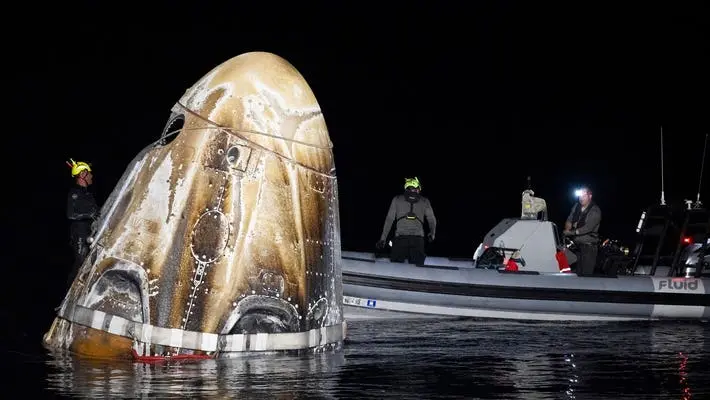
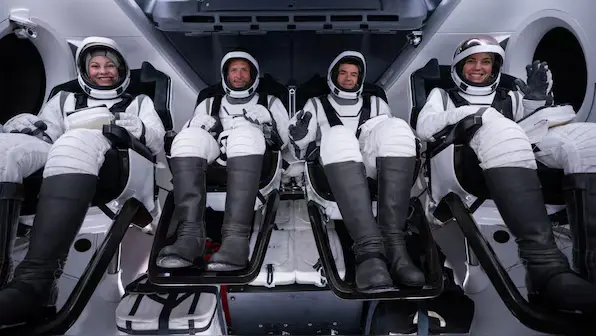
    NASA’s SpaceX Crew-8 astronauts returned to Earth aboard the SpaceX Dragon spacecraft at 3:29 a.m. EDT on October 25, 2024, splashing down off Pensacola, Florida, reported Forbes. The crew included NASA astronauts Matthew Dominick, Michael Barratt, and Jeanette Epps, and Roscosmos cosmonaut Alexander Grebenkin. Recovery teams from NASA and SpaceX secured the spacecraft promptly after landing.

    The astronauts spent nearly eight months aboard the International Space Station, completing research, maintenance, and other mission objectives. The mission, originally planned for two months, was extended due to delays in a Boeing Starliner mission carrying astronauts Sunita Williams and Butch Wilmore.

    During routine medical assessments after splashdown, one astronaut required further evaluation. All four astronauts were taken to a hospital in Pensacola. Three have since been discharged, while the fourth remains under observation in stable condition. NASA has not disclosed the identity or the medical details of the astronaut to protect privacy.

    Crew-8 launched on March 3, 2024, atop a SpaceX Falcon 9 rocket. The mission delivered the astronauts safely to the ISS, where they participated in ongoing research and station maintenance. The extended mission allowed continued support of ISS operations during the Starliner delay.

    The Boeing Starliner spacecraft recently returned uncrewed after docking issues, and NASA now plans to bring Williams and Wilmore back using the upcoming Crew-9 Dragon mission. This adjustment frees up two seats for the next SpaceX flight, which will carry NASA astronaut Nick Hague and Roscosmos astronaut Aleksandr Gorbunov.

    The successful return of Crew-8 demonstrates the continued partnership between NASA and SpaceX, maintaining ISS operations and safely rotating crews despite scheduling challenges and technical delays.

  • SpaceXโ€™s Starship Booster Caught Mid-Air by โ€˜Mechazillaโ€™ in Historic First

    SpaceXโ€™s Starship Booster Caught Mid-Air by โ€˜Mechazillaโ€™ in Historic First

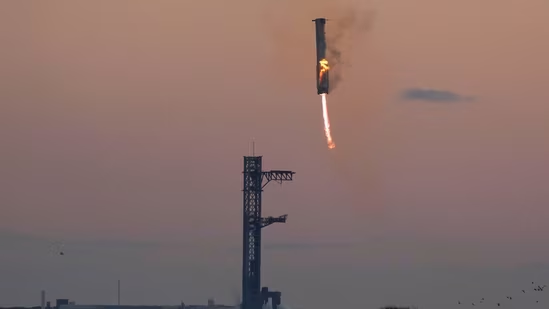
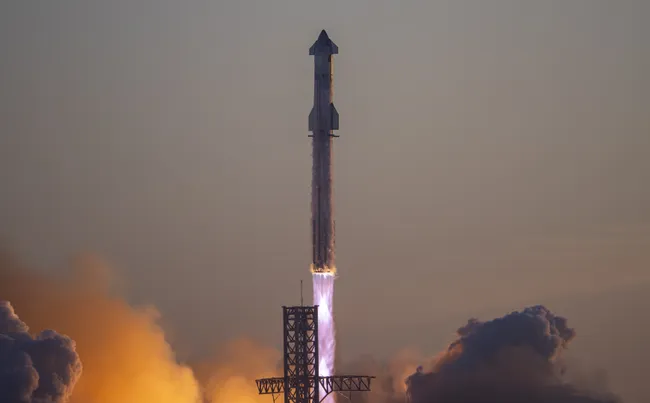
    SpaceX has pulled off one of its boldest feats yet, catching the massive Super Heavy booster of its Starship rocket mid-air with a set of giant mechanical arms. The attempt, carried out on October 13, 2024, at the company’s Starbase launch site in Boca Chica, Texas, marked the first time a booster was successfully caught instead of landing in the ocean.

    The milestone came during the fifth uncrewed test flight of Starship, the most powerful rocket ever built. The two-stage vehicle consists of the 230-foot Super Heavy booster and the Starship spacecraft, both powered by SpaceX’s next-generation Raptor engines.

    In earlier tests, the booster splashed down at sea and had to be retrieved, a time-consuming and costly process. By using the launch tower’s mechanical arms, a system SpaceX calls “Mechazilla,” the company has taken a major step toward fully reusing its largest rocket.

    SpaceX shared a video of the catch on X, showing the giant arms clamping around the descending booster in real time. “Thousands of distinct vehicle and pad criteria had to be met prior to catching the Super Heavy booster. Thanks to the tireless work of SpaceX engineers, we succeeded with a catch on our first attempt,” the company said in its post.

    This success brings SpaceX closer to its long-term goal of rapid rocket reusability, a cornerstone of lowering launch costs. The achievement is particularly important for upcoming missions, including NASA’s Artemis program to return astronauts to the Moon, which will rely on versions of Starship for lunar landings.

    The Starship system is also central to SpaceX’s long-term ambitions of sending humans to Mars. By catching and quickly reusing boosters, the company aims to launch Starship more frequently, reducing turnaround times and costs.

    With four test flights already behind it, this fifth mission demonstrated the progress SpaceX has made in just over a year since Starship’s first launch attempt in April 2023. The company says further refinements are ahead, but the mid-air catch has set a new benchmark for rocket recovery.

  • SpaceX Crew-9 Docking Complete as Dragon Freedom Joins International Space Station

    SpaceX Crew-9 Docking Complete as Dragon Freedom Joins International Space Station

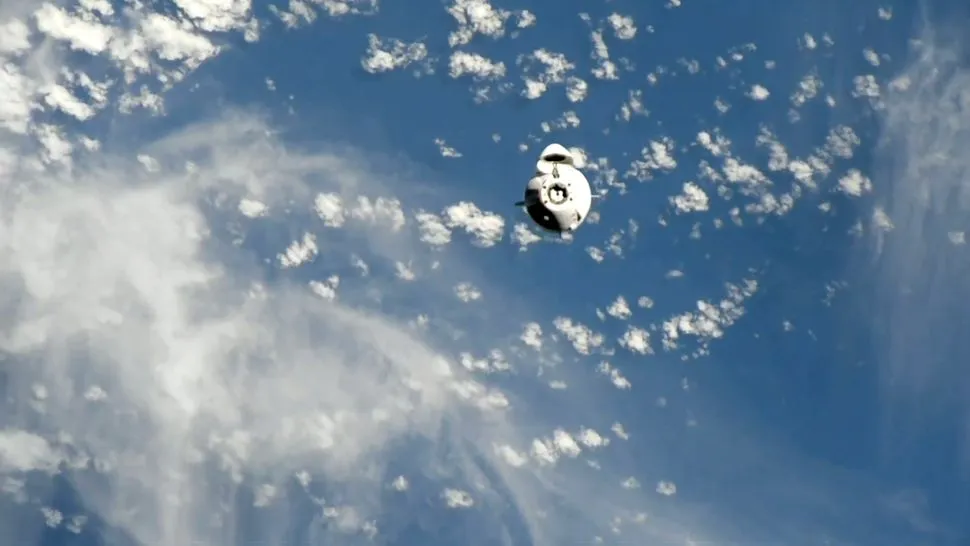
    NASA and SpaceX’s Crew-9 mission has successfully arrived at the International Space Station (ISS). The Dragon Freedom spacecraft docked with the station’s forward-facing Harmony module port on Sunday, September 29, at 5:30 p.m. EDT (2130 GMT), according to Space.com.

    The hatches between the two spacecraft were opened at about 7:15 p.m. EDT (2315 GMT), followed by welcoming remarks from astronauts aboard the ISS. NASA streamed the docking live on YouTube.

    The Crew-9 mission launched a day earlier, on Saturday, September 28, at 1:17 p.m. EDT, from Space Launch Complex-40 at Cape Canaveral Space Force Station in Florida. The mission marks one of the first crewed launches from this newly prepared pad.

    Crew-9’s main objective is to support the safe return of NASA astronauts Sunita Williams and Butch Wilmore, who have been on the ISS since June after technical problems left Boeing’s Starliner spacecraft unable to bring them back. Their originally scheduled 8-day mission has now stretched to months, with their return planned for early 2025.

    Alongside this priority task, the Crew-9 astronauts will also support hundreds of ongoing scientific experiments aboard the ISS, contributing to long-duration human spaceflight research.

  • SpaceX Crew-9 Launches with Two Astronauts to the ISS, Mission to Bring Back Stranded Crew

    SpaceX Crew-9 Launches with Two Astronauts to the ISS, Mission to Bring Back Stranded Crew

    SpaceX’s Crew-9 mission successfully launched two astronauts to the International Space Station (ISS) on Saturday at 1:17 p.m. EDT. The launch took place from Space Launch Complex-40 (SLC-40) at Cape Canaveral Space Force Station in Florida, with the astronauts riding aboard SpaceX’s Dragon spacecraft Freedom atop a Falcon 9 rocket. The event was broadcast live on NASA’s YouTube channel and NASA+ streaming platform.

    The spacecraft is set to dock autonomously with the ISS’s forward-facing port of the Harmony module on Sunday, September 29, at around 5:30 p.m. The crew consists of NASA astronaut Nick Hague and Roscosmos astronaut Aleksandr Gorbunov.

    Originally planned as a four-crew mission, Crew-9 was reduced to two after NASA astronauts Zena Cardman and Stephanie Wilson were reassigned. Their seats were reserved for astronauts Sunita Williams and Butch Wilmore, who have been stranded aboard the ISS since June following failures with Boeing’s Starliner spacecraft. Their mission, initially expected to last 8 days, has now stretched to 8 months.

    The primary goal of Crew-9 is to ensure the safe return of Williams and Wilmore by February 2025. In addition to this, the mission will support around 200 scientific investigations aboard the ISS. Research topics include studying moisture effects on plants grown in space, understanding blood clotting in microgravity, and examining eyesight changes in astronauts during long-duration missions, NASA reported.

    The Crew-9 mission continues the ongoing partnership between NASA, SpaceX, and international partners to maintain operations aboard the ISS while resolving technical challenges that have delayed the Starliner program.

  • Starlink Satellitesโ€™ Radio Waves Disrupt Astronomy, Threatening Observations of Deep-Sky Objects

    Starlink Satellitesโ€™ Radio Waves Disrupt Astronomy, Threatening Observations of Deep-Sky Objects

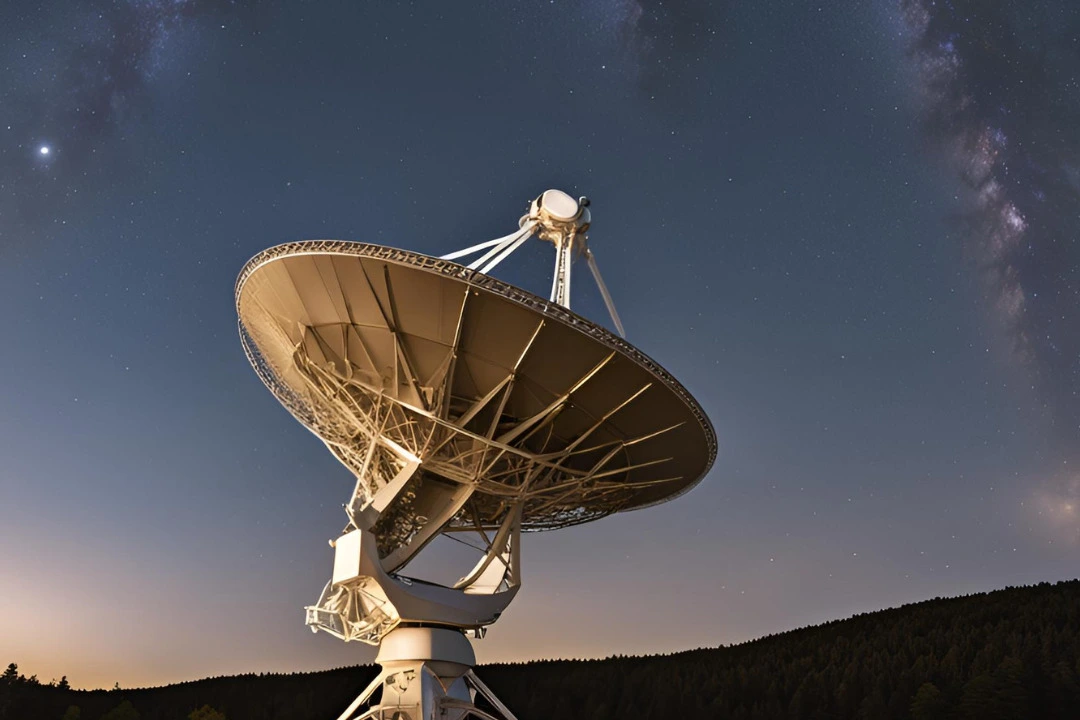
    Radio waves from SpaceX’s Starlink satellites are creating challenges for astronomers by interfering with radio telescopes, according to a BBC report. The new v2 Starlink satellites emit stronger radio signals than their predecessors, making it difficult to observe galaxies, nebulae, star clusters, and other deep-sky objects.

    This disruption affects researchers who rely on radio telescopes to capture electromagnetic emissions from these distant celestial bodies.

    The Netherlands Institute for Radio Astronomy (ASTRON) highlighted the problem during recent observations. Deep-sky objects emit light across the electromagnetic spectrum, and radio telescopes are essential for studying parts of the universe invisible to optical telescopes. ASTRON noted that the stronger radiation from the V2 satellites is creating significant obstacles for radio astronomy.

    SpaceX, led by Elon Musk, has launched over 7,000 Starlink satellites, controlling around two-thirds of all active satellites in Earth’s orbit. These satellites are part of SpaceX’s mission to provide global internet services and reduce the digital divide. The company plans to continue launching about 40 satellites every week, which will further increase electromagnetic emissions in orbit.

    Astronomers warn that without action, artificial satellites could dominate the night sky. Professor Jessica Dempsey, director of ASTRON, told the BBC, “The only constellations we will see will be human-made.” She stressed the need for immediate measures to limit interference from satellite constellations and protect astronomical research.

    To address the issue, scientists suggest solutions such as adjusting satellite frequencies, shielding emissions, or limiting launches during critical observations. The growing number of satellites underscores the tension between advancing global internet services and preserving the ability to study the universe through radio astronomy.

    Source: Bright unintended electromagnetic radiation from second-generation Starlink satellites

  • Polaris Dawn Crew Returns to Earth After Historic Private Spacewalk Mission

    Polaris Dawn Crew Returns to Earth After Historic Private Spacewalk Mission

    SpaceX’s Polaris Dawn

    crew has safely returned to Earth after completing a groundbreaking five-day mission that included the first commercial spacewalk. The Dragon spacecraft carrying the four-member team splashed down in the Gulf of Mexico near Florida’s Dry Tortugas at 03:37 local time (07:37 GMT) on September 15, 2024, following a launch from NASA’s Kennedy Space Center on September 10.

    The mission, funded by billionaire entrepreneur Jared Isaacman, tested new technologies and set multiple records in human spaceflight.

    SpaceX confirmed the successful landing in a post on X, formerly known as Twitter, writing, “Welcome back to Earth.” The splashdown was broadcast live on YouTube, with viewers watching as recovery teams approached the capsule. The hatch was opened at about 4:20 a.m. local time after the spacecraft was lifted onto a recovery ship.

    The mission launched atop a Falcon 9 rocket from Launch Complex 39A at Kennedy Space Center at 5:23 a.m. EDT (0923 GMT) on September 10. The launch had been postponed several times due to helium leaks and poor weather.

    Once underway, the crew entered a high elliptical orbit, reaching more than 700 km above Earth, placing them inside the Van Allen radiation belts farther than any crewed mission since the Apollo program more than 50 years ago.

    Historic Spacewalk

    On September 12, Commander Jared Isaacman and SpaceX engineer Sarah Gillis carried out the first-ever private spacewalk. Unlike previous missions, Dragon does not have an airlock, meaning the entire crew cabin was depressurized. The activity lasted about an hour, with the astronauts wearing new SpaceX-designed extravehicular suits. These suits were adapted from the intravehicular models previously used during launches and reentries.

    “SpaceX, back at home we all have a lot of work to do, but from here, Earth sure looks like a perfect world.” Said Mission Commander Jared Isaacman during the spacewalk.

    The Polaris Dawn team consisted of Jared Isaacman, SpaceX engineers Sarah Gillis and Anna Menon, and retired U.S. Air Force pilot Scott Kidd. Isaacman financed the mission, which is part of the larger Polaris Program, a series of private missions intended to test technologies for future long-duration space travel.

    Records and Firsts

    • Jared Isaacman and Sarah Gillis became the first humans to complete a private spacewalk.
    • Sarah Gillis and Anna Menon became the first women to travel to such a high orbital altitude.
    • Sarah Gillis became the first person to play a violin in space.
    • The crew tested Starlink laser-based communications in orbit, marking the first time the technology was used during human spaceflight.

    The mission traveled farther from Earth than any crewed mission since Apollo, reaching beyond 700 km. Polaris Dawn is the first of three planned missions under the Polaris Program. Future flights are expected to continue testing new EVA suits and medical research in microgravity and eventually fly aboard SpaceX’s Starship once the vehicle is ready for crewed missions.

    With its safe return, Polaris Dawn has demonstrated the potential for privately funded missions to push human spaceflight beyond the International Space Station and lay the groundwork for deeper exploration.

  • Starship will land uncrewed on Mars by 2026, says Elon Musk, CEO of SpaceX

    Starship will land uncrewed on Mars by 2026, says Elon Musk, CEO of SpaceX

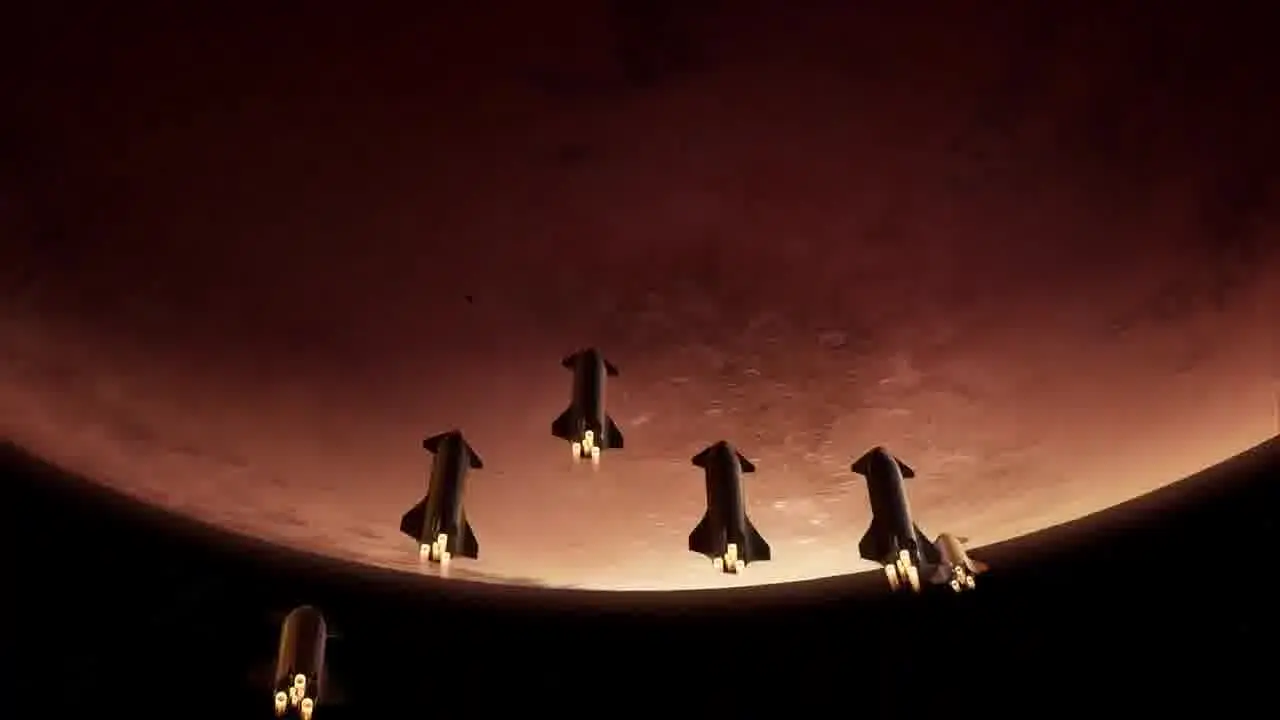
    Elon Musk has announced a new schedule for his Mars ambitions, saying the first uncrewed SpaceX Starship missions could launch in 2026, followed by the first crewed flights as early as 2028. Musk shared the timeline on September 6 in a post on X (formerly Twitter).

    According to Musk, the first flights in two years will aim to prove that Starship can land safely on Mars. If those succeed, the company will attempt to send astronauts on the next launch window four years from now. Looking further ahead, Musk said he envisions a city on Mars within 20 years, part of his long-term goal to make humanity a “multi-planetary species.”

    Starships second test flight carried in November 2023.
    Starship’s second test flight in November 2023. Image credit: SpaceX

    Starship is the world’s largest and most powerful rocket, designed to carry both astronauts and cargo. The vehicle is fully reusable and made of stainless steel alloy to reduce weight and improve efficiency. It consists of two stages: the Super Heavy booster and the Starship upper stage, both powered by SpaceX’s Raptor engines.

    So far, SpaceX has carried out four Starship test flights: two in 2023 and two in 2024. The company is preparing for its fifth flight, though no date has been confirmed. None of the test flights have yet reached orbit, but Musk says progress is being made quickly.

    SpaceX argues that reusability is the only way to make Mars travel affordable. Musk noted that today it costs around $1 billion per ton to deliver cargo to Mars. To build a city, he said, that figure must fall to $100,000 per ton. “Making life multiplanetary is fundamentally a cost per ton to Mars problem,” Musk wrote on X, calling the challenge “extremely difficult but not impossible.”

    Musk’s plan spans two decades:

    • 2026: An uncrewed Starship launches to Mars to test landing systems.
    • 2028: First crewed missions, if early landings succeed.
    • 2040s: A permanent city on Mars, supplied regularly by fleets of Starships.

    Musk also suggested that increasing the flight rate of Starship will be central to lowering costs. Each Starship is designed to fly multiple times, allowing SpaceX to scale launches in a way no other rocket has achieved.

    Founded in 2002, SpaceX has become the leading private space company, known for its Falcon 9 and Falcon Heavy rockets, as well as the Dragon spacecraft that regularly carries astronauts to the ISS. The company also operates Starlink, a satellite internet network that provides coverage around the world.

    Musk, who Forbes lists as the world’s richest person with a net worth of over $407 billion as of August 2025, has repeatedly said Mars settlement is his ultimate goal.

    Despite the bold timeline, experts note that SpaceX still faces technical and financial hurdles before Starship is ready for interplanetary missions. For now, the focus remains on proving the rocket can reach orbit, return safely, and fly again. These are the steps that will determine whether Musk’s Mars vision is achievable.

  • SpaceX Launches Historic Polaris Dawn Mission, First Private Spacewalk Planned in Orbit

    SpaceX Launches Historic Polaris Dawn Mission, First Private Spacewalk Planned in Orbit

    SpaceX launched the Polaris Dawn mission aboard the SpaceX Falcon 9 rocket early Saturday, September 10, 2024, sending a crew of four into orbit on a groundbreaking private flight that achieved the first commercial spacewalk before returning safely to Earth.

    The Falcon 9 rocket lifted off at 5:23 a.m. EDT (0923 GMT) from Launch Complex 39A at NASA’s Kennedy Space Center in Florida, following multiple delays caused by technical checks and weather concerns.

    The mission is funded by billionaire entrepreneur Jared Isaacman, founder and CEO of Shift4 Payments, who commanded the flight. His crewmates were SpaceX engineers Sarah Gillis and Anna Menon, along with former U.S. Air Force pilot Scott Poteet. Together, they flew aboard the Crew Dragon spacecraft into a highly elliptical orbit designed to push the limits of commercial human spaceflight.

    Polaris Dawn reached a peak altitude of 1,408 kilometers (870 miles), the highest Earth orbit for astronauts since the Apollo era. The crew passed through the Van Allen radiation belts, marking the first human trip through that region in more than 50 years. Gillis and Menon also became the first women to travel this far from Earth.

    The launch, originally scheduled for August 26, 2024, was repeatedly postponed. Engineers discovered helium leaks in equipment meant to separate from the rocket, and poor weather forecasts in potential splashdown zones forced further delays on August 28 and 29. The successful liftoff finally came on September 10, 2024.

    On the third day of the mission, Isaacman and Gillis performed the first-ever commercial Extravehicular Activity (EVA) wearing new spacesuits developed by SpaceX in just two and a half years.

    Isaacman spent nearly eight minutes outside Dragon, followed by Gillis for just over seven minutes. The entire crew was briefly exposed to space vacuum during the operation, setting another record for private human spaceflight.

    Beyond the EVA, the crew conducted medical and scientific experiments, including research on spaceflight-associated neuro-ocular syndrome (SANS), radiation monitoring, and other health effects. They also tested Starlink’s laser-based communications system in orbit.

    In a symbolic moment, Gillis played a violin solo from space to support St. Jude Children’s Research Hospital, continuing Isaacman’s long-standing fundraising efforts.

    After five days in orbit, Polaris Dawn splashed down safely in the Gulf of Mexico on September 15, 2024. Menon was the first to exit the capsule, followed by Gillis, Poteet, and Isaacman.

    The mission’s success earned the Polaris Dawn team the 2025 John L. “Jack” Swigert Jr. Award for Space Exploration, honoring achievements such as record-breaking altitude, the first commercial spacewalk, and pioneering communications tests.

    Polaris Dawn is only the beginning of the broader Polaris Program, a series of private missions designed to advance human spaceflight. Future flights may include a study of options for servicing the Hubble Space Telescope and the first crewed launch aboard SpaceX’s Starship, pending its readiness.