
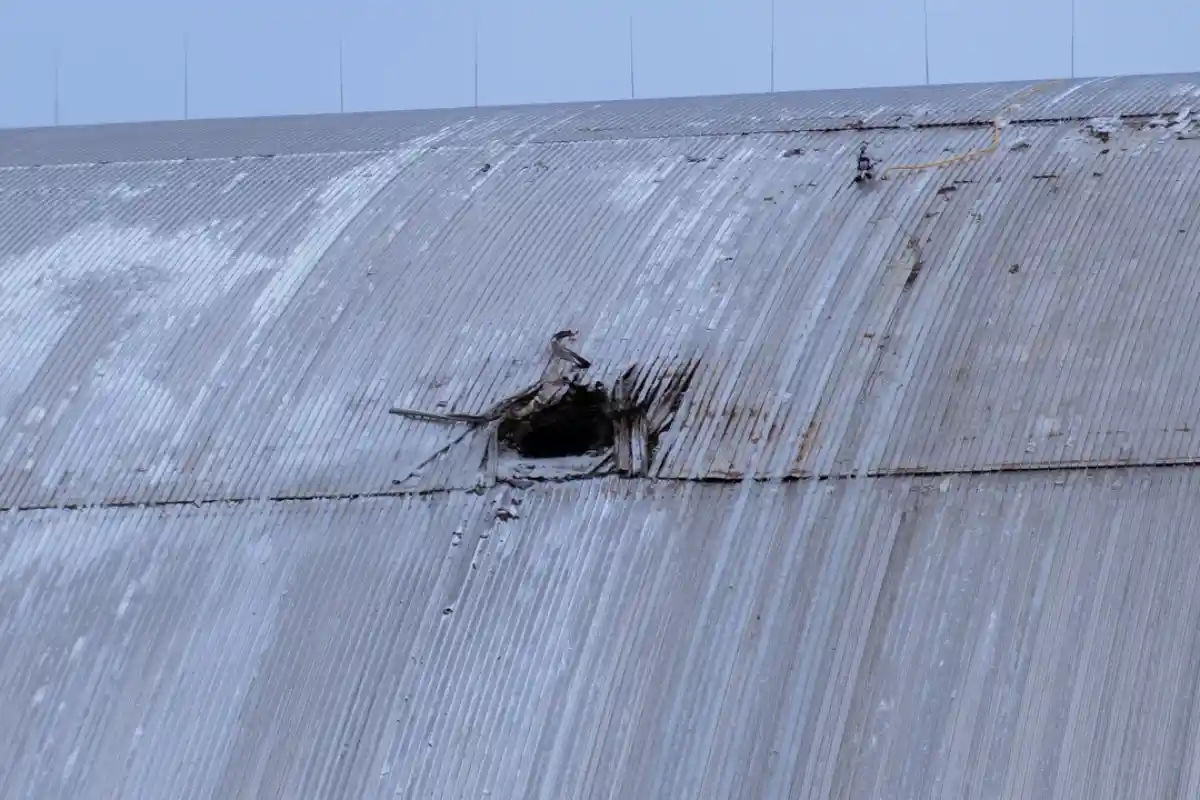
A Russian drone strike in February tore a 15-square-meter hole in Chernobyl’s protective steel dome, and inspectors now say the structure is no longer airtight, raising questions about whether it can protect the site for decades to come as planned. The International Atomic Energy Agency (IAEA) reported that the February 14 attack damaged the outer layer of the New Safe Confinement, the massive steel arch built to contain radioactive debris from the 1986 disaster.
While the inner concrete shell stayed intact and radiation levels remain normal, new gaps in the structure could let in weather and wildlife, speeding up corrosion and wear.
The steel dome was supposed to last 100 years. Workers moved it into place in 2016 to replace an aging concrete shell that covered reactor four after the April 26, 1986, explosion and fire. That accident killed more than 100 workers and spread radioactive dust across Europe, forcing thousands from their homes and creating a 30-kilometer zone that remains empty today.
The drone was heading toward Ukraine’s power grid when it crashed into the roof and started a fire. Ukraine blamed Russia; Russia denied responsibility. Crews patched the hole, but inspections found openings large enough to compromise the dome’s primary safety functions.
The damage creates a new problem for teams trying to remove 200 tons of melted fuel still inside the reactor. That work already stretches into the 2060s, and any setback could push the timeline back further. The dome needs to stay stable and maintain low air pressure to keep radioactive particles from drifting out while machines handle the dangerous cleanup work.
Fixing the structure will need cranes, steel, and money from other countries, all while the war continues. For now, radiation readings stay normal, and there is no immediate threat to public safety. But the long-term worry remains.
The site survived nearly 40 years after the disaster, only to face new damage from a conflict that has nothing to do with nuclear safety. Wildlife still wanders through the empty zone, which has become an unexpected nature reserve. The weakened dome shows that old disasters need constant attention, even when the world is focused on other things.

Leave a Reply