
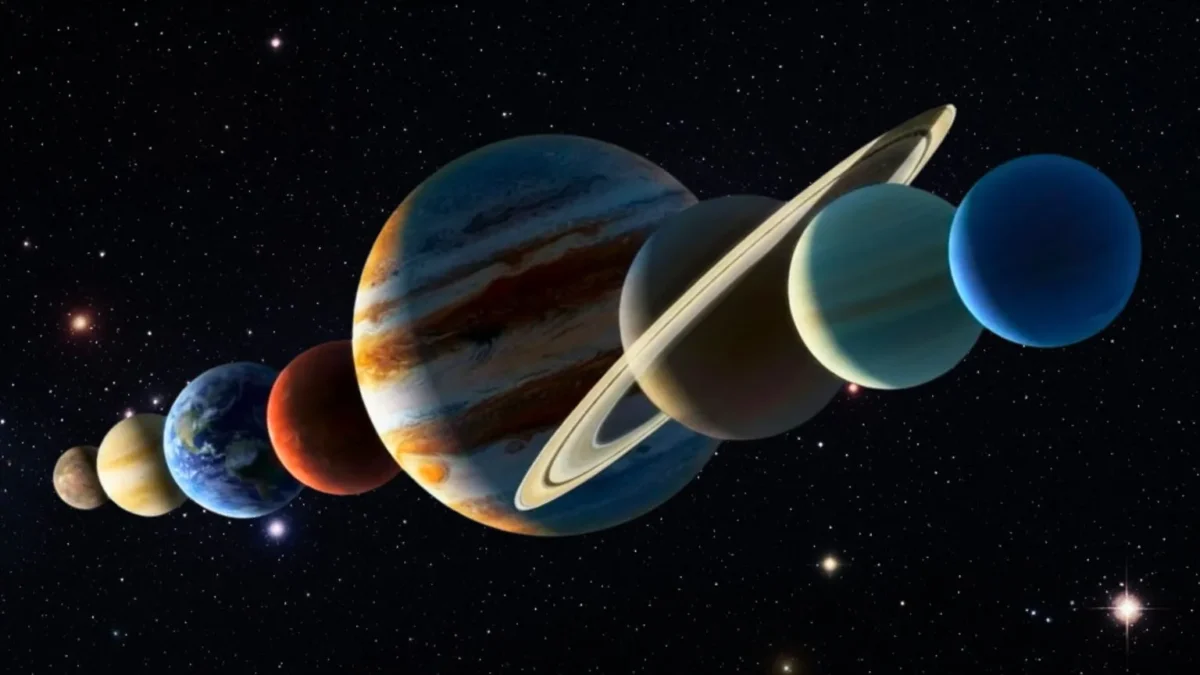
On February 28, 2026, a rare planetary alignment will be visible in the evening sky. Mercury, Venus, Saturn, Jupiter, Uranus, and Neptune will appear in the sky after sunset. Four of them will be visible to the naked eye, making this one of the most accessible multi-planet events in recent years.
The best time to observe the alignment is about 30 minutes after local sunset. Mercury, Venus, Saturn, and Neptune will appear low in the western sky, so a clear view of the horizon is essential. Jupiter will be higher in the southeastern sky and remain visible for most of the night. Uranus will sit higher than the western planets but will require binoculars to see.
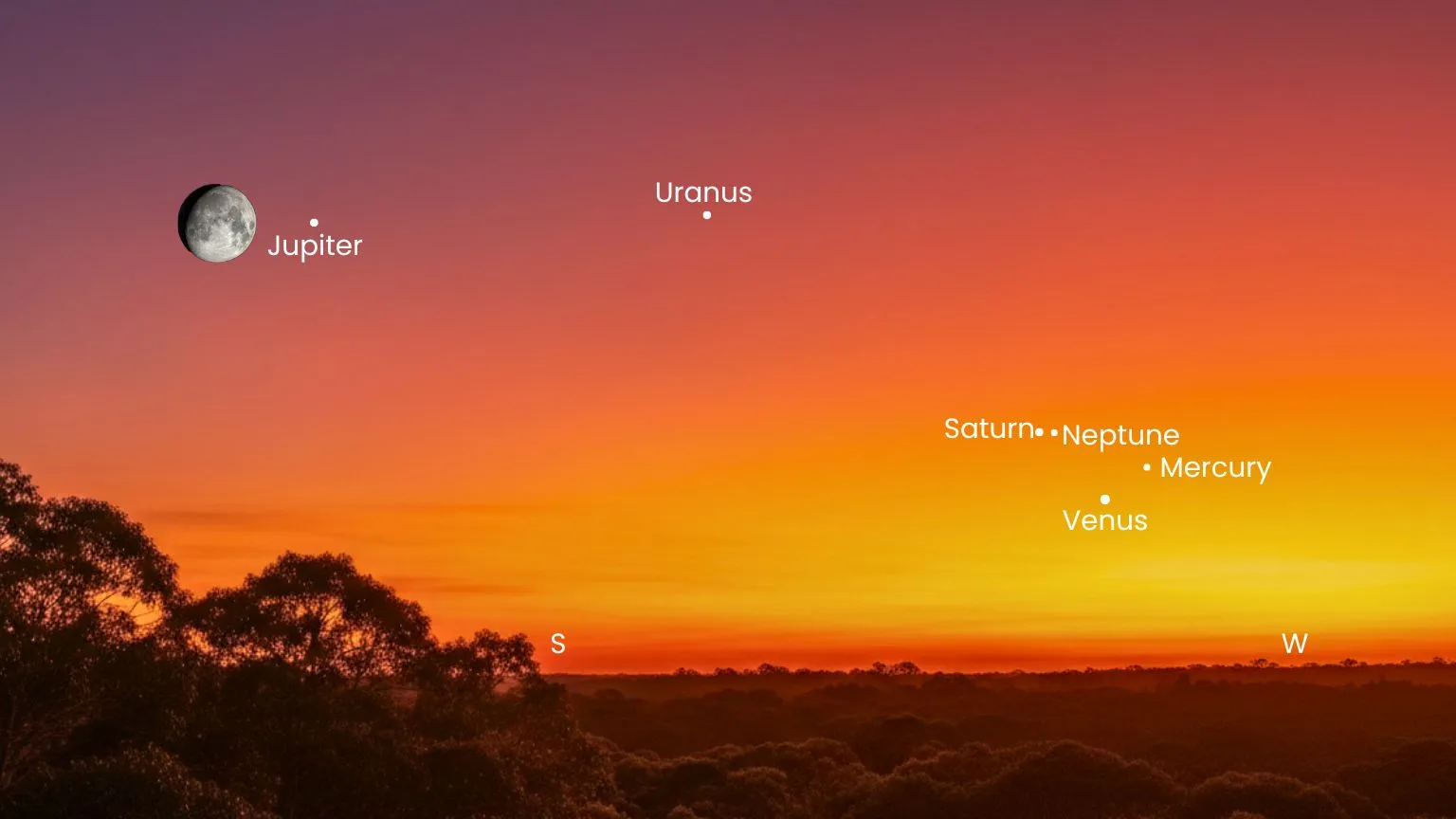
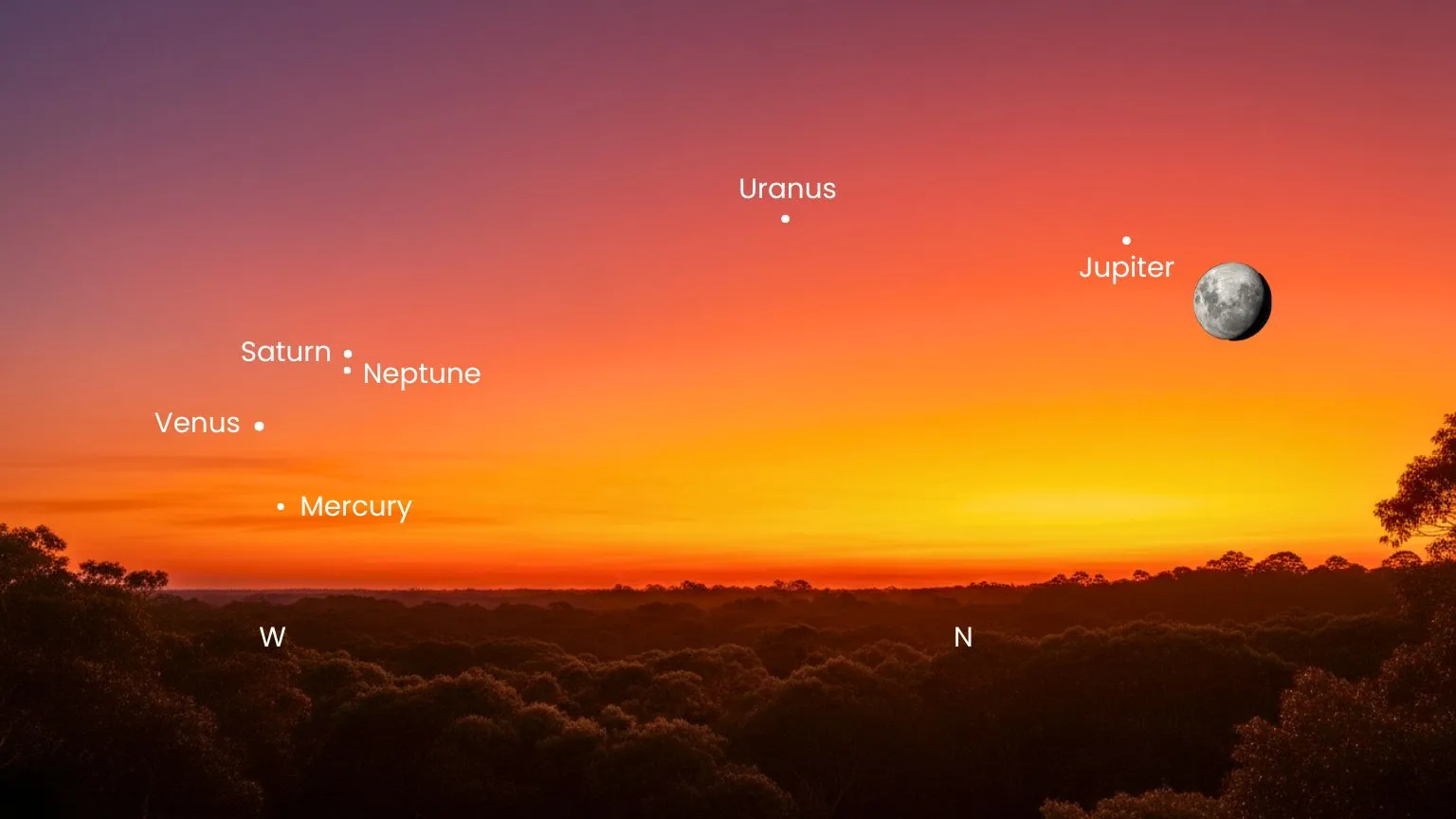
The planets appear grouped because they orbit the Sun along nearly the same plane. From Earth, this causes them to follow a common path across the sky called the ecliptic. On this date, the planets will form a gentle arc stretching from the western horizon toward the southeast.
Mercury and Venus will set first, followed by Saturn and Neptune. Uranus will remain visible a bit longer, while Jupiter will continue shining prominently throughout the night. For the best view, begin observing as soon as the sky becomes dark and choose a location with minimal light pollution. A bright Moon near Jupiter may make the fainter planets more difficult to spot.
For more details, see Starwalk.

Leave a Reply