
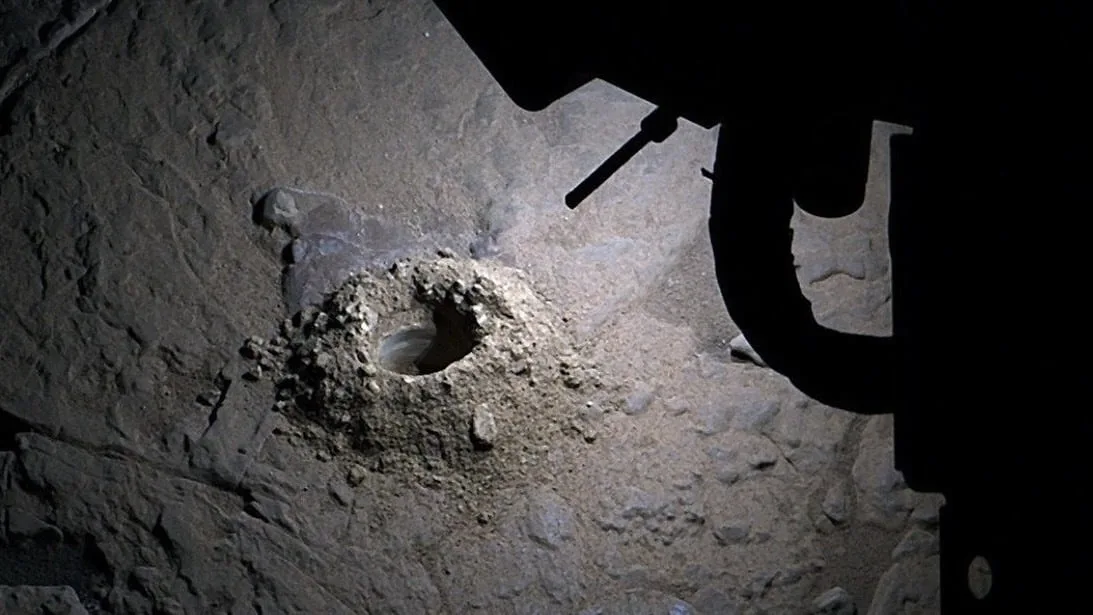
NASA’s Curiosity rover has begun one of the rarest experiments of its entire Mars mission, using the last of a special chemical to test a rock sample for organic molecules at a site called Nevado Sajama. The experiment started in early February 2026, after Mars emerged from a communication blackout with Earth, and could help scientists better judge whether Mars once supported life.
Curiosity drilled into fine-grained sedimentary rock near the base of Mount Sharp, an area believed to have formed long ago in the presence of water. At night, the rover used small LED lights on its robotic arm to illuminate the drill hole, allowing engineers to study rock layers without harsh shadows. The real focus, however, sits inside Curiosity’s onboard lab.
The rover mixed powdered rock with a solvent known as TMAH (tetramethylammonium hydroxide). This liquid helps release carbon-based molecules that standard heating methods often miss. Curiosity carried only two tiny cups of this solvent when it landed in 2012. The first was used in 2020. This test uses the final supply, making it a one-time chance.
Scientists chose the site carefully. The rock contains clay minerals, which can help preserve organic material over long periods. Similar minerals on Earth often trap chemical traces linked to life. While organics can form without biology, finding them in the right setting helps scientists narrow the story of ancient Mars.
The team practiced every step before committing the sample. Once Curiosity begins wet chemistry, there is no redo. Two of the three heating stages have already finished. Each stage lets the solvent react at a different temperature, mirroring lab work on Earth and reducing earlier sources of error.
Curiosity last ran this type of test nearly six years ago at a site called Mary Anning. That effort revealed a wider mix of organic molecules than expected and pushed scientists to redesign the method. Years of testing followed, slowed by the pandemic, until the team found the right moment to try again.

Leave a Reply