
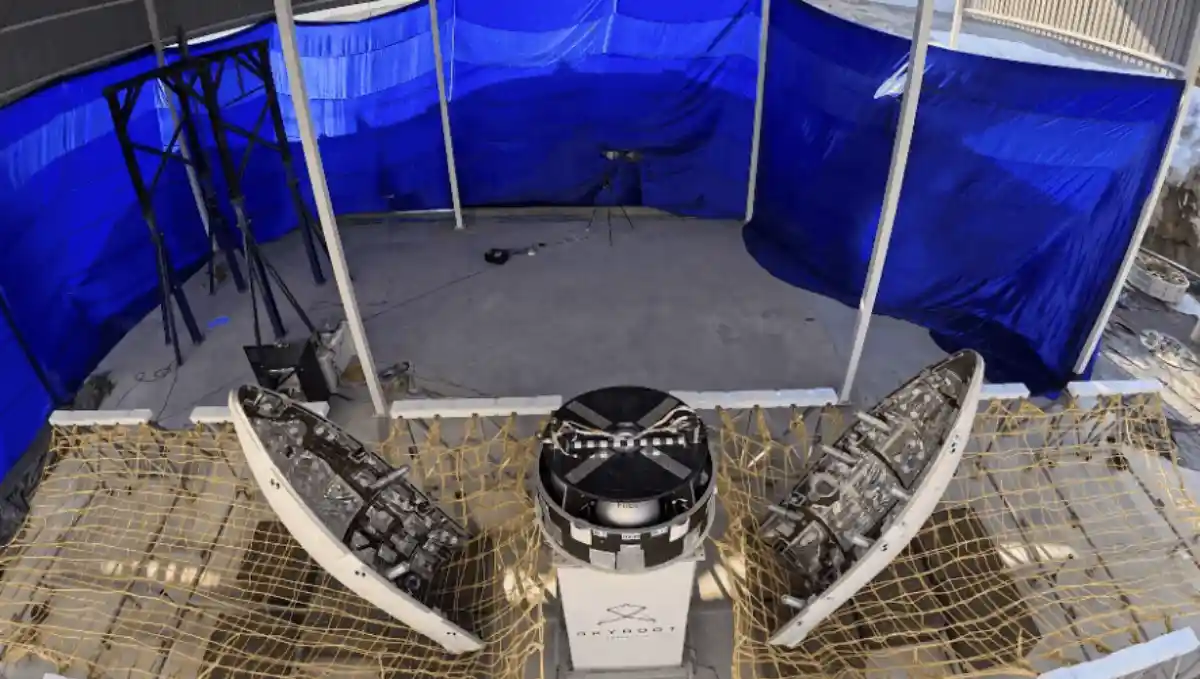
Vikram-1, the launch vehicle developed by Skyroot Aerospace, has completed all ground tests for its payload fairing separation system, marking a major step toward its first flight from Sriharikota. The mission was earlier scheduled for January 2026, but the updated timeline now points to a later launch window as final preparations continue.
The payload fairing plays a key role during liftoff. It shields satellites from heat, vibration, and pressure as the rocket climbs through the atmosphere. Once the vehicle crosses roughly 100 kilometers in altitude, these conditions drop sharply. At that stage, the fairing must separate cleanly to shed extra weight and allow the rocket to continue efficiently.
Engineers tested that sequence on the ground. The fairing split and moved away exactly as planned, with precise timing and stable motion. This step is sensitive. Any issue during separation can affect the rocket’s balance or damage the payload.
Vikram-1 uses a low-shock separation system instead of standard pyro-based methods. Traditional systems rely on small explosive charges, which can create sudden stress. In contrast, this design reduces mechanical shock and allows repeat testing before flight. That gives the team tighter control over performance and consistency.
The delay from the earlier January 2026 target reflects the detailed testing and validation still underway. Private launch companies often adjust timelines as they move from development to flight readiness. Each subsystem must pass strict checks before integration.
With all ground separation tests now complete, Vikram-1 moves closer to its debut. This mission will mark Skyroot Aerospace’s first orbital launch, placing it among a small group of private players building launch vehicles.
A successful flight would expand India’s launch capacity for small satellites and add competition in a fast-growing global market.

Leave a Reply