
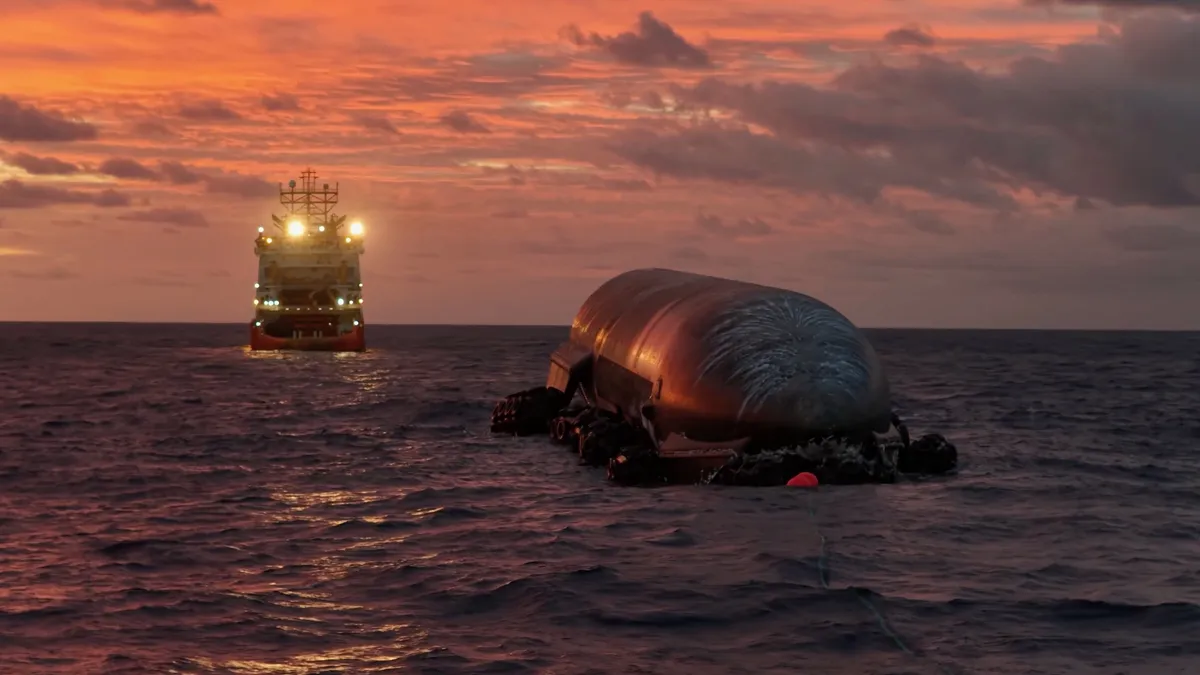
SpaceX is likely to lose its Starship upper stage at sea after an otherwise successful test flight, with Elon Musk confirming on Aug. 7 that recovery efforts in the Indian Ocean are “not looking good” due to worsening conditions. The spacecraft has remained afloat since its July 24 splashdown off Western Australia, but rough seas are now threatening the attempt to tow it back to shore.
Flight 13 marked a turning point for the Starship program. The rocket launched from South Texas and completed a planned suborbital mission, ending with the upper stage, known as Ship, landing in the Indian Ocean. Unlike earlier tests that ended in explosions or breakups, this vehicle stayed intact after hitting the water and even after tipping over.
That survival prompted SpaceX to attempt something new—recover the spacecraft for direct inspection. Teams began towing the 52-meter vehicle toward port in Western Australia. However, strong waves and unstable sea conditions slowed progress and made control difficult, reducing the chances of a successful recovery.
Even if the vehicle never reaches shore, the mission has already delivered useful results. Musk said engineers captured close-up images of the heat shield and engine sections before conditions worsened. These areas are central to Starship’s design, especially its goal of flying again quickly after landing.
The flight also tested Starship’s role as a heavy satellite launcher. During its time in space, the vehicle deployed 20 Starlink V3 satellites, a larger and more advanced version of SpaceX’s internet spacecraft. The satellites later reentered Earth’s atmosphere, but the test showed how future missions could support much larger constellations.
Musk recently stated that Starship’s heat shield challenge may now be solved, a claim supported by the vehicle’s stable reentry and survival in the ocean. That issue has long been one of the biggest barriers to making the system reusable.
The likely loss of this spacecraft highlights how SpaceX develops new hardware. The company often pushes systems to their limits, accepts losses, and uses real-world data to improve the next version. Flight 13 showed that Starship can survive reentry and splashdown, but it also exposed how difficult ocean recovery remains.
What happens next is clear. SpaceX will focus on making landings more controlled and recoverable, possibly moving toward catching the vehicle back at the launch site in future tests. If that step works, Starship could move closer to routine reuse and frequent launches.
For now, the rocket may be lost to the sea. But the data it returned is already shaping what comes next.
Source:

Leave a Reply