
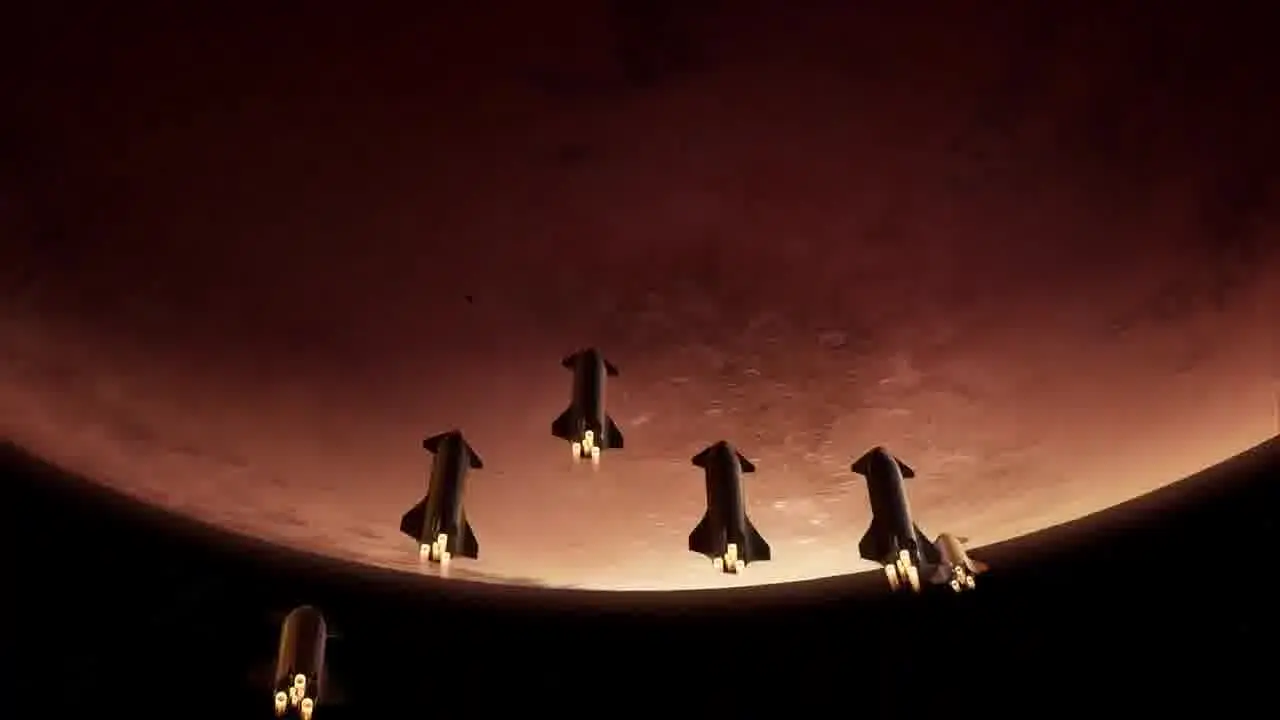
Elon Musk has announced a new schedule for his Mars ambitions, saying the first uncrewed SpaceX Starship missions could launch in 2026, followed by the first crewed flights as early as 2028. Musk shared the timeline on September 6 in a post on X (formerly Twitter).
According to Musk, the first flights in two years will aim to prove that Starship can land safely on Mars. If those succeed, the company will attempt to send astronauts on the next launch window four years from now. Looking further ahead, Musk said he envisions a city on Mars within 20 years, part of his long-term goal to make humanity a “multi-planetary species.”
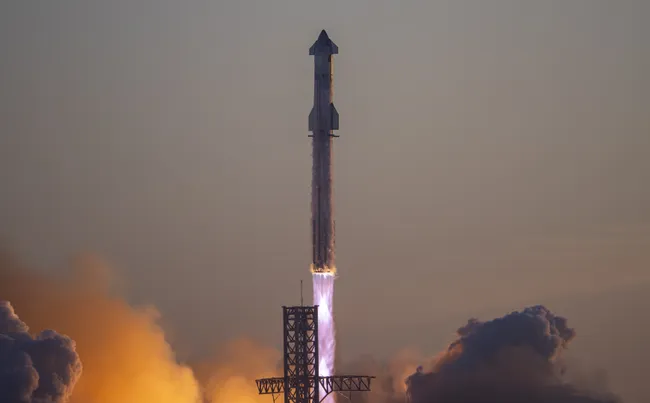
Starship is the world’s largest and most powerful rocket, designed to carry both astronauts and cargo. The vehicle is fully reusable and made of stainless steel alloy to reduce weight and improve efficiency. It consists of two stages: the Super Heavy booster and the Starship upper stage, both powered by SpaceX’s Raptor engines.
So far, SpaceX has carried out four Starship test flights: two in 2023 and two in 2024. The company is preparing for its fifth flight, though no date has been confirmed. None of the test flights have yet reached orbit, but Musk says progress is being made quickly.
SpaceX argues that reusability is the only way to make Mars travel affordable. Musk noted that today it costs around $1 billion per ton to deliver cargo to Mars. To build a city, he said, that figure must fall to $100,000 per ton. “Making life multiplanetary is fundamentally a cost per ton to Mars problem,” Musk wrote on X, calling the challenge “extremely difficult but not impossible.”
Musk’s plan spans two decades:
- 2026: An uncrewed Starship launches to Mars to test landing systems.
- 2028: First crewed missions, if early landings succeed.
- 2040s: A permanent city on Mars, supplied regularly by fleets of Starships.
Musk also suggested that increasing the flight rate of Starship will be central to lowering costs. Each Starship is designed to fly multiple times, allowing SpaceX to scale launches in a way no other rocket has achieved.
Founded in 2002, SpaceX has become the leading private space company, known for its Falcon 9 and Falcon Heavy rockets, as well as the Dragon spacecraft that regularly carries astronauts to the ISS. The company also operates Starlink, a satellite internet network that provides coverage around the world.
Musk, who Forbes lists as the world’s richest person with a net worth of over $407 billion as of August 2025, has repeatedly said Mars settlement is his ultimate goal.
Despite the bold timeline, experts note that SpaceX still faces technical and financial hurdles before Starship is ready for interplanetary missions. For now, the focus remains on proving the rocket can reach orbit, return safely, and fly again. These are the steps that will determine whether Musk’s Mars vision is achievable.

Leave a Reply