
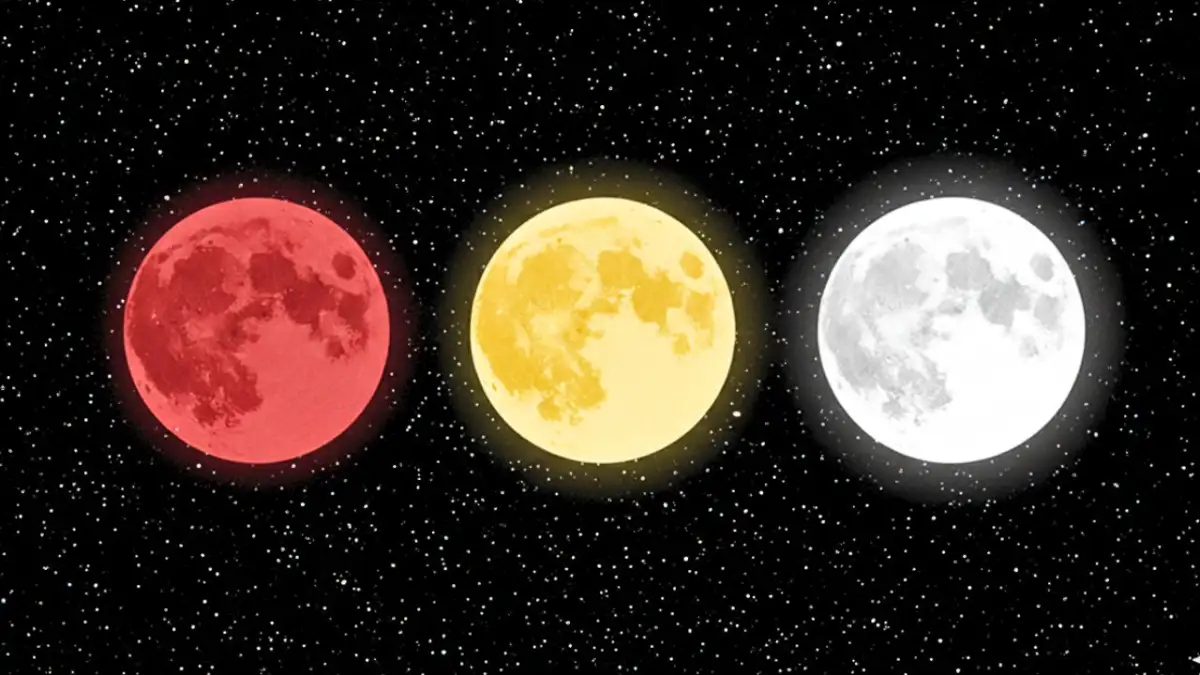
Most people say the Moon is white, but anyone who has watched the sky for more than a few nights knows it changes color. It can look bright white overhead, pale gray through a telescope, soft yellow near the horizon, and even red during a lunar eclipse. These shifts happen because of sunlight, surface material, and Earth’s atmosphere. The Moon itself never changes its natural shade, yet our view of it does, and understanding why is easier than it seems.
The Moon’s True Color
The Moon’s surface is mostly gray. If you could stand on it, you would see a dull mix of gray rock and dust. Astronaut photos confirm this. The bright “white” we see from Earth is just sunlight reflecting off this gray surface. The Moon reflects less light than many people think, but the contrast against the dark sky makes it appear brighter.
Why It Looks White in a Clear Night Sky
When the Moon sits high in the sky, you look at it through a smaller amount of Earth’s atmosphere. Less air means less scattering of light. Sunlight bounces off the Moon and reaches your eyes almost unchanged, so the Moon looks white or light gray. This is the color most people picture.
Why It Turns Yellow or Orange Near the Horizon
When the moon rises or sets, you look at it through a much thicker layer of air. Dust, smoke, and water vapor scatter blue light. The remaining light is more yellow or orange. This effect is the same one that gives us colorful sunsets. The Moon has not changed color. The air in front of it has changed what reaches you.
Why It Turn’s Red
During a lunar eclipse, Earth blocks direct sunlight from reaching the Moon. Some light still bends through Earth’s atmosphere, and this light is mostly red. The Moon then glows with a copper or brick shade. This red moon often makes people think something unusual is happening on the surface, but it is still the same gray world. Only the lighting changes.
Perception
Your eyes and phone cameras can exaggerate these colors. Long exposures can make the moon look gold or almost orange even when it does not look that strong in person. So if your photos are dramatic, you are not imagining it. Your camera is just doing what cameras do.
Conclusion
The Moon’s color stays the same. The way we see it changes because of sunlight, air, and viewing angle. High in the sky, it looks white. Low on the horizon, it turns yellow or orange. During an eclipse, it can glow red. The Moon may not be as colorful as some photos suggest, but the shifts you see are real and follow simple rules.

Leave a Reply