
Scientists have found that a rare bacterium, Tersicoccus phoenicis, can survive inside NASA’s spacecraft assembly clean rooms by entering a dormant state, raising questions about how well current sterilization methods protect missions to Mars, Europa, and beyond.
The discovery comes from new research led by the University of Houston, which studied how the microbe withstands environments designed to be nearly lifeless.
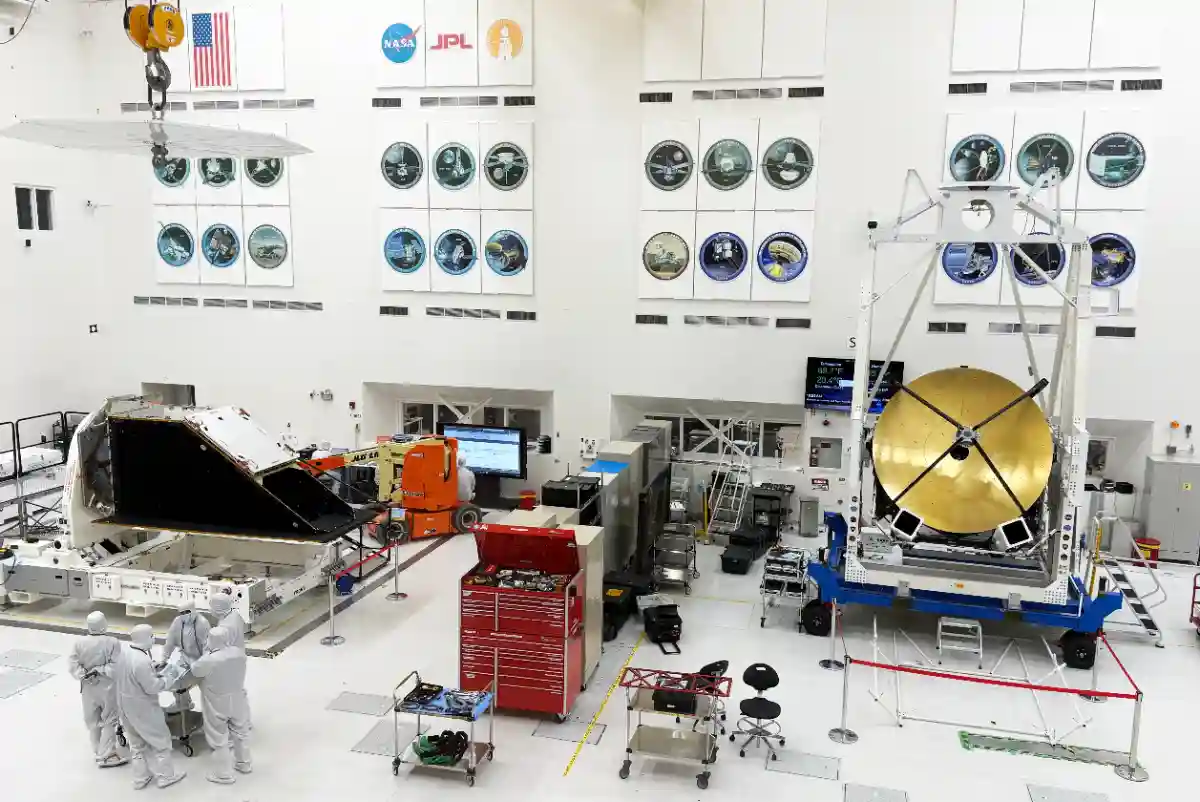
Clean rooms are essential for building spacecraft that search for signs of life. NASA enforces strict planetary protection rules to prevent Earth microbes from contaminating other worlds, a standard put in place after lessons from the Viking missions in the 1970s.
Workers disinfect surfaces with chemicals, UV light, and filtered air. Yet T. phoenicis has repeatedly been detected in these facilities, including at Kennedy Space Center in Florida and a launch site in French Guiana.
Unlike many tough bacteria, T. phoenicis does not form protective spores. Instead, it shuts down activity when nutrients run out, staying alive but almost impossible to grow under normal lab conditions. In experiments, researchers starved the bacterium in nutrient-poor solutions.
Within days, the number of colonies visible on plates dropped by more than seven orders of magnitude, but cell numbers stayed the same under a microscope, proving the microbes had entered dormancy rather than died. To simulate the dry surfaces of clean rooms, the team also dehydrated the cells. After two days without water, few could grow back on their own.
However, when researchers added a protein known as resuscitation-promoting factor, borrowed from a related bacterium, the dormant microbes “woke up” faster and resumed growth. This protein shortened recovery times from more than 50 hours to about 31 in some cases.
The study also noted that T. phoenicis carries stress-related genes similar to those seen in pathogens such as Mycobacterium tuberculosis, which is known for lying dormant inside the human body. In laboratory tests, the bacteria tended to clump together during dormancy, creating unusual stop-and-start growth patterns until the added protein restored normal behavior.
Researchers warn that standard checks, which rely heavily on spore counts and DNA testing, may overlook these hard-to-detect dormant cells. If such microbes survive sterilization and ride along on spacecraft, they could complicate life-detection experiments or even seed new environments with Earth organisms.
Beyond space science, the findings may also apply to medicine and food safety. Many bacteria survive harsh conditions, antibiotics, or disinfectants by entering a similar dormant state. Better understanding this process could improve sterilization practices in hospitals and factories.
The team plans further tests on other microbes that persist in clean rooms. With Mars sample return projects and human missions under development, scientists say detecting and managing these hidden survivors will be more important than ever.
Source: Tersicoccus phoenicis (Actinobacteria), a spacecraft clean room isolate, exhibits dormancy

Leave a Reply