

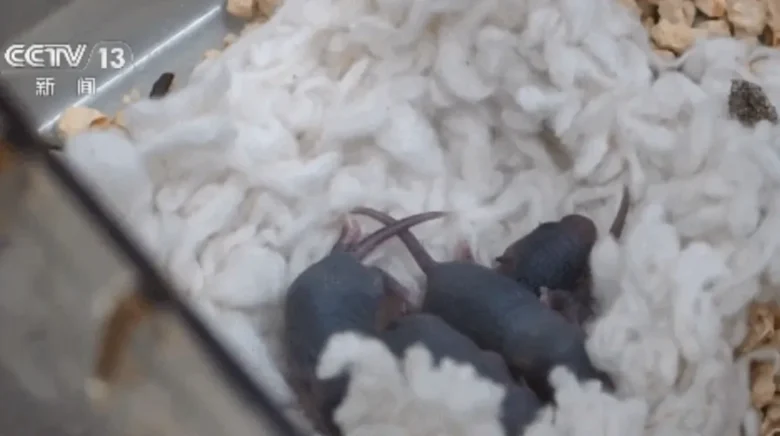
A female mouse that spent two weeks aboard China’s Tiangong space station has given birth to healthy pups back on Earth, offering fresh evidence that short space missions may not disrupt mammal reproduction. The birth followed the Shenzhou-21 mission, which launched on October 31, 2025, and returned on November 14. Scientists designed the mission to test how small mammals cope with microgravity, stress, and tight living conditions in orbit.
China sent four mice into space inside a custom-built habitat. The system supported food, water, air flow, and waste control while cameras and AI software tracked movement, sleep, and feeding patterns around the clock. Researchers wanted clear answers to a basic question. Can mammals survive spaceflight and still reproduce normally after they return?
The mission faced a real test when launch schedules shifted and supplies ran low. Engineers and astronauts responded fast, sending extra water and safe food substitutes, including soy-based nutrition. The mice adapted without health issues, and monitoring showed stable behavior until landing.
After the mice returned to Earth, one female soon became pregnant. On December 10, 2025, she delivered nine pups. Six survived, which matches normal birth outcomes seen in ground labs. Care behavior appeared normal, and early checks showed the pups active and healthy.
For space scientists, this result matters because long missions depend on biology working as expected. Human crews heading to the Moon or Mars will face months or years away from Earth. Reproduction, hormone balance, and early development remain open questions in low-gravity and radiation-rich environments. Animal studies help answer those questions before humans face the risks.
Past experiments with fish, frogs, fruit flies, and rodents showed that space can alter growth patterns and gene activity. Some changes reversed after return, while others lingered. This mouse birth adds a missing piece by showing that fertility and early care can remain stable after a short stay in orbit.
Researchers now track the pups as they grow, watching for shifts in health, movement, or behavior. They also plan breeding tests to see if space exposure affects the next generation. Those results will guide future mission design, habitat shielding, and life-support planning.