

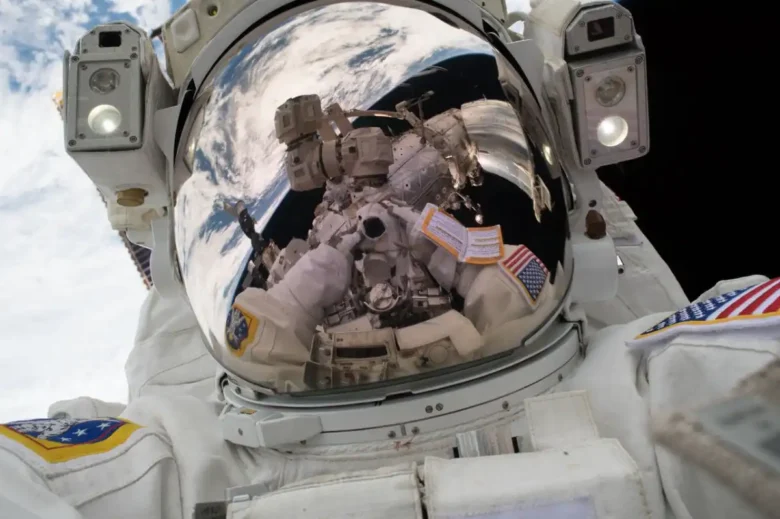
NASA announced its newest astronaut candidates on September 22, 2025, at the Johnson Space Center in Houston. The ten recruits, chosen from more than 8,000 applicants, will train for two years before becoming eligible for assignments to the International Space Station, future lunar missions under Artemis, and eventually Mars.
This group, the 24th class in NASA’s history, includes more women than men for the first time and reflects the agency’s growing focus on both diversity and technical range.
The class consists of six women and four men with varied skills. Ben Bailey, a U.S. Army test pilot with over 2,000 hours of flying, joins Lauren Edgar, a geologist who helped define Artemis III science goals. Anna Menon, a Houston native and former SpaceX engineer, took part in a private spaceflight in 2024.
Other members include Air Force majors Adam Fuhrmann and Cameron Jones, Navy pilot Erin Overcash, engineer Yuri Kubo, Navy test pilot Rebecca Lawler, physician Imelda Muller, and chemical engineer Katherine Spies.
For the next two years, these candidates will complete intensive training. They will learn to operate systems on the International Space Station (ISS), practice spacewalks in large water facilities, and train in high-performance jets to prepare for demanding environments.
Their education will also include foreign languages to work with global partners, as well as survival courses to handle land and water emergencies.
Medical training will prepare them to manage health problems in orbit, where even minor injuries can become serious. Geology lessons will support upcoming lunar missions, where astronauts will study soil and rock samples to learn more about the Moon’s history. All these skills aim to prepare them for Artemis missions scheduled later this decade and for future exploration of Mars.
NASA’s Artemis program is driving the agency’s long-term goals. Artemis II, set for 2026, will send astronauts around the Moon to test systems needed for landing. Later missions will establish the Gateway, a small space station orbiting the Moon to support science and logistics. By the 2030s, NASA hopes to send humans to Mars. The new class could play a role in these missions.
The announcement also highlights changes in astronaut selection. With more women than men for the first time, the group reflects NASA’s effort to bring a broader mix of experience. Their backgrounds in fields like medicine, engineering, and planetary science will help address the many challenges of long-term spaceflight, from radiation risks to limited resources.
Future missions will include science goals such as studying lunar samples to understand the solar system’s history and searching for signs of life on Mars. Candidates like Edgar, with a background in planetary geology, will play key roles in shaping those investigations. Their work will also support studies of space weather, which can affect both astronauts and satellites on Earth.
Since 1959, NASA has selected just 370 astronauts, making this a highly selective program. The 2025 class joins 41 active astronauts already preparing for missions. Acting Administrator Sean Duffy said the group represents the next stage in human spaceflight, building on decades of progress from Apollo through the Space Shuttle and the International Space Station (ISS).
The announcement comes as NASA prepares for other missions, including the Carruthers Geocorona Observatory, which launches this month to study Earth’s hydrogen halo. Together, these efforts reflect the combined work of astronauts and robotic spacecraft in advancing knowledge about space and preparing for future human exploration.