

Science often feels ordinary because it sits quietly in our daily lives. Your phone knows where you are. Planes cross oceans without getting lost. Doctors stop diseases that once killed entire towns. None of this feels dramatic anymore. That calm presence is exactly why science matters. It works best when it stays honest, open, and grounded in reality.
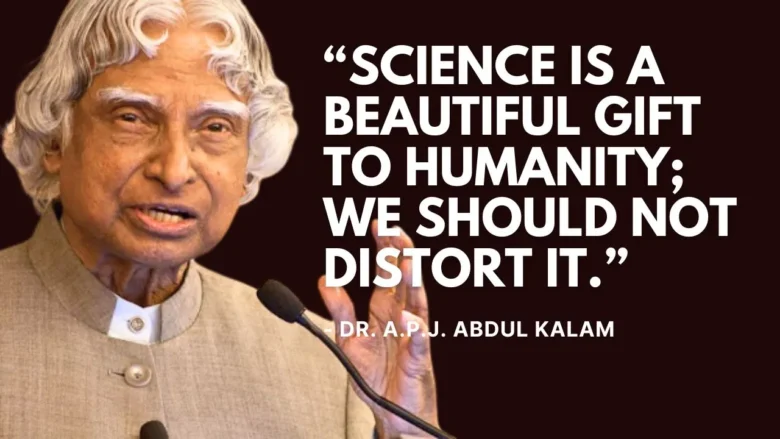
“Science is a beautiful gift to humanity; we should not distort it.” Dr. A. P. J. Abdul Kalam once warned that science should not be distorted. That warning matters more today than ever. We live in a time when facts travel fast, but false claims move even faster. When people bend science to suit fear, money, or pride, everyone pays the price.
This is not a philosophical debate. It affects health, safety, education, and trust.
How Science Earned Our Trust
Science did not appear fully formed. People built it slowly by asking questions, testing ideas, and accepting when they were wrong. That habit set it apart from belief systems based on authority alone.
In space research, progress followed that same path. Early sky watchers guessed what stars were. Later, better tools showed they were distant suns. Each step relied on proof, not comfort. When new data challenged old views, scientists adjusted their thinking.
That pattern explains why science works. It corrects itself. It does not protect pride. It rewards patience and honesty.
This process led to modern medicine, clean water systems, safe bridges, weather warnings, and satellite navigation. None of these came from opinion. They came from careful testing and public review.
Why Space Research Still Matters
Some people ask why we spend money studying space when problems exist on Earth. The answer is simple. Space research improves life here.
Navigation systems came from work on satellites. Medical imaging borrowed tools first designed to study distant objects. Even simple items like phone cameras improved through research meant for telescopes.
Recent space observations pushed this progress further. New telescopes now see objects formed soon after the universe began. These findings help scientists test ideas about how matter formed and how galaxies grew. That knowledge feeds better models, better tools, and better predictions.
This matters because accurate models guide real decisions. They help engineers design safer systems. They help planners prepare for natural threats. They help students learn how evidence shapes truth.
Where Distortion Begins
Distortion rarely starts with lies shouted from rooftops. It begins with doubt framed as curiosity.
Claims that Earth is flat still circulate online. So do claims that massive objects in space do not exist, despite clear images and measurements. These ideas spread because they offer simple answers and a sense of belonging.
Social media rewards bold claims, not careful thinking. Algorithms push content that triggers emotion. Calm explanations struggle to compete.
Money also plays a role. Some industries fund studies designed to confuse the public. They highlight uncertainty while ignoring clear trends. This tactic delays action and protects profits.
In science reporting, cherry-picked facts mislead readers. A single data point becomes a headline. Context disappears. Trust erodes.
The Cost of Getting It Wrong
When people stop trusting science, real harm follows.
During disease outbreaks, false claims slow treatment. During climate debates, delayed action worsens damage. In cities, poor lighting policies erase the night sky while wasting energy.
Light pollution offers a clear example. Excess lighting hides stars and disrupts wildlife. Studies show better lighting saves money and improves safety. Still, some officials ignore the data to avoid change.
The loss goes beyond darker skies. Children miss early moments of curiosity. Communities lose a shared sense of place. Science warned us early. Distortion stalled progress.
Why Peer Review Still Matters
Peer review sounds dull, but it protects truth. Scientists share work openly. Others check the methods, repeat tests, and look for errors. Flawed ideas fail. Strong ones survive.
This system does not promise perfection. It promises correction.
In space research, teams review images and measurements for months before releasing results. Independent groups confirm findings. Amateur observers often verify paths of objects using simple tools. This openness keeps claims grounded.
The public benefits when this process stays visible. It shows that science does not demand trust. It earns it.
Teaching Skepticism the Right Way
Healthy skepticism asks questions without assuming answers. It checks sources and follows evidence.
Bad skepticism rejects evidence before seeing it.
Education plays a key role here. When students learn how data works, they spot weak claims quickly. They learn that changing your mind after new evidence shows strength, not weakness.
Planetariums and science centers help by showing how simple measurements reveal distance, age, and motion. No mystery. Just steps anyone can follow.
This approach builds confidence. People trust what they can test.
What Happens Next
The next decade will bring faster data, sharper images, and more powerful tools. Artificial images will look real. Fake videos may mimic space missions or health studies.
This raises new challenges. Clear labeling of generated media will matter. Open access to raw data will matter more. Journalists must slow down and verify before publishing.
Space research will continue to deliver practical returns. Better satellites will improve weather tracking and disaster response. Medical tools will benefit from advances in imaging and materials.
But these gains depend on trust. Without it, progress stalls.
The Role of the Public
Science does not belong to labs alone. Public support funds research. Public pressure shapes policy.
People can help by checking sources, sharing responsibly, and supporting open research. Ask who funded a study. Ask whether others confirmed it. Ask what the data shows, not what a headline claims.
Small actions count. Support dark-sky rules. Attend public lectures. Encourage schools to teach evidence-based thinking.
Curiosity works best when paired with discipline.
Keeping Science Honest
Science stays useful only when people defend its rules. Those rules include transparency, correction, and humility.
We should expect scientists to explain their work clearly. We should expect journalists to report carefully. We should expect leaders to respect evidence, even when it feels inconvenient.
Kalam’s warning remains timely. Science gave us flight, communication, and longer lives. It did so by refusing shortcuts.
The future will test that discipline. Better tools will reveal more facts. Whether society accepts them depends on how well we guard truth today.
Science does not ask for belief. It asks for attention. When we give it that, it rewards us with progress we can trust.
