Tag: Artemis Program

  • NASA’s Artemis II rocket and Orion spacecraft have reached Launch Pad 39B

    NASA’s Artemis II rocket and Orion spacecraft have reached Launch Pad 39B

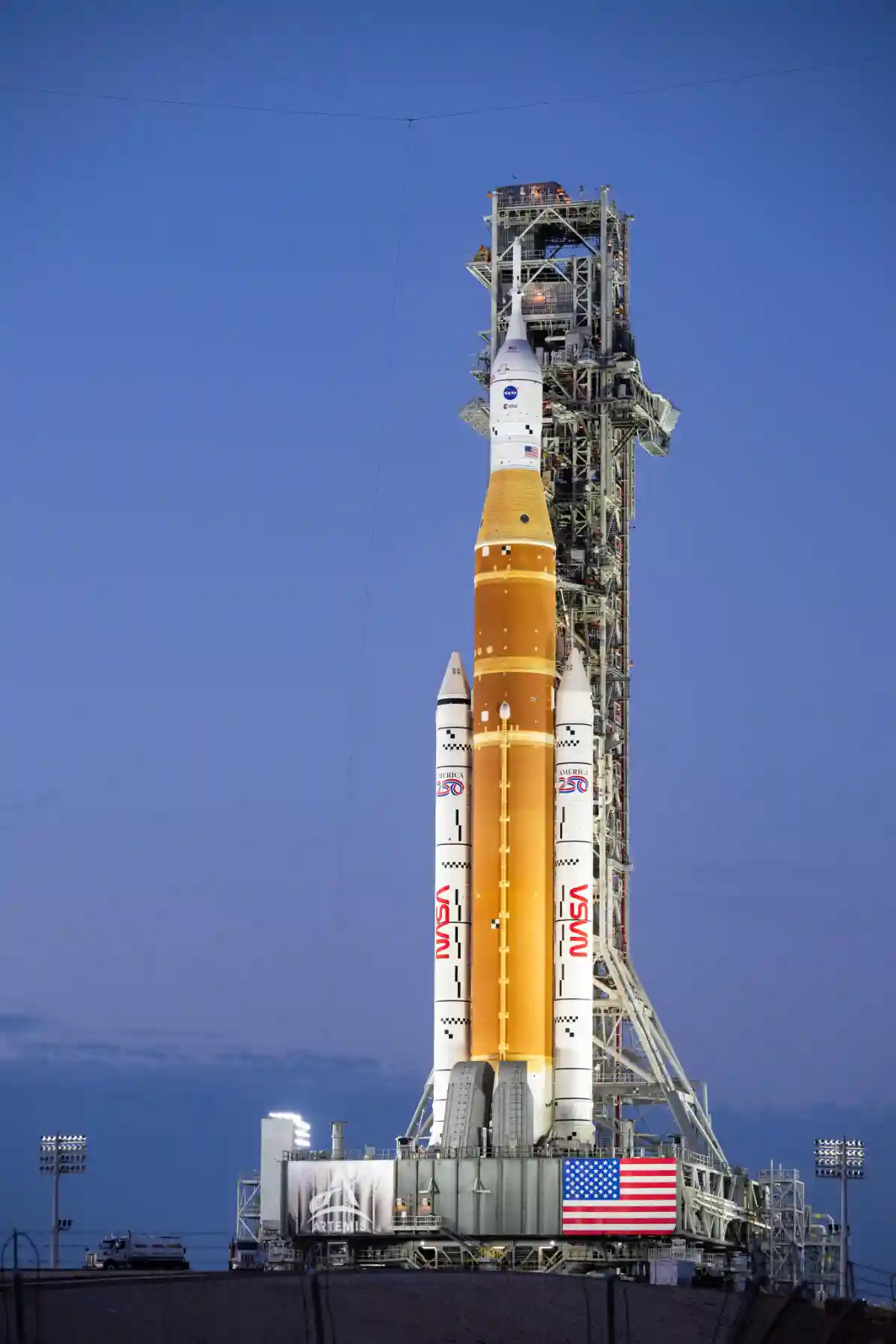
    NASA has moved the Artemis II rocket and Orion spacecraft to Launch Pad 39B, marking a major step toward the first crewed flight to lunar space in more than five decades. The rollout finished at 6:42pm ET on January 17, 2026, at Kennedy Space Center in Florida, placing the vehicle where final ground testing will determine launch readiness.

    NASA's Space Launch System (SLS) rocket on a crawler transporter.
    NASA’s Space Launch System (SLS) rocket on a crawler transporter. Image credit: NASA Administrator Jared Isaacman via X

    The Space Launch System (SLS) rocket traveled about four miles from the Vehicle Assembly Building to the pad. The trip took nearly 12 hours and used NASAโ€™s crawler-transporter, a tracked vehicle first built for the Apollo program and later upgraded. The crawler carried the 11-million-pound rocket stack at under one mile per hour. Teams paused during the move to adjust the crew access arm, which astronauts will use to enter the Orion capsule before launch.

    With the rocket now secured at the pad, engineers have begun pad integration work. Crews will connect power, communications, cooling, and fueling systems. These steps confirm that the rocket and spacecraft operate correctly outside the assembly building and under real launch conditions.

    The next major milestone is the wet dress rehearsal, planned no later than February 2. During this test, teams will load more than 700,000 gallons of liquid hydrogen and liquid oxygen into the rocketโ€™s tanks. They will run through a full launch countdown and stop just before engine ignition. Afterward, they will drain the propellants. If teams identify leaks, valve issues, or timing problems, NASA may repeat the test or roll the rocket back for repairs. Officials have said safety decisions will override schedule targets.

    Artemis II will carry four astronauts. Reid Wiseman will serve as mission commander, with Victor Glover as pilot and Christina Koch as mission specialist. Canadian Space Agency astronaut Jeremy Hansen completes the crew. The mission will last about 10 days and send the astronauts on a loop around the Moon, reaching nearly 280,000 miles from Earth. Glover will become the first Black astronaut to travel beyond Earth orbit, and Hansen will be the first Canadian to do so.

    The mission will not include a lunar landing. Instead, it will test Orionโ€™s life support, navigation, and heat shield systems with a crew onboard. Orion will reenter Earthโ€™s atmosphere at about 25,000 miles per hour, placing heavy demands on the spacecraftโ€™s thermal protection.

    Artemis II follows the uncrewed Artemis I mission in 2022 and supports NASAโ€™s plan to return astronauts to the Moon later this decade. Data from this flight will guide future missions aimed at long-term human activity near the Moonโ€™s south pole and beyond.

  • WashU to Manage Lunar Data for NASAโ€™s Artemis Missions

    WashU to Manage Lunar Data for NASAโ€™s Artemis Missions

    NASA’s Artemis program is preparing to send astronauts back to the moon for the first time in more than half a century, and Washington University in St. Louis will be at the center of the effort. The university’s Geosciences Node has been named the lead data center for the next three missions, responsible for collecting, reviewing, and distributing the large flow of information expected from the lunar surface.

    The decision reflects WashU’s long history with space missions. Since the late 1980s, the Geosciences Node has managed planetary data from Mars rovers, asteroid sample-return missions, and even archives from the Apollo era.

    With Artemis, the team will organize lunar maps, photographs, rover measurements, and samples, making them freely accessible to researchers around the world.

    The Artemis missions will begin with Artemis II, scheduled for no later than April 2026. That flight will carry four astronauts on a test orbit around the moon, confirming that the Orion spacecraft can operate safely in deep space.

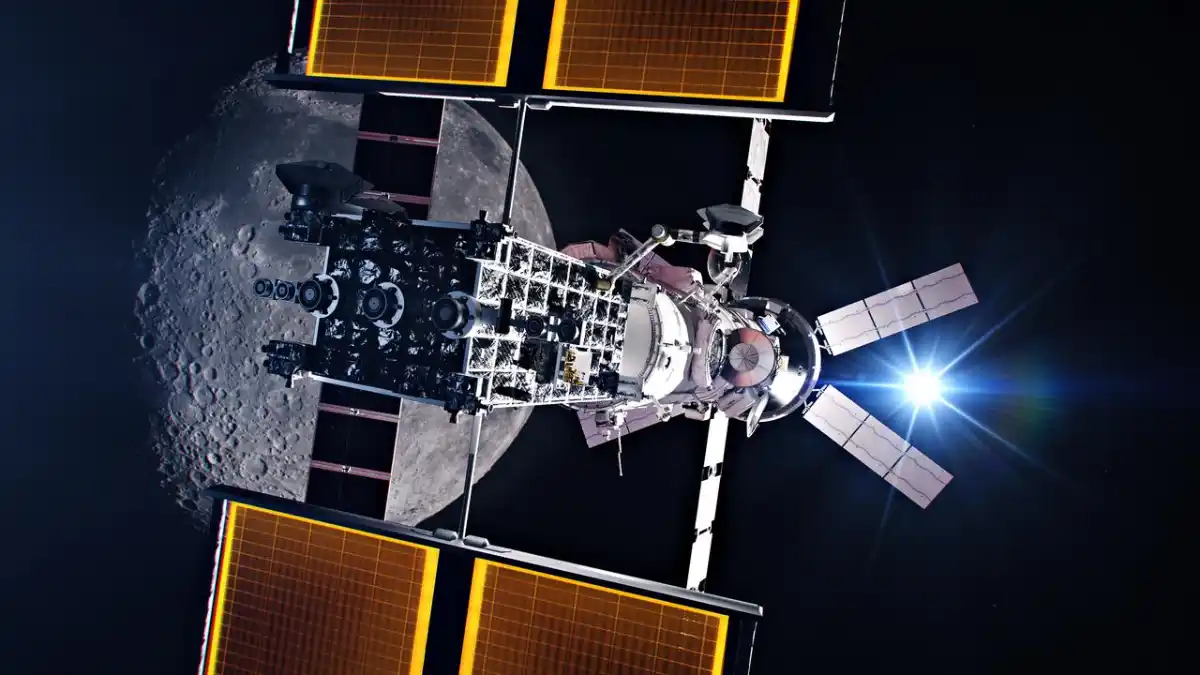
    Artemis III will follow with the first crewed landing since 1972, targeting the moon’s south pole, where frozen water is believed to lie hidden in shadowed craters. Artemis IV will expand those efforts by connecting with NASA’s planned Gateway station, a platform in lunar orbit designed to support longer stays and more detailed research.

    The choice of the South Pole is deliberate. Its permanently shadowed craters may contain water ice deposited by ancient comets, and if it can be mined, it could provide drinking water, air, and rocket fuel. Access to those resources would reduce the cost of long-term lunar operations and future Mars expeditions.

    WashU’s Geosciences Node, part of NASA’s Planetary Data System since 1989, will oversee the vast amount of information generated by these missions.

    The team does more than store files: they review incoming data for quality, manage peer review, and design tools that allow scientists to search and analyze results. They have already done this for missions such as Perseverance on Mars and OSIRIS-REx, which delivered samples from an asteroid.

    Scientists expect the Artemis data to answer longstanding questions. Lunar regolith, the layer of dust and soil covering the surface, may contain helium-3, a possible fuel for future fusion reactors.

    Instruments could record moonquakes, improving knowledge of the moon’s structure and helping engineers design safer bases. Samples from untouched regions might even reveal new details about the moon’s origin, believed to be the result of a giant impact with early Earth.

    Lessons from Apollo are also in play. Astronauts during the 1960s and 1970s found lunar dust clung to spacesuits and damaged equipment. With updated information from Artemis, engineers can build gear that avoids the same problems.

    NASA views Artemis as the first step toward human missions to Mars in the 2030s. The moon provides a nearby testing ground for habitats, life-support systems, and other technology needed for longer journeys. By managing and releasing the data, WashU ensures that scientists everywhere can use the findings to prepare for the next stage of exploration.

    Paul Byrne, who leads the Geosciences Node, said his team is ready for the scale of the work. For NASA, the partnership ensures that information from the missions will not only support astronauts on the moon but also shape the future of human spaceflight.

  • NASA invites public to send names aboard Artemis II mission around the Moon in 2026

    NASA invites public to send names aboard Artemis II mission around the Moon in 2026

    NASA is giving the public a chance to have their names travel beyond Earth. Through its “Send Your Name with Artemis II” campaign, the space agency is inviting people worldwide to add their names to a digital list that will fly on the Orion spacecraft during its 2026 mission around the Moon. Participants will receive a downloadable boarding pass as a keepsake, while the names are stored on a memory card inside the capsule.

    The Artemis II mission is scheduled to launch from Kennedy Space Center in Florida no later than April 2026. It will be the first crewed flight of NASA’s Artemis program and the first time astronauts travel beyond low Earth orbit since Apollo 17 in 1972. Over the course of 10 days, Orion will follow a free-return trajectory, circling the Moon before heading back to Earth without landing.

    The four-member crew represents a new era for human spaceflight. Commander Reid Wiseman and pilot Victor Glover, both from NASA, will be joined by mission specialist Christina Koch, also from NASA, and Canadian astronaut Jeremy Hansen. Koch will be the first woman to journey to the Moon, and Glover will be the first person of color. Hansen becomes the first non-American to fly beyond low Earth orbit.

    During the flight, the astronauts will test Orion’s life support systems, including air and water recycling. They will assess how the spacecraft operates during different levels of activity, from exercise to rest.

    The mission will also deploy five CubeSats built by international partners to study radiation and new technologies. Another key trial involves high-speed laser communications, designed to transmit data back to Earth faster than radio signals.

    NASA sees Artemis II as a critical step toward establishing a long-term human presence on the Moon. The flight is expected to inform Artemis III, which aims to land astronauts on the lunar south pole by 2027. The mission is also designed to gather data on how radiation and deep-space conditions affect human health, information that will be essential for future Mars missions.

    Artemis II Boarding Pass by NASA.
    Boarding passes on NASA’s Artemis II mission will carry participants’ names on them. Image credit: NASA

    Public participation plays a role in building interest. More than a million names flew on the uncrewed Artemis I mission in 2022, and NASA hopes to exceed that number this time.

    People can sign up online until January 21, 2026, at

    go.nasa.gov/artemisnames for English

    or

    go.nasa.gov/TuNombreArtemis for Spanish.

    On launch day, all submitted names will travel with the crew.

    NASA has also invited volunteers to help track the mission from home, using publicly available data to monitor Orion’s journey. Officials say these efforts are meant to remind people that space exploration belongs to everyone, not just astronauts and scientists.