Tag: Asteroid

  • Astronomers Spot a Skyscraper-sized Asteroid 2025 SC79 Racing Around the Sun

    Astronomers Spot a Skyscraper-sized Asteroid 2025 SC79 Racing Around the Sun

    Astronomers have discovered a rare, fast-moving asteroid orbiting deep within the inner solar system. The object, named 2025 SC79, was detected in October 2025 by the ATLAS sky survey, with observations led by Scott S. Sheppard of Carnegie Science. The asteroid, roughly 700 meters wide, completes one trip around the sun every 128 days, making it the second-fastest asteroid ever recorded, behind only 2021 PH27.

    The find is remarkable because asteroids this close to the sun are hard to detect. For years, 2025 SC79 remained hidden in the glare of sunlight, its faint reflection drowned out by the star it orbits. Researchers were able to spot it only thanks to ATLAS’s sensitive telescopes in Chile, which scan the sky for objects that could pose a threat to Earth.

    Most asteroid-hunting telescopes avoid pointing near the sun because of its brightness. However, ATLAS and similar systems are built to peer into what scientists call the “twilight zone,” a region of space where few objects are visible from Earth.

    2025 SC79 belongs to a rare group called Atira asteroids, objects that never travel beyond Earth’s orbit. Their entire paths lie closer to the sun, under 1 astronomical unit. Because of their proximity, these asteroids are among the hardest to find and study.

    While Venus takes 225 days to complete a solar orbit, 2025 SC79 finishes in nearly half that time. Its path lies mostly within Venus’s orbit, looping tightly around the sun. At its closest point, it moves at about 60 kilometers per second. That speed, driven by the sun’s strong gravity, makes it one of the fastest natural objects in our solar system.

    The only known asteroid with a shorter orbit is 2021 PH27, which circles the sun in just 113 days. Both are part of an extremely small group of inner asteroids that help scientists understand how rocky material behaves so close to the sun.

    Asteroids like 2025 SC79 may have formed closer to the sun than most, or they might have been knocked inward after collisions in the asteroid belt. Studying their orbits helps scientists trace how gravity and planetary interactions shape the solar system over billions of years.

    Despite their tight orbits, these asteroids pose no threat to Earth. Their paths remain well inside our planet’s orbit, where they stay locked in the sun’s gravitational grip. However, tracking them improves models that predict the movement of other near-Earth objects.

    The discovery also highlights progress in detecting asteroids near the sun. Upcoming missions such as NASA’s NEO Surveyor, set to launch later this decade, will scan deeper into this region using infrared sensors that can detect heat instead of reflected light.

    Scientists expect to uncover dozens more Atira asteroids in the next few years. Each new find fills in part of the picture of how planets and smaller bodies formed in the solar system’s earliest days.

  • Eiffel Tower sized Asteroid 2003 MH4 just missed Earth by a few million kilometers

    Eiffel Tower sized Asteroid 2003 MH4 just missed Earth by a few million kilometers

    Asteroid 2003 MH4 safely flew by Earth at an approximate distance of 6.68 million kilometers with a velocity of around 8.35 kilometers per second today (May 24, 2025, at 10:37 UTC).

    The asteroid 2003 MH4, designated as 387746, was discovered in 2003. Comparable in size to the Eiffel Tower, it is classified as an Apollo-class Near-Earth Object (NEO) and a Potentially Hazardous Asteroid (PHA) due to its size and proximity to Earth’s orbit.

    Physical characteristics

    Asteroid 2003 MH4 has an estimated diameter of approximately 335 meters, making it comparable in size to the Eiffel Tower. Its albedo (reflectivity) is measured at 0.132, and it has an absolute magnitude of 20.1.

    Orbital characteristics

    Asteroid 2003 MH4 orbits the Sun every 1,010 days (approximately 2.77 years). Its orbit ranges from a perihelion (closest point to the Sun) of 0.96 AU to an aphelion (farthest point) of 2.97 AU. The asteroid’s orbit has an eccentricity of 0.5134 and an inclination of 3.89 degrees relative to the ecliptic plane.

    Future Flybys

    • May 23, 2036, at a distance of approximately 7.45 million kilometers.
    • April 17, 2047, at about 9.99 million kilometers.
    • March 27, 2058, at a distance of approximately 11.53 million kilometers.

    NASA and other space agencies are actively monitoring asteroids to evaluate potential future risks and improve planetary defense strategies. In preparation for future missions aimed at studying asteroids, NASA is set to examine the well-known asteroid Apophis during its close flyby in 2029.

  • ‘Football field’ sized asteroid 2024 YR4 has a 1.2% collision chance, say scientists!

    ‘Football field’ sized asteroid 2024 YR4 has a 1.2% collision chance, say scientists!

    Asteroid 2024 YR4, a recently discovered near-Earth object, has garnered significant attention due to its potential collision risk with Earth. Discovered on December 27, 2024, by the Asteroid Terrestrial-impact Last Alert System (ATLAS) telescope in Chile, this asteroid measures roughly equivalent to half the width of a football field.


    Potential Impact and Risk Assessment

    As of early February 2025, NASA and the European Space Agency (ESA) assessed the likelihood of an impact on December 22, 2032, at approximately 1.2%. This translates to a roughly 99% chance that the asteroid will safely pass Earth during its close approach. The asteroid’s trajectory places it within about 106,200 kilometers (66,000 miles) of Earth, which is considered a close encounter in astronomical terms.

    Dr. Paul Chodas, director of NASA’s Center for Near Earth Object Studies, emphasized that while there is a slim chance of impact, ongoing observations are critical to refining the asteroid’s trajectory and size estimates34. The current risk level categorizes 2024 YR4 as a Level 3 on the Torino Impact Hazard Scale, indicating it warrants attention but does not pose an immediate threat.


    What will happen if Asteroid 2024 YR4 collides on Earth?

    If asteroid 2024 YR4 were to collide with Earth, it could produce significant localized damage. Depending on its size and speedโ€”estimated at 17 kilometers per second (approximately 38,028 miles per hour)โ€”the impact could create an airburst or an impact crater with blast damage potentially extending up to 50 kilometers (31 miles) from the site. Such impacts are rare; asteroids of this size typically collide with Earth only once every few thousand years.


    Monitoring Efforts

    Following its discovery, automated systems flagged Asteroid 2024 YR4 for further observation due to its potential risk. Astronomers have since utilized multiple telescopes globally to gather data on the asteroid’s characteristics and trajectory67. As it moves away from Earth after its close approach in late December 2024, it will become increasingly difficult to observe until its next close pass in December.

    The ongoing monitoring efforts are crucial as they may lead to changes in the assessed impact probability. History has shown that many asteroids initially deemed a threat later had their risks downgraded as more data became available. For instance, similar scenarios unfolded with asteroids like Apophis, which was once thought to be on a collision course but was later ruled out.

  • Asteroid C0WEPC5 Burns Up Over Yakutia, Russia

    Asteroid C0WEPC5 Burns Up Over Yakutia, Russia

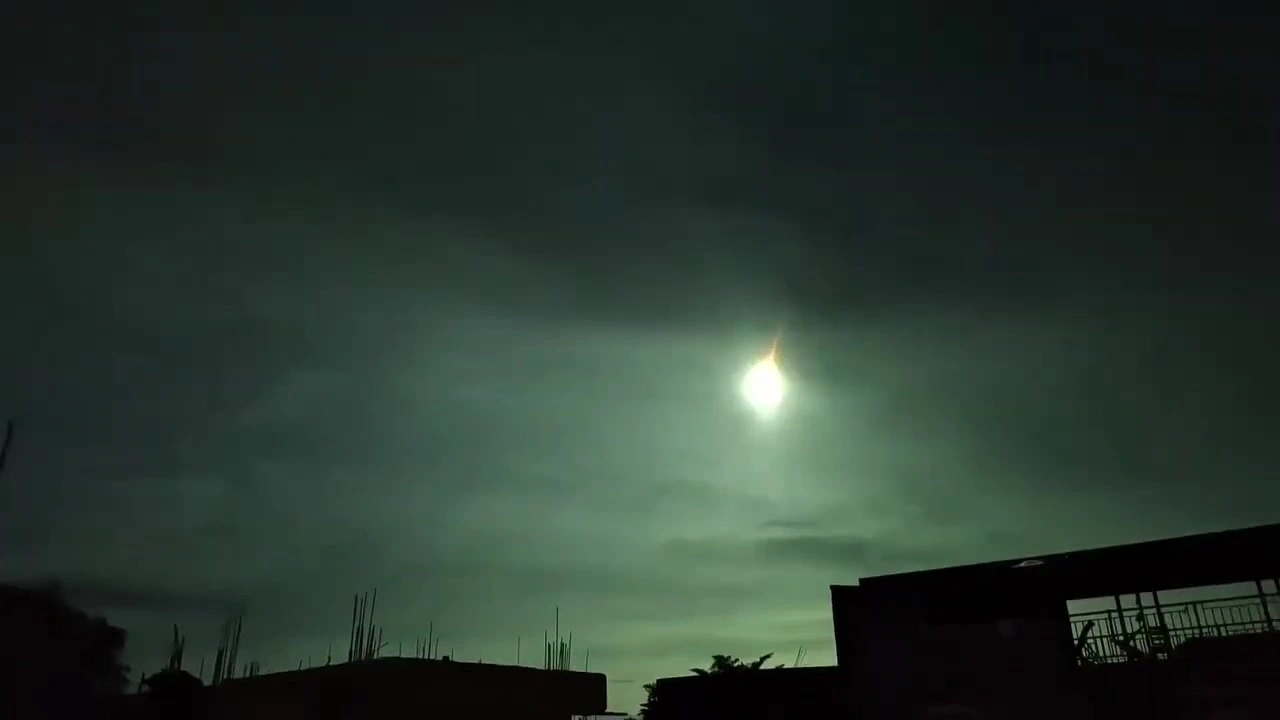
    A bright fireball streaked across the skies of Yakutia, Russia, on Tuesday, December 3, as asteroid C0WEPC5 entered Earthโ€™s atmosphere and burned up. The asteroid, about 70 cm in diameter, lit up the sky at 16:15 UTC, creating a dazzling fireball that left many observers stunned. Stunning footage shared on social media captured the moment, quickly going viral among space enthusiasts.

    The European Space Agency (ESA) had detected the asteroid hours before its impact, confirming it would pose no threat. ESA posted an alert on X, noting that the asteroid would likely produce a harmless but spectacular fireball over northern Siberia. The agencyโ€™s prediction proved accurate, as the object disintegrated harmlessly, with no reports of damage on the ground.

    This event follows a series of recent asteroid sightings, including the fireball of asteroid 2024 RW1 over the Philippines in September.

    Space agencies and monitoring networks such as ESA, NASA, and the Asteroid Terrestrial-impact Last Alert System (ATLAS) continue to track Near-Earth Objects (NEOs) closely, providing early warnings of potential impacts. The Yakutia fireball served as another reminder of the importance of these detection systems in monitoring cosmic visitors to Earth.

  • Asteroid Ryugu Sample Contaminated by Earth Bacteria Despite Strict Handling Protocols

    Asteroid Ryugu Sample Contaminated by Earth Bacteria Despite Strict Handling Protocols

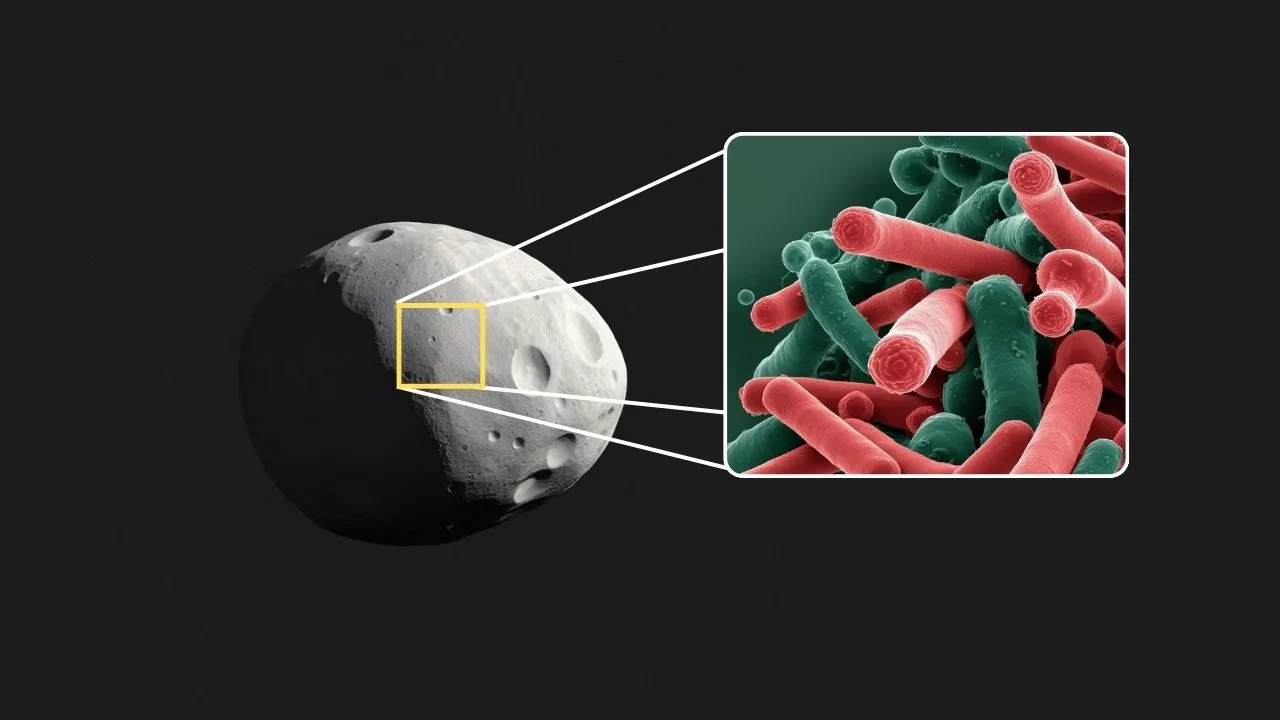
    A rare asteroid sample brought back to Earth by Japanโ€™s Hayabusa 2 mission has been found to contain Earth bacteria, raising questions about contamination risks in the study of extraterrestrial material. Researchers discovered filament-shaped microbes resembling the Bacillus genus inside a fragment of the asteroid Ryugu, despite strict controls meant to prevent such exposure.

    The Hayabusa 2 spacecraft launched in December 2014 and landed on Ryugu in June 2018, collecting material from the asteroidโ€™s surface. The samples were returned to Earth in December 2020 and distributed among international research teams for analysis. The contaminated fragment was examined using high-resolution microscopy, which revealed structures consistent with Earth-based bacteria.

    According to one of the researchers, the bacteria took a filamentous form, suggesting they likely came from Bacillus, a common group of rod-shaped bacteria. The contamination likely occurred during handling or storage on Earth rather than during the mission itself, researchers said.

    The finding was shared publicly after a user on X posted excerpts from the study, noting that the sample was โ€œrapidly colonized by terrestrial microorganisms despite strict contamination control.โ€ The revelation highlights the challenges scientists face in preserving the integrity of rare extraterrestrial material once it reaches Earth.

    Asteroid samples are highly sought after because they offer a window into the early solar system. Unlike Earth, where geological processes erase ancient records, asteroids remain unchanged for billions of years. Examining their composition helps researchers understand how planets formed and whether asteroids carried organic molecules that may have seeded life on Earth.

    Ryuguโ€™s samples are not the only ones under study. NASAโ€™s OSIRIS-REx mission recently returned material from the asteroid Bennu, which was found to contain carbon and water-bearing minerals. These discoveries support the idea that asteroids could have delivered the ingredients for life to Earth through impacts. Future missions, including Europeโ€™s Hera spacecraft, aim to expand knowledge of these small but important bodies.

  • Earth’s Temporary Mini-Moon 2024 PT5 Leaves Orbit After Two Months, Next Visit in 2055

    Earth’s Temporary Mini-Moon 2024 PT5 Leaves Orbit After Two Months, Next Visit in 2055

    Earth had a temporary mini-moon for the past two months as asteroid 2024 PT5 orbited the planet from September 29. The small asteroid left Earth’s orbit on November 25, with its next close approach scheduled for November 8, 2055, according to Space.com. Measuring about 10 meters (33 feet) in diameter, 2024 PT5 was too small to be seen with the naked eye, unlike larger asteroids such as Apophis or Bennu.

    NASA’s Asteroid Terrestrial-impact Last Alert System (ATLAS) discovered 2024 PT5 on August 7, 2024, from its Hawaii observatory. The asteroid’s designation reflects the year of discovery and its sequence. ATLAS, which tracks potentially hazardous asteroids, also discovered comet Tschunishan-Atlas, visible between September 27 and October 24.

    Classified as an Apollo-class near-Earth object (NEO), 2024 PT5 temporarily orbited Earth before returning to its regular orbit around the Sun. The asteroid did not pose any collision threat during its stay.

    Mini-moons are asteroids that get caught in Earth’s gravity during a flyby and orbit the planet briefly. NASA monitors around 28,000 NEOs, including such temporary satellites.

    Historically, mini-moons are rare. Asteroid 2022 NX1 orbited Earth in 1981 and again in 2022. Asteroid 2006 RH120 remained in orbit for a year, from 2006 to 2007. In 2020, a piece of space debris from a 1966 rocket launch became the third mini-moon.

  • Asteroid Burns Up Over Philippines Creating Spectacular Fireball Display

    Asteroid Burns Up Over Philippines Creating Spectacular Fireball Display

    A small asteroid streaked across Philippine skies Wednesday afternoon, creating a brilliant fireball that amazed onlookers before burning up in Earth’s atmosphere over Luzon Island.

    The space rock, designated 2024 RW1, measured roughly one meter across and struck the atmosphere at 17:08 UTC (1:08 a.m. local time Thursday). Scientists had tracked the asteroid’s approach for hours after its discovery earlier that morning.

    Research technologist Jacqueline Fazekas spotted the incoming asteroid using the NASA-funded Catalina Sky Survey telescope near Tucson, Arizona. The discovery came just hours before impact, giving astronomers time to predict its path and warn the public.

    The European Space Agency posted on social media platform X shortly before the strike, telling residents they might witness “a spectacular fireball” but that the object posed no danger.

    Video footage captured the asteroid’s final moments as it blazed through the atmosphere at tremendous speed. The space rock traveled at 17.6 kilometers per second (roughly 63,360 kilometers per hour), disintegrating completely.

    The timing allowed the asteroid to be visible during evening hours across parts of the Philippines. Witnesses reported seeing a bright streak of light followed by a glowing trail that lasted several seconds.

    Such small asteroids regularly enter Earth’s atmosphere, with most burning up completely before reaching the ground. NASA estimates that objects of this size hit our planet’s atmosphere about once every two weeks, though many occur over remote areas or during daylight hours when they’re harder to spot.

    The successful detection and tracking of 2024 RW1 represents another win for planetary defense systems. These networks of telescopes constantly scan the skies for potentially dangerous asteroids, though objects this small pose no real threat.

    Much larger near-Earth objects continue to pass by our planet regularly. Recent close approaches included asteroids 2024 PQ5, 2011 MW1, and 2020 RL, all significantly bigger than Wednesday’s visitor but still maintaining safe distances from Earth.

    The Philippines event marks the latest in a series of small asteroid impacts that have been successfully predicted in advance, showing how astronomical surveillance systems have improved in recent years.

  • NASA Tracks Asteroid 2020 RL and Four other Asteroids Set to Pass Earth Between August 27 and September 1

    NASA Tracks Asteroid 2020 RL and Four other Asteroids Set to Pass Earth Between August 27 and September 1

    NASA has confirmed that five asteroids will make close approaches to Earth between August 27 and September 1, just days after asteroid 2024 PQ5 passed safely by on August 20. None of the incoming space rocks pose a danger, but scientists are monitoring them closely as part of ongoing efforts to track near-Earth objects that could threaten the planet.

    The first of the group, asteroid 2020 RL, is expected to pass Earth on August 27 at a distance of 2.91 million miles. Measuring about 110 feet, roughly the size of a passenger aircraft, it will be the first of several flybys.

    Two days later, on August 29, asteroid 2021 RA10 will make its closest approach at 1.62 million miles. At 92 feet across, it is large enough to cause significant local damage if it were ever to impact, though no collision risk exists this time.

    Asteroid 2012 SX49, measuring 64 feet, will pass much farther away at 26.65 million miles. Despite being smaller, NASA continues to track such objects to build accurate models of their orbits.

    The largest of the group, 2016 RJ20, is estimated at 210 feet wide and will approach on August 31, passing within 4.34 million miles of Earth. NASA classifies it as the most notable of this series of flybys because of its size.

    Finally, asteroid 2012 JT, measuring 30 feet, will pass at 3.95 million miles on September 1. Though the smallest of the group, it still falls under NASA’s near-Earth object watch list.

    NASA’s Jet Propulsion Laboratory uses telescopes and radar systems such as NEOWISE to track thousands of asteroids and refine predictions of their future paths. Even small changes in trajectory could increase risks, which is why the agency monitors all flybys.

    Scientists stress that while flybys like these are routine, tracking them provides valuable data. Studying near-Earth asteroids helps researchers better understand the solar system’s formation and develop planetary defense strategies. NASA has already tested one such defense with its DART mission, which successfully redirected a small asteroid in 2022.

    Most Earth impacts, if they ever occurred, would likely happen in the oceans, since water covers 70 percent of the planet. Still, NASA considers precise tracking and long-term planning essential to protecting both people and infrastructure from potential future threats.

  • 140-Foot Asteroid โ€˜2024 PQ5โ€™ Speeds Past Earth at 3.2 Million Miles Away

    140-Foot Asteroid โ€˜2024 PQ5โ€™ Speeds Past Earth at 3.2 Million Miles Away

    A 140-foot asteroid named 2024 PQ5 passed Earth on August 20, coming within 3.2 million miles of the planet, which is pretty close by astronomical standards, though still a safe distance. NASA monitored the object closely because any shift in its orbit could have posed a potential threat, but the asteroid passed without incident.

    The asteroid, roughly the size of a small ship, belongs to the Apollo group, a class of near-Earth asteroids whose orbits cross Earth’s path around the Sun. Traveling at a speed of about 28,128 miles per hour, 2024 PQ5 was classified as a near-Earth object (NEO), meaning its trajectory brings it within 120 million miles of Earth.

    NASA tracks thousands of NEOs using an array of telescopes and radar systems, including the Near-Earth Object Wide-field Infrared Survey Explorer (NEOWISE). These tools allow scientists to calculate asteroid paths years in advance and assess any potential risk to Earth.

    Flybys like this are not unusual. NASA says small- to medium-sized asteroids frequently pass by Earth at varying distances, most of them harmless. In fact, at least five more asteroids are expected to make close approaches before the end of the month, though none pose a danger.

    While 2024 PQ5’s flyby was uneventful, it underscores the importance of tracking near-Earth objects. Scientists continue to study asteroid movements as part of broader planetary defense efforts, which include projects like NASA’s DART mission that successfully tested deflecting an asteroid in 2022.

  • NASA tracks 380-foot asteroid on close approach to Earth at nearly 29,000 km/h
    NASA tracks 380-foot asteroid on close approach to Earth at nearly 29,000 km/h

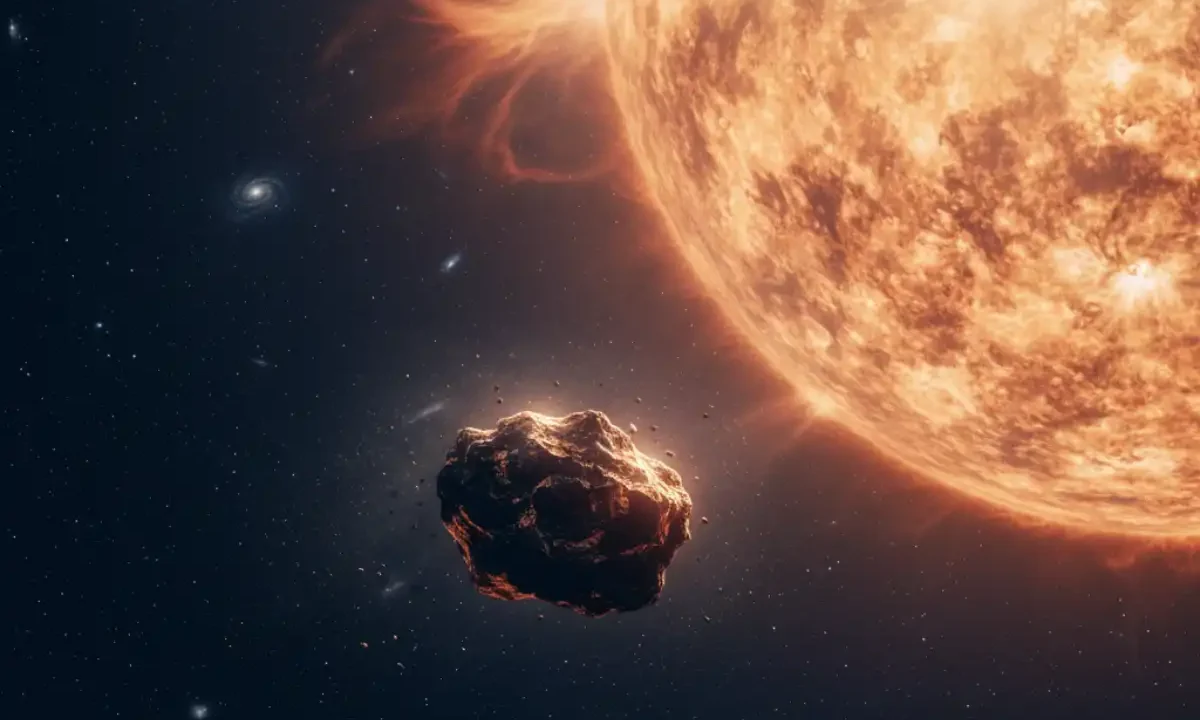
    NASA has issued an alert for a possible asteroid flyby. The near-earth asteroid ‘asteroid 2011 MW1’ is approaching Earth at a speed of 28,946 km/h. It will pass within 2.4 million miles from Earth, which is a minimal distance in astronomical units. Despite its size and trajectory, NASA has said it poses no threat but is being closely monitored.

    Asteroid 2011 MW1 is a massive 380-foot asteroid heading towards Earth at a speed of 28,946 km/h. The data from NASA’s Center for Near-Earth Object Studies (CNEOS) suggests that the asteroid will make its closest approach to Earth on July 25, coming within approximately 2.4 million miles.

    Asteroid 2011-MW1 is an Apollo-class asteroid. Being 380 feet large, it is the size of a skyscraper. Its impact could lead to human extinction, but for now, we are safe, as NASA has classified it as a near-earth asteroid (NEA) and not ‘a potentially hazardous asteroid (PHA)’ based on its orbital distance from the Earth.

    To date, NASA has tracked over 35,000 Near-Earth Objects and will continue to do so, as monitoring and classifying space rocks is essential to avoiding any possible catastrophic impact.

    Keeping a watch on space rocks

    NASA’s Center for Near Earth Object Studies (CNEOS) is responsible for tracking the Near Earth Objects (NEOs) and classifying them based on their distance from the Earth. Space rocks that orbit within 120 miles of the Sun are classified as NEOs, as they pose a threat to Earth.

    NASA has various observatories like Pan-Starrs, the Catalina Sky Survey, NASA’s NEOWISE mission, and the new NEO Surveyor that track the asteroids and collect important data about them. Other than this, planetary initiatives such as the Goldstone Solar System Radar Group work on tracking the space rocks.