Astrophotography is one of the most rewarding things you can do with a clear night sky. It is also, at first glance, one of the most intimidating.
Long exposures, tracking mounts, image stacking, noise reduction. The vocabulary alone can make you feel like you’ve wandered into the wrong hobby. But the truth is that astrophotography has never been more accessible than it is right now. Smartphone sensors are capturing the Milky Way.
Entry-level DSLR cameras are imaging nebulae from suburban backyards. And the global community of amateur astronomers is bigger, friendlier, and better-documented than at any point in history.
This guide will walk you through everything: what astrophotography actually is; its history; career opportunities, average salary, and who hires astrophotographers; the different types you can pursue; the gear you genuinely need (and what you can skip); the camera settings that matter; how to find and plan your shots; and how to process your images once they’re on your computer. By the end, you’ll have a clear, actionable path to your first image of the night sky.
What is astrophotography?
Astrophotography is the art and science of taking images of celestial objects and events. It can be pursued as a hobby or a profession. Modern technology has made high-quality astrophotos more accessible, encouraging more people to try the field. The practice began in the 19th century, when early astronomers attempted to photograph the Moon and star clusters.
Watch this video before you get into astrophotography:
History and development
Notable early contributors to astrophotography include William Herschel and his son John Frederick William Herschel, who photographed the Moon and star clusters. Since then, the field has advanced to capture objects invisible to the naked eye, such as distant galaxies, nebulae, and short-lived events like supernovae. It combines technical skill, artistic vision, and scientific application.
Career opportunities in astrophotography
Scientific research
Astrophotographers can work with astronomers to document celestial objects and changes in the night sky. Their images may support data analysis, research, and scientific publications. In education, astrophotographers create visuals for classrooms, lectures, and outreach programs. Competitions such as the Astronomy Photographer of the Year offer recognition and exposure.
Night sky tourism
Growing interest in dark-sky travel has created demand for astrophotography services. Photographers can guide tours, teach workshops, and offer photo sessions at locations with minimal light pollution. These services can enhance the visitor experience and generate income for skilled photographers.
Publishing and media
Magazines, websites, books, and documentaries require high-quality astronomical images. Astrophotographers may provide visuals for articles, covers, or video productions. Their work is used to illustrate scientific concepts or to add visual appeal to media content.
Stock photography and licensing
Astrophotographers can sell their work through stock image platforms, where photos may be licensed for advertising, websites, or promotional materials. This provides a potential source of ongoing income from previously captured images.
It is a money-making venture. This implies that the taken photographs can still be used for other purposes, like in advertisements, on websites, or for promotional purposes.
How much money does an astrophotographer make?
According to Jobzmall, beginner-level astrophotographers earn between $25,000 and $50,000 per year, while experienced professionals can make up to $75,000 per year. Pay depends on skill, experience, and the type of work.
Who hires astrophotographers?
Employers include research institutions, universities, space agencies such as NASA, ISRO, and ESA, observatories, planetariums, media companies, and tourism businesses. Work may involve research projects, public outreach, or commercial assignments.
Types of Astrophotography
Before buying any gear, it helps to know what kind of astrophotography you actually want to do. Each branch has different requirements in terms of equipment, location, and skill level.
Wide-Field Nightscape Photography
This is where almost every beginner should start. Wide-field nightscape photography means photographing large portions of the night sky (the Milky Way rising over a mountain, star trails above a desert landscape, a meteor shower streaking across the sky) with a standard camera and a wide-angle lens.
What you need: A DSLR or mirrorless camera, a wide-angle lens (14โ35mm), and a sturdy tripod. That’s it.
What you can photograph: The Milky Way core, star trails, constellations, conjunctions (planets close together in the sky), auroras, meteors, satellites.
Difficulty: Low. This is the best starting point for anyone new to astrophotography.
Lunar Photography
Photographing the Moon is actually one of the most technically forgiving branches of astrophotography, because the Moon is so bright that you don’t need long exposures or tracking equipment.
What you need: Any camera with a zoom lens of at least 200mm, or a camera attached to a small telescope.
What you can photograph: Surface details including craters, mountain ranges, valleys, and the terminator line (the boundary between the lit and dark portions of the Moon).
Difficulty: Very low. A great first target for absolute beginners.
Planetary Photography
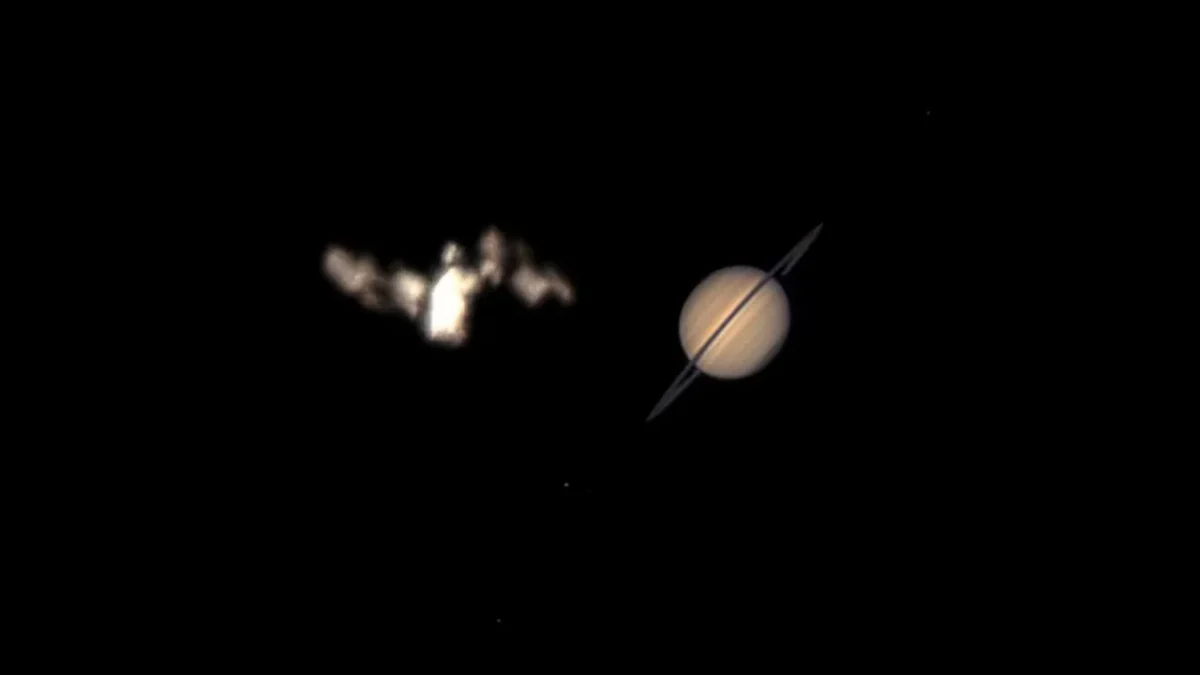
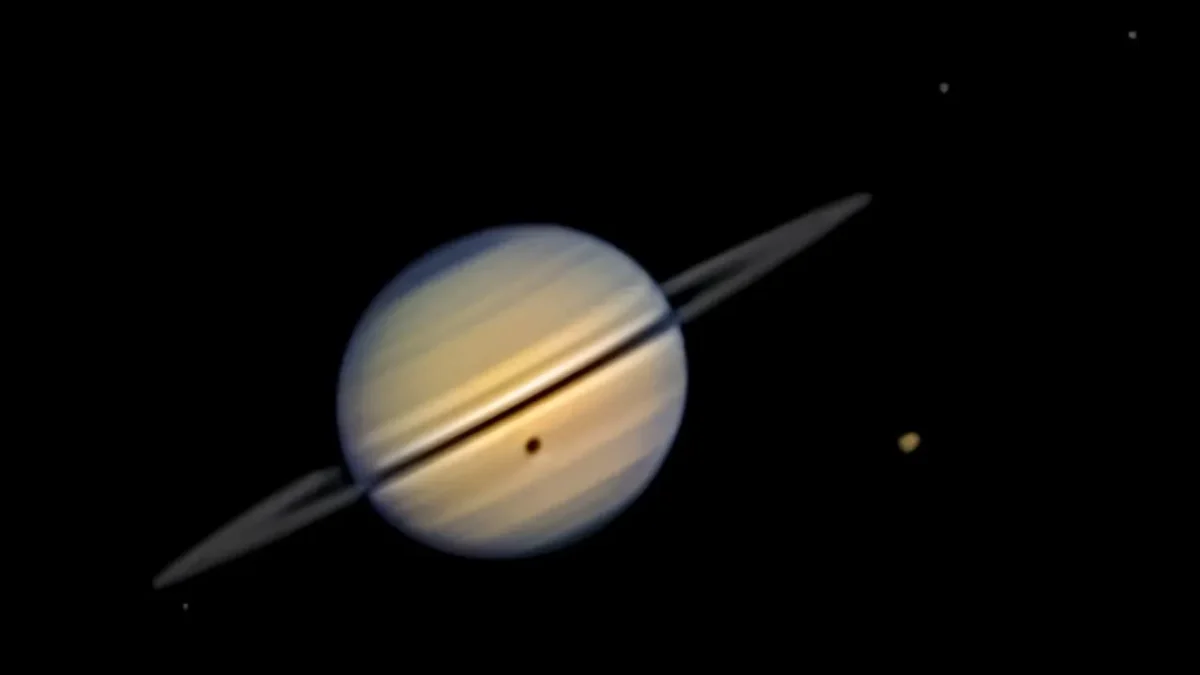
Photographing the planets: Jupiter, Saturn, Mars, Venus, requires high magnification and a different technique than wide-field or deep-sky imaging. Rather than a single long exposure, planetary photographers typically record video at high frame rates and then stack the best frames together in software.
What you need: A telescope with a long focal length (at least 1000mm), and ideally a dedicated planetary camera or a smartphone adapter. A stable mount is essential.
What you can photograph: Jupiter’s cloud bands and the Great Red Spot, Saturn’s rings, Mars’s polar ice caps, Venus’s phases.
Difficulty: Moderate. Requires more equipment than nightscape photography but less than deep-sky imaging.
Deep-Sky Object (DSO) Imaging
Deep-sky imaging is the most technically demanding branch of astrophotography, and also arguably the most spectacular. DSO imaging captures nebulae, galaxies, star clusters, and supernova remnants (objects that are often thousands or millions of light-years away and extremely faint).
What you need: A camera (DSLR, mirrorless, or dedicated astronomy camera), a telescope, and a motorized equatorial mount to track the sky as the Earth rotates. Capturing multiple exposures and stacking them in software is standard practice.
What you can photograph: The Orion Nebula (M42), the Andromeda Galaxy (M31), the Crab Nebula (M1), globular clusters, emission nebulae, planetary nebulae.
Difficulty: High. Best approached after gaining experience with wide-field imaging first.
What Equipment Do You Actually Need?
The single biggest misconception about astrophotography is that you need expensive, specialized gear to get started. You don’t. Here is a realistic, honest breakdown of equipment at each stage.
Stage 1: The Absolute Minimum (Smartphone or Any Camera + Tripod)
Modern smartphones (particularly recent flagship Android phones and iPhones) can capture the Milky Way using their built-in night modes. Apps like ProCamera, Halide (iOS), or Camera2 (Android) give you manual control over ISO, shutter speed, and focus, allowing you to push your phone much further than the default camera app permits.
If you have a smartphone and a tripod adapter (around โน500โโน2,000 or $10โ$30 depending on where you are), you already have a working astrophotography setup. The results won’t rival a DSLR, but they’re real, and they’re a genuinely useful way to learn composition and planning before investing more.
Stage 2: The Core Beginner Setup (DSLR or Mirrorless + Wide Lens + Tripod)
This is the setup recommended for the vast majority of beginners, and it’s what will produce satisfying Milky Way and star trail images without requiring a tracking mount.
Camera body: Any entry-level DSLR or mirrorless camera with manual mode and RAW file capability will work. Specific models worth considering include:
- Canon EOS 250D / Rebel SL3: compact, beginner-friendly, good high-ISO performance
- Nikon D3500 / D5600: excellent dynamic range, large second-hand market
- Sony A6000 series: mirrorless, lighter, excellent sensor performance
- Fujifilm X-T30: strong high-ISO capability, compact form factor
The sensor size matters. A full-frame sensor (found in more expensive bodies) collects more light than a crop sensor (APS-C) or micro four-thirds, but an APS-C sensor is more than capable for beginners.
Lens
For wide-field nightscape photography, you want a wide-angle lens with a large maximum aperture. The two most recommended beginner astrophotography lenses are:
- Rokinon/Samyang 14mm f/2.8: manual focus, affordable, produces excellent results for its price
- Canon 10โ18mm f/4.5โ5.6 / Nikon 10โ20mm f/4.5โ5.6: versatile zoom options, though the smaller maximum aperture requires longer exposures.
A lens at f/2.8 or wider lets in significantly more light than an f/4 lens, which is critical for photographing faint objects without excessively long exposures.
Tripod
Don’t underestimate the tripod. A flimsy tripod is one of the most common sources of blurry astrophotos. Choose one that feels solid with your camera mounted on it, with minimal wobble when you press the shutter button. A ball head allows easy precise positioning. Ball head tripods from brands like Joby, Benro, or K&F Concept offer good stability at reasonable prices.
Remote shutter release or intervalometer: Pressing the shutter button directly causes camera shake, particularly for exposures longer than a second. A remote shutter release (wired or wireless) eliminates this. An intervalometer additionally lets you automatically take multiple frames for star trails or image stacking.
Stage 3: Adding a Tracker (For Better Stars and Longer Exposures)
The Earth rotates at a rate of approximately 15 arcseconds per second. On a stationary tripod, stars begin to trail (appear as short lines rather than points) after exposures of roughly 15โ25 seconds depending on your focal length. A tracking mount counteracts this rotation by turning at the same rate as the Earth, keeping stars pinned to the same pixels on your sensor.
Star tracker mounts are compact, battery-powered devices that sit between your tripod head and camera. Popular models include:
- iOptron SkyTracker Pro: reliable, portable, accurate polar alignment
- Sky-Watcher Star Adventurer Mini: lightweight (under 500g), affordable, excellent for travel
- Vixen Polarie Star Tracker: compact and accurate, popular with landscape astrophotographers
With a tracker, you can extend your exposures to several minutes, dramatically improving your ability to capture faint structures in nebulae and galaxies with just a wide-angle or short telephoto lens.
What You Can Skip (For Now)
- A telescope (not necessary for nightscape and Milky Way photography)
- A dedicated astronomy camera (your DSLR works well for beginners)
- Narrowband filters (highly specialized, for advanced imaging)
- An equatorial mount with a telescope (save this for deep-sky imaging later)
Understanding the Key Camera Settings
Astrophotography relies on three camera settings more than any others: ISO, aperture, and shutter speed. These form the exposure triangle. The relationship between them determines how much light hits your sensor and how your image looks.
ISO
ISO is your camera’s light sensitivity setting. A higher ISO means the sensor is more sensitive to light, allowing it to capture faint objects in a shorter time. However, higher ISO also introduces digital noise, random variations in pixel brightness that make images appear grainy.
For nightscape photography, ISOs between 1600 and 6400 are typical. The right ISO depends on your camera’s sensor quality and your shooting conditions:
A newer full-frame sensor (Sony A7III, Nikon Z6, etc.) handles ISO 6400 with manageable noise
An APS-C sensor from 5โ10 years ago may show significant noise above ISO 3200
Light-polluted skies require lower ISOs because the sky itself is bright, worsening noise
A useful approach: take a test shot at ISO 3200 and ISO 6400, zoom into the image on your camera’s screen, and judge the noise level yourself. Your camera’s native base ISO (typically ISO 100 or 200) produces the cleanest images, but is too insensitive for most nighttime shooting.
Aperture
Aperture refers to the size of the opening in your lens that lets light through. It’s expressed as an f-number: f/1.8, f/2, f/2.8, f/4, f/5.6, where lower numbers mean a larger opening and therefore more light.
For nightscape photography, always shoot at the widest aperture your lens allows. An f/1.8 lens collects four times as much light as an f/3.6 lens. This translates directly into either brighter images or shorter exposure times, both of which reduce star trailing and noise.
The caveat: many lenses produce slightly soft or distorted images at their maximum aperture, particularly in the corners. Stopping down by one stop (e.g., shooting f/2.0 on an f/1.8 lens) often improves sharpness noticeably. Test your lens and find the sweet spot.
Shutter Speed
Shutter speed determines how long the camera’s sensor is exposed to light. Longer shutter speeds collect more light but risk star trailing on a fixed tripod, and risk overexposing the sky in light-polluted locations.
The relationship between shutter speed and star trailing depends on your focal length and sensor size. This is where the 500 Rule comes in.
The 500 Rule (and Why It Matters)
The 500 Rule is the standard starting point for calculating your maximum shutter speed before stars begin to trail on a stationary tripod. The formula is:
Maximum shutter speed (seconds) = 500 รท (focal length in mm ร crop factor)
Examples:
Full-frame camera + 24mm lens: 500 รท 24 = ~20 seconds
APS-C camera (1.5ร crop) + 24mm lens: 500 รท (24 ร 1.5) = 500 รท 36 = ~13 seconds
APS-C camera + 14mm lens: 500 รท (14 ร 1.5) = 500 รท 21 = ~23 seconds
The 500 Rule gives you a safe starting point. In practice, modern high-megapixel cameras may require shorter exposures because the pixel density makes trailing more visible when zoomed in. A stricter version called the NPF Rule accounts for pixel size and declination angle, and is worth looking up once you’re comfortable with the basics.
The key takeaway: use the widest lens you have, keep your shutter speed within the 500 Rule limit, and dial up ISO to compensate for the shorter exposure time.
How to Choose a Shooting Location
Your location will make or break your astrophotography session. Three factors matter above all others: darkness, weather, and horizon.
Light Pollution
The artificial glow from cities, streetlights, and industrial areas โ is the primary challenge for astrophotographers. It brightens the sky background, drowning out faint stars and making it difficult or impossible to see the Milky Way.
The Bortle Scale measures sky darkness from 1 (perfectly dark rural sky) to 9 (inner-city sky where only the brightest stars are visible). For Milky Way photography, you ideally want a Bortle Class 4 or darker sky. For wide-field star photography without the Milky Way, even a Class 5โ6 sky produces decent results.
Use Light Pollution Map (lightpollutionmap.info) or the Globe at Night project to find dark sky areas near you. In India, dark sky zones exist in places like Spiti Valley (Himachal Pradesh), Hanle (Ladakh), Pench National Park (Madhya Pradesh), and the Thar Desert (Rajasthan). Many rural areas across India that lack major infrastructure provide surprisingly dark skies.
Atmospheric Conditions
Even a dark sky is useless under cloud cover or haze. For India specifically, the monsoon season (JuneโSeptember) makes consistent astrophotography difficult across most of the country. The best months for astrophotography in India are typically October through February, when clear, transparent nights are most frequent.
Two atmospheric quality metrics matter:
Transparency: how clear the air is. High transparency means less scattering of starlight.
Seeing: how stable the atmosphere is. Good seeing means sharper stars. Bad seeing produces shimmering, blurry stars.
Apps like Clear Outside and Astrosphere give forecasts for both transparency and seeing, going beyond standard weather apps.
Horizon Clearance
If your goal is to photograph the Milky Way galactic core, you need a clear southern horizon in the Northern Hemisphere. Trees, mountains, or buildings blocking the south will obscure the most dramatic part of the Milky Way for most of the year. Scout your location before your actual shooting session.
Planning Your Astrophotography Session
Arriving at a dark location without a plan wastes time and often results in nothing. Good planning turns a clear night into productive shooting.
Check the Moon Phase
The Moon is the astrophotographer’s most significant natural obstacle. A full moon is bright enough to wash out the Milky Way entirely and significantly degrade wide-field exposures. Shoot during the new moon or within a few days of it for the best conditions. If the Moon is above the horizon, plan your shots facing away from it.
Use the Wonders in Space Full Moon Calendar or apps like Stellarium to check moonrise and moonset times for your planned shooting night.
Use Planetarium Apps
Stellarium (free, desktop and mobile), SkySafari, and PhotoPills are essential tools for planning exactly where the Milky Way will be at a given time and location. These apps let you simulate the night sky at any date, time, and GPS coordinate, so you can plan your composition in advance.
PhotoPills in particular is designed for photographers: it overlays the Milky Way, Moon, and Sun position on your device’s camera view through augmented reality, letting you preview exactly where the galactic core will rise and set relative to your landscape.
Consider the Season
The Milky Way galactic core is only visible from Earth during certain months. From India and most of the Northern Hemisphere, the core is best positioned in the sky from approximately March through October, peaking in June and July. During the winter months, the galactic core is below the horizon at night, meaning winter astrophotography focuses more on star clusters, nebulae, and other targets.
How to Focus on Stars
Autofocus does not work in the dark. A camera pointed at a dark sky has nothing to lock onto, and autofocus systems will hunt endlessly without finding a focus point. You must focus manually.
Here is the most reliable method for beginners:
- Point your camera at a bright star or a distant artificial light on the horizon
- Set your lens to manual focus mode
- Enable Live View on your camera screen (or use the electronic viewfinder on a mirrorless camera)
- Zoom in on the bright star using your camera’s digital zoom (usually a button on the back)
- Slowly turn the focus ring until the star appears as a tiny, sharp pinpoint rather than a soft, blurry blob
- Lock the focus ring in place with tape if it tends to shift
On many lenses, infinity focus (the โ symbol on the focus ring) is a useful starting point, but on modern lenses, true optical infinity often falls slightly before the hard stop, so don’t rely on it alone. Use the Live View zoom method above to verify sharpness.
Capturing Your First Image: Step-by-Step
With location chosen, focus confirmed, and settings prepared, here’s a practical step-by-step for your first astrophotography session.
Before leaving home:
- Fully charge your camera battery (cold temperatures drain batteries faster; bring a spare)
- Format your memory card and confirm you have enough space (RAW files are large)
- Download Stellarium or PhotoPills and plan your composition
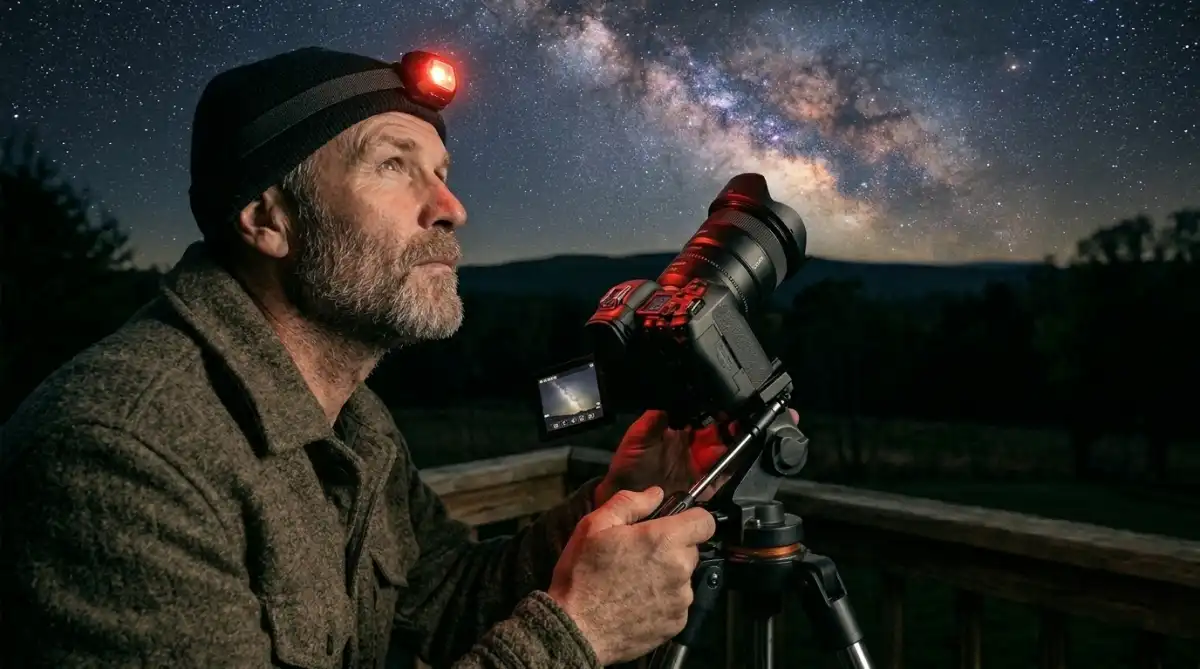
- Pack red light headlamp: red light preserves your night vision, which takes about 20 minutes to fully adapt
At your location:
- Set up your tripod on stable ground, away from foot traffic
- Attach your camera and level the tripod head
- Set your lens to its widest aperture
- Set your camera to RAW file format (not JPEG, RAW files retain far more data for processing)
- Set your camera to Manual (M) mode
- Set your ISO to 3200 as a starting point
- Set your shutter speed using the 500 Rule based on your focal length
- Turn off image stabilization: on a tripod, stabilization can cause blur by trying to compensate for non-existent movement
- Turn off long exposure noise reduction initially: it doubles your exposure time, blocking further shooting while the camera processes
- Use a 2-second self-timer or a remote shutter release to avoid camera shake when triggering the shutter
- Take a test shot and review it on your camera screen
Check star sharpness by zooming into the image (stars should be pinpoints, not trails or blurry blobs) - Adjust ISO, shutter speed, or framing as needed
Once settings are dialed in, shoot a series of 20-30 frames for later stacking, or shoot a longer sequence for star trails.
Image Processing: From Raw Files to Final Photo
The photograph that comes off your camera sensor is a raw data file it contains all the captured information but looks flat, dim, and noisy. Processing is where the image comes to life.
Essential Software
For beginners:
- Adobe Lightroom: the most widely used tool for adjusting brightness, color, noise reduction, and contrast on individual frames. Available as a subscription or as Lightroom Classic.
- RawTherapee: a free, open-source alternative to Lightroom with extensive RAW processing capabilities.
- GIMP: free image editing that can handle basic astrophotography adjustments.
For image stacking (combining multiple frames):
- DeepSkyStacker (DSS): free, Windows-only, the standard tool for deep-sky image stacking. Combines multiple exposures to reduce noise and reveal faint detail.
- Sequator: free, Windows-only, designed specifically for wide-field nightscape stacking including landscapes.
- Siril: free, cross-platform (Windows/Mac/Linux), increasingly the preferred choice for beginners stepping into deep-sky processing.
A Basic Processing Workflow for Nightscape Images
The goal of processing is to bring out the faint sky detail while reducing noise and keeping the image looking natural (or dramatic, depending on your style).
- Import your RAW files into Lightroom or RawTherapee
- Adjust white balance: artificial light pollution often creates orange-yellow color casts. Shift the white balance cooler (more blue) to produce a more natural dark sky appearance.
- Raise the shadows and reduce the highlights: this reveals faint sky detail without blowing out bright stars.
- Apply noise reduction: Lightroom’s Luminance slider (or the AI Denoise tool in newer versions) is remarkably effective. Start at 40โ60 and judge the result.
- Boost clarity and texture: this brings out the structural detail in the Milky Way’s dust lanes and star clouds.
- Adjust the curve: a gentle S-curve increases overall contrast and gives the image more punch.
Export at full resolution as TIFF or JPEG
Understanding Image Stacking
Image stacking is the process of combining multiple exposures of the same scene so that random noise averages out and consistent signal (actual light from stars and nebulae) is reinforced. A stack of 20 frames of the Milky Way will show dramatically less noise and more detail than any single frame at the same settings.
This is why astrophotographers often take long sequences rather than single shots. Load your frames into DeepSkyStacker or Sequator, align them (the software does this automatically), and let it combine them. The resulting stacked image is your master frame for final processing.
Common Beginner Mistakes and How to Avoid Them
Choosing a full moon night to shoot the Milky Way
The Moon washes out the Milky Way completely. Always check the moon phase before planning a session. Shoot within a few days of new moon.
Shooting in JPEG instead of RAW
JPEG files are compressed and lose information during processing. RAW files preserve all the data your sensor captured, giving you far more flexibility in processing. Always shoot RAW for astrophotography.
Not letting your eyes (and camera) adapt to the dark
Your eyes take about 20โ30 minutes to fully adapt to darkness. Don’t check your phone screen (or use white-light flashlights) during this time. Switching to airplane mode and using a red-light headlamp helps.
Touching the tripod during exposures
Even a light touch on the tripod during a 20-second exposure will blur the image. Use a remote shutter release or the 2-second self-timer on every shot.
Shooting on hazy or dewy nights
Dew forming on your lens is invisible until you see blurry, glowing stars in your images. A dew heater strip (available cheaply) wraps around your lens and prevents this. Check your lens between shots on humid nights.
Using image stabilization on a tripod
Optical image stabilization can cause blur when used on a stationary tripod because the system tries to compensate for movement that isn’t there. Turn it off.
Not checking star sharpness until you get home
Always zoom into your test shots on the camera screen to verify that stars are sharp pinpoints, not blurry or trailed. Catching a focus problem in the first five minutes of a session saves the entire night.
How to Progress from Beginner to Intermediate
Once you’ve taken your first Milky Way shots and worked through the basics, the natural next steps are:
Add a star tracker
A Sky-Watcher Star Adventurer Mini or iOptron SkyTracker Pro opens up longer exposures and enables you to image fainter structures in the Milky Way with your existing camera and lens.
Move to a short telephoto lens. A 50mm, 85mm, or 135mm lens attached to a tracker lets you zoom into specific sections of the sky: nebula regions, star clusters, areas of the Milky Way with impressive results before you ever touch a telescope.
Learn narrowband imaging
Light pollution filters (such as SkyTech or Optolong L-eNhance filters) allow you to photograph nebulae from light-polluted suburban skies by blocking artificial light wavelengths while passing the specific wavelengths emitted by nebulae. A single filter can transform your backyard imaging dramatically.
Try planetary imaging during opposition
When Jupiter or Saturn are at opposition (closest to Earth), a smartphone attached to a basic telescope eyepiece using an afocal adapter can produce surprisingly good planetary images. This is an excellent, low-cost way to try telescope-based astrophotography.
Join the community. India has a growing community of amateur astrophotographers. The Amateur Astronomers Association of India, Astro Trails India, and various online forums connect you with people who can answer questions, share dark sky locations, and provide feedback on your images.