Tag: Comet

  • NASA releases new images of interstellar comet 3I/ATLAS

    NASA releases new images of interstellar comet 3I/ATLAS

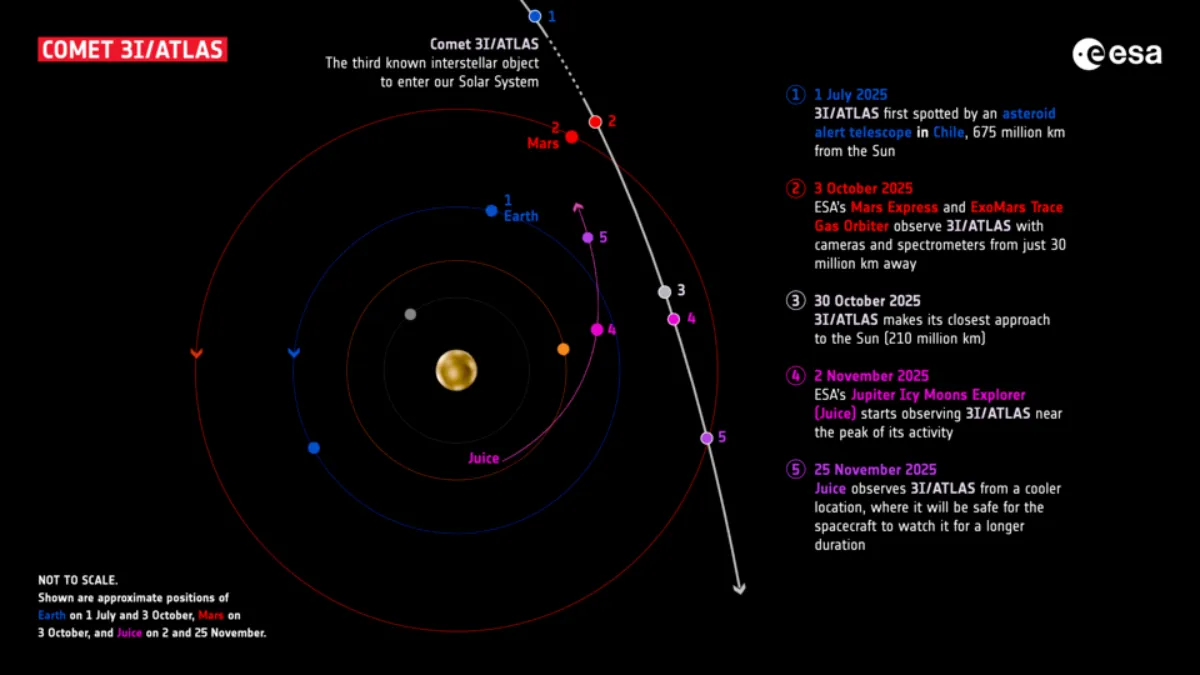
    NASA has released a new set of images showing the interstellar comet 3I/ATLAS as it crossed the inner solar system in October 2025. Spacecraft orbiting the Sun, traveling through deep space, and working around Mars all turned their cameras toward the object after its close pass. The goal was to capture its shape, motion, and makeup before it fades from view and leaves the solar system for good.

    The images were published on November 19, weeks after the comet passed near Mars in early October. NASA confirmed that missions including MAVEN, Psyche, Lucy, and SOHO collected data from different positions in space. Together, they created a rare, multi-angle record of an object that formed around another star.

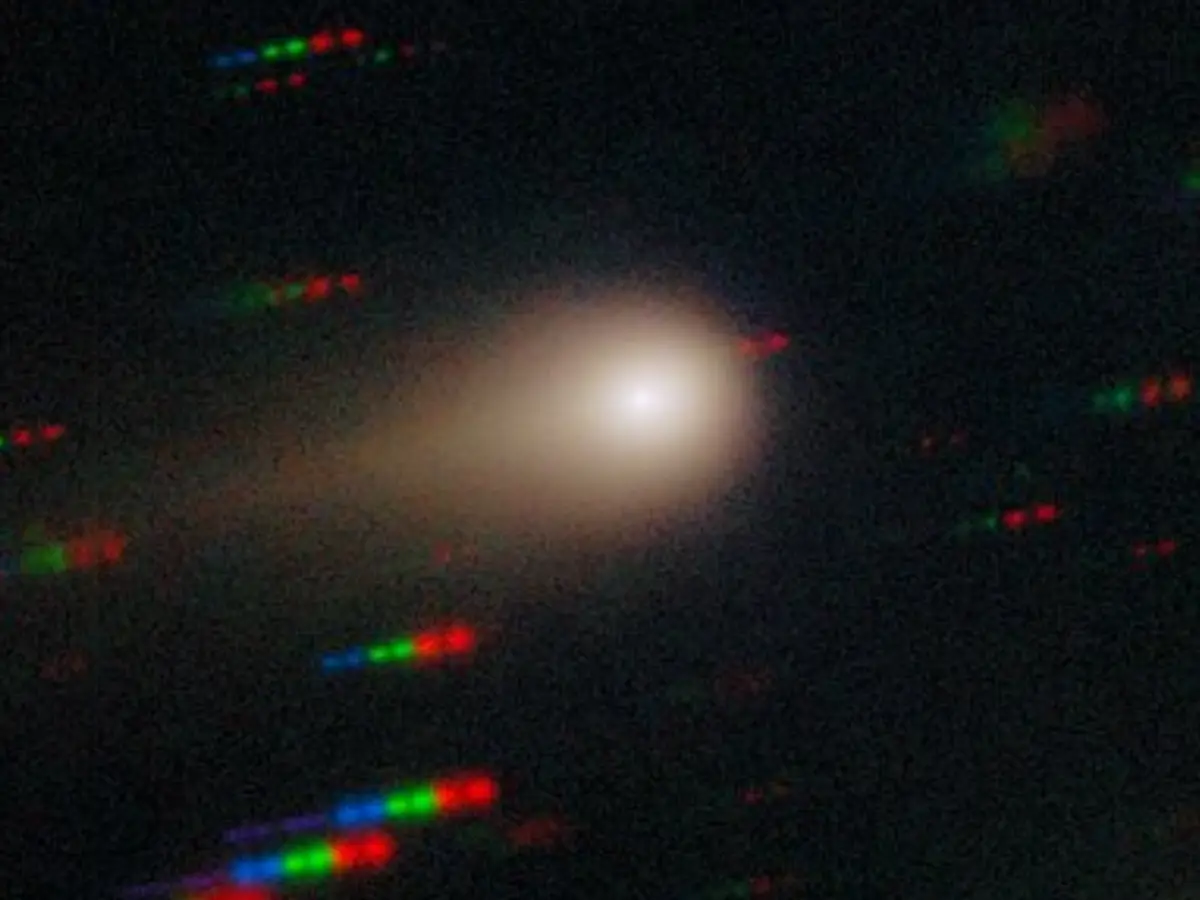
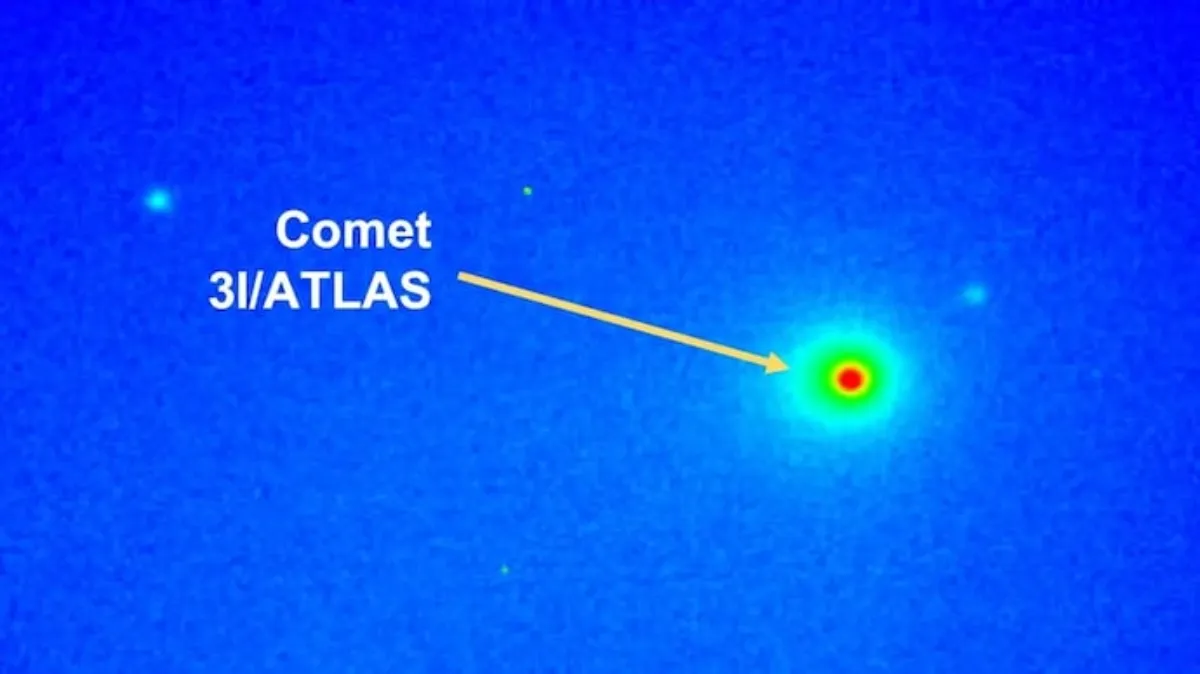
    In most of the images, the comet appears as a faint, blurred ball surrounded by a cloud of gas and dust. A short tail can also be seen in some views. Despite coming from another star system, it behaves much like comets that formed in our own.

    Interstellar comet 3I/ATLAS captured by MAVEN spacecraft
    Interstellar comet 3I/ATLAS captured by MAVEN spacecraft. Image credit: NASA

    MAVEN, which orbits Mars, used its ultraviolet camera to detect a wide cloud of hydrogen around the comet. This cloud formed as sunlight broke down gases released from the surface. The solar wind then pushed this material away, stretching it through space.

    Interstellar comet 3I/ATLAS captured by the Psyche spacecraft.
    Interstellar comet 3I/ATLAS captured by Psyche spacecraft. Image credit: NASA

    The Psyche spacecraft observed the comet for nearly eight hours as it passed about 33 million miles away. These long observations helped scientists calculate its exact path and speed with better accuracy.

    Interstellar comet 3I/ATLAS captured by LUCY spacecraft
    Interstellar comet 3I/ATLAS captured by LUCY spacecraft. Image credit: NASA

    Farther out, the Lucy spacecraft captured faint images from roughly 240 million miles away. Scientists combined several of these pictures to reveal the dusty cloud and a short tail against the background of stars.

    Interstellar comet 3I/ATLAS captured by the Perseverance rover.
    Interstellar comet 3I/ATLAS captured by the Perseverance rover. Image credit: NASA

    Even on the Martian surface, the Perseverance rover managed to spot a weak trace of the comet in the sky. From Earth’s orbit, the Hubble Space Telescope collected clearer data on the gases surrounding the object. Ground-based telescopes added more detail about its size and activity.

    Chemical readings show large amounts of carbon monoxide and cyanide in the gas cloud around 3I/ATLAS. These substances are also common in comets within our own solar system. This suggests similar conditions may exist in many star systems when comets form.

    The comet is only the third confirmed visitor from outside our solar system, following ‘Oumuamua in 2017 and Borisov in 2019. It is moving at nearly 150,000 miles per hour on a path that will send it back into deep space, never to return.

    The ATLAS survey first discovered the object on July 1, 2025. It made its closest pass to the Sun on October 30 at a distance of about 1.4 times the gap between Earth and the Sun, close to the orbit of Mars. Scientists estimate the solid center of the comet may be between one and five kilometers wide. It appears to be covered in reddish dust, similar to objects found on the edge of our own solar system.

    Large telescopes will continue tracking 3I/ATLAS into early 2026 as it fades. The James Webb Space Telescope has already observed it, and more data is being processed. Each set of images adds to a small but growing record of objects that travel between stars. For now, 3I/ATLAS is offering one of the clearest chances yet to study material formed around another sun.

  • ISRO captures Interstellar Comet 3I/ATLAS from Mount Abu as it exits the Solar System

    ISRO captures Interstellar Comet 3I/ATLAS from Mount Abu as it exits the Solar System

    Indian astronomers have recorded one of the rarest visitors ever seen in the sky. Scientists at the Physical Research Laboratory used the 1.2‑meter telescope at Mount Abu in Rajasthan to image and study the interstellar comet 3I/ATLAS for four nights starting on November 12, 2025.

    The object, which came from outside our solar system, had already passed its closest point to the Sun in late October and is now travelling outward on a one-way path into deep space.

    This makes 3I/ATLAS only the third confirmed interstellar object ever observed in our solar system. The first was ‘Oumuamua in 2017, followed by Comet Borisov in 2019. Unlike most comets, which come from the outer regions of our own system, this object formed around a different star before drifting into our neighborhood.

    The Mount Abu team captured images showing a faint but visible glow around the comet’s core. This glow forms when ice on the surface turns into gas and dust as it is warmed by sunlight. Even though the comet was already moving away from the Sun, it remained active enough to produce a clear cloud around its center.

    Researchers also split the comet’s light into its basic components to study what it is made of. Their data shows a higher level of carbon dioxide compared to water, which is unusual when compared to many comets from our own system. At the same time, it also contains familiar gases such as cyanide and other carbon-based compounds commonly detected in local comets.

    The comet was first discovered on July 1, 2025, by the ATLAS survey in Chile. Further tracking confirmed that it was moving far too fast to be held by the Sun’s gravity. Its stretched, open path shows that it did not originate here and will not return once it leaves.

    At the time of its closest pass, the comet was about 1.5 times farther from the Sun than Earth. While that distance kept it out of public view, it was still close enough for large telescopes to study its behavior and composition. This is why observations from high-altitude sites like Mount Abu were so important.

    Other observatories around the world, as well as instruments near Mars, also tracked 3I/ATLAS. By combining this data, scientists can compare an interstellar object to comets and asteroids formed around our own Sun. This helps them test how common certain materials may be in other star systems.

    Over the coming months, the comet will grow dimmer as it moves farther away from the Sun. By early 2026, it is expected to fade beyond the reach of most telescopes. After that, it will continue its long journey through interstellar space.

    For researchers, even a brief visit like this is important. Each interstellar object carries material from another part of the galaxy. Studying it, even for a short time, adds one more piece to the wider story of how planets and small bodies form around stars across the universe.

  • ESA maps path of interstellar comet 3I ATLAS using rare images captured from Mars

    ESA maps path of interstellar comet 3I ATLAS using rare images captured from Mars

    Scientists at ESA (European Space Agency) have produced the clearest tracking yet of comet 3I ATLAS, an interstellar visitor first detected in July 2025 as it entered the Solar System at high speed. The agency combined telescope data from Earth with images taken by spacecraft orbiting Mars, which improved the comet’s predicted course by ten times. The comet is the third confirmed object from outside the solar system and will leave the region later this year.

    Astronomers first identified 3I ATLAS with the ATLAS telescope in Chile on July 1, 2025. Its speed and curved path showed that it was not bound to the Sun. Instead, it was passing through once before heading back into interstellar space. Only two similar objects have been confirmed before. One was 1I/Oumuamua in 2017, and the other was 2I/Borisov in 2019.

    Unlike Oumuamua, which behaved more like a rocky body, this comet produces a cloud of gas and dust around its nucleus. Observations from Hubble and the James Webb Space Telescope confirmed water, carbon monoxide, and traces of nickel coming from its surface. Early findings suggest the comet may be several billion years old, possibly older than the Sun.

    IInterstellar comet 3I ATLAS captured by ESAs ExoMars trace gas orbiter.
    Interstellar comet 3I ATLAS captured by ESA’s ExoMars trace gas orbiter. Image credit: ESA

    The comet passed about 29 million kilometers from Mars on October 3, 2025. The distance was close enough for ESA’s ExoMars Trace Gas Orbiter to capture a set of images that showed the comet moving across a field of stars. Mars Express also observed it during the same period.

    These views from a different angle helped reduce the uncertainty in the comet’s position and improved predictions for its path. ESA said this was the first time measurements from a spacecraft orbiting another planet were added to the official Minor Planet Center database.

    The comet does not pose any danger to Earth. Its closest approach is far beyond the orbit of Mars. Even so, the event served as a practical test for teams that monitor objects that could one day threaten the planet. If a hazardous asteroid ever appears, data from spacecraft around other planets could help confirm its trajectory.

    The comet remained active as it passed the Sun on October 30, 2025. Telescopes have recorded long tails and narrow jets coming from its surface. Most researchers say the features match what they expect from an icy body heating up near the Sun. A few unusual details have drawn attention but do not change the overall picture.

    More images will arrive in 2026 from ESA’s Juice spacecraft, which observed the comet soon after its closest approach to the Sun. ESA also plans to use its upcoming NeoMIR mission to detect objects hidden in sunlight and its Comet Interceptor mission to target future visitors from deep space.

    Comet 3I ATLAS is already moving back toward the outer solar system, but the brief chance to track it from both Earth and Mars has given scientists a clearer look at material from another star system. The data shows how rare encounters like this can help identify and study objects that travel between the stars.

    Source: ESA pinpoints 3I/ATLAS’s path with data from Mars

  • Interstellar Comet 3I/ATLAS Skims Past the Sun, Drawing Attention From Space Agencies Worldwide

    Interstellar Comet 3I/ATLAS Skims Past the Sun, Drawing Attention From Space Agencies Worldwide

    Comet 3I/ATLAS will reach its closest point to the Sun on Wednesday, October 29, 2025, giving astronomers a rare look at a visitor from outside our solar system. The object was discovered in July by the ATLAS survey telescope in Chile and is now under close study because it may carry material from another star system.

    DetailInformation
    NameComet 3I/ATLAS
    TypeInterstellar comet
    Discovered OnJuly 1, 2025
    Discovered ByATLAS Telescope, Chile
    Closest Approach to Sun (Perihelion)October 29, 2025
    Distance at Perihelion0.25 AU (closer than Mercury)
    Estimated SizeAbout 10 km across
    Current Brightness (October 29, 2025)Magnitude 12–14
    Constellation LocationVirgo (evening sky)
    Will It Return?Not for thousands of years

    Scientists first saw the comet on July 1. ATLAS normally watches for space rocks that might come near Earth, but this one stood out. Its path is not an orbit. It moves through space on a straight route, which shows that it came from far beyond our Sun.

    3I/ATLAS is the third known interstellar object after ‘Oumuamua in 2017 and Comet Borisov in 2019. Unlike ‘Oumuamua, which looked like a rocky fragment, this comet is made of ice and dust and is about 10 kilometers wide. Its size and speed make it one of the most interesting objects to cross our region of space in recent years.

    At perihelion today, the comet sits about 0.25 astronomical units from the Sun. That is closer than Mercury. The heat is forcing gas and dust out of its surface and forming a bright cloud around the comet. Researchers say this activity could increase over the next several days.

    Space agencies are watching. ESA reported that cameras on the Mars Express and ExoMars probes recorded bursts of material coming from the comet’s surface. NASA’s Hubble Telescope captured a green glow around it last week, produced by carbon compounds boiling off in sunlight.

    For skywatchers, seeing the comet will not be easy yet. Its brightness is between magnitude 12 and 14, far too dim for the naked eye. Observers will need a telescope with at least an 8-inch mirror and dark skies. It appears low in the evening sky in the direction of Virgo.

    The comet may brighten as it moves away from the Sun, potentially reaching magnitude 10 by mid-November. That would make it faintly visible in binoculars under ideal conditions, though still challenging for most people.

    Scientists want to learn what the comet is made of. Interstellar comets may contain ice and organic matter from the system they came from. Testing that material could reveal how planets form around other stars. It may also help researchers improve systems that warn of dangerous objects headed toward Earth.

    Online rumors claim the comet will pass behind the Sun or rival the Moon in brightness. Astronomers say neither is true. The comet remains visible to ground instruments, and its brightness will stay far below moonlight levels. Even so, its tails may stretch for millions of kilometers, making it a striking object through a large telescope.

    3I/ATLAS will continue moving outward after today and should fade from sight by early 2026. It will not return for thousands of years. Some researchers hope a future probe could collect dust from its tail, but no mission has been approved.

    For now, scientists will track every change they can. Interstellar visitors are rare, and each one helps researchers learn more about the wider galaxy. Clear skies to anyone giving it a try tonight.

  • ESA Mars Orbiters Capture Rare Images of Interstellar Comet 3I/ATLAS Passing Near the Red Planet

    ESA Mars Orbiters Capture Rare Images of Interstellar Comet 3I/ATLAS Passing Near the Red Planet

    Two European spacecraft orbiting Mars have captured rare images of an interstellar comet passing nearby. On October 3, ESA’s ExoMars Trace Gas Orbiter and Mars Express turned their cameras toward comet 3I/ATLAS as it came within about 30 million kilometers of the red planet. The close approach gave scientists an unusual chance to study material from beyond our solar system.

    Comet 3I/ATLAS was first spotted in July 2025 by the ATLAS telescope in Chile. It is only the third interstellar comet ever confirmed, following ‘Oumuamua in 2017 and Borisov in 2019. These comets travel on hyperbolic paths, meaning they are not bound to the sun and will not return once they pass through.

    Astronomers believe 3I/ATLAS may be far older than our solar system. Models suggest it formed about 7.6 billion years ago, roughly three billion years before the sun and planets. Its orbit shows that it likely escaped from a distant star system long ago and has been drifting through space ever since, carrying frozen material from another corner of the galaxy.

    The ExoMars orbiter used its CaSSIS camera to take a series of long exposures, capturing the comet as a faint white spot moving across the sky. That blur represents the nucleus and its coma, the cloud of dust and gas released as sunlight warms the surface.

    The nucleus itself is estimated to be only about a kilometer wide, too small to be resolved directly from such a distance. By comparison, scientists described it as like trying to see a phone from the surface of the moon.

    The coma already measures thousands of kilometers across, though its edges are hard to see against the background. No tail has yet been detected, but astronomers expect one to form as the comet moves closer to the sun in the coming weeks.

    Mars Express also attempted to record the event, but its shorter exposures made the comet more difficult to pick out. Teams are combining and processing multiple images to improve visibility. Both orbiters also tried to collect spectral data to identify gases escaping from the comet.

    Capturing these images was a technical challenge. The orbiters are built to photograph the Martian surface, which is only hundreds of kilometers away. The comet, by contrast, was tens of millions of kilometers distant and tens of thousands of times dimmer. According to CaSSIS team leader Nick Thomas, the task pushed the limits of the spacecraft’s instruments.

    Studying interstellar comets is important because they are made of material that formed around other stars. Small differences in their chemistry, such as isotope ratios or unusual ice content, help researchers compare how planetary systems form across the galaxy.

    When astronomers studied 2I/Borisov, for example, they found unusually high levels of carbon monoxide, suggesting it came from a colder environment than our solar system.

    Analysis of the Mars images will continue for several weeks, as scientists measure the coma’s size and look for chemical signatures. The comet will also be observed by ESA’s Juice spacecraft, which is currently on its way to Jupiter. Juice is expected to capture new data after 3I/ATLAS makes its closest approach to the sun. Because of the spacecraft’s distance, that information will not reach Earth until February 2026.

    Looking ahead, ESA plans to launch the Comet Interceptor mission in 2029. The spacecraft will wait in space for a target, which could be an untouched comet from the Oort Cloud or even another interstellar visitor. Unlike current observations from afar, a direct encounter would allow scientists to study the surface and structure of such an object up close.

    Source: ESA’s ExoMars and Mars Express observe comet 3I/ATLAS

  • Comet Lemmon Brightens Ahead of October 21 Close Approach, Now Visible in Northern Skies

    Comet Lemmon Brightens Ahead of October 21 Close Approach, Now Visible in Northern Skies

    A newly discovered comet is putting on an unexpected show in the October sky. Comet C/2025 A6 Lemmon, first spotted in January by the Mount Lemmon Observatory in Arizona, is brightening faster than astronomers expected and will pass within 90 million kilometers of Earth on October 21. Northern Hemisphere observers now have a chance to see it in binoculars either before sunrise or just after sunset.

    When first observed, Lemmon was faint at magnitude 21.5, barely distinguishable from an asteroid. But as it drew closer to the sun, it became active. By late September, the comet reached magnitude 6.6 and displayed a three-degree-long ion tail. As of October 9, it had brightened further to magnitude 5.8, making it a visible target in binoculars under dark skies.

    The brightening is due to sunlight heating the nucleus, causing ices to vaporize and release gas and dust. The coma now shows a cyan tint from cyanogen, a common comet molecule. Lemmon follows a long retrograde orbit of about 1,350 years, though a gravitational nudge from Jupiter will shorten this to 1,150 years after it leaves the inner solar system.

    For skywatchers, the first half of October offers morning views. The comet sits in Ursa Major, about 15 degrees below the Big Dipper’s cup. Around October 10, it will be high enough to remain visible all night for locations north of 48 degrees latitude, including Scotland and Alaska.

    From mid-October, it will appear in the west after sunset, low on the horizon, moving through Leo Minor, Ursa Major, and Canes Venatici at about four degrees per day.

    Key observing dates include October 9, when it passes near the star Omega Ursae Majoris, and October 15, when it comes within two degrees of Messier 94, a spiral galaxy. On October 16, it will pass close to Cor Caroli, a bright star in Canes Venatici. The closest approach to Earth comes on October 21, at 0.60 astronomical units. Its perihelion, the closest point to the sun, follows on November 8 at 0.53 astronomical units.

    By late November, Lemmon will appear near Mars, offering another viewing opportunity. Its tilted path, inclined 144 degrees to the plane of the planets, explains why it favors northern observers during this apparition.

    Lemmon is not the only comet active this month. C/2025 R2 SWAN will pass 0.26 astronomical units from Earth on October 20 and is currently at magnitude 6. Together, the two comets could provide favorable binocular views around Halloween. Interstellar comet 3I/ATLAS is also moving through the inner solar system, though much fainter at magnitude 11.

    Observers hoping to see Lemmon should use binoculars or a small telescope. The coma spans about one arcminute, with a faint tail pointing away from the sun. Under very dark skies, it may eventually become visible to the naked eye if it brightens to magnitude 3 later this month.

    Skywatching apps such as Stellarium can help locate the comet. For photography, short exposures of 10 to 30 seconds can capture the coma and part of the tail, while stacking multiple images reveals more detail. Recent photos have shown changes in the tail linked to interactions with the solar wind.

    Astronomers note that Lemmon is brighter than predicted, about 600 times more than its initial estimate. That makes it one of the more surprising comets in recent years, drawing comparisons with NEOWISE in 2020 and Tsuchinshan-ATLAS in 2024. As it fades after perihelion, attention will shift to C/2025 R3 PanSTARRS, due in early 2026. For now, Lemmon offers a rare autumn viewing opportunity for comet enthusiasts.

  • Where to see Comet G3 Atlas? Will it be visible to the naked eye?

    Where to see Comet G3 Atlas? Will it be visible to the naked eye?

    Comet G3 Atlas will be visible on January 13 and 14 before sunrise and after sunset. The Comet C/2024 G3 Atlas was last seen 0.16 million years ago, i.e., when the woolly mammoths existed. Scientists predict that Comet G3 Atlas can be the brightest comet in 20 years (possibly brighter than Tschunishan Atlas), making it as bright as Venus in the night sky.

    The Asteroid Terrestrial-impact Last Alert System survey (ATLAS) in Hawaii first discovered the comet in April. Scientists have been tracking it since then, and as it approaches the sun, if it survives this encounter, it might become bright enough to be visible to the naked eye.

    You can watch the comet on Monday, January 13, before sunrise and for a few days in the west direction before sunset. But why does a comet get so bright when it approaches the sun?

    Comets are some of the most beautiful and interesting celestial objects. A comet is made of ice, gas, and dust, and when it approaches the sun, this ice evaporates and forms the bright coma and the tail of the comet.

  • Comet C/2024 S1, Dubbed the โ€˜Halloween Comet,โ€™ Could Shine Brighter Than Venus; If It Survives!

    Comet C/2024 S1, Dubbed the โ€˜Halloween Comet,โ€™ Could Shine Brighter Than Venus; If It Survives!

    A newly discovered comet, C/2024 S1, may put on a dramatic sky show in late October, but only if it survives its close pass with the Sun. First detected in September 2024 by the Asteroid Terrestrial Impact Last Alert System (ATLAS) in Hawaii, the comet is expected to reach peak brightness around October 24, possibly outshining Venus. Yet astronomers warn the object could break apart before reaching that stage.

    Nicknamed the “Halloween Comet” by Forbes, C/2024 S1 is drawing attention because it follows closely on the heels of Comet Tsuchinshan-ATLAS, making 2024 a rare year with two bright comets visible to the public. NASA said the comet could briefly become visible in daylight near the Sun on October 24, especially from the U.S. East Coast. After Halloween, it is expected to reappear in the western evening sky from November 2 through mid-December.

    The best viewing, however, will be from Africa, Europe, and South America, according to astronomers. Skywatchers in those regions may be able to see the comet without special equipment if it brightens enough. For others, binoculars or small telescopes will improve the view.

    Still, its future is uncertain. The Watchmen Earth and Space Connection reported that the comet’s brightness has been fluctuating by about two magnitudes, a sign its icy core could be unstable. If the nucleus fractures while approaching the Sun, it may fade or even vanish completely, leaving only fragments behind.

    On the other hand, if it holds together, the comet could become as bright as magnitude –5, far brighter than Venus, and visible in the pre-dawn skies of the Northern Hemisphere. Such brightness would make it one of the most striking comets in recent decades.

    Scientists also believe C/2024 S1 may not be entirely new. Research suggests it could be a surviving fragment of the Great Comet of 1106, which broke apart more than 900 years ago during a close approach to the Sun. Like that historic comet, C/2024 S1 is thought to have originated in the distant Oort Cloud, a region of icy bodies at the edge of the solar system.

    For now, astronomers are watching closely to see whether the so-called Halloween Comet makes it through its brush with the Sun. Its survival could mean a rare treat for skywatchers across several continents.

  • Tsuchinshan-ATLAS becomes the brightest visible comet of the 21st century
    Tsuchinshan-ATLAS becomes the brightest visible comet of the 21st century
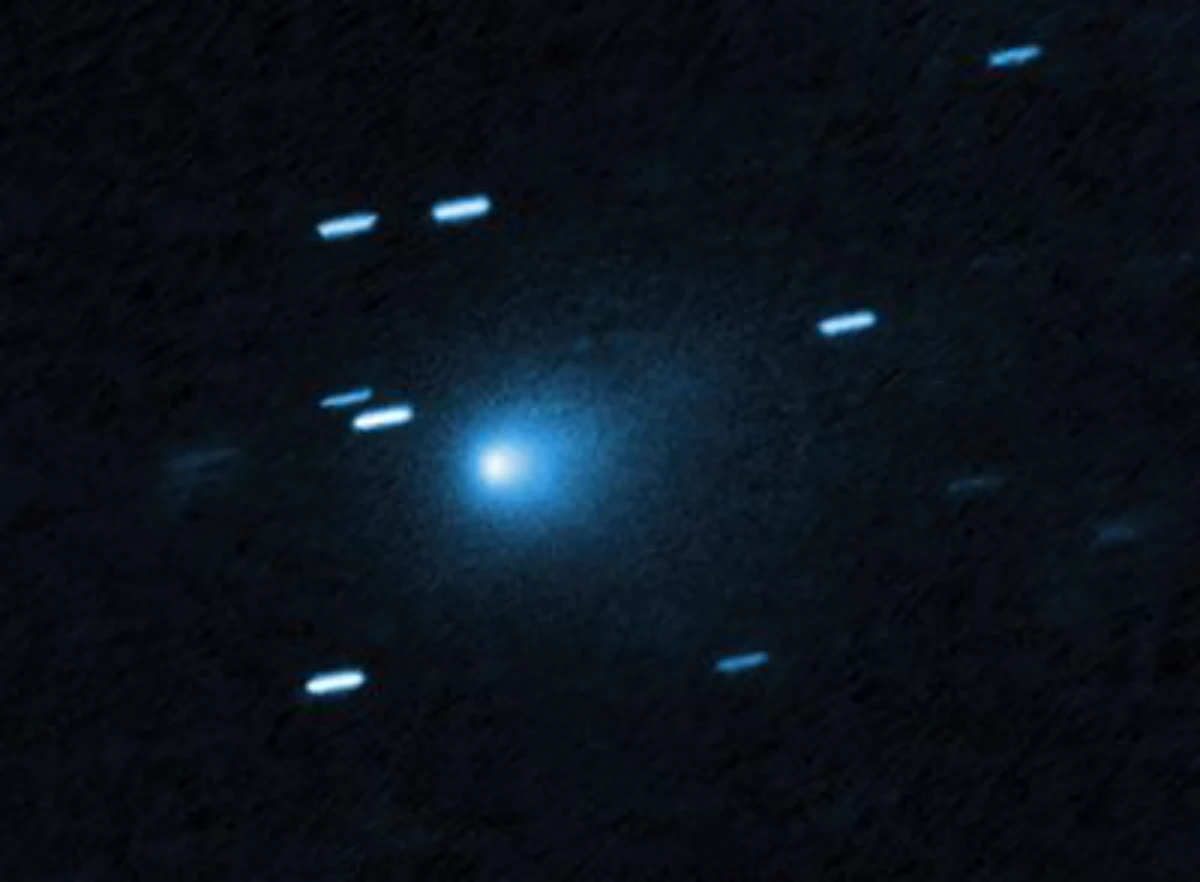
    Comet Tsuchinshan-ATLAS in the night sky captured by a telescope.
    C/2023 A3 (Tsuchinshan-ATLAS) on April 26, 2024, as seen through an 8-inch f/4 reflector telescope. Image credit: Wikimedia Commons

    Comet C/2023 A3, known as Tsuchinshan-ATLAS, became visible from late September to mid-October 2024, with peak brightness in early October shortly after sunset. It was observed from both the northern and southern hemispheres before fading from view by October 24. The comet stood out for its brightness, size, and extremely long 80,000-year orbit, last passing the inner solar system when Neanderthals lived on Earth.

    Discovery of comet C/2023 A3

    Purple Mountain Observatory
    Purple Mountain Observatory. Image Credit: Wikimedia Commons

    The comet was discovered on January 9, 2023, by China’s Purple Mountain Observatory (also called Tsuchinshan) and the Asteroid Terrestrial-impact Last Alert System (ATLAS) in South Africa. Tsuchinshan has a long history in astronomy, while ATLAS is a modern automated system for detecting near-Earth objects.

    What makes Comet Tsuchinshan-ATLAS unique?

    • It has an orbital period of about 80,000 years.
    • Its nucleus size and composition contributed to exceptional brightness, at times rivaling Venus and Sirius.
    • It was discovered independently by two observatories, giving it a dual name.

    Orbital path

    C/2023 A3 follows a vast elliptical path that takes it far into the outer solar system before returning close to the Sun and planets. Its last visit to the inner solar system was tens of thousands of years ago.

    Physical characteristics

    The comet’s nucleus contains ice, dust, and rock from the early solar system. The head of the comet is about 130,000 miles wide, and its tail can stretch up to 18 million miles. As it nears the Sun, heat turns its ice into gas and dust, creating a bright coma and tail pushed outward by the solar wind.

    Technical aspects of comet Tsuchinshan-ATLAS

    Viewing times and locations

    The comet reached its closest point to the Sun (perihelion) on September 27, 2024, and its closest point to Earth on October 12, 2024, at a distance of about 44 million miles. Observers in the northern hemisphere enjoyed the best views as it appeared higher in the sky.

    How to photograph Tsuchinshan-ATLAS

    Photographing the comet requires a camera with manual settings, a tripod, and a remote shutter or timer to avoid camera shake. Longer exposures capture its motion and detail, and binoculars or a telescope improve clarity.

    Previous comet sightings

    Bright comets like Halley and Hale-Bopp have been recorded throughout history. Today, astronomers use ground-based telescopes and space probes to monitor comets, studying their chemical makeup and behavior in detail.