Tag: CSA

  • Canada’s First Lunar Rover to Join NASA’s Artemis Program at Moon’s South Pole in 2029

    Canada’s First Lunar Rover to Join NASA’s Artemis Program at Moon’s South Pole in 2029

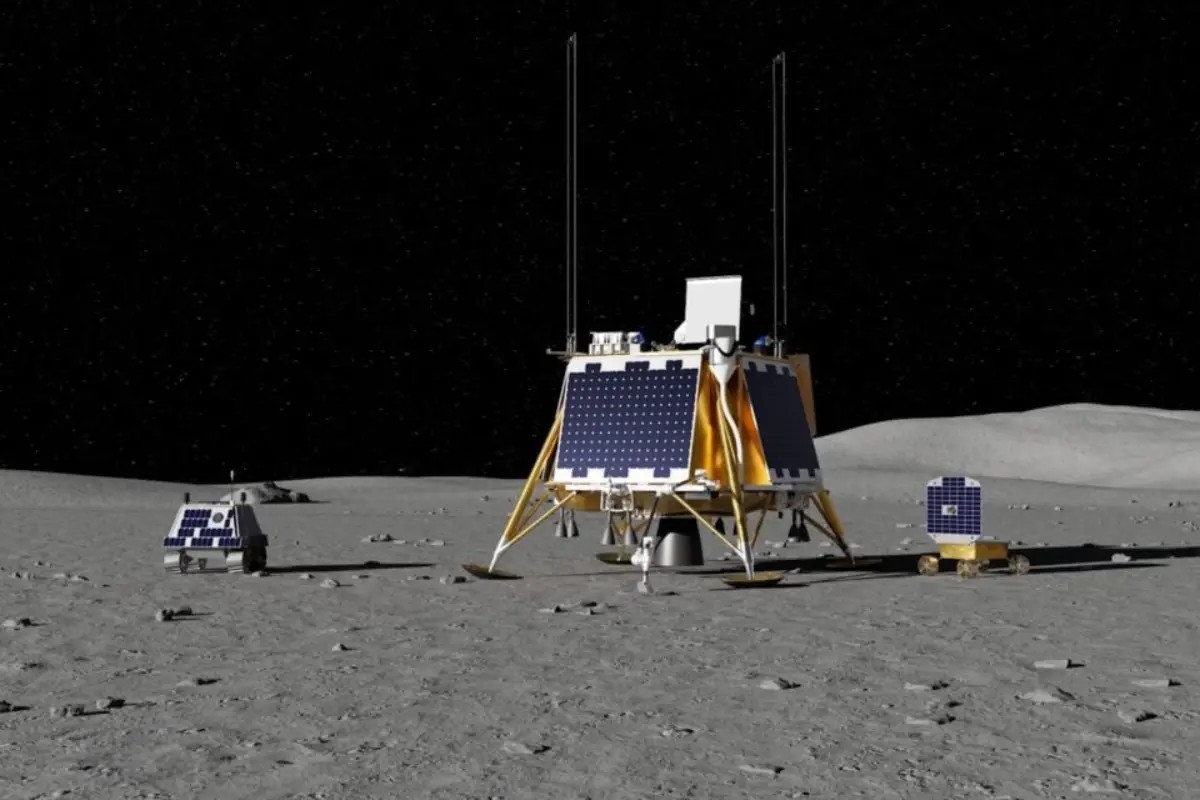
    Engineers in Ontario are building Canada’s first lunar rover, a 35-kilogram vehicle designed to search for water ice and study radiation at the Moon’s south pole. Scheduled to launch in 2029 aboard a Firefly Aerospace lander, the project is led by Canadensys Aerospace under a $14.6 million contract from the Canadian Space Agency.

    The mission is part of NASA’s Artemis program and aims to support future astronaut operations by identifying resources and assessing risks on the lunar surface.

    Once on the Moon, the rover will explore permanently shadowed craters that may hold frozen water delivered by comets over billions of years. Water is a key target because it can support astronauts as drinking water, provide oxygen, and be split into hydrogen and oxygen for rocket fuel. The rover will also track radiation levels, which can be hundreds of times stronger than on Earth, to inform habitat designs.

    Canadensys engineers are preparing the rover to handle extreme lunar temperatures that swing between -200°C at night and 100°C in daylight. Insulated batteries and heaters will help it survive long lunar nights, while rugged wheels are designed for the abrasive dust known as regolith. The system will also include autonomous navigation software, allowing the rover to avoid obstacles in the South Pole’s rough terrain.

    This rover continues Canada’s long record in space technology, beginning with the Alouette-1 satellite in 1962. More recently, the Canadarm and Canadarm2 robotic systems have supported hundreds of space operations on shuttles and the International Space Station. The new rover marks Canada’s most ambitious lunar project yet, after Canadensys supplied instruments for more than 20 other Moon missions.

    The rover will carry spectrometers to detect hydrogen signals, cameras for terrain mapping, and an alpha particle X-ray spectrometer to study soil composition. The science team is led by Gordon Osinski, a University of Western Ontario geologist who has trained astronauts in Canada’s Arctic to simulate lunar conditions. His earlier research re-examined Apollo samples and revealed traces of water, shifting views of the Moon’s past.

    Reaching the lunar south pole is complex. Craters and steep hills make precision landings difficult, as shown by recent failures from private companies in Japan and the U.S. To reduce risk, Canadensys is designing the rover to drive autonomously and adapt in real time. Solar panels with dust-resistant coatings will help extend its mission life.

    The mission aligns with the Artemis Accords, which Canada signed alongside more than 50 other nations to ensure peaceful use of space. In the long term, the rover’s work could help establish lunar bases by testing technologies such as in-situ resource use. Canadensys is also researching lunar greenhouses that might one day allow astronauts to grow crops directly in moon soil.

    Prototypes of the rover are undergoing tests in vacuum chambers to simulate space conditions. A public contest to name the rover is ongoing through the Canadian Space Agency, with the winner to be announced ahead of launch. If successful, the rover will contribute to turning the Moon into a testing ground for deeper missions, including a human landing on Mars.

  • James Webb and Hubble Capture Detailed Images of Merging Galaxies IC 2163 and NGC 2207

    James Webb and Hubble Capture Detailed Images of Merging Galaxies IC 2163 and NGC 2207

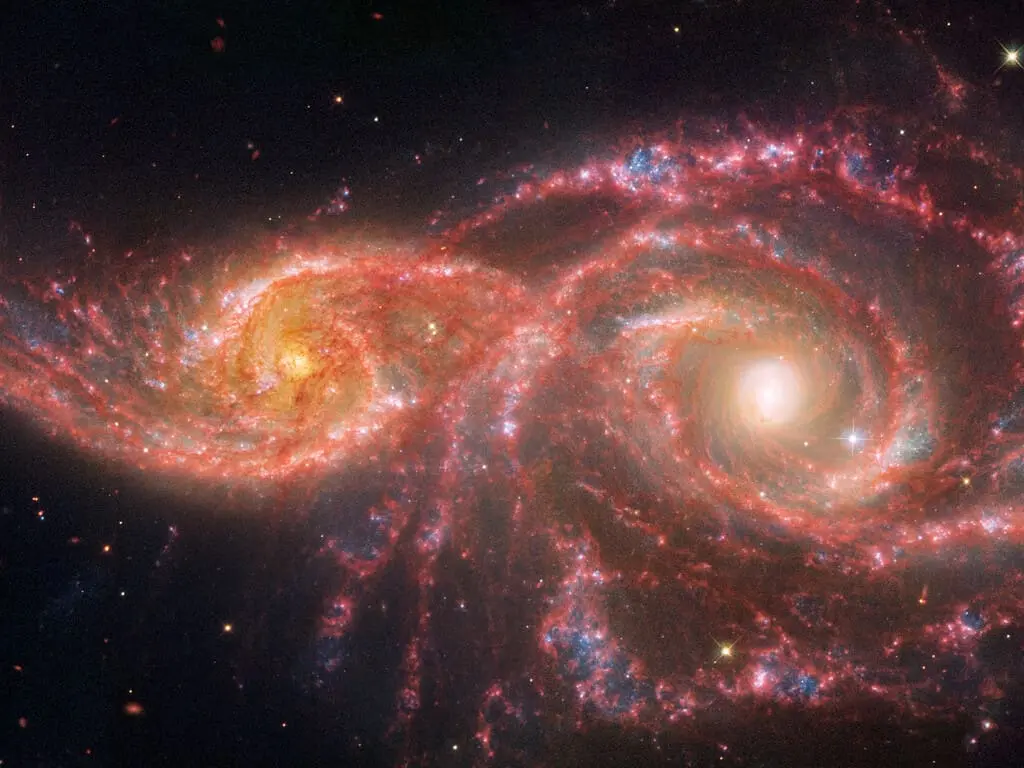
    The European Space Agency (ESA) released new images of the merging galaxy pair IC 2163 and NGC 2207 on October 31, 2024. Captured by both the James Webb Space Telescope and the Hubble Space Telescope, the images show the smaller galaxy IC 2163 interacting with the larger NGC 2207. The collaboration between the two telescopes provides a more complete view, combining infrared and visible light data.

    IC 2163 and NGC 2207 are in the early stages of a galactic merger, with IC 2163 currently shifting behind the larger galaxy. Such interactions, known as galactic cannibalism, are common across the universe. According to the Harvard Center for Astrophysics, roughly 25 percent of galaxies experience mergers at some point in their history.

    The James Webb Space Telescope (JWST) captures infrared light, revealing details invisible to the human eye, while Hubble records visible light. This combination allows scientists to study the structure, star formation, and dust content of merging galaxies in greater detail than ever before.

    Previously, James Webb captured images of another pair of merging galaxies, ARP 142, demonstrating its ability to track dynamic interactions over time. Observing galaxy mergers helps researchers understand how galaxies evolve and grow.

    The IC 2163 and NGC 2207 images highlight both the scale and complexity of galactic interactions. Scientists will continue to monitor these galaxies to learn more about their movement, collision effects, and the broader role of mergers in shaping the universe.