Tag: Sunita Williams

  • NASA Astronaut Suni Williams Retires After 27 Years of Service and 608 Days in Space

    NASA Astronaut Suni Williams Retires After 27 Years of Service and 608 Days in Space

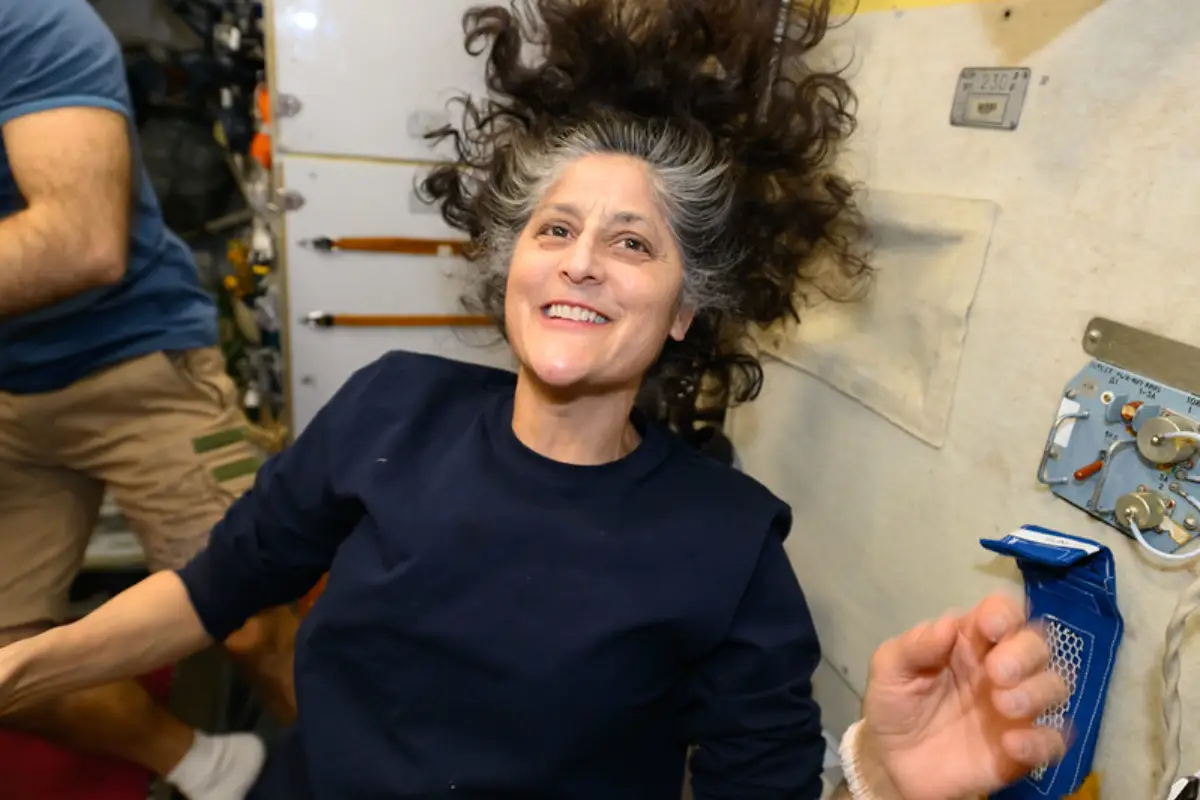
    NASA astronaut Sunita โ€œSuniโ€ Williams retired on December 27, 2025, closing a 27-year career that reshaped how long humans can live and work in orbit. Across three missions to the International Space Station (ISS), Williams spent 608 days in space, ranking second among NASA astronauts for total time off Earth, behind Peggy Whitson, who has spent 695 days. Williams leaves NASA after serving as a station commander, test pilot, spacewalker, and steady hand during one of the agencyโ€™s most difficult crewed missions.

    “Anyone who knows me knows that space is my absolute favorite place to be,” said Williams to NASA. “Itโ€™s been an incredible honor to have served in the Astronaut Office and have had the opportunity to fly in space three times. I had an amazing 27-year career at NASA, and that is mainly because of all the wonderful love and support Iโ€™ve received from my colleagues.”

    Born in 1965 in Euclid, Ohio, Williams grew up in Massachusetts in a family that valued science and discipline. Her father, a neuroanatomist from Gujarat, India, encouraged curiosity early. She later earned a degree in physical science from the U.S. Naval Academy and a masterโ€™s in engineering management from Florida Institute of Technology. Before joining NASA in 1998, she built a long Navy career, flew more than 40 aircraft types, and logged over 4,000 flight hours. That background shaped her calm approach to high-risk missions.

    Williams first flew to the ISS in 2006 aboard Space Shuttle Discovery. During a 195-day stay, she completed four spacewalks and helped rewire the stationโ€™s power systems. She also became the first person to run a marathon in orbit, finishing the Boston Marathon on a treadmill while circling Earth.

    Her second mission in 2012 marked a new chapter. Williams commanded the ISS, repaired a failing coolant system during spacewalks, and completed a full triathlon using onboard exercise gear. The mission showed how astronauts protect muscle and bone health during long stays in microgravity.

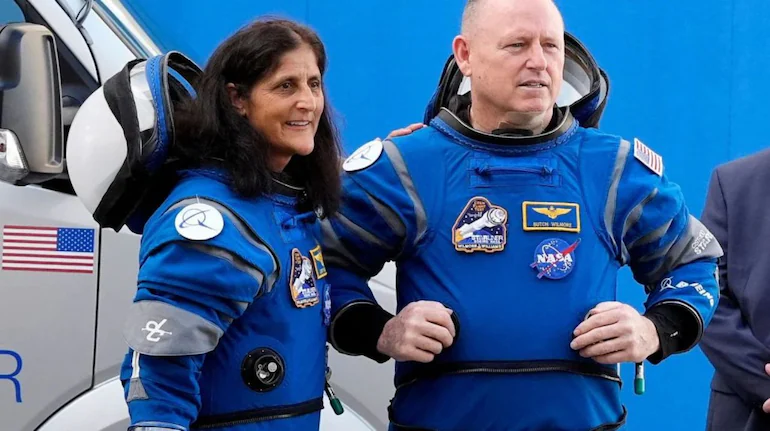
    Her final flight, launched in 2024 on Boeingโ€™s Starliner, tested that experience to the limit. The mission, planned as a short demonstration, stretched to 286 days after thruster failures and helium leaks delayed the spacecraftโ€™s return. Williams and fellow astronaut Butch Wilmore joined the station crew, adjusted schedules, and kept operations stable. She commanded the ISS again and completed two more spacewalks, raising her career total to nine and setting a new record for women.

    Williams also supported long-term research on fluid behavior and human health in orbit. That work continues to guide NASAโ€™s plans for future Moon missions under Artemis. In retirement, she is expected to advise space programs and promote science education. Her career shows how preparation, adaptability, and teamwork keep human spaceflight moving forward.

  • NASA’s SpaceX Crew-10 is now onboard the ISS: Sunita Williams and fellow astronauts perform welcoming ceremony

    NASA’s SpaceX Crew-10 is now onboard the ISS: Sunita Williams and fellow astronauts perform welcoming ceremony

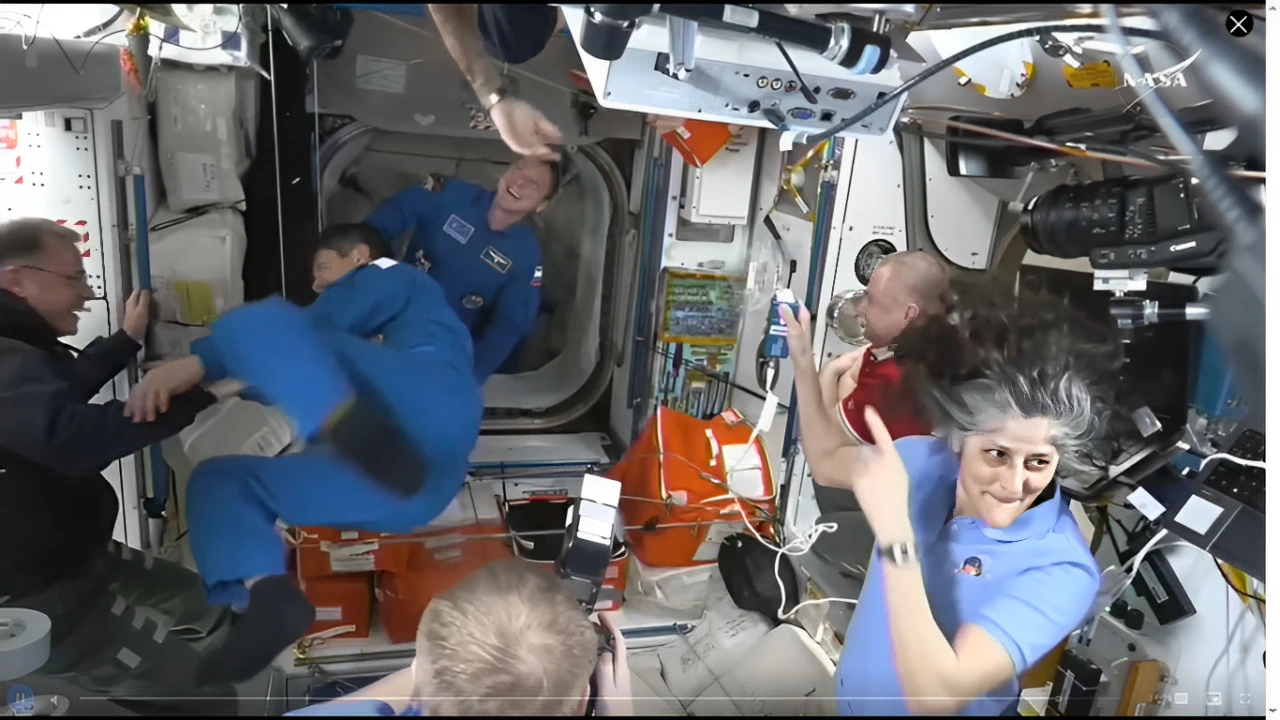
    NASA’s SpaceX Crew-10 has successfully arrived at the International Space Station (ISS), This enabled the return of NASA astronauts Sunita Williams and Barry “Butch” Wilmore who were stuck on the ISS for the past 10 months. The hatches of the crew-10 dragon capsule were opened at 12:35 a.m. EDT, and shortly after, the Crew-10 astronauts Anne McClain, Nichole Ayers, Takuya Onishi, and Kirill Peskoventered entered the ISS.

    They were greeted by the Expedition 72 crew, which includes NASA astronauts Nick Hague, Don Pettit, Sunita Williams, and Butch Wilmore, along with Russian cosmonauts Aleksandr Gorbunov, Alexey Ovchinin, and Ivan Vagner, during a welcoming ceremony.

    The Crew-10 Dragon capsule, named Endurance, docked with the ISS at 12:04 a.m. EDT (04:04 GMT) on Sunday, March 16, 2025, securing its position at the Harmony module of the orbiting laboratory. The Crew-10 mission was launched on Friday, March 14, 2025, aboard the SpaceX Falcon 9 rocket from NASA’s Kennedy Space Center in Florida.


    Return Journey of Sunita Williams and Butch Wilmore

    Sunita Williams and Butch Wilmore departed from the International Space Station (ISS) on March 18, aboard the SpaceX Crew Dragon capsule docked at the station. Their return marks the conclusion of an extraordinary journey that began with a short mission but evolved into an extended stay due to unforeseen challenges.

    The Crew-10 astronauts will spend several months on the ISS, conducting a variety of scientific experiments and maintaining the station’s operations. Their arrival also marks the beginning of a new phase for the ISS crew, as they integrate with the existing team and prepare for future missions.

    This article was last updated with the news of Crew-10 entering the ISS. Keep visiting this page for more updates.

  • NASA: Sunita Williams and Butch Wilmore will return in March

    NASA: Sunita Williams and Butch Wilmore will return in March

    NASA has officially announced that the American astronauts Sunita Williams and Butch Wilmore, along with Crew-9 astronauts, are scheduled to return to Earth, while Crew-10 will launch on March 12.

    Astronauts Sunita Williams and Butch Wilmore docked at the International Space Station (ISS) in June 2024 aboard the Boeing Starliner for an 8-day mission. However, they have been stuck on the ISS for over 9 months as of February 19.

    The Boeing Starliner mission aimed to test the Boeing Starliner spacecraft, which was developed over several years by Boeing engineers to transport astronauts to and from the ISS. Traditionally, astronauts have been sent to the ISS using either the Russian Soyuz spacecraft or the SpaceX Crew Dragon spacecraft.

    Unfortunately, the Boeing Starliner mission encountered multiple delays and malfunctions during both launch and docking. A few months after docking, NASA and Boeing engineers declared the spacecraft unsafe due to several thruster failures and malfunctions. The Boeing Starliner spacecraft returned to Earth uncrewed on September 6.

    Due to the issues with the Boeing Starliner, NASA enlisted SpaceX to facilitate the return of Sunita Williams and Butch Wilmore. To accommodate this, two seats were left empty on the SpaceX Crew-9 Dragon spacecraft mission. The Crew-9 Dragon spacecraft docked with the ISS on September 29.

    The SpaceX Dragon spacecraft will now return with Crew-9 astronauts Nick Hague, and Roscosmos astronaut Aleksandr Gorbunov, along with Boeing Starliner astronauts Sunita Williams and Butch Wilmore on March 12.