Tag: Supernova

  • Early Polarization Data Reveals a Stunning Supernova Explosion in NGC 3621 Galaxy

    Early Polarization Data Reveals a Stunning Supernova Explosion in NGC 3621 Galaxy

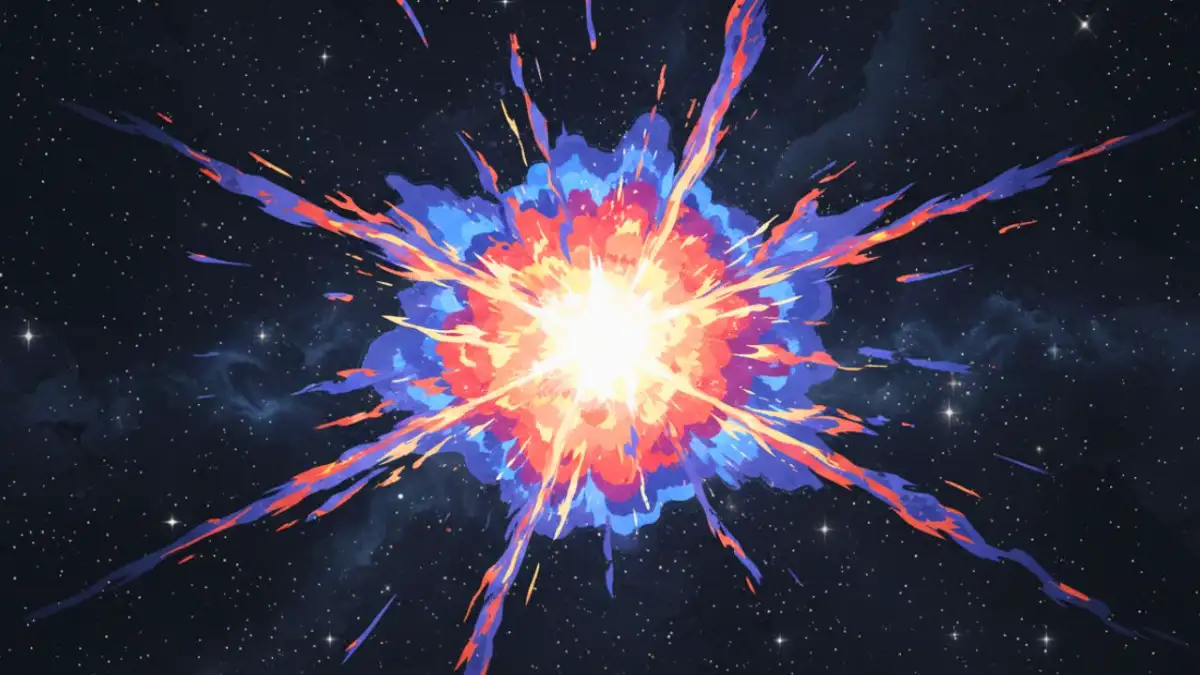
    Astronomers have captured one of the most detailed early looks at a dying star after a type II supernova in the nearby galaxy NGC 3621 was caught only 1.2 days after it erupted. The blast, named SN 2024ggi, sits about 7 million parsecs from Earth. Early readings came from the FORS2 instrument on the Very Large Telescope in Chile, giving researchers a rare view of how the shock broke through the star’s surface and pushed outward in a fixed direction.

    Polarization happens when light waves align instead of moving in random directions. Most supernovae show almost none of it because their blasts expand in a round shape. When the blast is slightly stretched, the scattered light no longer cancels out, and a small part of it becomes aligned. This lets researchers map the shape of the explosion without taking a direct picture.

    The first FORS2 measurements produced a straight line on the Q-U plot, which meant the blast followed a clear axis from the start. The position angle was about 66 degrees. This showed that the shock did not expand evenly and instead pushed harder along one direction as it emerged from the star’s outer layers.

    High-energy elements such as oxygen and carbon followed the same axis as the main light. Hydrogen features, which form farther from the center, appeared more mixed. This pattern showed that the earliest light escaped along the central axis while cooler material filled a wider region.

    About ten days after the blast, the polarization changed sign but kept almost the same direction. This shift meant the visible shape changed from stretched to flattened, while the axis itself stayed fixed. The debris continued to point the same way even as the structure changed during expansion.

    Between day two and day seven, the axis turned by nearly sixty degrees. During this period, the expanding material ran into gas the star had released earlier in its life. That gas formed a tilted disk around the star. The short rotation in the measured angle came from the combined effect of the disk and the explosion before the original axis took over again.

    These findings provide clues to how the core collapsed. One model predicts a chaotic, uneven blast driven by neutrinos. Another point is rotation and magnetic fields, which can force matter to move along a stable direction. SN 2024ggi stayed aligned from the first day through almost a month, which supports the rotation-based model. The blast was moderately stretched, enough to create steady polarization without the extreme shapes seen in some other events.

    Several other facilities also followed SN 2024ggi in the weeks after the event, including the 2.4-meter Lijiang Telescope in China, the 3.6-meter Telescopio Nazionale Galileo in Italy, and the 6.5-meter Magellan telescopes in Chile. But the earliest polarization data that revealed the axis came from the VLT’s FORS2.

    Only a small number of type II supernovae have been measured this early. SN 2023ixf, another nearby event, showed uneven expansion too, but its first readings came after the shock had already crossed the outer layers. SN 2024ggi is the first case in which astronomers caught the breakout itself and later saw the same axis deeper in the hydrogen envelope.

    The early and consistent data make SN 2024ggi one of the clearest recorded examples of a massive star showing its final structure in real time. The event suggests that some stars do not explode evenly and instead follow a stable direction shaped by their rotation and magnetic fields long before they collapse.

    Source: An axisymmetric shock breakout indicated by prompt polarized emission from the type II supernova 2024ggi

  • New research suggests black holes can trigger unique supernovae, challenging past theories

    New research suggests black holes can trigger unique supernovae, challenging past theories

    Astronomers have spotted a supernova that’s unlike any they’ve seen before, and they think it’s a star that exploded while being consumed by a black hole. This rare event, named SN 2023zkd, was first seen in July 2023, about 730 million light-years away in a low-mass host galaxy with little star formation.

    Classified as a Type IIn supernova, it stands out because of narrow hydrogen lines in its spectrum, along with strong helium features that make it helium-rich. These traits point to the explosion happening inside a dense cloud of gas the star lost earlier.

    A special AI tool, called LAISS, designed to find strange space events, flagged it for immediate attention. This allowed astronomers to get crucial data from the beginning of the explosion, giving them a full picture of what happened.

    Scientists from Harvard, MIT, and other universities believe a massive star, starting with at least 30 solar masses and partially stripped of its outer layers, was in a tight orbit with a black hole. As the star got closer, the black hole’s immense gravity began to pull off gas and dust, forming a swirling disk around it.

    Before the black hole could fully swallow the star, the intense pressure and gravitational stress caused the star to detonate. The blast ejected about 10 solar masses of material at high speeds, with an energy around 2 × 10^51 ergs.

    The light curve showed two peaks: the first reached an absolute magnitude of about -18.7 in the r-band, then it faded, only to brighten again to -18.4 magnitude roughly 240 days later. This second flash came from the shock wave hitting denser material the star had ejected earlier.

    Spectra revealed asymmetric lines from hydrogen and helium, with velocities ranging from 400 km/s in slow-moving equatorial hydrogen to 1,000-2,000 km/s in faster polar helium. These suggest an uneven distribution of material around the system.

    Looking at old data, scientists found that the system had been glowing more brightly for four years before the big explosion, with a persistent brightness around -15 magnitude in the the r-band. This precursor split into two parts: a long steady phase and a ramp-up in the final year.

    The total circumstellar material involved was about 5-6 solar masses, lost in bursts 3-4 years and 1-2 years before the explosion. Such high mass-loss rates, up to 1 solar mass per year, are hard to explain with a single star.

    An alternative view is a tidal disruption where the black hole rips the star apart without a true supernova, but the long precursor and spectral details favor the merger scenario. “This is strong evidence for black holes triggering these special explosions,” said Alexander Gagliano, the lead author of the study. It points to a process where orbital instability leads to a common envelope phase, ending in a blast.

    V. Ashley Villar, a co-author, believes this could be a new kind of supernova that scientists haven’t recognized before. Most massive stars live in pairs, so binary ends like this might be more common than thought.

    This discovery shows how binary systems can produce odd supernovae and perhaps lead to pairs of black holes that merge later, detectable by gravity waves.

    As new, powerful telescopes like the Vera C. Rubin Observatory become fully operational, they will scan the entire sky for transient events. Scientists believe that AI tools will be key in sifting through the vast amounts of data to find similar, hidden classes of supernovae.

    The findings were published in the Astrophysical Journal.

    References

  • A ‘New Star’ has Exploded in the Night Sky! Hereโ€™s Where to See It

    A ‘New Star’ has Exploded in the Night Sky! Hereโ€™s Where to See It

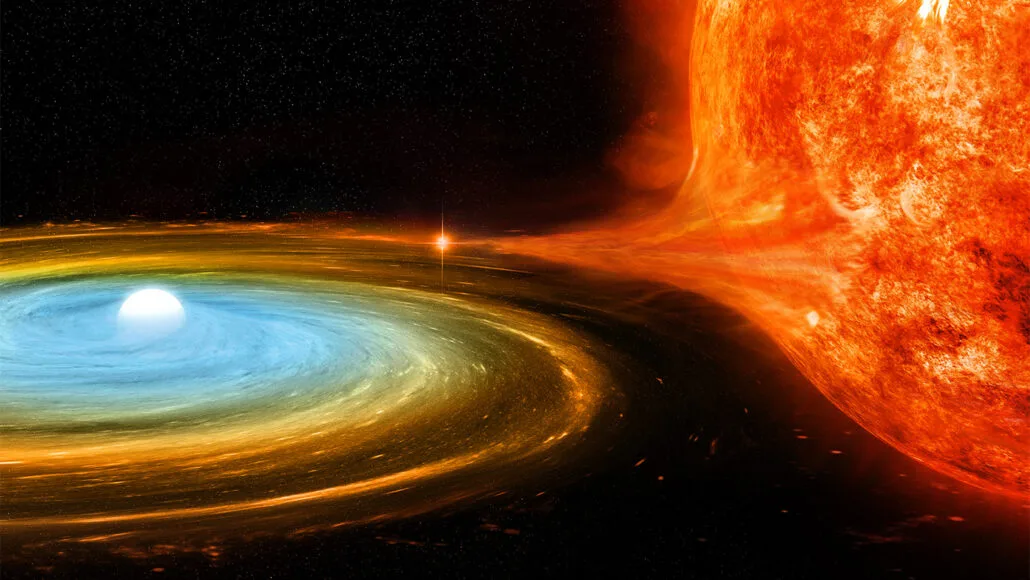
    Astronomers have discovered a new star in the night sky. This new star is not a normal star but a nova. On June 12, 2025, the All-Sky Automated Survey for Supernovae detected a sudden bright spot in the constellation Lupus. Over the coming days, that spot brightened enough to become visible without a telescope. This supernova is named V462 Lupi.

    As of June 18, it had reached an apparent magnitude of +5.7, just inside the range our eyes can see under dark skies. The explosion made the star 4 million times brighter than it was before, thanks to a thermonuclear burst on the surface of a white dwarf in a binary system.

    Where is the Nova V462 Lupi visible?

    The nova is visible in the constellation Lupus, low in the southern sky after sunset. It’s best seen from the Southern Hemisphere, but people in North America can also catch a glimpse. Sightings have been reported as far north as Lake Superior, as well as in California and Arizona, particularly just after sunset near the southern horizon. The nova can be viewed with the naked eye in dark sky areas; however, using a telescope or binoculars can increase your chances of spotting it.

    What is a nova?

    A young boy pointing to a bright new star in the night sky
    (Artist’s Concept). Credit: Nihal sayyad / Wonders in Space

    A nova is a transient astronomical event that causes the sudden appearance of a bright, apparently newย star that slowly fades over weeks or months.

    What Makes This Event Rare?

    Novae like this one do happen, but they rarely reach a brightness level we can see without tools. On average, just one or two novae a year become visible to the naked eye worldwideโ€”and often, they appear in hard-to-see parts of the sky or go unnoticed due to moonlight, clouds, or city lights.

    What makes V462 Lupi stand out is that it was unexpected; it got bright enough for backyard stargazers to notice. It’s in a southern constellation but still visible from parts of the Northern Hemisphere.

    Don’t miss this incredible opportunity to witness a nova explosion. Use a sky-watching app like Stellarium to find the constellation and the nova, and enjoy the experience!

  • Crown of Thorns Nebula: Astrophotographer discovers a stunning new Nebula in Virgo

    Crown of Thorns Nebula: Astrophotographer discovers a stunning new Nebula in Virgo

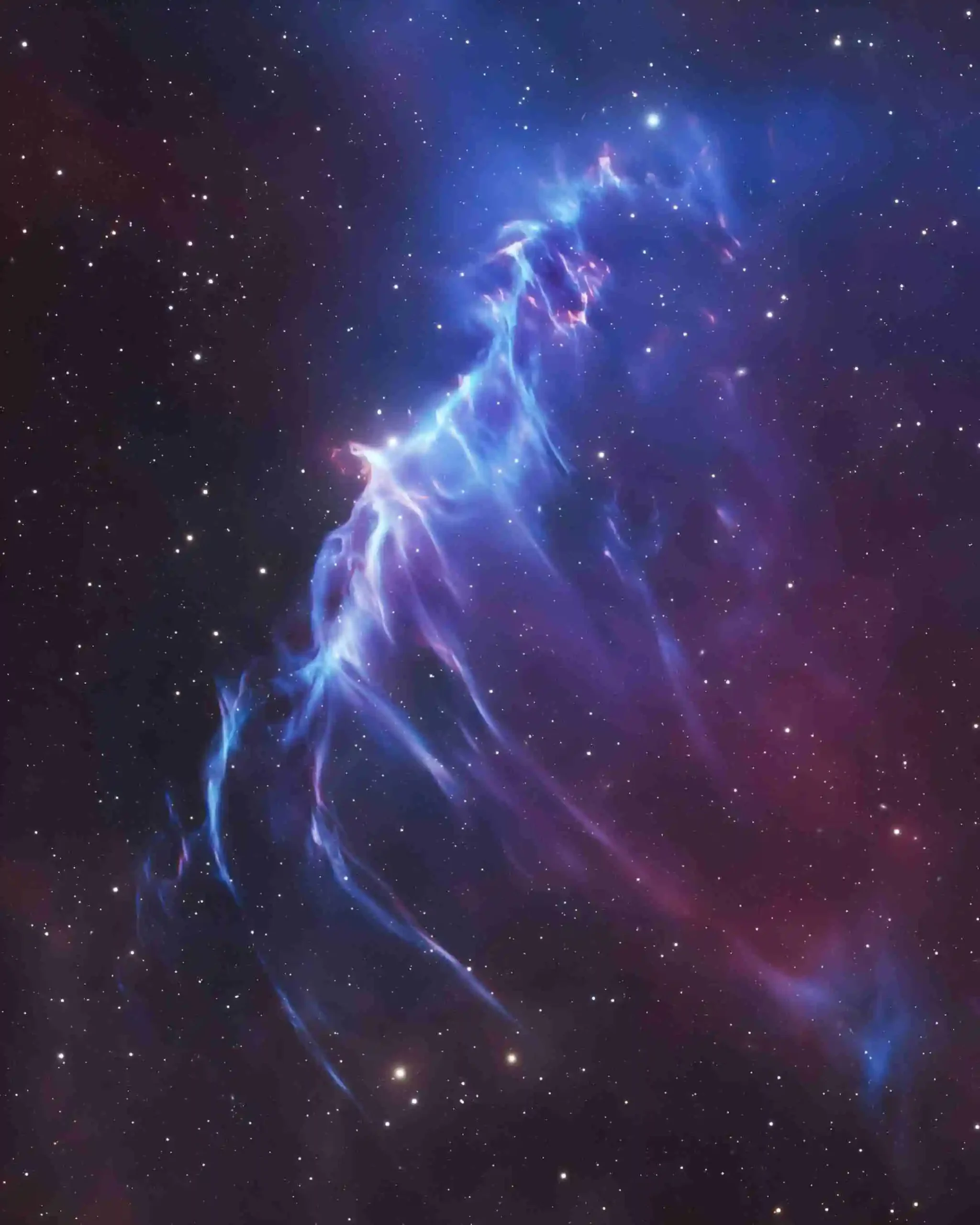
    An American astrophotographer has discovered a new nebula in the constellation Virgo. Called the Crown of Thorns Nebula, the discovery was shared on Instagram on May 14, 2025. It drew attention from the public and the scientific community. People responded with surprise and excitement. Comments included โ€œCongratulations, this is spectacular, too mind-blowing for my mind to comprehendโ€ and โ€œPhenomenal!!โ€

    Bray Falls, a professional astrophotographer from Austin, Texas, posted images of the nebula and shared some details. โ€œIโ€™ll start this off by saying this nebula should not be here,โ€ he wrote. He explained that most supernova remnants are found within 10 degrees of the Milky Way band, where the star count is highest. But this one is different. It is located 42 degrees away from that area, in the constellation Virgo.

    Falls said he discovered this object through a careful search of areas in the night sky that are often overlooked. The survey he ran to find it took about 90 hours of exposure time and two months in real time. Capturing the final image took 185 hours of exposure time. He also mentioned that editing the data was very challenging.

    He added that he and his friend Derek Culver named the Nebula. The name perfectly matches its shape. The long, pointed strands of gas, dust, and matter stretch from a central structure that looks like a crown of thorns.

    This discovery shows that even after years of looking at the sky, there is still much we do not know about space. New objects and patterns appear all the time. Each one helps us learn more about the universe.

  • What is a Supernovae? What types of Stars end their lives with Supernovae?
    What is a Supernovae? What types of Stars end their lives with Supernovae?

    Stars are born in huge clouds of gas and dust. For most of their lives, they create energy by fusing hydrogen into helium in their cores. This process keeps them stable, balancing the outward pressure of fusion with the inward pull of gravity.

    When a star runs out of hydrogen fuel, its life changes dramatically. Stars like our sun will puff up into red giants. However, a massive star much bigger than our sun becomes a supergiant. This is when its story gets truly explosive.

    Why Do Stars Explode?

    Inside a massive star, fusion works like a cosmic onion, creating heavier elements in layers. This process stops when the star’s core begins to fuse iron. Making iron requires more energy than it releases, so the star’s power source shuts down.

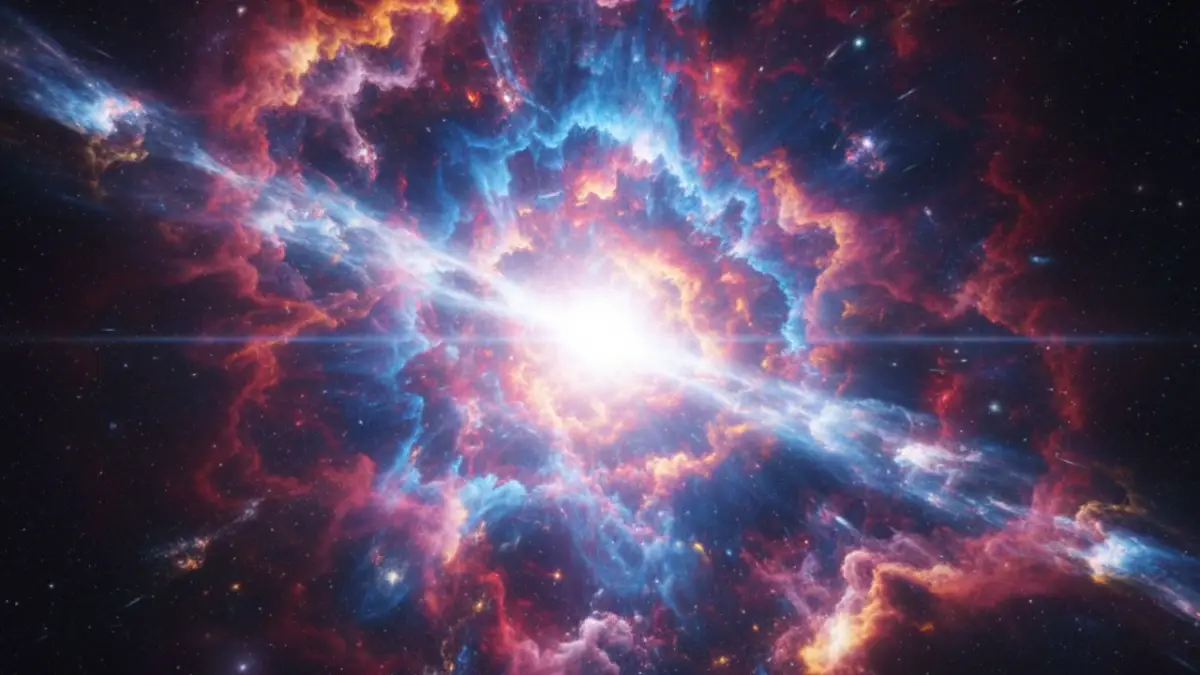
    Without fusion to hold it up, the core collapses in a fraction of a second. This collapse creates a powerful shockwave that races outward, tearing the star apart. The result is a supernova: a brilliant explosion that briefly outshines an entire galaxy.

    Types of Stars That End Their Lives with Supernovae

    Not all stars are destined for a supernova. Whether a star ends this way depends on its mass and other factors:

    • Massive Stars: Stars at least eight times more massive than our Sun can end their lives in a Type II supernova. As they burn through their fuel, they build up layers of heavier elements in their cores. Once iron is produced, fusion can no longer support the star, causing the core to collapse and trigger an explosion.
    • White Dwarfs: Smaller stars, like our Sun, donโ€™t explode as supernovae when they die. However, a white dwarf in a binary system can trigger a Type Ia supernova. If the white dwarf pulls in enough material from its companion star, it can reach a critical mass, leading to a runaway explosion.

    What Are the Different Kinds of Supernovae?

    Astronomers group supernovae into two main types.

    • Type I supernovae: Type I supernovae occur in a two-star system. A white dwarf star pulls matter from its partner until it triggers a runaway nuclear reaction, which blows the star apart.
    • Type II supernovae: Type II supernovae are the death throes of a massive star. When its core collapses, the outer layers explode outward. These events leave behind a super-dense neutron star or, if the original star was huge, a black hole.

    What Produces a Type I Supernova?

    Type I supernovae occur when a white dwarf star accumulates material from a nearby companion. Once the white dwarf reaches a certain mass, a sudden burst of nuclear reactions occurs, leading to a thermonuclear explosion. This type of supernova doesnโ€™t show hydrogen lines in its spectrum, setting it apart from other types.

    What Produces a Type II Supernova?

    Type II supernovae occur in massive stars that are at least eight times the mass of the Sun. When these stars exhaust their nuclear fuel, they no longer have the energy to support their massive cores. The core collapses rapidly, causing the outer layers to crash inward.

    This collapse generates a shockwave that propels the outer layers into space in a spectacular explosion. Unlike Type I supernovae, Type II supernovae display hydrogen in their spectra because the star still has hydrogen in its outer layers at the time of the explosion.

    The remaining core can form a neutron star or, if the star is massive enough, collapse further into a black hole. These remnants are among the densest objects in the universe.

    How Hot Is a Supernova?

    Supernovae are incredibly hot, reaching temperatures of millions of degrees. This extreme heat causes atoms to fuse into heavier elements, creating many of the elements found throughout the universe, including those that make up planets and even life itself.

    How Does a Supernova Change a Galaxy?

    The temperatures inside a supernova can reach hundreds of millions of degrees. These extreme conditions create heavy elements like gold, silver, and uranium. The explosion scatters these elements across space.

    This cosmic dust eventually becomes part of new stars and planets. The iron in our blood and the calcium in our bones were created in ancient stellar explosions. We are, in a very real sense, made of star stuff.

    How Did We First See These Events?

    Long ago, people noticed sudden “new stars” appearing in the night sky. In 1054, Chinese astronomers wrote about a star so bright it was visible during the day. We now know its remains formed the Crab Nebula.

    Centuries later, in 1572, Danish astronomer Tycho Brahe observed another bright new star. His detailed work showed that the heavens were not unchanging, helping to usher in modern astronomy.

    How Do Astronomers Find Supernovae Today?

    Modern telescopes on Earth and in space constantly hunt for supernovae. Surveys scan the sky every night, catching these events soon after they begin. This lets researchers study them in real time.

    Powerful instruments like the Hubble and James Webb Space Telescopes also reveal the structure of these explosions in amazing detail. By watching them, we learn about how stars die and how galaxies evolve over time.

    Why Do Supernovae Matter to Us?

    Supernovae are more than just bright explosions. They are essential for galaxy evolution, spreading heavy elements and even triggering the birth of new stars. The remnants they leave behind are among the universe’s most fascinating objects.

    By studying supernovae, we are not just looking at the death of a star. We are learning about the origins of our own solar system and understanding our place in the cosmos.