
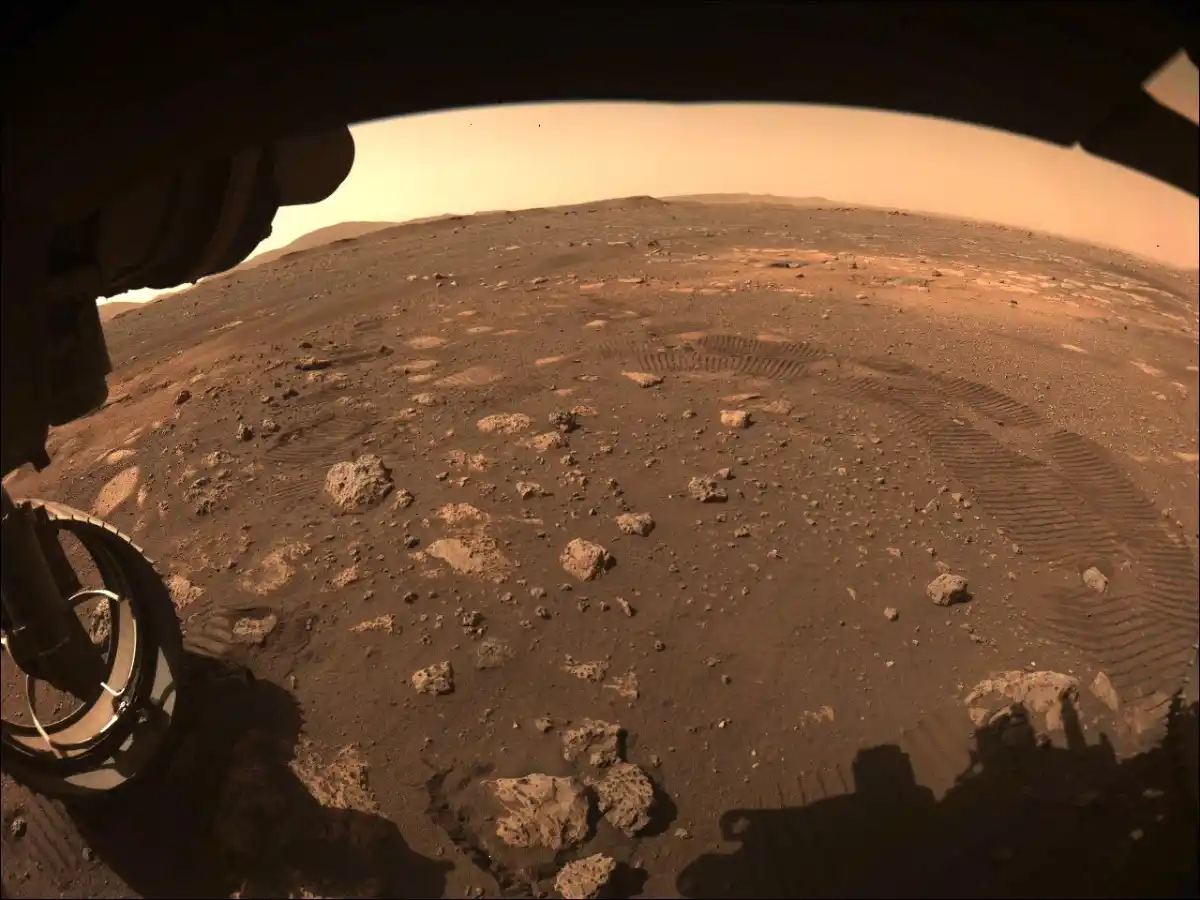
NASA’s Perseverance rover may have found its most promising hint of Martian habitability yet. In July 2024, the rover drilled into a rock in Jezero Crater’s ancient river valley and extracted a core sample that shows chemical signatures often tied to microbial activity on Earth. The results, described this week in the journal Nature, have sparked debate among scientists about whether Mars once hosted life.
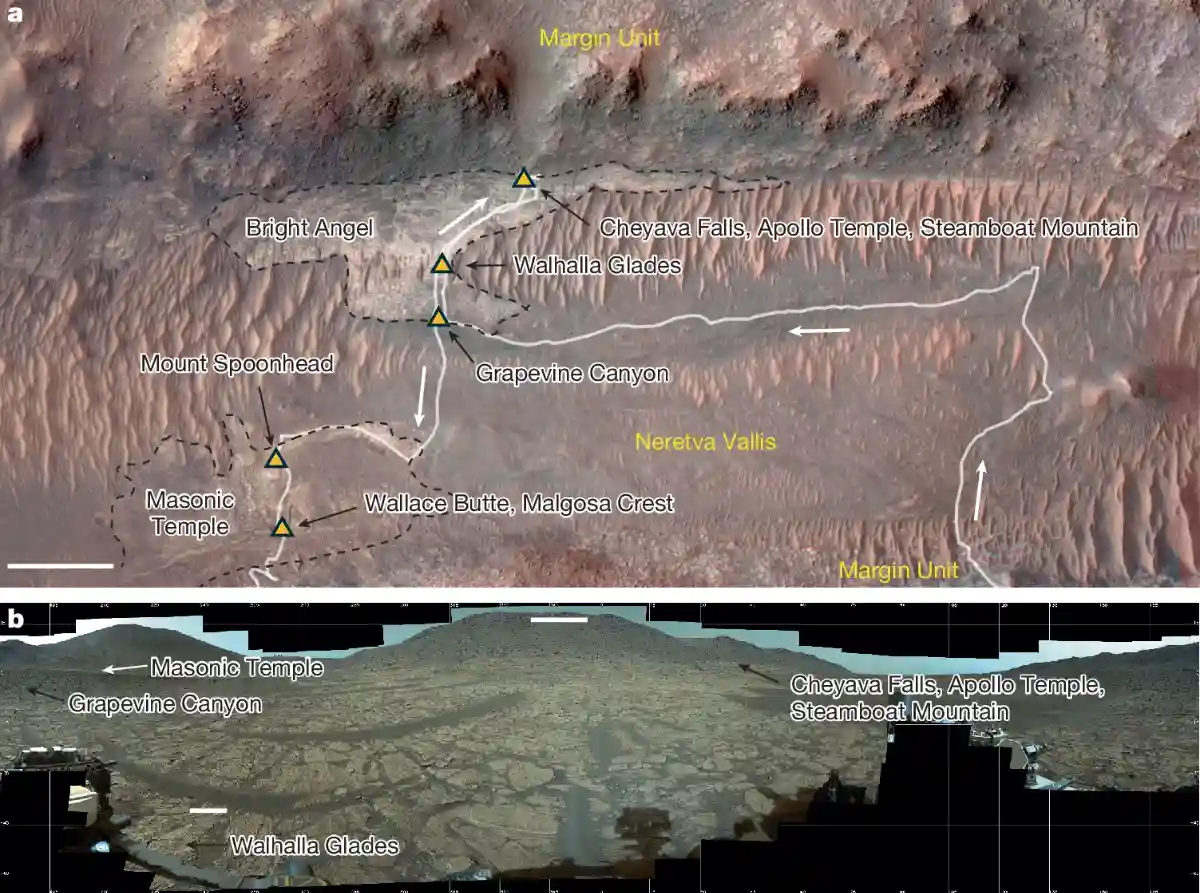
The rock, known as Cheyava Falls, lies in Neretva Vallis, a channel carved by water billions of years ago. The extracted core, named Sapphire Canyon, is one of 27 samples collected so far by Perseverance for eventual return to Earth. Jezero Crater itself once held a large lake, making it a prime site for the search for biosignatures.
Two of Perseverance’s instruments, PIXL and SHERLOC, detected organic carbon, sulfur, phosphorus, and iron oxides in the sample. These elements were not scattered randomly but arranged in distinct patterns nicknamed “leopard spots.” The mineral mix includes vivianite, a hydrated iron phosphate, and greigite, an iron sulfide. On Earth, both are often linked to microbial processes in wet environments.
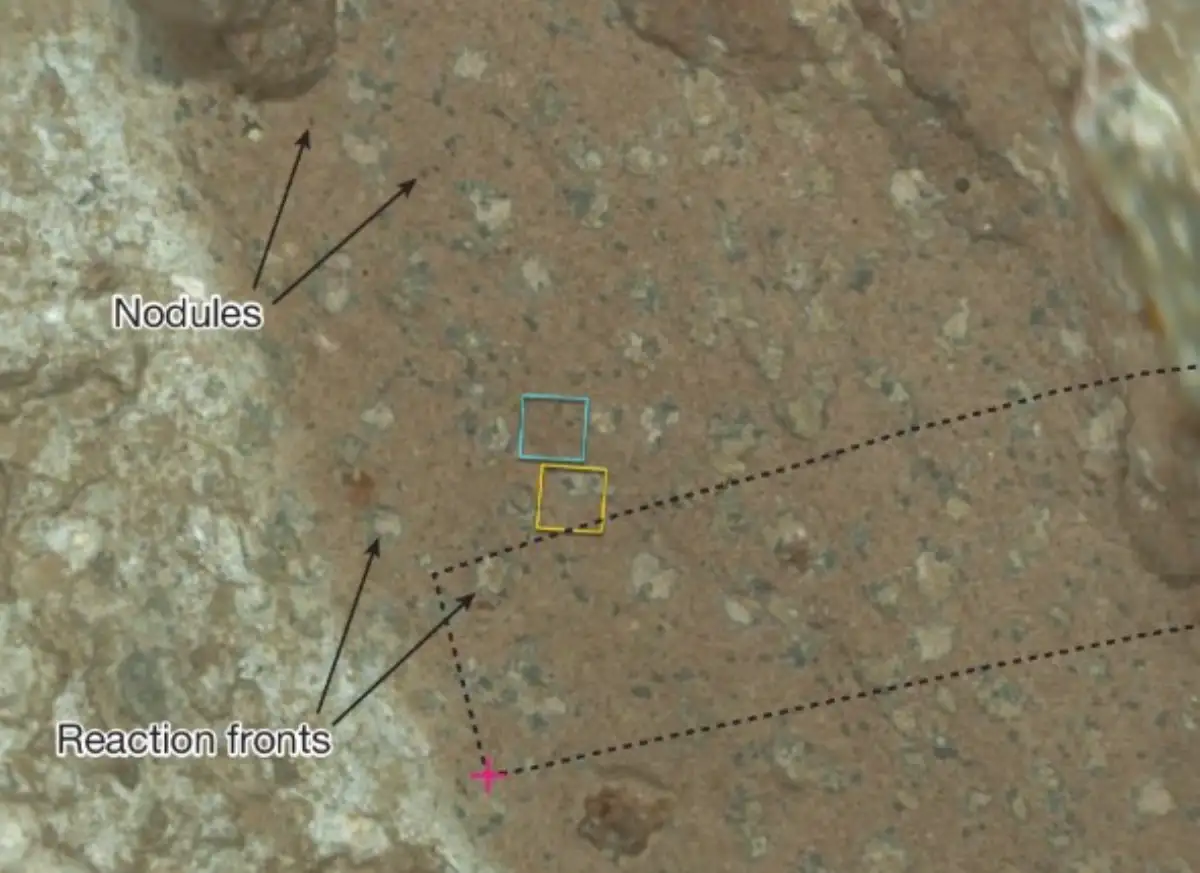
Vivianite typically forms in sediments containing decaying organic matter. Greigite can appear when microbes use sulfate for energy. The presence of both together, in specific textures, suggests electron exchanges between organics and minerals, reactions commonly driven by bacteria. Scientists note that similar features are seen in peat bogs and lake beds on Earth.
However, chemistry alone cannot prove biology. Non-living processes, such as chemical reactions with heat or acid, can create similar patterns. Researchers point out that this rock does not show signs of extreme heat or acidity, raising the chances (but not confirming) that microbes once played a role.
To assess such findings, scientists use the CoLD scale, which ranks the strength of evidence for past life. The Sapphire Canyon sample meets some early criteria but falls short of definitive proof. Future laboratory testing will be required to confirm whether these chemical traces were truly biological.
Perseverance’s discoveries matter because they suggest Mars may have remained habitable longer than once thought. Previous missions, such as Curiosity in Gale Crater, also found organic molecules, but Sapphire Canyon adds evidence from younger rocks in a once-wet delta.
The rover’s work is meant to support the proposed Mars Sample Return mission, which aims to bring these samples back to Earth in the 2030s. That mission faces funding and technical hurdles, but it remains the most likely path to confirming or rejecting signs of Martian life. Scientists still recall the controversy around the ALH84001 meteorite, which in 1996 was claimed to contain fossils but was later proved inconclusive.
For now, Perseverance will continue its survey of Jezero, while Europe’s planned ExoMars rover prepares to drill deeper into the surface. Each mission adds new clues to one of science’s biggest questions: whether Mars ever supported life.
Source: Redox-driven mineral and organic associations in Jezero Crater, Mars

Leave a Reply