

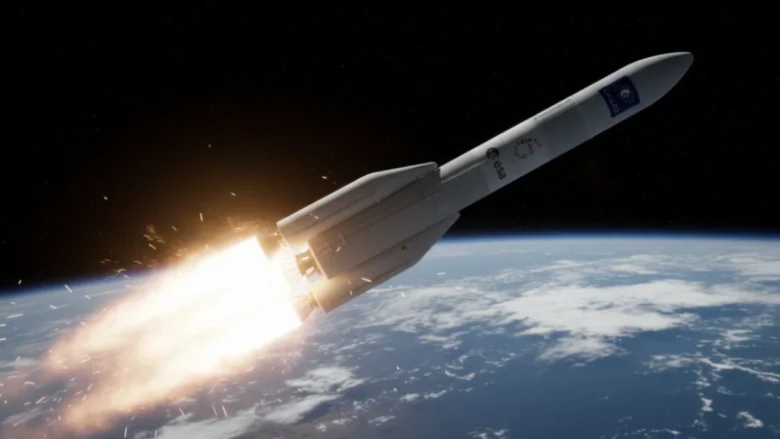
Europe will launch two new Galileo navigation satellites on the Ariane 6 rocket from French Guiana on December 17, 2025. The launch window opens at 05:01 GMT. The mission marks the first time Galileo satellites fly on Ariane 6 and the rocket’s fifth flight.
The satellites, called SAT 33 and SAT 34, will head to orbit about 23,000 kilometers above Earth to strengthen Europe’s navigation network and protect it from service gaps.
The launch will take place from the Guiana Space Centre in Kourou. Once separated from the rocket, the satellites will move into their final positions in medium Earth orbit. They will join 31 other Galileo satellites already in space, with 27 currently in active service across the globe.
Mission teams are adding more satellites to keep backups available in orbit. If a satellite fails or must be taken offline, another can take its place. This keeps the system stable and helps maintain location accuracy for phones, cars, aircraft, ships, and emergency services.
Most modern smartphones already use Galileo signals along with GPS. The mix of systems improves location accuracy in crowded cities and remote regions. Farmers use Galileo to guide equipment in straight lines. The system also supports a search and rescue channel that sends a distress location to emergency teams and confirms to the sender that help is on the way.
Europe created Galileo to keep navigation services under civilian control. This reduces reliance on foreign systems such as the American GPS or the Russian GLONASS network. The design also includes tools that help block false signals and protect against attempts to confuse receivers.
Each Galileo satellite carries very precise atomic clocks. These clocks send time signals to Earth. A receiver measures how long the signal takes to arrive. When at least four satellites are in view, the receiver can calculate its position, height, and time with high precision. The more satellites it can see, the faster and more accurate the result.
The satellites move in three orbital paths around the planet, tilted to give strong coverage at high and mid latitudes. This setup helps users in northern and southern regions receive steady signals.
Ariane 6 replaces earlier launch options. Previous Galileo satellites flew on Ariane 5 and Russian Soyuz rockets. Ariane 5 has retired, and Soyuz is no longer available to Europe. With Ariane 6, Europe now has its own launcher ready for regular Galileo missions.
This launch will use the Ariane 62 version, which has two strap-on boosters. Its upper stage will restart its engine more than once to place the satellites in the correct path. After releasing the payload, the upper stage will move to a safe disposal orbit.
The two satellites on this mission are first-generation models built by the German company OHB. Four more of the same type are ready for future flights.
From around 2027, Europe plans to introduce second-generation Galileo satellites. These will use digital systems, electric thrust for easier movement in orbit, and links that allow satellites to pass data to each other without constant ground support. Improved clocks, stronger signals, and better protection against jamming are also planned.
With billions of devices already using Galileo signals, each new satellite adds capacity and stability. The latest launch will strengthen the system as Europe prepares for the next phase of its navigation program.